Quick Facts About Duchess Falls
Quick Facts – Duchess Falls
| Entry Fee | No official entry fee |
| Timings | Daylight hours; no fixed official timings |
| Altitude (m) | Varies by trail level (approx. 900–1,000 m) |
| Ideal Visit Duration | 45–60 minutes |
| Best Time of Day | Morning |
| Crowd Level | Low to moderate |
| Distance from City Centre (km) | Approx. 4 km from Pachmarhi town |
| Walking Difficulty | Moderate to difficult (steep, rocky forest trail) |
| Parking Available | Limited roadside parking near trail entry |
| Last Mile Access | Forest trail on foot |
| Suitable for Kids | Not ideal due to steep trail and uneven terrain |
| Suitable for Seniors | Not recommended |
| Wheelchair Friendly | No |
Why Visit Duchess Falls
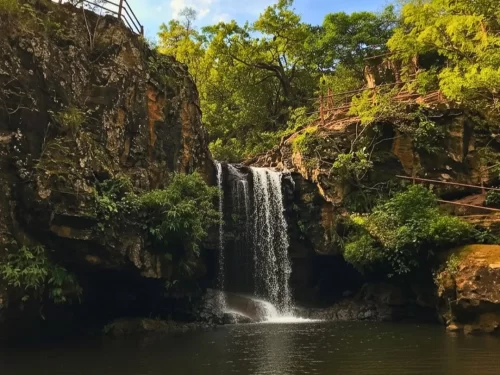
Visitors come to Duchess Falls for a quiet forest waterfall experience that feels separate from Pachmarhi’s busier viewpoints, with a short trek leading to a natural cascade and plunge pool.
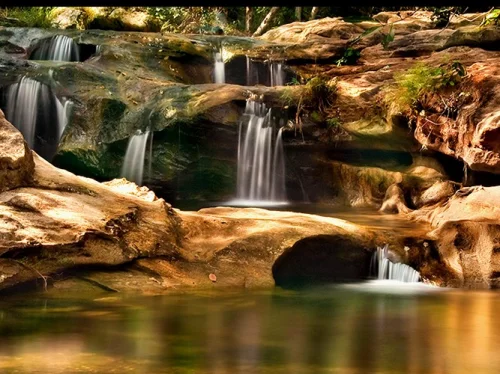
The on-ground atmosphere is calm and shaded, with dense forest cover, bird sounds, and the constant flow of water, especially during and after the monsoon season.
What makes Duchess Falls distinct is the combination of a narrow forest trail, a relatively secluded setting, and close-up access to the waterfall, creating a more raw and natural experience compared to roadside viewpoints.
History of Duchess Falls
Duchess Falls does not have documented historical, religious, or cultural associations and is known primarily as a natural feature within the Pachmarhi forest landscape. The name is linked to the colonial-era period when many natural locations in the Pachmarhi plateau were identified and named by British administrators during the development of the hill station.
There are no associated temples, monuments, inscriptions, or traditional rituals connected to the site. Its recognition comes from its geographic setting along forest trails used by local forest staff, trekkers, and visitors rather than from any historical settlement or cultural use.
Best Time to Visit Duchess Falls
Duchess Falls is best visited during the post-monsoon and winter months when water flow is stable, forest trails are accessible, and visibility is clear for viewing the waterfall and surrounding valley.
- Ideal months: October to February, when the waterfall has consistent flow and forest paths are dry and safe for walking.
- Weather conditions during the best season: Cool to mild temperatures with low humidity, clear air, and stable ground conditions around the viewpoint and access trail.
- Periods to avoid: Peak monsoon (July–September) due to slippery forest trails, restricted access conditions, leech presence, and limited visibility caused by mist and heavy rainfall.
How to Reach Duchess Falls
- Nearest airport: Raja Bhoj Airport, Bhopal (approx. 200 km). From Bhopal, travel by road to Pachmarhi via Pipariya or Itarsi; onward access to Duchess Falls is through Pachmarhi town.
- Nearest railway station: Pipariya Railway Station (approx. 55 km), the main railhead for Pachmarhi. Taxis and shared jeeps operate regularly from Pipariya to Pachmarhi.
- Road access and last-mile connectivity: Duchess Falls is accessed via forest routes from Pachmarhi. Visitors must travel by local taxi/jeep to the designated forest drop point, followed by a forest trail walk to the waterfall. Private vehicles are not permitted on internal forest tracks, and access may be restricted during monsoon or high wildlife activity periods.
What to Expect When You Visit Duchess Falls
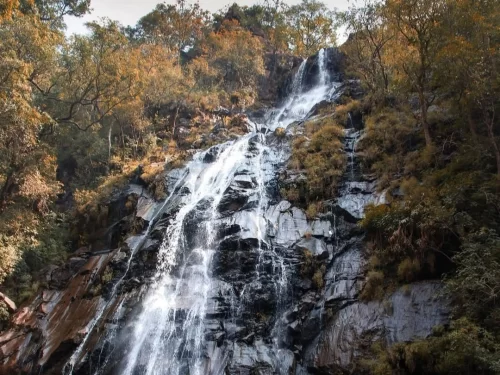
- Environment and surroundings: The waterfall is located deep inside the forested Satpura terrain near Pachmarhi, surrounded by dense vegetation, rocky cliffs, and narrow valleys. The area remains largely natural with no built-up viewpoints or landscaped spaces.
- Facilities and amenities: There are no toilets, food stalls, drinking water points, shelters, or seating areas near the falls. All basic needs must be arranged in Pachmarhi before entering the forest zone.
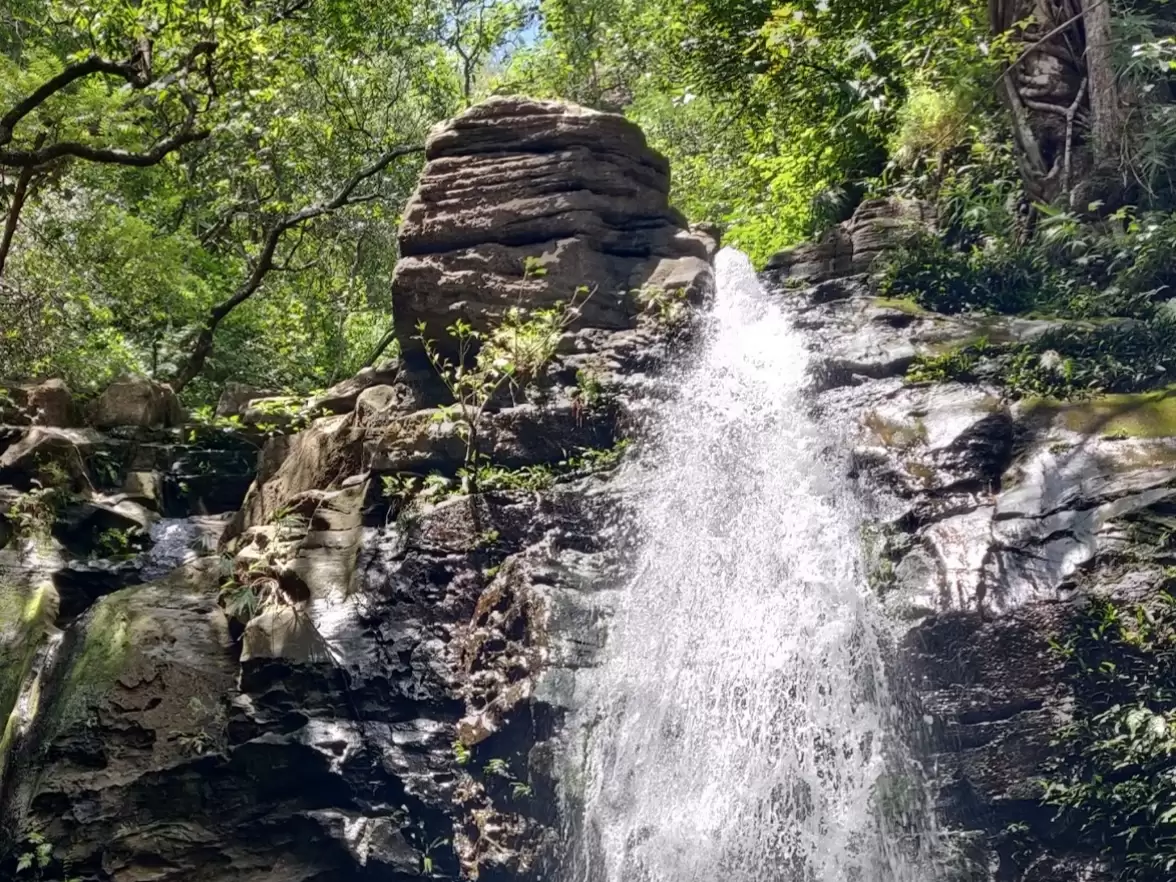
- Accessibility and movement: Access involves a forest vehicle drop point followed by a trek on uneven, rocky forest trails and steep descents. Movement near the waterfall requires careful footing due to slippery rocks and water spray.
- Typical visitor behavior and conditions: Visitors usually come in small groups with local guides or drivers, spend limited time near the base due to terrain difficulty, and return before evening as forest access hours are regulated. Mobile network coverage is unreliable inside the forest zone.
Important Visitor Information for Duchess Falls
- Crowd and weather notes: Visitor numbers increase during weekends, holidays, and peak tourist months in Pachmarhi. During monsoon season, the trail becomes muddy and slippery, and access may be restricted by forest authorities due to safety and wildlife movement.
- Peak and quiet visiting hours: Late morning to early afternoon sees the highest visitor movement due to regulated forest vehicle timings. Early hours have fewer visitors but access depends on forest gate opening schedules.
- Dress code: No formal dress code, but the terrain requires closed footwear and clothing suitable for forest trails and wet conditions near the waterfall.
- Safety notes and practical cautions: Steep drops, loose rocks, and slippery surfaces are present near the falls. Swimming is unsafe due to strong water flow and uneven rock beds. Entry and exit timings are controlled by forest authorities, and late return from the trail is not permitted.
Photography and Viewpoints at Duchess Falls
- Best viewpoints or angles for photography: The most practical photo angles are from the lower trail sections where the full vertical drop of the waterfall is visible through the forest opening, and from the rocky base area that allows framed shots with cliff walls and vegetation.
- Lighting conditions and time-of-day considerations: Midday and early afternoon provide clearer visibility inside the narrow valley due to direct overhead light. Early morning light is limited because of dense forest cover and steep surrounding rock faces.
- Rules or restrictions on photography: Photography is allowed for personal use, but forest entry rules apply. Drone usage is not permitted within the forest zone without official permission from forest authorities.
- Crowd or access factors that affect photography: The narrow trail and limited standing space near the base restrict tripod use and prolonged shooting. During peak tourist hours, small gathering points near the falls make clear framing difficult.