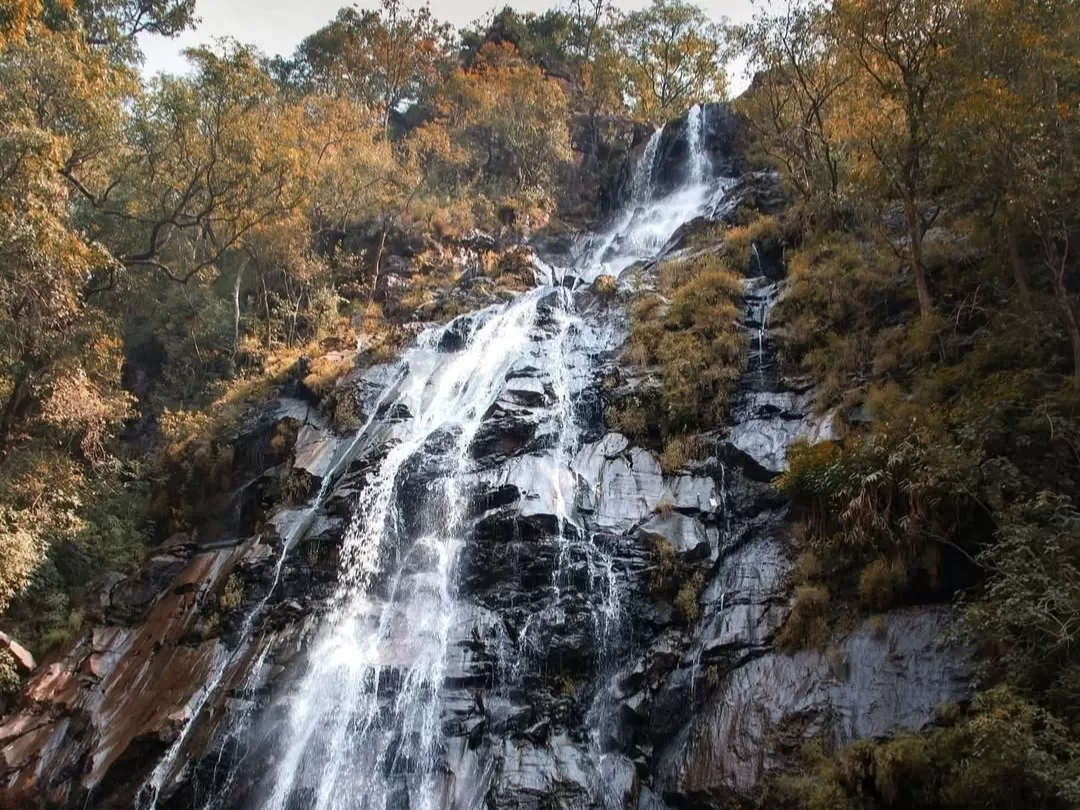
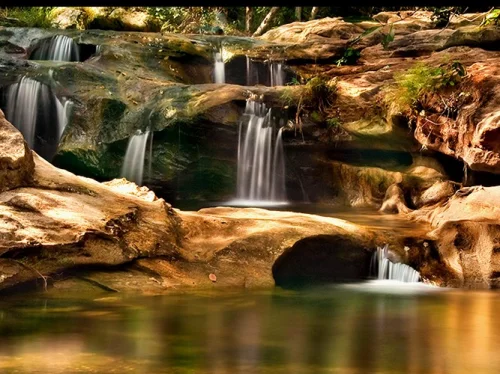
Bee Falls, Pachmarhi, Madhya Pradesh, India

Bee Falls , Pachmarhi
Tourists visit Bee Falls for its strong water flow, natural plunge pool, and forest trail access. It is one of the main water sources for Pachmarhi and a common stop on walking routes connecting Apsara Vihar and nearby viewpoints.

Quick Facts About Bee Falls

Quick Facts about Bee Falls

Entry Fee No official entry fee
Timings Daylight hours only; access varies with forest and local authority regulations
Altitude (m) Not officially listed; Pachmarhi plateau ranges approx. 1,000–1,100 m
Ideal Visit Duration 45–60 minutes
Best Time of Day Morning hours for safer trails and clearer views
Crowd Level Moderate to high during peak tourist season
Distance from City Centre (km) Approx. 3 km from Pachmarhi town
Walking Difficulty Moderate; steep stone steps and uneven forest paths
Parking Available Limited parking near the upper access point
Last Mile Access On foot via forest trail and stairway descent
Suitable for Kids Yes, with close supervision near water and steps
Suitable for Seniors Limited; steep steps and long descent can be difficult
Wheelchair Friendly No

Why Visit Bee Falls

Visitors come to Bee Falls to experience one of Pachmarhi’s strongest natural water flows, with a direct cascade into a deep natural pool and a forest trail approach that makes the visit physically engaging rather than roadside sightseeing.

The on-ground setting is cool and shaded by dense forest cover, with constant sound of flowing water, stone steps leading down to the base, and mist near the plunge area, especially during and after the monsoon season.

Bee Falls is distinct for its functional role as a water source for Pachmarhi and for its connected walking routes to nearby spots like Apsara Vihar, making it part of a continuous forest trail circuit rather than an isolated viewpoint.

History of Bee Falls

Bee Falls has long been a natural water source for the Pachmarhi plateau, with its stream historically used to supply drinking water to the hill station area.

The site developed as a known visitor location only after Pachmarhi emerged as a British-era hill station, when forest paths and access steps were created to reach the base of the waterfall.

There is no recorded religious or ceremonial association with Bee Falls; its significance is practical and geographic, linked to water supply and forest movement routes rather than cultural traditions.

Best Time to Visit Bee Falls

Bee Falls can be visited year-round, but water volume, trail conditions, and safety vary significantly by season, making certain months more suitable for a comfortable and safe visit.
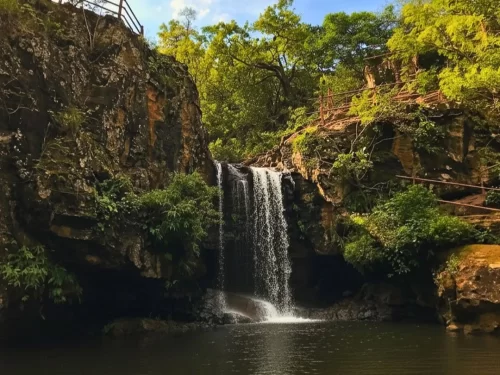
  • Ideal months: July to February, when the waterfall has steady flow and forest paths remain clearly accessible.
  • Best season conditions: Monsoon and post-monsoon months bring strong water flow and active streams, while winter months offer stable trails and safer movement around the plunge pool.
  • Periods to avoid: Peak monsoon days (heavy rainfall spells in July–August) due to slippery stone steps, strong currents, and restricted forest access during safety alerts.

How to Reach Bee Falls

  • Nearest airport: Raja Bhoj Airport, Bhopal (approx. 195 km). From Bhopal, travel by road via Pipariya or Hoshangabad to reach Pachmarhi.
  • Nearest railway station: Pipariya Railway Station (approx. 52 km), the closest major railhead with regular trains from Bhopal, Jabalpur, and Itarsi. Taxis and shared jeeps operate from Pipariya to Pachmarhi.
  • Road access and last-mile connectivity: Bee Falls is about 2 km from Pachmarhi town. The last stretch involves a forest walking trail and stone steps descending into the valley; vehicles are not permitted beyond the designated parking area. The path can be steep and slippery during monsoon months.

What to Expect When You Visit Bee Falls

  • Environment and surroundings: Bee Falls is set in a forested gorge with rocky cliffs, dense vegetation, and a continuous stream flow; the area remains shaded and humid, with wet rock surfaces near the waterfall.
  • Facilities and amenities: Basic facilities are limited to small stalls and rest points near the upper access area; there are no permanent toilets, changing rooms, or structured seating at the base of the falls.
  • Accessibility and movement: Access requires walking down a long flight of stone steps and uneven forest paths; the descent is manageable for most visitors, but the climb back is physically demanding, especially in heat or humidity.
  • Typical visitor behavior and conditions: Visitors often spend time near the water pool and rocks at the base; during peak seasons and weekends, the lower area becomes crowded, making movement and resting space limited.

Important Visitor Information for Bee Falls

  • Crowd and weather notes: Bee Falls becomes heavily crowded during weekends, holidays, and peak tourist seasons; during monsoon months, water flow increases significantly, and paths and rocks become slippery.
  • Peak and quiet visiting hours: Late mornings to early afternoons are the busiest due to tour groups and day visitors; early morning hours usually have fewer people and easier movement on the steps.
  • Dress code: No formal dress code, but sturdy footwear is necessary due to wet stone steps and uneven forest trails.
  • Safety notes and practical cautions: Rocks near the base are slippery, especially after rain; swimming in deep or fast-moving water is risky during high flow; mobile network coverage is unreliable, and medical facilities are not available on-site.

Photography and Viewpoints at Bee Falls

  • Best viewpoints and angles: The main lower platform near the base of the waterfall offers the clearest frontal view of the cascade; mid-level steps along the descent trail provide angled shots with forest framing, while the upper approach path gives partial top-down views during low water flow.
  • Lighting and time-of-day: Late morning to early afternoon provides the most balanced natural light as sunlight reaches the waterfall basin; early mornings are shaded by dense forest cover, creating low-light conditions with high contrast.
  • Rules and restrictions: Casual photography is permitted; there are no official restrictions for personal cameras or phones, but tripods are difficult to use due to narrow steps and uneven rocky surfaces.
  • Crowd and access factors: The viewing platform and base area become congested during peak hours, limiting clear compositions; monsoon-season water spray and mist reduce visibility and lens clarity, and slippery rocks restrict access to certain angles near the pool.

Near By Attraction

Apsara Vihar waterfall in Pachmarhi with serene pool, lush greenery and rocky cliffs, Madhya Pradesh tourism attraction Tourist Attraction

Apsara Vihar

Apsara Vihar is a natural forest pool and small waterfall area located near the Bee Falls zone in Pachmarhi.

Silver Fall in Pachmarhi with tall cascading waterfall amid lush Satpura hills, Madhya Pradesh nature tourism attraction Waterfall

Silver Fall

Silver Fall is a seasonal waterfall located in the Pachmarhi forest zone, accessible through forest trails and regulated entry routes.

Duchess Falls in Pachmarhi cascading through dense forest and rocky cliffs, Madhya Pradesh nature tourism attraction Waterfall

Duchess Falls

Duchess Falls is a seasonal waterfall in the Pachmarhi hill region, accessed by forest trails and rocky pathways.

Frequently Asked Questions About Bee Falls

Bee Falls is located in Pachmarhi hill station in Narmadapuram district, Madhya Pradesh. It is one of the most popular natural attractions within the Pachmarhi Biosphere Reserve area.
Bee Falls is generally open to visitors from morning until late afternoon, usually between 8 AM and 5 PM. Timings may vary depending on local administration and seasonal conditions in Pachmarhi, Madhya Pradesh.
There is a nominal entry fee to visit Bee Falls as it falls under protected forest area regulations. Additional charges may apply for vehicle entry or camera usage.
Visitors can reach Bee Falls by local taxi or private vehicle from Pachmarhi town, followed by a short trek down a stepped pathway. The nearest railway station is Pipariya, which connects to major cities in Madhya Pradesh.
Parking is available near the designated entry point of Bee Falls. From the parking area, visitors must walk down several steps to reach the waterfall.
The best time to visit Bee Falls is between October and March when the weather in Pachmarhi, Madhya Pradesh remains pleasant. The waterfall also looks impressive during the monsoon season.
Most travelers spend about 1 to 2 hours at Bee Falls, including time for walking, photography, and relaxing near the water. The climb back up may require additional time.
Bee Falls is suitable for family visits, but the steep steps may be challenging for elderly visitors. Comfortable footwear is recommended for safe movement.
Swimming is generally allowed at Bee Falls in designated safe areas, depending on water flow and official guidelines. Visitors should follow safety instructions and avoid deep sections.
Basic restroom facilities are available near the entry area of Bee Falls. Small shops and food stalls can be found in Pachmarhi town, Madhya Pradesh before reaching the site.

Loved this place ? Let’s Plan Your Madhya Pradesh Trip

Get customized Madhya Pradesh tour planning designed around safari seasons, road travel distances, heritage site exploration time, and comfortable pacing across regions. Whether you are visiting for wildlife safaris, temple architecture, historical monume

⚡ Quick Response | 💰 Free consultation | 🕒 24×7 expert support

×

Plan Your Trip