Quick Facts About Dhuandhar Falls
Dhuandhar Falls Quick Facts
| Entry Fee | No entry fee for viewing the falls; separate charges apply for ropeway rides and certain activities. |
| Timings | Open throughout the day; daylight hours are recommended for sightseeing and photography. |
| Altitude (m) | Approximately 410 m above sea level |
| Ideal Visit Duration | 1–2 hours |
| Best Time of Day | Morning or late afternoon for comfortable weather and better visibility of the waterfall |
| Crowd Level | Moderate to high; busiest on weekends, holidays, and during the post-monsoon season |
| Distance from City Centre (km) | Approximately 25 km from Jabalpur city centre |
| Walking Difficulty | Easy to Moderate; involves walking on paved pathways and steps near viewing areas |
| Parking Available | Yes, paid parking facilities are available near the main entrance area |
| Last Mile Access | Direct road access followed by a short walk to the designated viewpoints |
| Suitable for Kids | Yes, with supervision near railings and viewing platforms |
| Suitable for Seniors | Yes, though some viewpoints require walking and navigating steps |
| Wheelchair Friendly | Partially; some viewing areas are accessible, but steps and uneven terrain limit full access |
Why Visit Dhuandhar Falls Jabalpur
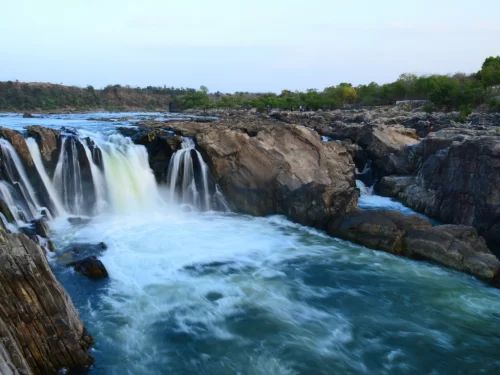
Visitors come to Dhuandhar Falls to witness the Narmada River plunging through a narrow rocky gorge, creating one of the most dramatic waterfall landscapes in central India.
The atmosphere is energetic and scenic, with the sound of rushing water, mist rising from the falls, and viewpoints that attract photographers and nature enthusiasts.
What makes Dhuandhar Falls distinct is the powerful flow of the Narmada, the smoke-like spray that gives the falls its name, and its proximity to the famous Marble Rocks area of Bhedaghat.
History of Dhuandhar Falls
Dhuandhar Falls is a natural waterfall formed by the Narmada River near Jabalpur in Madhya Pradesh. The name "Dhuandhar" translates to "smoke cascade," referring to the mist-like spray created when the river plunges through a narrow gorge and strikes the rocks below.
The falls are part of the Narmada Valley, a region that has held geographical and cultural importance for centuries. Located close to the famous Marble Rocks at Bhedaghat, Dhuandhar Falls has long been a notable landmark for travelers, pilgrims, and visitors exploring the natural heritage of the Narmada River.
Best Time to Visit Dhuandhar Falls
Dhuandhar Falls is best visited after the monsoon and during the winter months when the Narmada River carries substantial water flow, creating the waterfall's signature misty appearance while maintaining comfortable sightseeing conditions.
- Ideal months: October to March is the best time to visit Dhuandhar Falls, with strong water flow, pleasant weather, and excellent conditions for sightseeing, photography, and ropeway rides.
- Weather conditions during the best season: Temperatures are generally comfortable, visibility is good, and the waterfall remains powerful after the monsoon, producing the characteristic spray that gives Dhuandhar its name.
- Periods to avoid: April to June can be very hot during the day, making outdoor exploration less comfortable. During peak monsoon months, heavy rainfall and high river discharge may restrict access to certain viewpoints and boating activities in the nearby Marble Rocks area.
How to Reach Dhuandhar Falls
- Nearest Airport: Jabalpur Airport (Dumna Airport), located approximately 25 km from Dhuandhar Falls, is the nearest airport. Taxis and app-based cabs are available for direct travel to the falls.
- Nearest Railway Station: Jabalpur Junction Railway Station, about 20 km away, is the nearest major railway station with excellent connectivity to major cities across India.
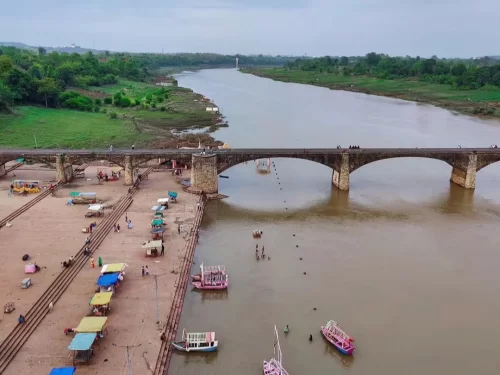
- Road Access and Last-Mile Connectivity: Dhuandhar Falls is situated at Bhedaghat on the Narmada River and is well connected by road from Jabalpur city. Visitors can reach the site by private vehicle, taxi, auto-rickshaw, or local bus. Parking facilities are available near the falls, followed by a short walk to the main viewing areas. During the monsoon season, water levels rise significantly and access to certain viewpoints or boating activities may be restricted for safety reasons.
What to Expect When You Visit Dhuandhar Falls
- Environment and Surroundings: Dhuandhar Falls is a powerful waterfall on the Narmada River near Jabalpur, where the river plunges through a narrow gorge, creating a misty spray that gives the falls their name. The area is surrounded by rocky landscapes and scenic river viewpoints.
- Facilities and Amenities: Visitors can find parking areas, viewing platforms, food stalls, souvenir shops, and basic tourist facilities near the main entrance. Availability of services may vary depending on the season and visitor volume.
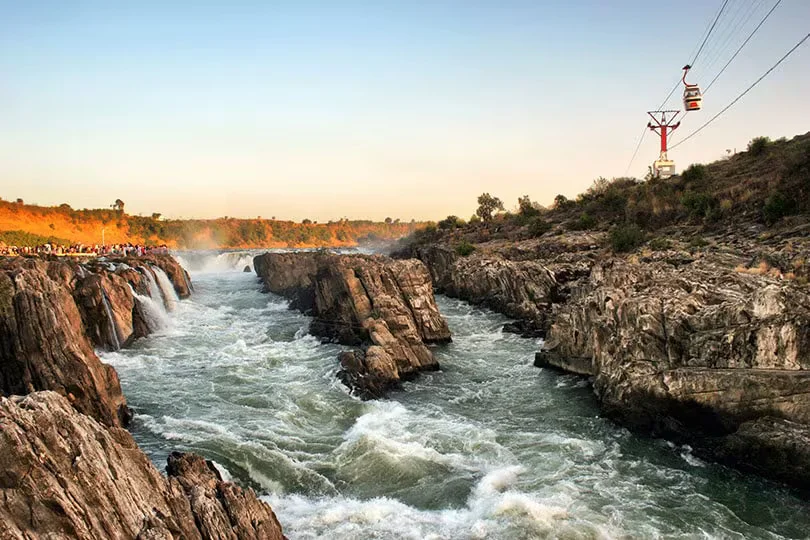
- Accessibility and Movement: The falls are easily accessible by road from Jabalpur. Exploring the viewpoints involves walking on paved pathways and steps, while the nearby ropeway offers an aerial perspective of the waterfall and gorge.
- Visitor Conditions: The site attracts a large number of tourists, especially during weekends, holidays, and the monsoon season when water flow is at its strongest. Viewing areas can become crowded, and visitors should exercise caution near wet surfaces and designated safety barriers.
Important Visitor Information for Dhuandhar Falls
- Dhuandhar Falls attracts the highest number of visitors during weekends, public holidays, and the peak tourist season from October to March.
- Early mornings generally offer a quieter experience and better opportunities to enjoy the views, while afternoons and evenings tend to be busier.
- Water flow increases significantly during and immediately after the monsoon season, creating spectacular views but also resulting in slippery conditions near viewing areas.
- No specific dress code applies, though comfortable clothing and sturdy footwear are recommended for walking on uneven paths and observation points.
- Visitors should stay within designated viewing zones, avoid crossing safety barriers, and exercise caution near wet rocks, railings, and river edges.
Photography and Viewpoints at Dhuandhar Falls
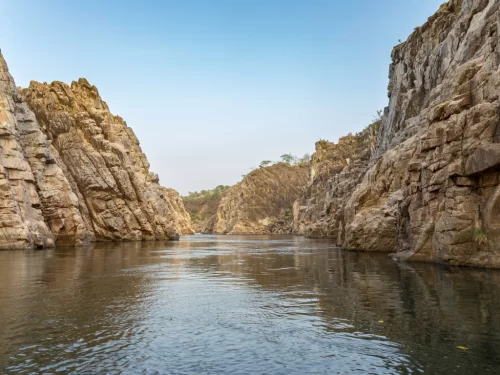
- The best photographs are captured from the designated viewing platforms overlooking the falls, where the Narmada River plunges through the marble gorge and creates the characteristic mist that gives Dhuandhar Falls its name.
- Early morning offers softer light and fewer visitors, while late afternoon provides favorable illumination on the cascading water and surrounding marble rock formations.
- The viewpoints near the ropeway terminals and riverside observation areas provide wide-angle perspectives of the waterfall, gorge, and the turbulent river below.
- During the monsoon season, the falls are at their most powerful and photogenic, although heavy spray and mist can affect visibility and camera equipment.
- Photography is generally permitted from public viewing areas, but visitors should remain within designated safety zones and avoid crossing barriers near the gorge edge.
- Weekends, holidays, and peak tourist seasons can lead to crowded viewpoints, making weekday mornings preferable for unobstructed landscape photography.
- Drone operations may be restricted due to safety concerns and local regulations around the waterfall and surrounding tourist zone; visitors should verify current permissions before flying.