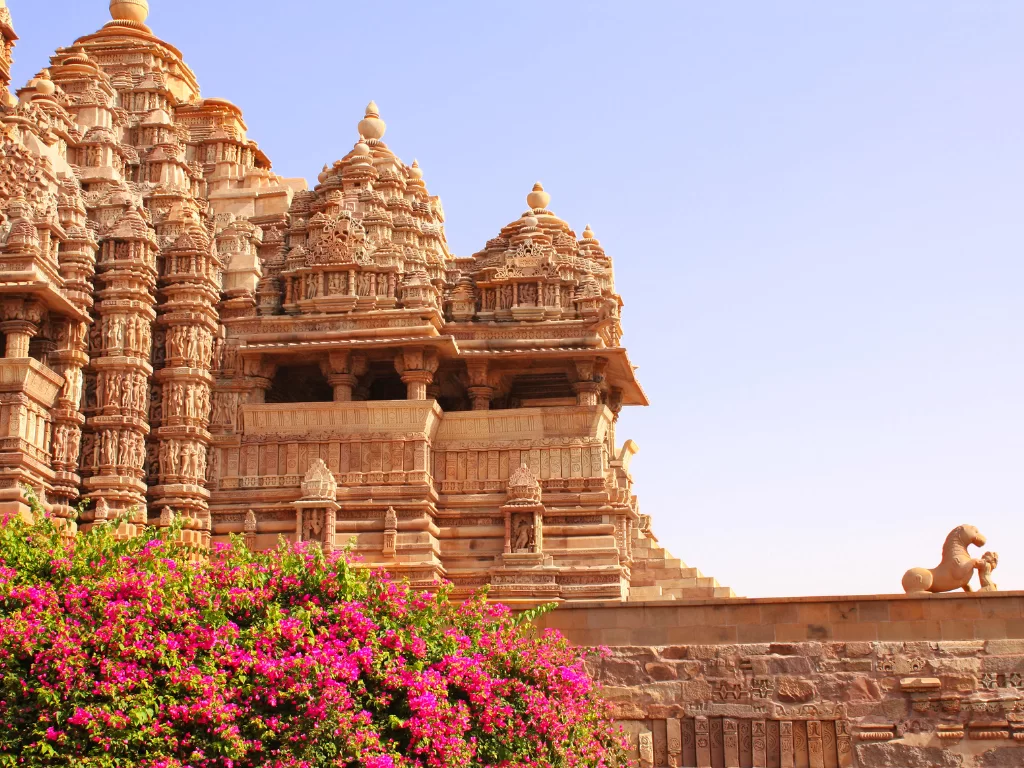
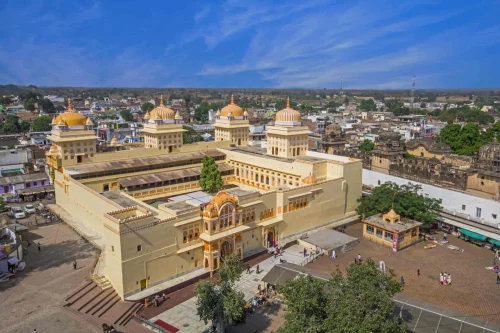
Devi Jagdambi Temple in Khajuraho, Madhya Pradesh, India

Devi Jagdambi Temple , Khajuraho
Tourists visit Devi Jagdambi Temple for its detailed sandstone sculpture and its location inside Khajuraho’s main UNESCO-listed temple complex. It is often visited alongside Kandariya Mahadev Temple because both are close together and share the same Chandela-era architectural style.

Quick Facts About Devi Jagdambi Temple

Devi Jagdambi Temple Khajuraho – Quick Facts

Entry Fee Included in the ASI combined ticket for the Western Group of Temples: 40 (Indian citizens), 600 (foreign nationals); free for children below 15 years. Fees are subject to revision.
Timings 6:00 AM – 6:00 PM (daily; closing time can vary slightly by season).
Altitude (m) Approx. 283 m above sea level (Khajuraho).
Ideal Visit Duration 20–40 minutes (typically visited as part of the Western Group complex).
Best Time of Day Early morning for fewer visitors and better light on carvings.
Crowd Level Moderate to high during October–March; busiest on weekends and holidays.
Distance from City Centre (km) Approx. 1 km from Khajuraho town centre.
Walking Difficulty Easy; flat paved paths inside the Western Group complex.
Parking Available Yes; paid parking is available near the Western Group entrance.
Last Mile Access Motorable road to the Western Group entrance; short walk inside the complex.
Suitable for Kids Yes.
Suitable for Seniors Yes; mostly level walking with optional steps up to temple platforms.
Wheelchair Friendly Partially; pathways are accessible, but the temple platform has steps and no guaranteed ramp.

Why Visit Devi Jagdambi Temple, Khajuraho

Visitors come to Devi Jagdambi Temple, Khajuraho for its refined stone carvings and the way it showcases the sculptural detail Khajuraho is known for without the scale of the largest shrines. It’s a key stop inside the Western Group, especially for travelers who want to compare temple styles side by side within a short walking loop.

On the ground, the atmosphere is focused and museum-like, with most people circling slowly to study the exterior panels before stepping into the darker inner space. The temple sits within the landscaped Western Group complex, so the visit feels structured—clear paths, open viewing angles, and frequent moments where guides point out specific figures in the stonework.

What makes Devi Jagdambi Temple, Khajuraho distinct for travelers is how well it rewards close viewing: the carvings are crisp, the composition is dense, and the proportions make it easy to see details without needing distance. For many visitors, it becomes the temple where Khajuraho’s craftsmanship feels most approachable, because you can read the sculpture at eye level in a single slow circuit.

History of Devi Jagdambi Temple Khajuraho

The Devi Jagdambi Temple in Khajuraho is a Chandela-period monument built around the 11th century CE, during the peak phase of temple construction in the region. Despite its current name, the temple is widely understood by historians to have been originally dedicated to Vishnu, based on its architectural form and iconographic program.

The name “Jagdambi,” associated with the goddess, reflects a later devotional identification that became established after the temple’s original medieval context. Like other major Khajuraho temples, it is built in the Nagara style and is known for its refined sculptural work, including carved bands of deities, celestial figures, and narrative scenes that represent the mature artistic tradition of Chandela patronage.

For visitors, Devi Jagdambi Temple is valued for the clarity of its architecture and the high quality of its carvings, making it one of the most studied temples within the Western Group at Khajuraho and a key stop for understanding the site’s 11th-century artistic development.

Best Time to Visit Devi Jagdambi Temple, Khajuraho

Devi Jagdambi Temple in Khajuraho is most enjoyable between October and March, when the weather is pleasant for exploring its intricate sandstone sculptures and walking comfortably within the Western Group of Temples complex.

  • Ideal months: October to March, especially November to February for the most comfortable sightseeing conditions.
  • Weather during the best season: Mild daytime temperatures with cool mornings and low humidity, making it ideal to observe the temple’s exterior carvings in natural light and explore nearby monuments without heat fatigue.
  • Periods to avoid (and why): April to June due to intense heat in the Bundelkhand region that makes open-site exploration tiring, and July to September when monsoon showers and humidity can disrupt outdoor plans and reduce overall comfort.

How to Reach Devi Jagdambi Temple, Khajuraho, Madhya Pradesh

  • Nearest Airport: The closest airport is Khajuraho Airport (HJR), located approximately 4–5 km from Devi Jagdambi Temple. The airport operates regular flights from Delhi and limited seasonal routes from select cities. Taxis and auto-rickshaws are available outside the terminal, and the drive to the Western Group of Temples complex takes about 10–15 minutes on well-maintained town roads.
  • Nearest Railway Station: Khajuraho Railway Station is about 6 km from the temple and has direct rail connectivity with Delhi, Kanpur, Jhansi, and Varanasi. For wider train options, Mahoba Junction (approx. 63 km) is an alternative railhead. From either station, taxis and auto-rickshaws are the most convenient means of reaching the Western Group temple complex, typically within 15–20 minutes from Khajuraho station.
  • By Road & Last-Mile Connectivity: Devi Jagdambi Temple is situated within the Western Group of Khajuraho Temples, the main UNESCO World Heritage complex located about 1 km from Khajuraho town center. Khajuraho is connected by road to Satna (approx. 115 km), Panna (approx. 45 km), and Jhansi (approx. 175 km) via NH39 and state highways. Regular state-run and private buses operate to Khajuraho bus stand. From there, visitors can reach the temple by auto-rickshaw, taxi, bicycle rental, or on foot if staying nearby. Roads remain accessible year-round, though summer heat (April–June) can be intense during midday visits, and parking near the Western Group entrance can be limited during peak tourist season (October–March).

What to Expect When You Visit Devi Jagdambi Temple, Khajuraho

Devi Jagdambi Temple is part of the Western Group of Temples in Khajuraho, Madhya Pradesh, a protected UNESCO World Heritage Site complex managed by the Archaeological Survey of India (ASI). The temple stands on a raised platform within a landscaped compound and is visited primarily for its detailed stone carvings and Nagara-style architecture.

  • Environment and surroundings: Expect a well-maintained lawn setting with paved walkways and open views of nearby temples in the Western Group. The temple exterior is fully exposed to sun, and shade is limited outside early morning and late afternoon. Surfaces are stone, and the area can feel hot underfoot during peak summer months.
  • Facilities and amenities: Ticketing, security checks, and basic visitor facilities (such as restrooms) are located at the main entrance to the Western Group complex, not directly at the temple platform. There are no food stalls or shops inside the protected zone. Drinking water availability may be limited, so carrying your own bottle is advisable.
  • Accessibility and movement: The temple sits on a raised plinth accessed by a flight of stone steps. Visitors can walk freely around the exterior to view carvings, but entry into the inner sanctum involves additional steps. Wheelchair access is limited due to the elevated platform and lack of ramps. Pathways within the complex are generally flat and manageable.
  • Typical visitor behavior and conditions: Visitors typically spend time observing exterior sculptures and taking photographs. Guided tours are common, and small groups often gather near key carvings. The Western Group can become busy during peak tourist season (October to March) and on weekends, though visitor flow is generally steady rather than congested. As a heritage monument, it functions primarily as a historical site rather than an active temple with regular worship rituals.

A visit to Devi Jagdambi Temple is usually part of a broader exploration of the Western Group, with most travelers spending 20–40 minutes here depending on interest in architectural details and sculpture.

Important Visitor Information for Devi Jagdambi Temple, Khajuraho

  • Crowd and weather notes: Devi Jagdambi Temple is inside the Western Group of Temples complex in Khajuraho, so visitor numbers closely follow the main Khajuraho sightseeing flow. Crowds are heaviest during the peak tourist season (October to March) and around midday when multiple guided groups arrive together. In summer, the temple stone and open courtyards heat up quickly under direct sun.
  • Peak and quiet visiting hours: The busiest time is usually late morning to early afternoon. For a calmer visit and better viewing of carvings without people clustering around the plinth, arrive close to opening time or later in the afternoon.
  • Dress code: There is no strict dress code enforced within the ASI-managed complex, but the temple is a religious site and modest clothing is advisable. Footwear must be removed if you step into inner shrine areas.
  • Safety notes and practical cautions: The temple platform includes steep steps and worn stone edges. After rain or early morning dew, the stone can be slippery. The interiors are dim compared to the bright courtyard, so take a moment for your eyes to adjust before stepping further inside.

Photography & Viewpoints at Devi Jagdambi Temple, Khajuraho

Devi Jagdambi Temple in Khajuraho is part of the Western Group of Temples and is one of the most photographed structures in the complex due to its rich exterior sculpture bands and strong, compact profile. Since it sits in an open, regulated courtyard with steady visitor movement, the best photos come from using the temple’s corners and the outer circumambulatory path to capture carvings without crowd interference.
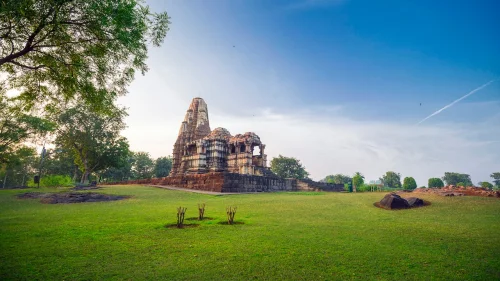
  • Front façade viewpoint: Stand on the main approach line to photograph the entrance and the rising shikhara together. This is the cleanest angle for showing the temple’s overall proportions within the Western Group setting.
  • Corner three-quarter composition: Move to the front-left or front-right corner to capture two carved walls at once. This angle is especially effective for showing the depth of the sculpture bands and the temple’s stepped architecture.
  • Outer wall sculpture close-ups: Along the circumambulatory path, shoot slightly along the wall (not straight-on) to show the relief depth of figures and decorative panels. The carvings read best when the light hits from the side.
  • Shikhara upward frame: From a few steps back in the courtyard, tilt upward to include the full vertical rise of the shikhara. A clear sky helps separate the silhouette from the background, especially outside peak haze periods.
  • Time-of-day lighting: Early morning and late afternoon generally produce the most readable stone texture and softer shadows on the carvings. Midday light can flatten details and increase contrast under projecting ledges.
  • Crowd and access factors: Visitor density is highest in the late morning and afternoon when tour groups arrive. Photography around the entrance is easiest near opening time, before groups gather at the same viewing points.
  • Photography rules: Photography is typically allowed throughout the Western Group complex in open areas. Flash is best avoided near detailed stone surfaces, and drones or commercial filming require official permission through the site authorities.

Near By Attraction

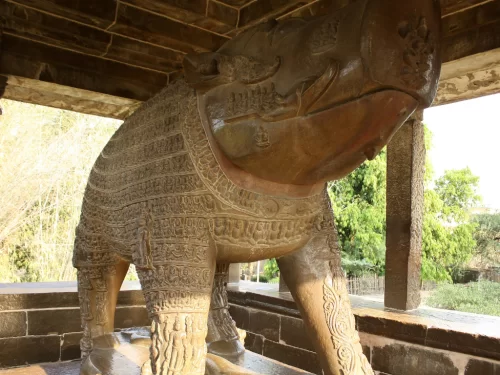
Varaha Temple Khajuraho monolithic boar Vishnu avatar sculpture, 2.6m sandstone carving 674 deities Chandela dynasty 900-925 AD Western Group UNESCO site, ideal Madhya Pradesh heritage tour package. Temple

Varaha Temple Khajuraho

Vishwanath Temple is a 10th-century Hindu temple dedicated to Lord Shiva, located in the Western Group of Temples at Khajuraho.

Asri Adinath Digambar Jain Mandir in Madhya Pradesh with intricately carved stone shikhara surrounded by lush trees, a serene heritage temple often featured in Madhya Pradesh tour packages. Temple

Sri Adinath Digambar Jain Mandir

Sri Adinath Digambar Jain Mandir in Khajuraho is a historic Jain temple dedicated to Lord Adinath.

Lakshmana Temple Khajuraho sunset golden hour Western Group UNESCO site, Nagara-style Vaikuntha Vishnu shrine intricate carvings Chandela dynasty 930-950 AD, perfect Madhya Pradesh heritage temple tour package. Temple

Lakshmana Temple

Lakshmana Temple in Khajuraho is one of the earliest and most magnificent temples of the Western Group.

Frequently Asked Questions About Devi Jagdambi Temple

Devi Jagdambi Temple is located within the Western Group of Temples in Khajuraho, Madhya Pradesh. It stands inside the main heritage complex and is easily accessible by road.
Devi Jagdambi Temple is generally open from sunrise to sunset as part of the Western Group of Temples. Daytime visits are recommended for clear views of the carvings and structure.
There is a combined entry fee for the Western Group of Temples which includes access to Devi Jagdambi Temple. Ticket prices vary for Indian and foreign visitors.
Visitors can reach Devi Jagdambi Temple by taxi, auto rickshaw, or private vehicle within Khajuraho, Madhya Pradesh. The nearest railway station and airport are located in Khajuraho.
Parking is available near the Western Group of Temples complex close to Devi Jagdambi Temple. Parking charges may apply depending on vehicle type.
The best time to visit Devi Jagdambi Temple is between October and March when the weather in Khajuraho, Madhya Pradesh is pleasant. Morning hours offer comfortable temperatures and better lighting for photography.
Most travelers spend about 20 to 30 minutes exploring Devi Jagdambi Temple while touring the Western Group of Temples. Additional time may be needed for photography and detailed observation.
Devi Jagdambi Temple is suitable for family visits and is part of a well maintained heritage complex. The walking paths are manageable for children and senior citizens.
Photography is generally allowed at Devi Jagdambi Temple for personal use. Professional equipment may require additional permission from authorities.
Restroom facilities are available within the Western Group of Temples complex near Devi Jagdambi Temple. Several restaurants and cafes are located nearby in Khajuraho town.

Loved this place ? Let’s Plan Your Madhya Pradesh Trip

Get customized Madhya Pradesh tour planning designed around safari seasons, road travel distances, heritage site exploration time, and comfortable pacing across regions. Whether you are visiting for wildlife safaris, temple architecture, historical monume

⚡ Quick Response | 💰 Free consultation | 🕒 24×7 expert support

×

Plan Your Trip