+91 9910402252
admin@chalbanjare.com


| Entry Fee | No entry fee free to visit the temple and surroundings |
|---|---|
| Timings | Open daily generally from 6 00 AM to 6 30 PM for visitors |
| Altitude (m) | Located at about 380 meters above sea level near Bhedaghat in Jabalpur district |
| Ideal Visit Duration | About one to two hours to explore the temple site and views |
| Best Time of Day | Early morning or late afternoon for cooler weather and scenic views |
| Crowd Level | Moderate crowds with more visitors on weekends and holidays |
| Distance from City Centre (km) | About thirty five kilometers from Jabalpur city centre and railway station |
| Walking Difficulty | Low to moderate walking on stone paths and uneven ground around the temple |
| Parking Available | Yes parking available near the Bhedaghat area before walking to the temple site |
| Last Mile Access | Taxi auto rickshaw and local transport available to Bhedaghat followed by a short walk to the temple |
| Suitable for Kids | Yes suitable for children with supervision around uneven temple grounds |
| Suitable for Seniors | Yes generally suitable though some uneven ground may require care |
| Wheelchair Friendly | No not wheelchair friendly due to uneven surfaces and stone steps |
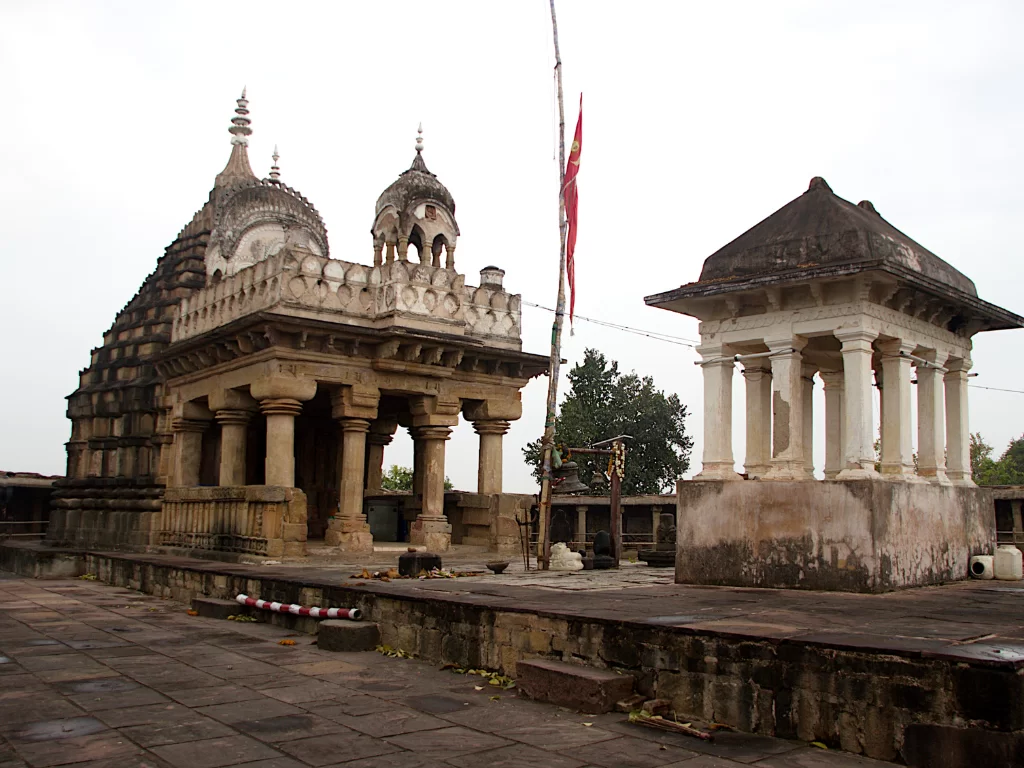
Atmosphere at Chausath Yogini Temple in Bhedaghat is mystical, elevated, and spiritually resonant, set atop a hill overlooking the dramatic marble landscapes near the Narmada River. The circular open-air structure, exposed to the sky, creates a powerful sense of connection between nature and divinity. The climb to the temple adds to the experience, rewarding visitors with panoramic views of the surrounding valleys and river basin, making the setting both sacred and scenic.
What makes Chausath Yogini Temple special is its rare circular architecture dedicated to the sixty-four Yoginis, associated with tantric traditions of medieval India. Believed to date back to the 10th century under the Kalachuri dynasty, the temple stands as one of the few surviving Yogini temples in India. At the center of the complex lies a shrine dedicated to Lord Shiva and Goddess Parvati, symbolizing the integration of Shakti and Shiva worship. The temple’s historical depth, architectural uniqueness, and religious significance make it an important heritage landmark in central India.
Beyond its spiritual importance, the temple offers exceptional viewpoints and photographic opportunities, especially during sunrise and sunset when the surrounding marble rocks and river valley glow under changing light. It attracts pilgrims, history enthusiasts, architecture scholars, and travelers exploring Bhedaghat’s natural wonders. The blend of mythology, ancient craftsmanship, and breathtaking scenery ensures a memorable and culturally enriching visit.
Chausath Yogini Temple at Bhedaghat near Jabalpur is an ancient 10th-century temple dedicated to the sixty-four Yoginis, powerful manifestations of the Divine Feminine in Tantric traditions. The temple is believed to have been constructed during the Kalachuri dynasty, which ruled parts of central India and contributed significantly to temple architecture in the region. It stands atop a hill overlooking the Narmada River, offering both strategic placement and spiritual elevation.
Architecturally, the temple follows a circular plan, a distinctive feature of Yogini temples across India. The open-air courtyard is surrounded by small shrines that once housed the idols of the sixty-four Yoginis, while a central shrine is dedicated to Lord Shiva and Goddess Parvati. The use of local stone and the simplicity of carvings reflect early medieval temple-building styles focused more on sacred geometry than ornate detailing.
Over centuries, the temple has remained an important spiritual site associated with esoteric worship and Tantric practices. Today, it stands as one of the few surviving Yogini temples in India, drawing pilgrims, historians, and architecture enthusiasts who seek to understand its historical, architectural, and spiritual significance.
The best time to visit Chausath Yogini Temple in Bhedaghat, Jabalpur depends on weather comfort, as the temple is located on a hilltop and requires climbing a significant number of steps. Choosing the right season ensures a comfortable ascent and clear panoramic views of the Narmada River and surrounding marble rocks.
October to March is considered the most ideal period to visit. During these months, the weather remains cool and pleasant, making it comfortable to climb the steps and explore the circular temple complex without heat discomfort. Clear skies during winter also enhance photography and scenic views.
Summer months from April to June can be quite hot in Jabalpur, especially during midday. Early morning or late afternoon visits are strongly recommended during this season to avoid peak temperatures while enjoying the spiritual and architectural beauty of the site.
Monsoon season from July to September brings refreshing greenery to the surrounding hills and increases the water flow of the Narmada River nearby. While the landscape becomes more scenic, steps may become slippery due to rain, so visitors should exercise caution.
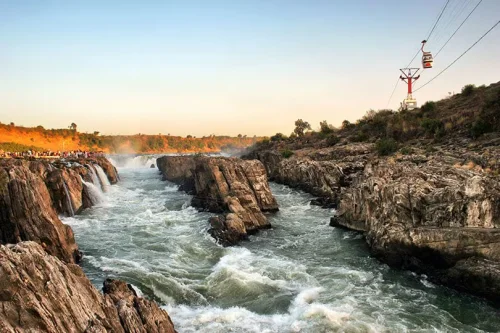 Waterfall
Dhuandhar Falls is a prominent waterfall on the Narmada River located near Bhedaghat in Jabalpur, Madhya Pradesh.
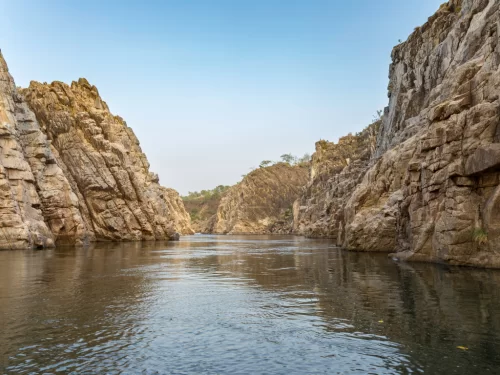 Tourist Attraction
Marble Rocks is a natural gorge of white and multicolored marble cliffs along the Narmada River at Bhedaghat.
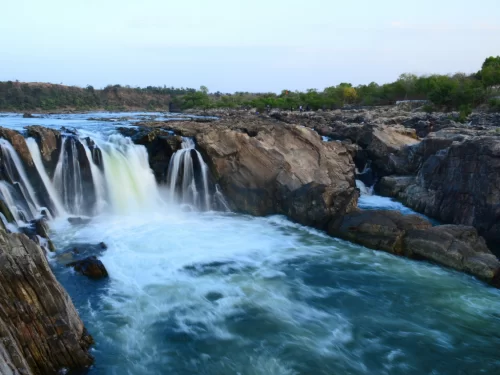 Waterfall
Dhuandhar Waterfall is a major waterfall on the Narmada River, famous for its misty spray and loud roar.
Get customized Madhya Pradesh tour planning designed around safari seasons, road travel distances, heritage site exploration time, and comfortable pacing across regions. Whether you are visiting for wildlife safaris, temple architecture, historical monume
⚡ Quick Response | 💰 Free consultation | 🕒 24×7 expert support

