Quick Facts About Chauragarh Temple & Fort
Quick Facts about Chauragarh Temple & Fort
| Entry Fee | No entry fee |
| Timings | Generally accessible from early morning to evening; exact timings vary during festivals and special days |
| Altitude (m) | Approx. 1,326 m above sea level |
| Ideal Visit Duration | 2–3 hours (including climb and descent) |
| Best Time of Day | Early morning |
| Crowd Level | Moderate; extremely high on Mahashivratri, Mondays, and during Shravan month |
| Distance from City Centre (km) | Approx. 4 km from Pachmarhi town |
| Walking Difficulty | High (steep climb of approx. 1,300 stone steps) |
| Parking Available | Limited parking at the base area |
| Last Mile Access | Stone staircase only; no vehicle access beyond base |
| Suitable for Kids | No (physically demanding ascent) |
| Suitable for Seniors | No (steep steps, long climb, limited resting points) |
| Wheelchair Friendly | No |
Why Visit Chauragarh Temple & Fort
Visitors come to Chauragarh Temple & Fort for the steep hill climb of around 1,300 stone steps leading to a Shiva temple at the summit and for the open views across the Pachmarhi and Satpura hill landscape.
The on-ground atmosphere is physically demanding and quiet, with a long staircase route through forested slopes and rocky terrain. At the top, the area is open, windy, and less crowded outside religious days, with limited built structures and wide natural visibility.
What makes Chauragarh Temple & Fort distinct is the combination of a strenuous foot ascent, a functioning hilltop religious site, and one of the highest accessible viewpoints around Pachmarhi, making it both a pilgrimage climb and a physical trekking experience.
History of Chauragarh Temple & Fort
Chauragarh Temple is primarily known as a long-standing religious site dedicated to Lord Shiva, established through continuous local worship traditions rather than formal temple construction history. The hilltop shrine developed as a pilgrimage destination due to its location on one of the highest peaks in the Pachmarhi region.
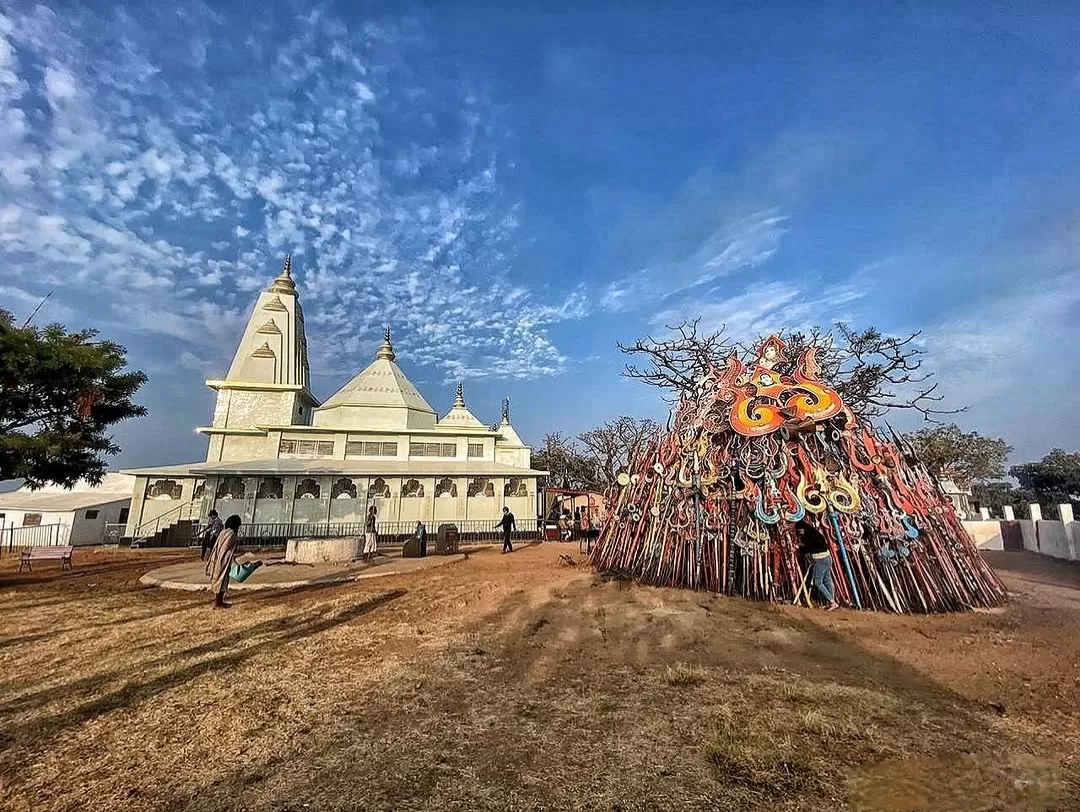
The site holds cultural significance for devotees who traditionally carry tridents (trishuls) as offerings during Mahashivratri and the Shravan month, a practice that continues today. The “fort” element refers to the natural hilltop setting and defensive terrain rather than a documented, structured fortification history.
Best Time to Visit Chauragarh Temple & Fort
Chauragarh Temple & Fort can be visited in most seasons, but weather conditions and physical exertion from the steep climb make timing important for safety and comfort.
- Ideal months: October to February provide the most manageable conditions for the climb, with cooler temperatures and clearer visibility. July to September is suitable for experienced walkers who are comfortable with wet steps and forest terrain.
- Weather conditions during the best season: Winter months have cool mornings and mild daytime temperatures, making the long staircase climb less exhausting. Post-monsoon months offer clear views and stable footing.
- Periods to avoid: April to June can be physically difficult due to high temperatures and direct sun exposure on open sections of the steps. Monsoon days with heavy rain should be avoided due to slippery stone steps and reduced safety on steep sections.
How to Reach Chauragarh Temple & Fort
- Nearest airport: Raja Bhoj Airport, Bhopal (approx. 210 km away) is the nearest major airport. From Bhopal, travel continues by road to Pachmarhi via Narmadapuram (Hoshangabad) and Pipariya.
- Nearest railway station: Pipariya Railway Station (approx. 52 km from the base of Chauragarh) is the closest major railhead on the Itarsi–Jabalpur railway line. Taxis and shared vehicles operate from Pipariya to Pachmarhi.
- Road access and last-mile connectivity: Chauragarh Temple & Fort is located about 4 km from Pachmarhi town. Vehicles can reach only up to the base area. The final access is entirely on foot via a steep stone staircase of approximately 1,300 steps. During monsoon season, steps can be slippery, and movement may be slow due to wet surfaces and crowd control on religious days.
What to Expect When You Visit Chauragarh Temple & Fort
- Environment and surroundings: The route to Chauragarh Temple & Fort runs through forested hill slopes, rocky terrain, and exposed open sections. The summit area is open and windy, with wide views over the Pachmarhi and Satpura landscape. Natural shade is limited on the upper sections of the climb.
- Facilities and amenities: Facilities are minimal. There are no restrooms, food stalls, or drinking water points along the staircase or at the summit. Basic services are available only in Pachmarhi town. The site has no developed visitor infrastructure.
- Accessibility and movement: Access is entirely on foot via a steep stone staircase of approximately 1,300 steps. Movement is slow due to the gradient, step height, and length of the climb. There is no vehicle access, ropeway, or alternate path. Wet conditions during monsoon make steps slippery.
- Typical visitor behavior and conditions: Visitors include pilgrims carrying offerings and tridents, as well as trekkers and viewpoint visitors. Foot traffic increases significantly on Mondays, Mahashivratri, and during Shravan month. Crowd density can slow movement on the staircase and limit resting space at the summit.
Important Visitor Information for Chauragarh Temple & Fort
- Crowd and weather notes: Chauragarh Temple & Fort sees the highest crowd levels on Mahashivratri, Mondays, and during the Shravan month. Weather conditions directly affect the climb, with intense heat in summer and slippery stone steps during the monsoon.
- Peak and quiet visiting hours: Early morning hours are quieter and safer for climbing due to lower temperatures and lighter foot traffic. Late mornings to afternoons, especially on religious days, experience heavier crowding on the staircase and at the summit.
- Dress code: No formal dress code is enforced, but modest clothing is expected at the temple. Footwear must be removed at the shrine area at the top.
- Safety notes and practical cautions: The staircase is steep with no protective railings along many sections. Dehydration and exhaustion are common risks due to the long climb and lack of water points. Wet steps during rain significantly increase slip risk, and medical facilities are not available on the route or at the summit.
Photography and Viewpoints at Chauragarh Temple & Fort
- Best viewpoints and angles: The summit area provides open panoramic views of the Pachmarhi plateau, Satpura hills, and surrounding forest valleys. Lower and mid sections of the staircase offer elevated angles of the forested slopes and the long stone stairway ascending the hill.
- Lighting conditions and time-of-day: Early morning offers clear visibility and balanced natural light at the summit, with minimal haze. Midday light is harsh on exposed upper sections of the climb, while late afternoon light creates long shadows but reduced visibility across distant hills.
- Rules and restrictions on photography: Photography is permitted along the staircase and at open summit areas. Photography near the temple shrine may be restricted during ???? times, and visitors are expected to follow instructions from temple authorities.
- Crowd and access factors: The narrow staircase limits stopping space for photography. On Mahashivratri, Mondays, and during Shravan month, heavy pilgrim movement restricts access to clear viewpoints and makes it difficult to pause for photos on both the steps and summit.