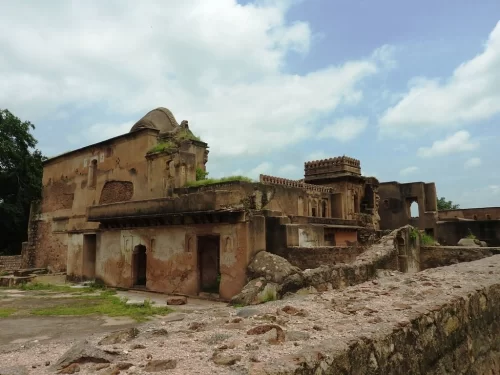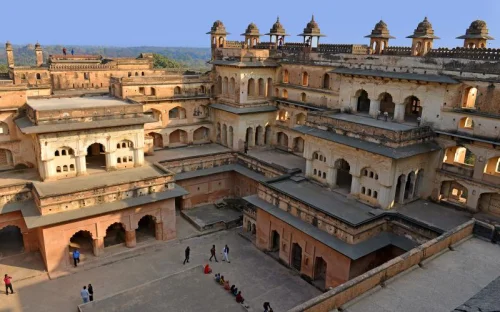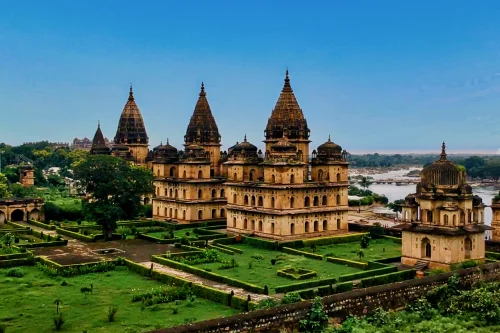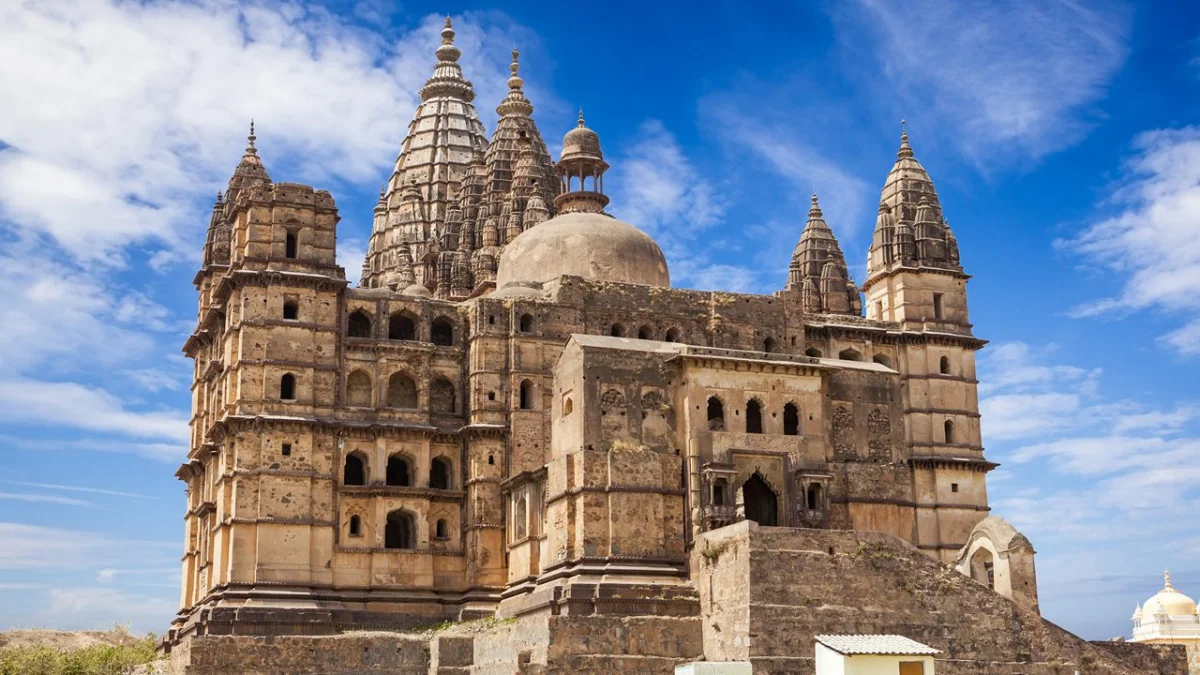
Quick Facts About Chaturbhuj Temple Orchha
Chaturbhuj Temple Quick Facts
| Entry Fee | No entry fee |
| Timings | Generally open daily from sunrise to sunset |
| Altitude (m) | Approximately 230 m above sea level |
| Ideal Visit Duration | 30–60 minutes |
| Best Time of Day | Morning or late afternoon for comfortable sightseeing and photography |
| Crowd Level | Low to moderate; generally less crowded than Ram Raja Temple |
| Distance from City Centre (km) | Approximately 1 km from Orchha town centre |
| Walking Difficulty | Moderate; access involves climbing a steep flight of temple steps |
| Parking Available | Limited parking available near the temple complex |
| Last Mile Access | Direct road access followed by a short walk and stair climb to the temple entrance |
| Suitable for Kids | Yes, with supervision on stairways |
| Suitable for Seniors | Suitable for active seniors comfortable with climbing steps |
| Wheelchair Friendly | No; access requires climbing multiple steps |
Why Visit Chaturbhuj Temple Orchha
Visitors come to Chaturbhuj Temple to admire its monumental architecture, towering spires, and one of the most distinctive temple structures in Orchha.
The atmosphere is peaceful and spacious, with visitors exploring the temple’s high interiors, elevated galleries, and impressive viewpoints overlooking the historic town.
What makes Chaturbhuj Temple distinct is its unique blend of temple and palace-style architecture, soaring vertical design, and panoramic views that make it one of Orchha’s most recognizable landmarks.
History of Chaturbhuj Temple
Chaturbhuj Temple is a historic Hindu temple located in Orchha, Madhya Pradesh, and was built in the late 16th century by the Bundela rulers. The temple was originally intended to house an idol of Lord Rama brought from Ayodhya, but the idol was ultimately installed at the nearby Ram Raja Temple, giving Chaturbhuj Temple its unique place in Orchha's history.
Dedicated to Lord Vishnu in his four-armed form, the temple is renowned for its striking blend of temple and palace architecture. Its towering spires, ????? halls, and elevated structure make it one of the most distinctive monuments in Orchha.
Today, Chaturbhuj Temple stands as an important symbol of the Bundela dynasty's architectural vision and remains one of the most prominent heritage landmarks in the historic town of Orchha.
Best Time to Visit Chaturbhuj Temple Orchha
Chaturbhuj Temple is best visited from October to March when the weather in Orchha is pleasant for exploring its towering architecture, climbing to elevated viewpoints, and visiting the town’s other historic monuments.
- Ideal months: October to March is the most favorable period to visit Chaturbhuj Temple, offering comfortable temperatures for sightseeing and heritage exploration.
- Weather conditions during the best season: Cool mornings, pleasant afternoons, and clear skies provide ideal conditions for admiring the temple’s unique blend of temple and palace architecture and enjoying panoramic views of Orchha from its upper levels.
- Periods to avoid: April to June can be extremely hot, making extended outdoor exploration less comfortable. During the monsoon season from July to September, occasional heavy rainfall may affect sightseeing, although the surrounding landscapes become lush and scenic.
How to Reach Chaturbhuj Temple Orchha
- Nearest Airport: Gwalior Airport, located approximately 120 km from Chaturbhuj Temple, is the nearest major airport. Khajuraho Airport, about 175 km away, is another convenient option for travelers visiting Orchha.
- Nearest Railway Station: Orchha Railway Station, around 3 km away, is the nearest railway station. Jhansi Junction, approximately 18 km from Orchha, is the nearest major railhead with extensive connectivity across India.
- Road Access and Last-Mile Connectivity: Chaturbhuj Temple is situated in the historic town of Orchha and is easily accessible by road from Jhansi, Gwalior, and Khajuraho. Visitors can reach the temple by private vehicle, taxi, auto-rickshaw, or local transport. The final approach is fully motorable, followed by a short walk to the temple entrance. The temple features steep stairways and elevated viewing areas, so comfortable footwear is recommended for exploration.
What to Expect When You Visit Chaturbhuj Temple
- Environment and Surroundings: Chaturbhuj Temple is a prominent historic temple in Orchha, surrounded by heritage monuments, palace complexes, and the traditional townscape of this former Bundela capital. Its towering structure dominates the skyline and offers a distinct architectural presence.
- Facilities and Amenities: Basic visitor facilities are available within the Orchha heritage area, including parking, ticketing services nearby, and local shops. Restaurants, restrooms, and additional amenities are located in Orchha town rather than within the temple premises.
- Accessibility and Movement: The temple is accessible by road and explored on foot. Visitors should expect steep staircases, elevated platforms, and uneven stone surfaces while moving through the historic structure. Comfortable footwear is recommended.
- Visitor Conditions: Most visitors come to admire the temple's architecture, historical significance, and elevated viewpoints. Climbing to the upper sections involves navigating narrow stairways, and some areas may require extra caution. Crowd levels are generally moderate, with increased activity during weekends and peak tourist seasons.
Important Visitor Information for Chaturbhuj Temple
- Chaturbhuj Temple receives the highest number of visitors during weekends, public holidays, and the peak tourism season from October to March when Orchha attracts more travelers.
- Early morning hours generally offer a quieter and more peaceful experience, while late mornings and afternoons tend to see increased visitor activity.
- Winter provides the most comfortable weather for exploring the temple, while summer afternoons can be hot, especially when climbing the temple’s elevated sections.
- No strict dress code is enforced, though modest attire is recommended as the temple remains an important religious and heritage site.
- Visitors should exercise caution on steep stairways, narrow passages, and elevated viewpoints, and avoid climbing on restricted sections of the historic structure.
Photography and Viewpoints at Chaturbhuj Temple
- The best photographs are captured from the open grounds surrounding Chaturbhuj Temple, where its soaring shikhara, towering stone structure, and distinctive Bundela architecture can be framed in full.
- Early morning and late afternoon provide the most favorable lighting conditions, highlighting the temple's intricate carvings, lofty facades, and architectural details without harsh shadows.
- The elevated levels inside the temple offer unique viewpoints overlooking Orchha's historic landscape, including Raja Mahal, Jahangir Mahal, and the surrounding temple complex.
- Wide-angle photography from the temple base is ideal for showcasing the monument's impressive height, making it one of the tallest temple structures in the region.
- The interior stairways, high vaulted spaces, stone pillars, and ancient architectural features are best photographed during daylight hours when natural light enters the structure.
- Photography is generally permitted throughout the temple premises, though visitors should follow any guidelines related to heritage conservation and religious activities.
- Weekends, holidays, and peak tourism seasons can increase visitor activity around the temple, while weekday mornings typically offer quieter conditions for architectural photography.