+91 9910402252
admin@chalbanjare.com


| Entry Fee | No separate entry fee for Chaturbhuj Temple itself but access to the Khajuraho Southern Group of Monuments requires an ASI ticket with standard charges for Indian and foreign visitors |
|---|---|
| Timings | Open daily from sunrise to sunset generally around 6 00 AM to 6 00 PM |
| Altitude (m) | Located at approximately 280 meters above sea level in Khajuraho, Madhya Pradesh |
| Ideal Visit Duration | Thirty to forty five minutes to explore the temple structure and the large Vishnu idol |
| Best Time of Day | Early morning or late afternoon for pleasant weather and better lighting on carvings |
| Crowd Level | Moderate crowds, generally less busy than the Western Group temples |
| Distance from City Centre (km) | About three kilometers from Khajuraho town center and bus stand |
| Walking Difficulty | Low walking difficulty with short paths inside the Southern Group complex though temple platform has steps |
| Parking Available | Yes parking available near the Southern Group monument entrance |
| Last Mile Access | Taxi auto rickshaw and local transport available to the Southern Group entrance followed by short walk to temple |
| Suitable for Kids | Yes suitable for children with supervision and interest in historical monuments |
| Suitable for Seniors | Yes generally suitable though steps to the platform may require assistance |
| Wheelchair Friendly | Partially wheelchair accessible in surrounding complex but temple platform has steps |
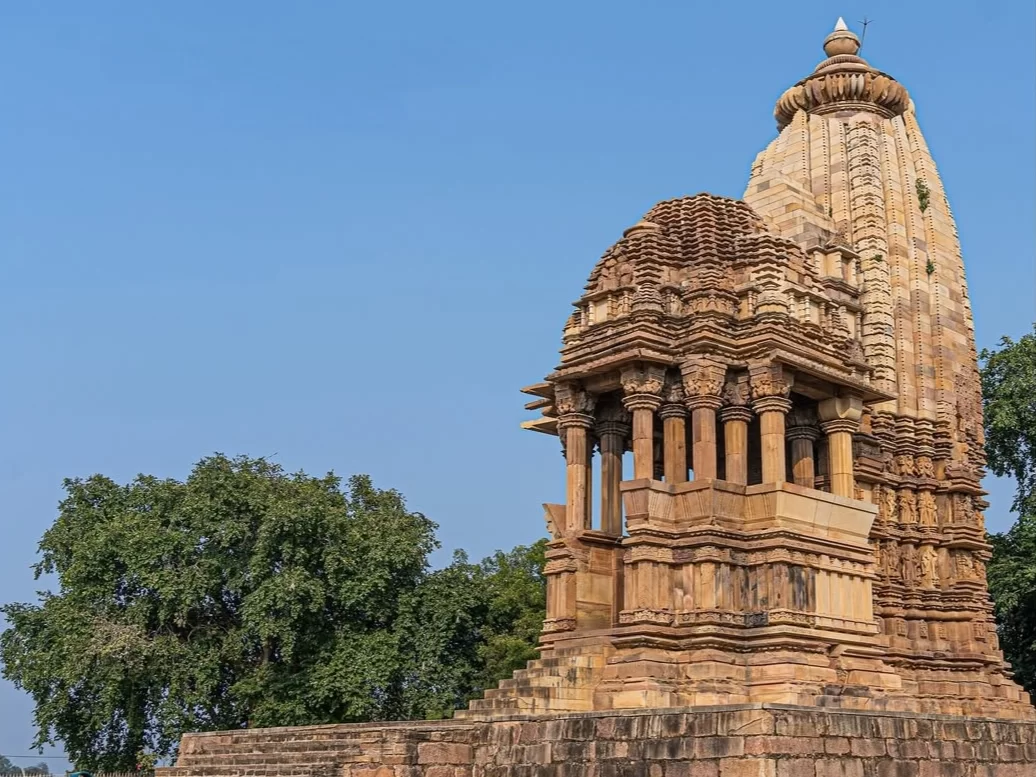
Atmosphere at Chaturbhuj Temple in Khajuraho is peaceful and contemplative, offering a quieter experience within the Southern Group of temples. Located slightly away from the more crowded Western complex, the temple stands amidst open surroundings that allow visitors to appreciate its architectural form without distraction. The soft golden sandstone, especially during sunrise and sunset, enhances the monument’s serene presence and creates an ideal setting for calm exploration and photography.
What makes Chaturbhuj Temple special is its dedication to Lord Vishnu and the presence of a striking four-armed idol (Chaturbhuj) enshrined within the sanctum. Built in the late 11th century during the Chandela period, the temple represents mature Nagara-style architecture with a well-proportioned structure and refined sculptural details. Unlike several other Khajuraho temples, it notably lacks erotic carvings, focusing instead on divine imagery, celestial figures, and devotional symbolism. The towering Vishnu statue inside stands as a remarkable example of medieval stone craftsmanship and spiritual expression.
Beyond its architectural beauty, Chaturbhuj Temple contributes to Khajuraho’s recognition as a UNESCO World Heritage Site, reflecting the artistic sophistication and religious philosophy of the Chandela dynasty. It appeals to history enthusiasts, architecture lovers, spiritual travelers, and photographers seeking a meaningful yet less crowded heritage experience. Visiting Chaturbhuj Temple offers insight into Vaishnavite traditions and the cultural legacy that defines Khajuraho’s global importance.
Chaturbhuj Temple in Khajuraho, Madhya Pradesh, was constructed in the late 11th century during the later phase of the Chandela dynasty. Located in the Southern Group of temples, it is dedicated to Lord Vishnu, whose name “Chaturbhuj” refers to the four-armed form of the deity. The temple stands apart for its serene setting and relatively restrained sculptural decoration compared to the more elaborate western group temples.
Built in the Nagara architectural style, the temple follows a linear plan comprising a sanctum, vestibule, and mandapa. The sanctum houses a striking four-armed idol of Vishnu, carved with balanced proportions and dignified expression, reflecting the devotional focus of the monument. Unlike many other Khajuraho temples, Chaturbhuj Temple notably lacks erotic sculptures, emphasizing spiritual symbolism over ornate exterior narratives.
As part of the UNESCO World Heritage-listed Khajuraho Group of Monuments, Chaturbhuj Temple represents the architectural continuity and religious diversity of the Chandela era. Its calm ambiance and sculptural refinement make it an important example of medieval temple craftsmanship and enduring Vaishnavite devotion.
The best time to visit Chaturbhuj Temple in Khajuraho depends on seasonal weather conditions, as the temple complex is open and explored on foot. Visiting during comfortable months allows travelers to appreciate the temple’s architecture and peaceful surroundings without climatic discomfort.
October to March is considered the ideal period to visit. During these months, Khajuraho experiences cool and pleasant weather, making it comfortable to walk around the temple complex and observe the impressive four-armed Vishnu idol housed inside the shrine.
Summer months from April to June can be very warm, especially during midday hours. Early morning or late afternoon visits are recommended during this season to avoid extreme heat while enjoying uninterrupted exploration.
Monsoon season from July to September brings occasional rainfall that enhances the greenery around the temple site. While humidity may increase, the surroundings appear refreshed and less crowded, offering a calm and serene atmosphere for visitors.
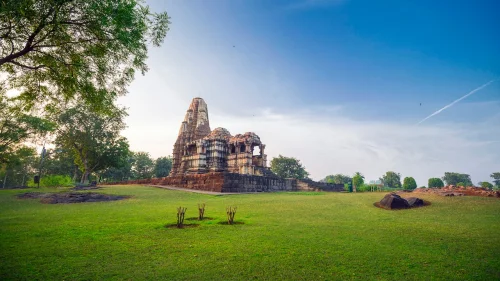 Temple
Dulhadeo Temple is a historic Hindu temple dedicated to Lord Shiva, located in the southern group of monuments at Khajuraho, Madhya Pradesh.
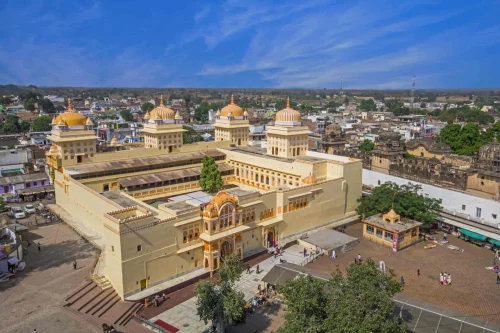 Temple
Ram Raja Temple is a unique Hindu temple in Orchha, Madhya Pradesh, where Lord Rama is worshipped as a king rather than solely as a deity.
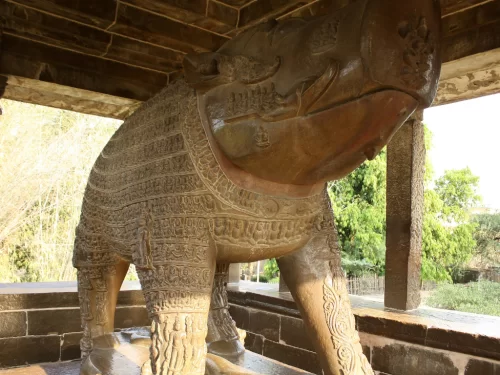 Temple
Vishwanath Temple is a 10th-century Hindu temple dedicated to Lord Shiva, located in the Western Group of Temples at Khajuraho.
Get customized Madhya Pradesh tour planning designed around safari seasons, road travel distances, heritage site exploration time, and comfortable pacing across regions. Whether you are visiting for wildlife safaris, temple architecture, historical monume
⚡ Quick Response | 💰 Free consultation | 🕒 24×7 expert support