Quick Facts About Ath Khamba Temple
Quick Facts: Ath Khamba Temple, Ujjain
| Entry Fee | Free |
| Timings | 6:00 AM – 8:00 PM |
| Altitude (m) | 486 |
| Ideal Visit Duration | 20–30 minutes |
| Best Time of Day | Early morning for fewer visitors |
| Crowd Level | Low to moderate; higher during festivals |
| Distance from City Centre (km) | Approximately 3 km from Ujjain city centre |
| Walking Difficulty | Low; few steps to reach main shrine |
| Parking Available | Limited nearby parking; larger vehicles may need to park farther |
| Last Mile Access | Accessible by auto-rickshaw or short walk |
| Suitable for Kids | Yes |
| Suitable for Seniors | Yes, with minimal steps |
| Wheelchair Friendly | Partially; main shrine has steps limiting full access |
Why Visit Ath Khamba Temple, Ujjain
Visitors come to Ath Khamba Temple primarily to offer prayers to Lord Shiva and participate in daily rituals observed at the shrine.
The temple premises are quiet and devotional, with limited foot traffic except during festival days, creating a focused atmosphere for worship.
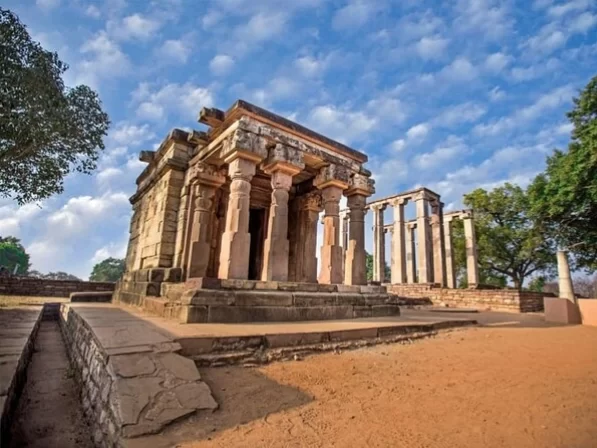
The temple is distinct for its architectural feature of eight stone pillars supporting the shrine and its central location within Ujjain, making it easily accessible to devotees and visitors.
History of Ath Khamba Temple, Ujjain
Ath Khamba Temple is named for its eight stone pillars ("Ath Khamba") that support the main shrine, reflecting traditional Hindu temple architecture. It has been an active site of worship for centuries within the Ujjain religious circuit.
The temple holds cultural significance for local devotees, particularly during Shivratri and other religious observances, where rituals and offerings are conducted regularly.
Best Time to Visit Ath Khamba Temple, Ujjain
The temple is best visited during the cooler and dry months when weather conditions allow comfortable access and quieter visits.
- Ideal months: October to March
- Weather conditions: Mild temperatures between 15°C and 28°C with low humidity and minimal rainfall
- Periods to avoid: July to September due to heavy monsoon rains that can make surrounding streets slippery and limit access
How to Reach Ath Khamba Temple, Ujjain
- Nearest airport: Devi Ahilya Bai Holkar Airport, Indore, approximately 55 km away; accessible by taxi or bus to Ujjain.
- Nearest railway station: Ujjain Junction, about 3 km from the temple; auto-rickshaws and taxis are available for last-mile travel.
- Road access: The temple is connected via city roads; local buses, taxis, and auto-rickshaws provide convenient access. Narrow streets near the temple may limit large vehicle parking.
What to Expect When You Visit Ath Khamba Temple, Ujjain
- Environment and surroundings: The temple is situated in a quiet part of Ujjain with narrow streets and nearby residential areas, creating a calm devotional setting.
- Facilities and amenities: Basic facilities include drinking water, small shops for offerings, and limited seating; washrooms are available but can be crowded during peak hours.
- Accessibility and movement: The main shrine has steps, limiting full wheelchair access; pathways are generally easy to navigate, though can be busy during festivals.
- Typical visitor behavior and conditions: Devotees perform prayers and rituals; visitors should expect a modest crowd and chanting during regular and festival periods.
Important Visitor Information for Ath Khamba Temple, Ujjain
- Crowd and weather notes: The temple is generally quiet; crowds increase during Shivratri and other festivals. Summers can be hot, and monsoon rains may make streets slippery.
- Peak and quiet visiting hours: Early morning (6:00–8:00 AM) is the quietest; evenings may have moderate crowds.
- Dress code: Modest clothing recommended; shoulders and knees should be covered as a sign of respect.
- Safety notes and practical cautions: Watch for steps leading to the shrine; narrow streets may restrict large vehicles. Carry minimal belongings due to limited parking and storage.
Photography and Viewpoints at Ath Khamba Temple, Ujjain
- Best viewpoints or angles: The main courtyard and entrance steps offer clear views of the eight pillars and stone carvings; side corridors provide detailed shots of architectural elements.
- Lighting conditions and time-of-day considerations: Early morning and late afternoon provide soft natural light, enhancing the textures of the stonework; midday sun can create harsh shadows.
- Rules or restrictions on photography: Photography is allowed in the temple courtyard; taking pictures inside the inner sanctum is prohibited.
- Crowd or access factors: Crowds are minimal during early morning hours; festivals may obstruct clear shots due to the presence of devotees and rituals.