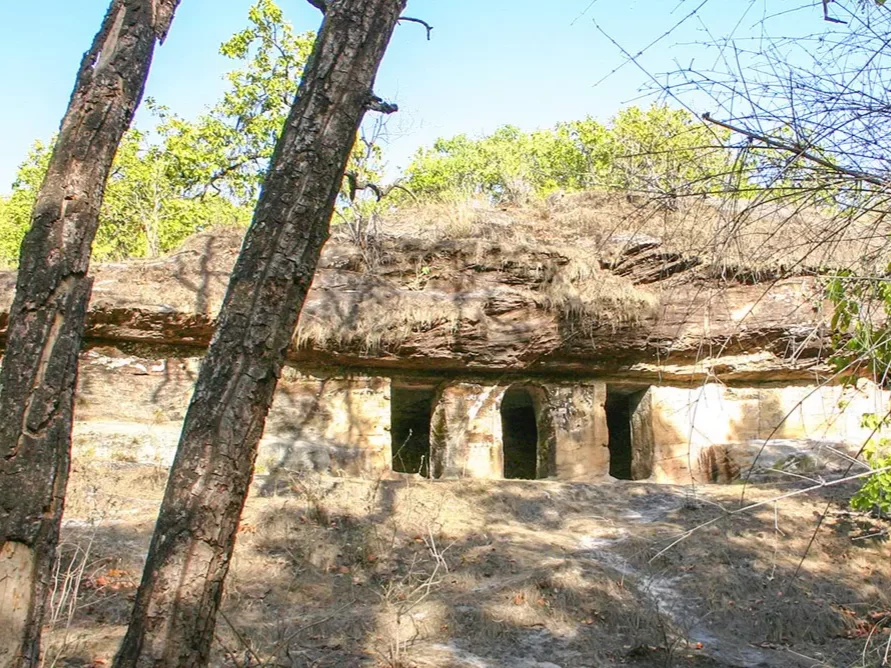
Quick Facts About Ancient Caves and Rock Shelters
Quick Facts: Ancient Caves and Rock Shelters, Umaria
| Entry Fee | INR 20 per person |
| Timings | 8:00 AM – 5:00 PM |
| Altitude (m) | 350 |
| Ideal Visit Duration | 1–2 hours |
| Best Time of Day | Morning for clear light and cooler conditions |
| Crowd Level | Low to Moderate |
| Distance from City Centre (km) | 25 km from Umaria town |
| Walking Difficulty | Moderate; uneven rocky paths |
| Parking Available | Yes, limited open-air parking near entrance |
| Last Mile Access | Short trek of 500 m from parking area |
| Suitable for Kids | Yes, with supervision on uneven terrain |
| Suitable for Seniors | Partial; some steep sections may be challenging |
| Wheelchair Friendly | No; rocky paths and steps restrict access |
Why Visit Ancient Caves and Rock Shelters, Umaria
Visitors come to Ancient Caves and Rock Shelters to observe prehistoric paintings, carvings, and inscriptions, offering insight into early human expression.
The atmosphere is quiet and natural, with rocky terrain and scattered trees providing shade; the site feels isolated from urban activity.
This place is distinct for travelers interested in archaeology and natural rock formations, combining cultural study with light trekking in a relatively undisturbed setting.
History of Ancient Caves and Rock Shelters, Umaria
The Ancient Caves and Rock Shelters in Umaria contain prehistoric paintings and carvings dating back several thousand years, reflecting early human settlement and artistic expression in central India.
These shelters were used as temporary dwellings and ceremonial sites by early communities, providing evidence of ritualistic and daily life activities through engraved symbols and artwork.
Best Time to Visit Ancient Caves and Rock Shelters, Umaria
The best time to visit Ancient Caves and Rock Shelters is during the cooler, dry months when walking paths are stable and the site is comfortable for exploration.
- Ideal months: October to March, when temperatures are moderate and rainfall is minimal.
- Weather conditions: Daytime temperatures range 20–28°C, nights drop to 10–15°C; dry conditions ensure safe access to rocky areas.
- Periods to avoid: July to September due to heavy monsoon rains making trails slippery and increasing the risk of water damage to rock art.
How to Reach Ancient Caves and Rock Shelters, Umaria
- Nearest airport: Jabalpur Airport (JLR), approximately 60 km from the site; limited flights, pre-booking recommended.
- Nearest railway station: Umaria Railway Station, around 25 km away; taxis and auto-rickshaws available for onward travel.
- Road access: Accessible via NH39 and local roads; last 500 m requires walking on uneven rocky terrain from the parking area.
What to Expect When You Visit Ancient Caves and Rock Shelters, Umaria
- Environment and surroundings: Natural rocky terrain with scattered trees; quiet and relatively isolated from urban areas.
- Facilities and amenities: Minimal facilities; no on-site restrooms or food stalls; carry water and snacks.
- Accessibility and movement: Short trek of 500 m from parking area; paths are uneven and rocky, requiring sturdy footwear.
- Typical visitor behavior and conditions: Moderate number of visitors, mostly students, researchers, and small tourist groups; calm and respectful atmosphere.
Important Visitor Information for Ancient Caves and Rock Shelters, Umaria
- Crowd and weather notes: Low to moderate visitor presence; best visited October to March to avoid monsoon-related slippery paths.
- Peak and quiet visiting hours: Early morning (8:00–10:00 AM) is quiet; midday can see small groups of students and researchers.
- Dress code: Comfortable trekking attire with sturdy shoes; hats recommended for sun protection.
- Safety notes and practical cautions: Uneven and rocky paths require careful walking; carry water; no emergency facilities on-site.
Photography and Viewpoints at Ancient Caves and Rock Shelters, Umaria
- Best viewpoints: Main cave entrances and rock shelter ledges provide clear views of prehistoric carvings and natural rock formations.
- Lighting conditions: Morning light (8:00–10:00 AM) offers soft illumination inside caves; late afternoon highlights textures on rock surfaces.
- Rules or restrictions: Photography is allowed; drones and flash photography inside caves are prohibited to protect artwork.
- Crowd or access factors: Limited visitor numbers ensure most viewpoints are accessible; early visits recommended for unobstructed shots.