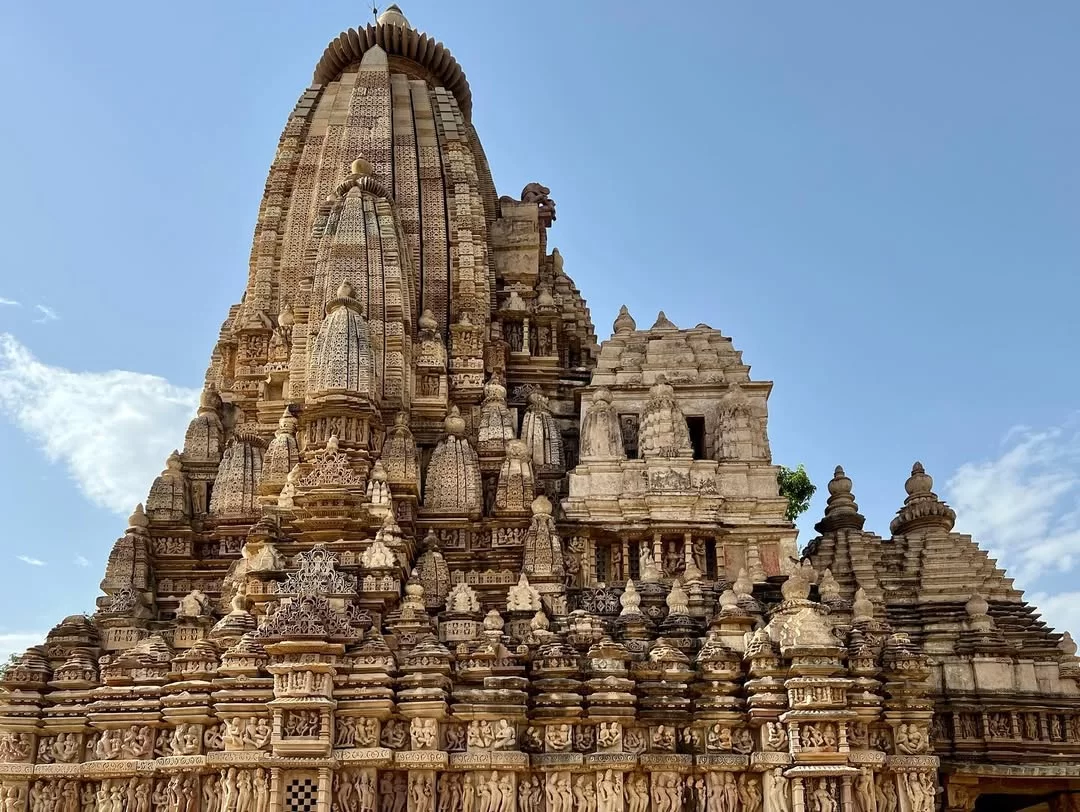
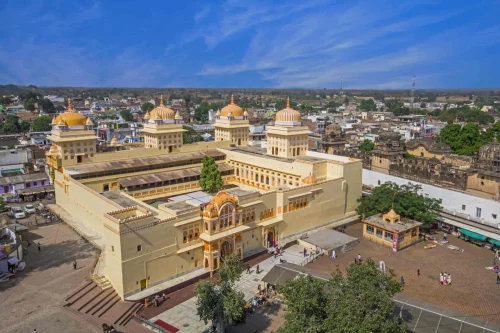
Adinath Temple in Khajuraho, Madhya Pradesh, India

Adinath Temple , Khajuraho
Tourists visit Adinath Temple for its well-preserved stone carving and as part of the broader Khajuraho temple circuit. It is often paired with the nearby Parshvanath Temple and visited for a quieter experience than the main Western Group temples.

Quick Facts About Adinath Temple

Adinath Temple Khajuraho – Quick Facts

Entry Fee Included in the ASI combined ticket for the Western Group of Temples: 40 (Indian citizens), 600 (foreign nationals); free for children below 15 years. Fees are subject to revision.
Timings 6:00 AM – 6:00 PM (daily; closing time can vary slightly by season).
Altitude (m) Approx. 283 m above sea level (Khajuraho).
Ideal Visit Duration 20–40 minutes (typically visited along with the Western Group temples).
Best Time of Day Early morning for quieter pathways and softer light on carvings.
Crowd Level Moderate; higher during October–March and weekends.
Distance from City Centre (km) Approx. 1 km from Khajuraho town centre.
Walking Difficulty Easy; flat paved walkways inside the Western Group complex.
Parking Available Yes; paid parking is available near the Western Group entrance.
Last Mile Access Motorable road to the Western Group entrance; short walk inside the complex to reach the temple.
Suitable for Kids Yes.
Suitable for Seniors Yes; mostly level walking, with optional steps up to temple platforms.
Wheelchair Friendly Partially; the complex pathways are accessible, but temple platforms have steps and no guaranteed ramps.

Why Visit Adinath Temple, Khajuraho

Visitors come to Adinath Temple, Khajuraho to see one of the site’s key Jain temples up close, especially for its finely carved exterior and the quieter feel compared to the busiest shrines in the Western Group. It’s a natural stop for travelers exploring Khajuraho beyond the headline temples, and for anyone interested in the Jain side of the complex without needing extra travel time.

On the ground, the atmosphere is calm and orderly, with a slower pace than the main temple courtyards. You’ll usually find more space to stand back and study the stonework, listen to guides without being jostled, and take detailed photos of the sculpted panels in consistent daylight.

What makes Adinath Temple, Khajuraho distinct for travelers is the contrast it offers within the same destination: it’s compact, focused, and visually dense, with carvings that reward close viewing rather than distant panoramas. For most visitors, it’s one of the easiest places in Khajuraho to appreciate how different communities and styles sit side by side within the same temple landscape.

History of Adinath Temple Khajuraho

The Adinath Temple in Khajuraho is a Jain temple built during the Chandela period, most commonly dated to the late 10th or early 11th century CE, when Khajuraho developed as a major center of temple construction. It stands within the Eastern Group of temples, an area historically associated with Jain worship alongside the larger Hindu temple complex for which Khajuraho is widely known.

Dedicated to Adinath (Rishabhanatha), the first Tirthankara of Jainism, the temple reflects the presence and patronage of Jain communities in the region during the height of Chandela rule. Its architecture follows the mature Nagara style seen across Khajuraho, with a compact sanctuary and finely carved exterior walls that include detailed figures, decorative bands, and characteristic Khajuraho sculptural workmanship.

Adinath Temple remains an important stop for visitors exploring Khajuraho beyond the main Western Group. Its smaller scale allows close viewing of the stone carvings and provides a clear, experience-friendly example of Jain sacred architecture preserved within the wider Khajuraho temple landscape.

Best Time to Visit Adinath Temple, Khajuraho

Adinath Temple in Khajuraho is most comfortable to visit during the cooler winter months, when the intricate sandstone carvings can be explored in pleasant weather and combined easily with other monuments in the Western Group of Temples complex.

  • Ideal months: October to March, with November to February offering the most enjoyable sightseeing conditions.
  • Weather during the best season: Mild daytime temperatures, cool mornings, and low humidity—ideal for walking between temple clusters, observing detailed exterior sculptures in natural light, and attending the Khajuraho Dance Festival (usually held in February).
  • Periods to avoid (and why): April to June due to extreme heat in Madhya Pradesh, often exceeding 40–45°C, which makes open-site exploration uncomfortable; July to September brings monsoon humidity and occasional heavy rainfall that can disrupt outdoor sightseeing plans.

How to Reach Adinath Temple, Khajuraho, Madhya Pradesh

  • Nearest Airport: The closest airport is Khajuraho Airport (HJR), located approximately 5 km from Adinath Temple. The airport has regular flights from Delhi and limited seasonal services from Varanasi and other select cities. Taxis and auto-rickshaws are easily available outside the terminal, and the drive to the temple in the Eastern Group complex takes about 10–15 minutes via well-paved town roads.
  • Nearest Railway Station: Khajuraho Railway Station is about 6 km from the temple and connects with Delhi, Kanpur, Jhansi, and Varanasi. Alternatively, Mahoba Junction (approx. 63 km) offers wider connectivity on the North Central Railway network. From either station, prepaid taxis, auto-rickshaws, and hotel-arranged transfers are the most convenient options. Travel time from Khajuraho station is around 15 minutes.
  • By Road & Last-Mile Connectivity: Adinath Temple is part of the Eastern Group of Khajuraho Temples, situated about 3 km from the Western Group complex and 1 km from Khajuraho town center. Khajuraho is well connected by road to Satna (approx. 115 km), Jhansi (approx. 175 km), and Panna (approx. 45 km) via state highways and NH39. Regular MP State Road Transport buses and private buses operate from nearby cities to Khajuraho bus stand. From the bus stand, visitors can reach the temple by auto-rickshaw, cycle-rickshaw, taxi, or even on foot if staying nearby. Roads are motorable year-round, though summer temperatures (April–June) can be extremely high during daytime visits.

What to Expect When You Visit Adinath Temple, Khajuraho

Adinath Temple in Khajuraho is a small but important Jain temple within the eastern temple group, visited for its calm atmosphere and detailed stone carving. Compared to the Western Group of Temples, this area usually feels quieter, with fewer tour groups and less time pressure.

  • Environment and surroundings: Expect a compact temple complex with open courtyards, stone pathways, and landscaped areas around the Jain shrines. The setting is cleaner and more controlled than roadside temples, but it is still exposed to sun and heat for much of the day, especially outside winter months.
  • Facilities and amenities: Facilities are basic and limited. You may find ticketing and security at the entrance to the temple group, but do not expect food stalls, shaded seating, or extensive visitor services directly at the temple. Restroom availability depends on the broader complex facilities rather than the shrine itself.
  • Accessibility and movement: The temple is reached via short, flat walks within the eastern group, with steps to enter the shrine platform. The stone surfaces can feel hard underfoot, and there is little shade on the approach. Wheelchair access is restricted by steps and the raised plinth, so visitors with mobility issues may only be able to view the temple from ground level.
  • Typical visitor behavior and conditions: Visitors usually walk through quietly, spend time observing carvings, and take photos from the outer sides. Jain temples are generally treated with more restraint than the more crowded Khajuraho sites, so loud behavior is less common. Expect brief stops by guides, and occasional peak-time clustering when a tour bus arrives, but the area rarely stays crowded for long.

If you are short on time in Khajuraho, this is typically a quick, calm visit focused on architecture and carvings rather than a long, facility-heavy sightseeing experience.

Important Visitor Information for Adinath Temple, Khajuraho

  • Crowd and weather notes: The Adinath Temple is part of Khajuraho’s Eastern Group of temples and generally sees fewer visitors than the Western Group complex. However, tour groups tend to arrive mid-morning, especially during the peak tourist season (October to March). Summers are extremely hot, with exposed stone surfaces radiating heat by midday.
  • Peak and quiet visiting hours: Late morning to early afternoon is typically the busiest period. For a quieter, more contemplative experience—particularly appropriate given its Jain heritage—visit shortly after opening or in the late afternoon when tour buses have usually moved on.
  • Dress code: As an active Jain temple, modest attire is expected. Visitors should wear clothing that covers shoulders and knees. Footwear must be removed before entering the sanctum area.
  • Safety notes and practical cautions: The temple platform and surrounding stone pathways can become slippery after rain. Steps are steep and uneven in places. Maintain respectful behavior inside the shrine area, as worship may be taking place.

Photography & Viewpoints at Adinath Temple, Khajuraho

Adinath Temple in Khajuraho is a compact Jain shrine in the Eastern Group of Temples, known for its clean stonework, detailed carvings, and quieter atmosphere compared to the Western Group. Because the temple sits in an open courtyard with low surrounding structures, photography here is strongly influenced by the direction of sunlight across the façade and the carved bands running around the outer walls.
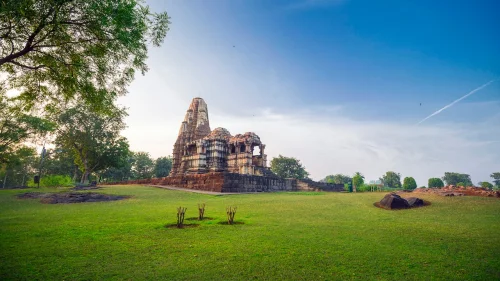
  • Main entrance façade viewpoint: Stand directly facing the front to photograph the temple’s symmetrical profile and shikhara. This angle works best when the sun is not directly behind the temple, as backlight can flatten the stone details.
  • Carving-band close-up angle: Walk along the outer wall at a slow pace and shoot parallel to the stone surface to highlight the depth of the carvings. Side-lighting brings out the relief work much more clearly than overhead light.
  • Three-quarter corner composition: From the front-left or front-right corner, you can capture both the entrance and the side wall carvings in one frame, which is one of the most informative compositions for Adinath Temple’s structure.
  • Shikhara and finial shot: Step back toward the courtyard edge and tilt upward to include the full vertical rise of the shikhara. The clean sky behind it makes this a strong composition in clear weather, especially outside peak haze months.
  • Time-of-day lighting: Early morning and late afternoon generally give the most readable texture on the carvings, as sunlight strikes the stone at a lower angle. Midday light is harsher and can wash out fine detailing on pale sandstone.
  • Crowd and access factors: The Eastern Group is usually less crowded than the Western Group, but the narrow walking space near the walls can get busy when tour groups arrive. Photographing the carvings is easiest in the first hour after opening.
  • Photography rules: Photography is typically permitted in the temple complex for visitors, but flash can be discouraged near delicate carvings and inside shaded areas. Drones and commercial shoots generally require official permission through the site authorities.

Near By Attraction

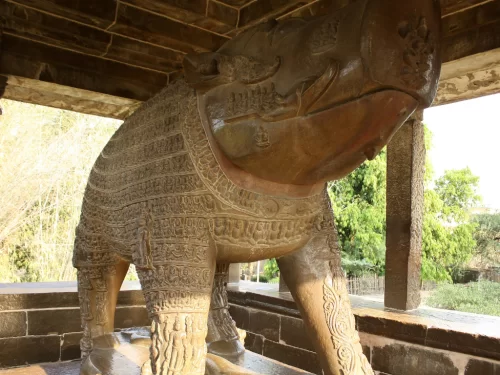
Varaha Temple Khajuraho monolithic boar Vishnu avatar sculpture, 2.6m sandstone carving 674 deities Chandela dynasty 900-925 AD Western Group UNESCO site, ideal Madhya Pradesh heritage tour package. Temple

Varaha Temple Khajuraho

Vishwanath Temple is a 10th-century Hindu temple dedicated to Lord Shiva, located in the Western Group of Temples at Khajuraho.

Asri Adinath Digambar Jain Mandir in Madhya Pradesh with intricately carved stone shikhara surrounded by lush trees, a serene heritage temple often featured in Madhya Pradesh tour packages. Temple

Sri Adinath Digambar Jain Mandir

Sri Adinath Digambar Jain Mandir in Khajuraho is a historic Jain temple dedicated to Lord Adinath.

Lakshmana Temple Khajuraho sunset golden hour Western Group UNESCO site, Nagara-style Vaikuntha Vishnu shrine intricate carvings Chandela dynasty 930-950 AD, perfect Madhya Pradesh heritage temple tour package. Temple

Lakshmana Temple

Lakshmana Temple in Khajuraho is one of the earliest and most magnificent temples of the Western Group.

Frequently Asked Questions About Adinath Temple

Adinath Temple is located in Khajuraho, Madhya Pradesh, within the Eastern Group of Jain Temples. It is easily accessible by road from the main town area.
Adinath Temple is generally open from sunrise to sunset. Daytime visits are recommended for peaceful darshan and clear architectural viewing.
There is usually no separate entry fee to visit Adinath Temple. Visitors can enter the temple premises freely during open hours.
Visitors can reach Adinath Temple by taxi, auto rickshaw, or private vehicle within Khajuraho, Madhya Pradesh. The nearest railway station and airport are located in Khajuraho.
Parking is available near the Eastern Group of Temples complex close to Adinath Temple. Parking charges may apply depending on vehicle type.
The best time to visit Adinath Temple is between October and March when the weather in Khajuraho, Madhya Pradesh is pleasant. Morning hours offer comfortable temperatures and fewer visitors.
Most travelers spend about 20 to 30 minutes exploring Adinath Temple while touring the Jain temple complex. Additional time may be needed for photography and detailed observation.
Adinath Temple is suitable for family visits and welcomes devotees of all age groups. The temple premises have manageable walking areas for senior citizens.
Photography is generally allowed in the outer premises of Adinath Temple. Visitors should avoid taking photos inside restricted prayer areas.
Restroom facilities are available near the Eastern Group of Temples complex close to Adinath Temple. Several restaurants and cafes are located nearby in Khajuraho town.

Loved this place ? Let’s Plan Your Madhya Pradesh Trip

Get customized Madhya Pradesh tour planning designed around safari seasons, road travel distances, heritage site exploration time, and comfortable pacing across regions. Whether you are visiting for wildlife safaris, temple architecture, historical monume

⚡ Quick Response | 💰 Free consultation | 🕒 24×7 expert support

×

Plan Your Trip