Quick Facts About Kargil War Memorial
| Entry Fee | Free |
| Timings | 09:00 - 18:00 |
| Altitude (m) | 3300 |
| Ideal Visit Duration (hrs) | 1 |
| Best Time of Day | Morning |
| Crowd Level | High |
| Distance from Kargil (km) | 60 |
| Walking Difficulty | Easy |
| Parking Available | Yes |
| Last Mile Access | Road |
| Suitable for Kids | Yes |
| Suitable for Seniors | Yes |
| Wheelchair Friendly | No |
Why Visit Kargil War Memorial
Kargil War Memorial is visited to understand the real human cost of the 1999 Kargil conflict rather than just reading about it in books. It offers a factual, grounded account of the war through names, records, and preserved equipment, making it an important stop for travelers interested in modern Indian history, military sacrifice, and national memory.
The atmosphere is solemn, disciplined, and respectful. Maintained by the Indian Army, the memorial is quiet and orderly, with visitors naturally lowering their voices. The surrounding mountains, once active battle zones, add emotional weight rather than scenic distraction, reinforcing the seriousness of the site.
What makes the memorial special is its authenticity. It stands at the actual location near the battle peaks of Tololing and Tiger Hill, not in a distant city. The engraved names of fallen soldiers, the war museum exhibits, and the daily upkeep by serving army personnel ensure that the memorial functions as a living place of remembrance rather than a symbolic structure alone.
Background and Significance of Kargil War Memorial
Kargil War Memorial was established by the Indian Army to commemorate the soldiers who laid down their lives during the Kargil War of 1999, officially known as Operation Vijay. The conflict occurred when armed intruders crossed the Line of Control and occupied strategic high-altitude positions in the Kargil sector of Ladakh. The memorial stands close to the actual battle zones, including the Tololing Range and Tiger Hill, making its location historically precise rather than symbolic.
The memorial was constructed as a permanent site of remembrance to honor the bravery, discipline, and sacrifice of Indian soldiers who fought in extreme terrain and harsh climatic conditions. Names of the fallen are inscribed on a sandstone wall, ensuring individual recognition rather than anonymous tribute. The adjacent museum preserves documents, photographs, weapons, and personal stories connected directly to the conflict.
Maintained and guarded by the Indian Army, the memorial continues to play an active role in national remembrance. It is regularly visited by families of soldiers, veterans, students, and official delegations, reinforcing its role as a place of collective memory and education rather than a static monument.
Best Time to Visit Kargil War Memorial
The best time to visit Kargil War Memorial is from May to September, when the Srinagar Leh highway remains open and weather conditions in Dras are relatively stable. During this period, temperatures are manageable, visibility is clearer, and access to the memorial is straightforward.
June to August is the most visited period due to peak tourist movement in Ladakh. While the memorial remains accessible, visitors should expect more crowds, especially during national holidays and commemorative events. Outside this window, heavy snowfall and extreme cold can restrict travel.
- May and early June offer fewer visitors with cooler temperatures
- July and August see the highest crowd levels due to tourism and official visits
- September provides clear skies and a quieter experience before winter closures
- October to April brings road closures and harsh winter conditions in Dras
How to Reach Kargil War Memorial
- By Road from Kargil: The memorial is located around 60 km from Kargil town on the Srinagar Leh National Highway near Dras. It is easily reachable by taxi or private vehicle during the open road season.
- By Road from Leh: Travelers from Leh can reach the memorial while driving toward Srinagar. The distance from Leh is approximately 215 km, usually covered over two days with an overnight stop in Kargil.
- Road Conditions: The highway is fully paved and well maintained, but weather conditions can affect travel, especially near Zoji La Pass.
- By Air: The nearest airport is Leh Airport. From Leh, visitors must travel by road to Kargil and then onward to Dras.
- By Rail: The nearest major railway station is Jammu Tawi. From Jammu, road travel via Srinagar to Dras is required.
- Last Mile Access: Vehicles can drive directly into the memorial parking area without any walking requirement.
What to Expect When You Visit Kargil War Memorial
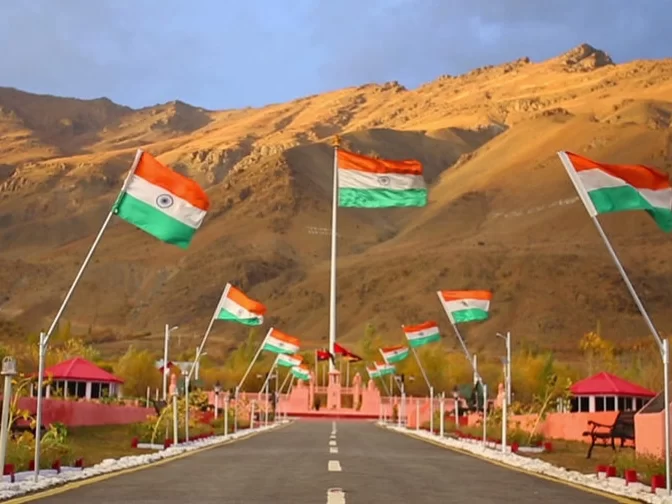
- A formally maintained memorial complex under the supervision of the Indian Army
- Engraved memorial wall listing the names of soldiers who lost their lives in the 1999 Kargil War
- An on-site museum displaying war photographs, weapons, documents, and personal accounts
- Clear views of surrounding battle locations such as Tololing Range and Tiger Hill from within the complex
- A quiet and respectful environment where visitors are expected to maintain decorum
- Well-laid walking paths, seating areas, and informational signage
- Occasional presence of serving army personnel managing visitor flow and ceremonies
Important Visitor Information
- Crowd and Weather Notes: Crowd levels increase during peak tourist months and on national remembrance days. Weather in Dras can change quickly, with strong winds and sudden temperature drops even in summer.
- Peak and Quiet Hours: Late morning to early afternoon sees the highest visitor movement. Early mornings and late afternoons are quieter and more reflective.
- Dress Code: Modest and respectful clothing is expected. Avoid sleeveless tops or casual attire that may feel inappropriate for a war memorial. Warm layers are recommended year-round.
- Safety Notes: The memorial is at high altitude, so visitors may experience mild breathlessness. Walk slowly, stay hydrated, and avoid prolonged standing if feeling unwell.
- Behavior Guidelines: Maintain silence near the memorial wall and follow instructions given by army personnel on site.
- Photography Rules: Photography is allowed in designated areas only. Follow posted guidelines and instructions from staff.
Photography and Viewpoints at Kargil War Memorial
- The memorial complex offers clear sightlines toward the Tololing Range and nearby battle peaks, which provide contextual landscape views rather than scenic panoramas
- Late morning to early afternoon is best for photography, as light falls evenly on the memorial wall and reduces harsh mountain shadows
- Wide-angle shots work well to frame the memorial against the surrounding mountains, emphasizing scale and location
- Close-up photography of the engraved names should be done respectfully, avoiding crowding or obstruction of other visitors
- Photography inside the museum is restricted; follow on-site rules and instructions from army personnel
- Weather can change quickly in Dras, so visibility may drop due to clouds or wind, affecting long-distance shots
- Tripods may be restricted during busy hours; handheld photography is more practical during peak visitor times
- Avoid photographing serving personnel or security areas unless explicitly permitted