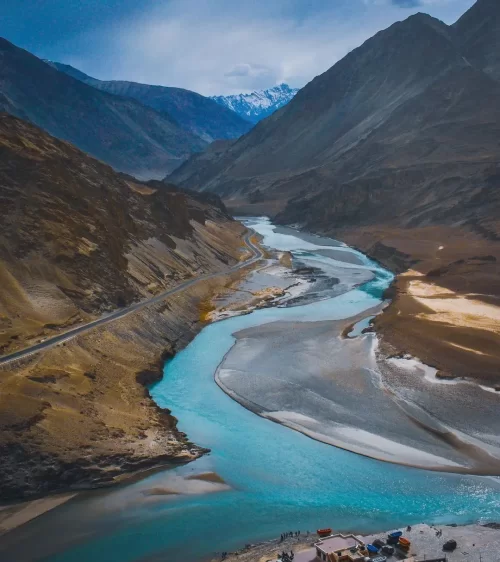
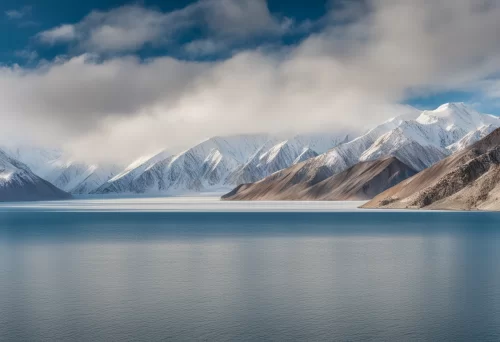
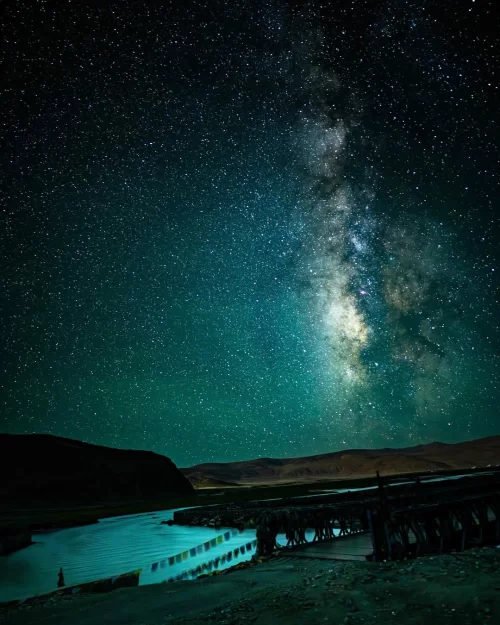
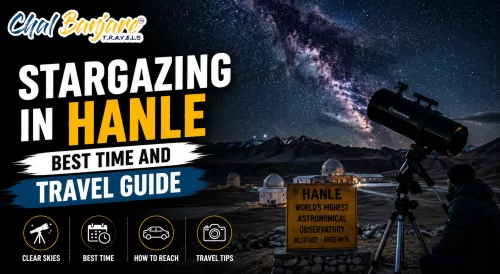
Stargazing in Hanle – Best Time and Travel Guide
Hanle is one of India’s best stargazing destinations with dark skies, high altitude landscapes, observatory access, and minimal light pollution in eastern Ladakh.
+91 9910402252
admin@chalbanjare.com


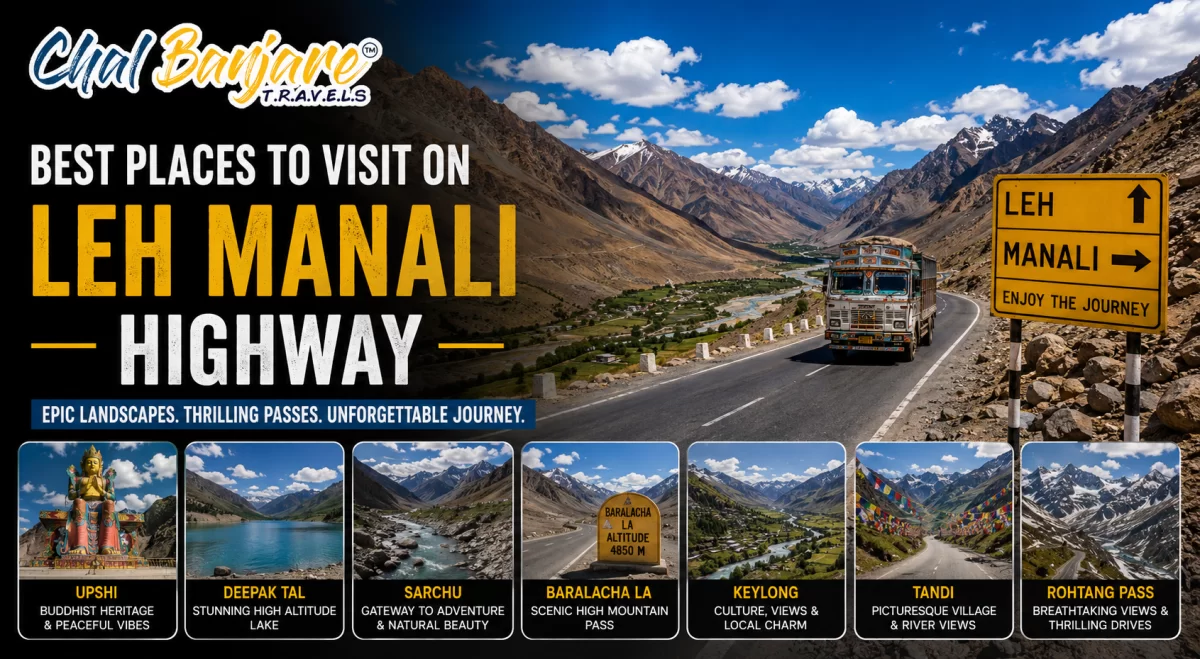
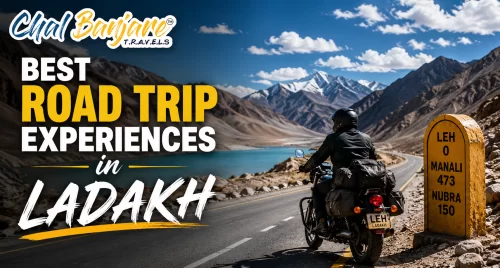
The Leh Manali Highway offers high mountain passes, remote plains, lakes, river crossings, and dramatic Himalayan landscapes across one of India’s most adventurous road routes.
The Leh–Manali highway near Leh passes through the scenic Indus Valley region where travelers experience dramatic mountain landscapes, river valleys, traditional Ladakhi settlements, and wide high-altitude desert scenery. The route through Upshi and Karu serves as an important gateway towards eastern Ladakh, Pangong Lake, Tso Moriri, and the Manali highway circuit.
Travelers driving through this region enjoy peaceful river landscapes, barren mountain ridges, and changing Himalayan terrain that create one of the most scenic road sections near Leh.
Travelers driving through Upshi and Karu should keep time for scenic roadside stops because the Indus Valley landscapes become especially beautiful during morning and evening light.
The Thiksey, Shey, and Hemis monastery circuit near Leh is one of the most popular cultural journeys along the Manali highway side because it combines Buddhist monasteries, Indus Valley landscapes, traditional architecture, and panoramic mountain views within a short driving distance from Leh.
Each monastery offers a unique spiritual atmosphere where travelers can explore prayer halls, giant Buddha statues, ancient murals, and peaceful Himalayan surroundings while experiencing Ladakh’s deep Buddhist heritage.
| Monastery or Attraction | Main Highlight | Travel Experience |
|---|---|---|
| Thiksey Monastery | Hilltop monastery and giant Maitreya Buddha statue | Panoramic spiritual exploration |
| Shey Palace and Monastery | Historic royal heritage and valley views | Cultural and architectural experience |
| Hemis Monastery | Largest monastery in Ladakh and Buddhist festivals | Historic spiritual atmosphere |
| Indus Valley Landscapes | River valleys and barren mountain scenery | Scenic road trip environment |
| Traditional Prayer Ceremonies | Authentic monastic rituals and chanting | Peaceful cultural immersion |
| Photography Opportunities | Monasteries, mountains, and valley landscapes | Ideal for heritage photography |
| Easy Accessibility From Leh | Comfortable monastery day-trip circuit | Balanced scenic and spiritual exploration |
Travelers visiting the monastery circuit should begin early in the morning because monastery prayer sessions and softer mountain lighting create a more peaceful experience.
Tanglang La is one of the highest mountain passes on the Leh–Manali highway and is famous for its dramatic high-altitude scenery, winding mountain roads, and panoramic Himalayan viewpoints surrounded by barren desert landscapes. The pass forms one of the most iconic sections of the Manali route.
Travelers crossing Tanglang La experience steep climbs, wide mountain valleys, and breathtaking views of the Ladakh plateau where changing weather and altitude create a raw expedition-style atmosphere.
Travelers crossing Tanglang La should avoid overexertion because the extreme altitude and cold winds can quickly cause fatigue and breathing discomfort.
Tanglang La is one of the highest mountain passes on the Leh–Manali highway and is famous for its dramatic high-altitude landscapes, winding roads, and panoramic Himalayan viewpoints surrounded by barren desert mountains. The pass represents one of the most iconic sections of the Ladakh road trip experience.
Travelers crossing Tanglang La experience steep climbs, vast mountain valleys, and changing weather conditions that create a raw expedition-style atmosphere across the remote Himalayan terrain.
Travelers crossing Tanglang La should avoid physical overexertion because the extreme altitude and cold winds can quickly cause fatigue and breathing discomfort.
Baralacha La is one of the most scenic and dramatic mountain passes on the Leh–Manali highway because of its snow-covered landscapes, glacier-fed streams, frozen terrain, and nearby high-altitude lakes surrounded by rugged Himalayan peaks. The region creates a striking wilderness atmosphere across the remote sections of the highway.
Travelers driving through Baralacha La experience dramatic snow walls during early summer, cold desert scenery, and breathtaking mountain panoramas that make the route one of the highlights of the entire Manali–Leh road trip.
| Attraction or Feature | Main Highlight | Travel Experience |
|---|---|---|
| Baralacha La Pass | Snow-covered high-altitude Himalayan pass | Adventure mountain crossing |
| Suraj Tal Lake | Beautiful glacial lake near the pass | Scenic photography stop |
| Snow Walls and Frozen Terrain | Dramatic summer mountain landscapes | Classic Himalayan expedition atmosphere |
| Glacier-Fed Streams | Remote mountain water crossings | Adventure highway experience |
| Rugged High-Altitude Valleys | Barren mountain wilderness scenery | Remote Ladakh road trip immersion |
| Changing Weather Conditions | Fog, snow, and cold winds possible | Dynamic mountain environment |
| One of the Most Scenic Sections of Leh–Manali Highway | Snow landscapes and panoramic views | Memorable Himalayan road journey |
Travelers crossing Baralacha La should prepare for freezing temperatures and unpredictable weather because conditions can change rapidly across the high-altitude mountain region.
The Lachung La, Nakee La, and Gata Loops section is one of the most adventurous stretches on the Leh–Manali highway because it combines steep mountain climbs, sharp hairpin bends, barren desert landscapes, and dramatic high-altitude driving conditions across the remote Himalayan terrain.
The famous Gata Loops consist of multiple winding switchbacks that climb sharply through rugged mountain slopes, creating one of the most recognizable road sections on the Manali–Leh route.
Travelers driving through Gata Loops and the surrounding passes should maintain slow speeds and remain cautious because altitude, sharp turns, and harsh road conditions can make the journey physically demanding.
More Plains is one of the most unique landscapes on the Leh–Manali highway because of its vast open valleys, straight high-altitude roads, barren mountain surroundings, and endless panoramic scenery across the Ladakh plateau. The region creates a rare driving experience where travelers move through wide desert plains surrounded by distant Himalayan ridges.
The smooth open roads and dramatic high-altitude environment make More Plains one of the most memorable sections of the highway for bikers, self-drive travelers, and landscape photographers.
Travelers crossing More Plains should remain cautious about altitude and strong winds because the open high-altitude environment can quickly become physically tiring.
Pang is one of the most dramatic landscape regions on the Leh–Manali highway and is known for its rugged mountains, unusual rock formations, narrow valleys, and harsh high-altitude desert terrain. The region showcases the raw geological beauty of the Himalayas where erosion-carved cliffs and winding roads dominate the environment.
Travelers passing through Pang experience a strong sense of isolation and wilderness while driving across remote valleys surrounded by towering barren mountains.
| Attraction or Feature | Main Highlight | Travel Experience |
|---|---|---|
| Pang Region | Rugged mountain terrain and remote valleys | Adventure highway exploration |
| Unusual Rock Formations | Dramatic geological landscapes | Photography and sightseeing opportunities |
| Narrow Canyon Roads | Scenic high-altitude driving experience | Expedition-style road journey |
| Barren Himalayan Desert Terrain | Raw Ladakh wilderness atmosphere | Remote mountain immersion |
| Changing Mountain Colors and Shadows | Dynamic visual scenery | Ideal sunrise and sunset photography |
| Minimal Human Settlement | Peaceful isolated environment | Authentic Himalayan road trip feel |
| Balanced Scenic and Adventure Experience | Classic Leh–Manali highway landscape | One of the route’s most dramatic sections |
Travelers crossing Pang should prepare for cold temperatures and altitude fatigue because the region lies deep within the high-altitude Himalayan desert environment.
Sarchu is one of the most famous overnight stop regions on the Leh–Manali highway and is known for its open plains, river valley scenery, dramatic mountain backdrops, and high-altitude camping landscapes. Located near the border of Himachal Pradesh and Ladakh, the region creates a raw expedition atmosphere surrounded by barren Himalayan terrain.
Travelers stopping in Sarchu experience colorful tent camps, wide open valleys, glacier-fed rivers, and spectacular night skies within one of the most remote highway environments in the Himalayas.
Travelers staying in Sarchu should acclimatize properly and stay hydrated because the high altitude and cold desert climate can quickly affect physical comfort.
Suraj Tal is one of the most beautiful high-altitude lakes on the Leh–Manali highway and is located near Baralacha La Pass amidst rugged Himalayan mountains, snow-covered slopes, and barren cold desert landscapes. The lake is famous for its crystal-clear waters and dramatic setting surrounded by remote wilderness terrain.
Travelers crossing the Baralacha La region often stop at Suraj Tal to experience the peaceful atmosphere, glacier-fed scenery, and panoramic mountain views that make it one of the most photogenic locations on the highway.
Travelers stopping at Suraj Tal should avoid long physical activity because the lake lies at very high altitude where oxygen levels remain low.
Deepak Tal is a peaceful roadside lake located along the Leh–Manali highway and is known for its calm water reflections, surrounding mountain scenery, and easy accessibility during the road journey. The lake creates a refreshing stop amidst the rugged Himalayan terrain of the Lahaul region.
Travelers visiting Deepak Tal experience beautiful reflections of surrounding peaks and skies across the still lake waters while enjoying a quiet mountain atmosphere beside the highway.
| Attraction or Feature | Main Highlight | Travel Experience |
|---|---|---|
| Deepak Tal Lake | Roadside mountain lake with calm reflections | Relaxed scenic stopover |
| Mountain Reflection Photography | Clear lake mirror-effect scenery | Ideal photography opportunities |
| Easy Highway Accessibility | Convenient roadside attraction | Comfortable short sightseeing break |
| Lahaul Mountain Landscapes | Snow peaks and rugged valley scenery | Scenic Himalayan road atmosphere |
| Peaceful Natural Environment | Quiet high-altitude setting | Slow travel and relaxation experience |
| Changing Light and Cloud Reflections | Dynamic visual landscapes | Sunrise and sunset photography appeal |
| Balanced Nature and Highway Exploration | One of the route’s scenic water stops | Refreshing Himalayan travel experience |
Travelers stopping at Deepak Tal should carry warm clothing because weather conditions around the lake can change quickly even during summer months.
The Tsokar diversion routes from the Leh–Manali highway lead travelers towards the remote Changthang region where high-altitude wetlands, barren desert plains, wildlife habitats, and isolated mountain landscapes create one of the most offbeat experiences in Ladakh. The route combines scenic exploration with wilderness immersion.
Travelers exploring the Tsokar region experience salt lakes, open plains, migratory bird habitats, and dramatic Himalayan scenery far away from crowded tourist circuits.
Travelers exploring the Tsokar diversion routes should plan fuel and supplies carefully because facilities remain extremely limited across the remote Changthang region.
Jispa is one of the most peaceful and scenic stopovers on the Leh–Manali highway and is known for its riverside camps, traditional mountain village atmosphere, and beautiful Himalayan landscapes surrounded by snow-covered peaks and green valleys. Located in the Lahaul region, Jispa provides a relaxing transition point before entering the harsher high-altitude terrain towards Ladakh.
Travelers staying in Jispa enjoy calm riverside surroundings, wooden camps and cottages, cool mountain weather, and a slower Himalayan travel atmosphere ideal for acclimatization and rest.
Travelers staying in Jispa should spend time walking near the riverside because the peaceful valley atmosphere is one of the best parts of the stopover experience.
Sarchu is one of the most iconic overnight camping locations on the Leh–Manali highway because of its vast high-altitude plains, colorful tent camps, rugged mountain surroundings, and remote expedition atmosphere. Located between Himachal Pradesh and Ladakh, the region offers travelers a true Himalayan wilderness camping experience.
Travelers staying in Sarchu experience freezing night temperatures, dramatic star-filled skies, glacier-fed river valleys, and the raw beauty of remote high-altitude desert landscapes.
| Attraction or Feature | Main Highlight | Travel Experience |
|---|---|---|
| Sarchu Plains | Open high-altitude camping landscapes | Adventure overnight stop experience |
| Tent Camps and Riverside Accommodation | Remote Himalayan camping atmosphere | Classic Leh–Manali highway stay |
| Starry Night Skies | Clear high-altitude stargazing conditions | Peaceful wilderness environment |
| Rugged Desert Mountain Terrain | Barren Himalayan landscapes | Expedition-style travel atmosphere |
| Cold Night Temperatures | Extreme mountain climate conditions | Authentic high-altitude camping experience |
| Photography Opportunities | Tent camps, valleys, and mountain scenery | Ideal sunrise and sunset landscapes |
| One of the Most Famous Highway Stopovers | Adventure and wilderness combined | Essential Himalayan road trip experience |
Travelers staying overnight in Sarchu should acclimatize properly because the high altitude and freezing temperatures can quickly affect physical comfort.
Keylong is one of the most comfortable and popular stopovers on the Leh–Manali highway and serves as the administrative center of the Lahaul region surrounded by green valleys, snow-covered mountains, rivers, and traditional Himalayan villages. Compared to Sarchu, Keylong offers better accommodation, food facilities, and road connectivity.
Travelers staying in Keylong experience a balanced combination of scenic mountain landscapes, local culture, monasteries, and peaceful Himalayan valley life before continuing towards higher-altitude regions.
Travelers choosing Keylong as a stopover usually enjoy a more comfortable and relaxed journey because the town provides better facilities and lower altitude compared to remote highway camping areas.
The Leh–Manali highway is one of India’s most adventurous mountain road journeys because it combines glacier-fed river crossings, rough terrain, broken roads, steep climbs, and remote offroad sections across the high-altitude Himalayas. Travelers experience constantly changing road conditions while crossing barren valleys, mountain passes, and isolated desert landscapes.
The challenging terrain near Sarchu, Pang, Baralacha La, and remote valley stretches creates a true expedition atmosphere for self-drive travelers, bikers, and adventure enthusiasts.
Travelers driving through rough sections of the Leh–Manali highway should maintain slow speeds because water crossings and broken roads can become dangerous during unstable weather conditions.
The Leh–Manali highway is considered one of the most legendary bike trip routes in the Himalayas because it passes through extreme mountain passes, high-altitude deserts, remote valleys, and dramatic landscapes that create a true long-distance adventure riding experience. Riders crossing Tanglang La, Baralacha La, Lachung La, and Gata Loops experience some of the toughest yet most rewarding mountain roads in India.
The constantly changing terrain, isolation, and panoramic Himalayan scenery make the route a dream journey for motorcycle travelers and road expedition enthusiasts.
| Adventure Route Feature | Main Highlight | Travel Experience |
|---|---|---|
| Tanglang La Pass | Extreme high-altitude riding conditions | Iconic Himalayan bike journey |
| Gata Loops | Sharp mountain hairpin bends | Thrilling riding experience |
| Baralacha La Region | Snow landscapes and rugged terrain | Adventure expedition atmosphere |
| More Plains | Open valley roads and panoramic riding | Unique high-altitude highway experience |
| Sarchu and Pang Sections | Remote desert valleys and mountain camps | Wilderness road immersion |
| Changing Himalayan Landscapes | Green valleys to barren cold deserts | Dynamic scenic exploration |
| One of India’s Most Famous Bike Routes | Adventure and scenery combined | Legendary Himalayan road trip |
Travelers planning bike trips on the Leh–Manali highway should prepare carefully with riding gear, fuel planning, and acclimatization because the route remains physically demanding.
The Leh–Manali highway offers some of the best photography and stargazing opportunities in the Himalayas because the route passes through remote valleys, barren deserts, glacier lakes, mountain passes, and isolated camping regions with minimal light pollution. Every section of the highway presents dramatic scenery shaped by altitude, weather, and changing terrain.
Travelers exploring the route during sunrise, sunset, and nighttime experience spectacular mountain lighting, Milky Way visibility, and peaceful wilderness landscapes across some of India’s most remote Himalayan regions.
Travelers exploring the Leh–Manali highway for photography and stargazing should carry warm clothing and camera protection because temperatures and weather conditions change rapidly at high altitude.
The Leh–Manali highway usually opens during late spring or early summer after heavy winter snowfall is cleared from the major mountain passes. The best travel period generally falls between June and September when road accessibility improves, weather conditions become comparatively stable, and travelers can comfortably experience the full Himalayan road journey.
During the peak summer season, travelers enjoy open mountain passes, glacier viewpoints, camping regions, high-altitude lakes, and scenic valley landscapes across one of India’s most famous adventure highways.
Travelers planning the Leh–Manali highway journey should still prepare for cold temperatures because even summer nights remain extremely chilly at high altitude.
Although Ladakh itself remains relatively dry because of its cold desert climate, sections of the Leh–Manali highway passing through Himachal Pradesh and mountain valleys can experience rainfall-related disruptions during monsoon months. Landslides, water crossings, mudslides, and road damage become common across vulnerable stretches near mountain passes and narrow valley roads.
Travelers driving during monsoon season may experience traffic delays, temporary closures, and difficult road conditions caused by unstable weather and glacier-fed streams overflowing onto the highway.
| Monsoon Travel Aspect | Main Highlight | Ground Reality |
|---|---|---|
| Landslide-Prone Sections | Mountain road disruptions during rainfall | Temporary highway closures possible |
| Overflowing Water Crossings | Glacier-fed stream activity increases | Driving becomes more challenging |
| Road Surface Damage | Broken and muddy highway sections | Slow travel conditions expected |
| Changing Weather and Visibility | Fog and cloud cover in mountain regions | Reduced photography visibility |
| Traffic Delays and Convoys | Long waiting times possible | Flexible itinerary planning important |
| Mountain Stream Crossings | Adventure driving conditions intensify | Experienced driving recommended |
| Remote Highway Environment | Limited support during disruptions | Self-preparation strongly necessary |
Travelers using the Leh–Manali highway during monsoon season should monitor daily road updates carefully because weather and landslides can quickly affect accessibility.
Late autumn and early winter bring serious travel challenges on the Leh–Manali highway because snowfall gradually begins blocking major mountain passes such as Baralacha La, Tanglang La, and Lachung La. Weather conditions become highly unpredictable and temperatures fall sharply across the high-altitude regions.
As snowfall increases, authorities begin restricting movement and eventually close the highway for the winter season, cutting off direct overland access between Ladakh and Himachal Pradesh.
Travelers planning late-season Leh–Manali highway trips should verify pass conditions carefully because snowfall and sudden closures can quickly make the route inaccessible.
The Leh–Manali highway crosses several extreme high-altitude regions where oxygen levels remain significantly lower than normal, making altitude sickness one of the biggest travel risks on the route. Travelers rapidly gain altitude while crossing Tanglang La, Lachung La, Baralacha La, and Sarchu, which can place sudden physical stress on the body.
Common symptoms include headache, dizziness, nausea, fatigue, breathing discomfort, and loss of appetite, especially among travelers arriving without proper acclimatization before beginning the road journey.
Travelers using the Leh–Manali highway should avoid rushing the journey because sudden altitude gain can quickly create serious health problems.
Large sections of the Leh–Manali highway pass through extremely remote mountain terrain where fuel stations, ATM facilities, mobile connectivity, and medical infrastructure remain very limited. Travelers often drive for long hours across isolated valleys without reliable support services.
Regions such as Pang, Sarchu, More Plains, and high mountain pass sections offer minimal facilities, making self-preparation and careful planning extremely important before beginning the journey.
| Travel Challenge | Main Impact | Ground Reality |
|---|---|---|
| Limited Fuel Availability | Long-distance fuel planning necessary | Fuel stations sparse across remote sections |
| Weak Mobile Network Coverage | Communication difficulties during travel | Connectivity unreliable in mountain regions |
| ATM Availability Limitations | Cash withdrawal difficulties | Carrying sufficient cash essential |
| Minimal Medical Facilities | Restricted emergency healthcare support | Serious cases may require evacuation |
| Digital Payment Failures | Online transactions may not function | Cash remains safest payment option |
| Limited Electricity and Charging Access | Power backup challenges | Carry power banks and charging support |
| Remote Highway Isolation | Minimal roadside assistance availability | Independent preparation strongly necessary |
Travelers driving on the Leh–Manali highway should carry fuel backup, medicines, cash, and offline navigation because support facilities remain highly limited across remote Himalayan sections.
The Leh–Manali highway is highly dependent on weather conditions because snowfall, landslides, glacier-fed streams, fog, and strong winds frequently affect road accessibility and driving safety across mountain passes and remote valleys. Conditions can change rapidly even during summer months.
Travelers often face broken roads, rough terrain, water crossings, traffic delays, and temporary road closures caused by unstable Himalayan weather and difficult mountain geography.
Travelers exploring the Leh–Manali highway should start early each day and monitor weather updates carefully because road and driving conditions can deteriorate quickly across high-altitude mountain sections.
Proper acclimatization is one of the most important factors for safely traveling on the Leh–Manali highway because the route crosses several extreme high-altitude mountain passes where oxygen levels remain very low. Travelers who ascend too quickly without giving the body enough adjustment time often experience serious altitude-related problems during the journey.
Regions such as Tanglang La, Baralacha La, Sarchu, Pang, and Lachung La can become physically demanding because rapid altitude gain, cold weather, and long travel hours increase stress on the body.
Travelers planning the Leh–Manali highway should never underestimate altitude because even healthy travelers can experience serious physical discomfort without proper acclimatization.
The Leh–Manali highway passes through extremely remote Himalayan regions where fuel stations, ATM facilities, medical support, and reliable shops remain limited for long distances. Proper self-preparation is essential because travelers may spend many hours or even entire days in isolated mountain sections.
Cold temperatures, changing weather conditions, and minimal infrastructure support make it important to carry emergency supplies and basic travel essentials throughout the journey.
| Travel Essential | Main Purpose | Ground Reality |
|---|---|---|
| Extra Fuel Backup | Long isolated highway stretches | Petrol stations highly limited |
| Sufficient Cash | ATM and digital payment failures | Cash remains safest payment method |
| Medicines and First Aid | Altitude and emergency support | Medical facilities minimal in remote regions |
| Heavy Warm Clothing | Protection from freezing temperatures | Cold weather common even during summer |
| Power Banks and Offline Maps | Weak network and electricity issues | Connectivity unreliable across the highway |
| Snacks and Water Supply | Limited roadside food availability | Long travel hours between settlements |
| Vehicle Emergency Equipment | Breakdown and rough-road preparation | Self-support important in remote areas |
Travelers driving on the Leh–Manali highway should prepare independently because support facilities remain extremely limited across many high-altitude sections.
Night driving on the Leh–Manali highway is strongly discouraged because the route passes through isolated mountain terrain with rough roads, sharp curves, water crossings, landslide-prone sections, and very limited roadside support. Visibility drops significantly after sunset and weather conditions can change rapidly across high-altitude regions.
Many travelers also make the mistake of planning unrealistic long-distance schedules that ignore altitude, road conditions, traffic delays, and physical fatigue caused by continuous mountain driving.
Travelers exploring the Leh–Manali highway should focus on safe pacing rather than speed because the journey becomes far more enjoyable when experienced slowly and responsibly.
Planning overnight stops properly on the Leh–Manali highway is extremely important because the route crosses remote high-altitude regions, rugged mountain passes, and long isolated valleys where continuous driving can become physically exhausting. Most travelers divide the journey into multiple segments to improve acclimatization and enjoy the landscapes more comfortably.
Popular stopovers such as Jispa, Keylong, Sarchu, and Pang provide accommodation, food, and resting opportunities while allowing travelers to experience different Himalayan landscapes across Himachal Pradesh and Ladakh.
Travelers planning overnight stops on the Leh–Manali highway should avoid overloading the itinerary because high altitude and rough roads can significantly slow travel speed.
Travelers visiting Ladakh often compare the Srinagar route and the Manali route because both highways offer completely different Himalayan travel experiences. The Srinagar highway provides gradual altitude gain and a more balanced cultural journey, while the Manali highway offers extreme mountain passes, rough terrain, and a stronger adventure-focused atmosphere.
Many experienced travelers prefer entering Ladakh from Srinagar and exiting through Manali because this combination provides better acclimatization along with a complete Himalayan road-trip experience.
| Highway Route | Main Highlight | Travel Experience |
|---|---|---|
| Leh–Manali Highway | Extreme mountain passes and rugged terrain | Adventure-focused Himalayan expedition |
| Leh–Srinagar Highway | Gradual acclimatization and varied landscapes | Balanced scenic and cultural journey |
| Manali Route Landscapes | High-altitude deserts and remote valleys | Raw wilderness exploration atmosphere |
| Srinagar Route Landscapes | Kashmir valleys, monasteries, and river scenery | Comfortable transition into Ladakh |
| Altitude Adjustment | Better on Srinagar route | Reduced sudden altitude sickness risk |
| Road Difficulty | Higher on Manali route | More physically demanding road conditions |
| Best Combined Circuit | Enter via Srinagar and exit via Manali | Most complete Ladakh road-trip experience |
Travelers visiting Ladakh for the first time generally find the Srinagar entry route easier because gradual altitude gain helps improve acclimatization before crossing the tougher Manali highway.
Proper preparation is essential before traveling on the Leh–Manali highway because the route involves extreme altitude, remote mountain terrain, rough roads, freezing temperatures, and limited infrastructure support across large sections of the journey. Careful planning helps travelers experience the road trip more safely and comfortably.
Travelers should focus on acclimatization, vehicle preparation, weather monitoring, fuel management, and flexible scheduling before beginning the highway expedition.
Travelers exploring the Leh–Manali highway should approach the journey patiently because the road itself is one of the greatest adventure experiences in the Himalayas.
Get customized Ladakh tour planning designed around altitude comfort, acclimatization time, weather windows, and real Himalayan road conditions. Whether you are visiting for high mountain passes, monasteries, lakes, or remote valley experiences, our exper
⚡ Quick Response | 💰 Free consultation | 🕒 24×7 expert support