Quick Facts About Thumboormuzhy Dam
Thumboormuzhy Dam, Athirappilly, Kerala Quick Facts
| Entry Fee | Nominal entry fee applicable for the garden and park area; dam access is restricted to designated viewpoints |
| Timings | 9:00 AM–5:00 PM (may vary on government holidays and seasonal conditions) |
| Altitude (m) | Approximately 40 m above sea level |
| Ideal Visit Duration | 1–2 hours |
| Best Time of Day | Morning or late afternoon for pleasant weather and photography |
| Crowd Level | Moderate; higher during weekends, holidays, and monsoon season |
| Distance from City Centre (km) | Approximately 20 km from Athirappilly town area |
| Walking Difficulty | Easy; paved pathways within the garden area |
| Parking Available | Yes, designated parking available near the entrance |
| Last Mile Access | Accessible by road up to the entrance followed by short walking paths |
| Suitable for Kids | Yes |
| Suitable for Seniors | Yes |
| Wheelchair Friendly | Partially; main garden areas are accessible, but some sections have uneven paths |
Why Visit Thumboormuzhy Dam, Athirappilly, Kerala
Visitors come to Thumboormuzhy Dam near Athirappilly to experience the Chalakudy River reservoir area, known for its calm waters and landscaped garden spaces. It is a frequent stop for travelers combining visits to Athirappilly Waterfalls and nearby eco-tourism sites.
The on-ground atmosphere is relaxed and nature-focused, with walking paths, butterfly gardens, hanging bridges, and open views of the dammed river. Families and day-trippers often spend time here enjoying the quieter setting compared to the nearby waterfall crowds.
What makes Thumboormuzhy Dam distinct is its blend of engineered river control and well-maintained eco-garden space within a forested landscape. Its proximity to Athirappilly and Vazhachal allows travelers to experience multiple natural settings within a short travel radius.
History of Thumboormuzhy Dam, Athirappilly, Kerala
Thumboormuzhy Dam is a small irrigation dam built across the Chalakudy River in the Thrissur district of Kerala. It forms part of the larger Chalakudy River irrigation system developed to support agriculture and water management in the region.
The dam area was later developed as a public recreation space, with landscaped gardens and the Butterfly Park introduced by the Kerala Forest Department to promote environmental awareness and eco-tourism in the Athirappilly region.
Today, Thumboormuzhy Dam functions both as an irrigation structure and a nature-based tourism site, contributing to local water management while serving as a scenic stop near Athirappilly Falls.
Best Time to Visit Thumboormuzhy Dam, Athirapally, Kerala
Thumboormuzhy Dam is best visited when the Chalakudy river flow is steady and the surrounding butterfly garden and viewpoints are fully accessible, offering a balanced experience of water scenery and landscaped gardens near Athirapally.
- Ideal Months: October to February is the most suitable period for visiting, with post-monsoon freshness enhancing river views and garden landscapes.
- Weather Conditions: These months generally offer pleasant temperatures, clear surroundings, and stable water levels, making it ideal for walking across the dam area, butterfly garden visits, and photography.
- Periods to Avoid: June to September should be avoided due to heavy monsoon rainfall, which can lead to strong river currents, restricted access to certain viewpoints, and slippery pathways around the dam complex.
How to Reach Thumboormuzhy Dam, Athirapally
- By Air: Cochin International Airport (COK), located in Nedumbassery, is the nearest airport at approximately 40–45 km from Thumboormuzhy Dam. From the airport, taxis and rental cabs are available for onward travel via Chalakudy and Athirapally forest route.
- By Train: Chalakudy Railway Station is the nearest railhead, situated around 30 km away. It is well connected to major cities like Kochi, Thrissur, and Chennai. From the station, taxis and local jeeps are available, though public transport options become limited closer to the forest stretch.
- By Road: Thumboormuzhy Dam is accessed via the Chalakudy–Athirapally road through forest-controlled zones managed by the Kerala Forest Department. Private vehicles and taxis are the most practical option. Entry may require passing forest check posts, and vehicle movement can be regulated during heavy rains or monsoon periods due to safety concerns and potential water level rise in the Chalakudy River.
What to Expect When You Visit Thumboormuzhy Dam, Athirappilly, Kerala
- Thumboormuzhy Dam is located near Athirappilly in the Chalakudy river basin, surrounded by forested Western Ghats terrain, river channels, and landscaped garden areas that form part of a controlled eco-tourism zone.
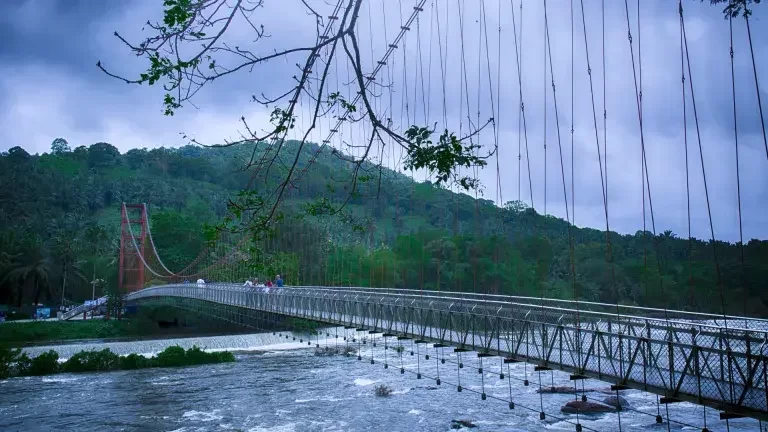
- The environment is a mix of natural river flow and maintained public spaces, including a butterfly garden, hanging bridge, children’s play area, and shaded walking paths along the riverbanks.
- Basic visitor facilities are available, including ticket counters, restrooms, parking areas, and small refreshment stalls. However, dining options are limited and concentrated outside the main dam complex.
- Access is via road from Athirappilly or Chalakudy, followed by short walking distances within the site. Movement is generally easy on paved paths, though some sections near the river or gardens may be uneven or slippery during rain.
- The site attracts families, local tourists, and day-trippers, with moderate crowds on weekends and peak tourist seasons. Weekdays are usually quieter and more suitable for relaxed visits.
- River flow and water release conditions vary seasonally, especially during monsoon months, which can affect viewpoints and restrict access to certain areas near the dam and river edges.
- Visitors should expect a calm, nature-focused experience with limited commercial activity, where most time is spent walking through gardens, viewing the river, and using designated picnic areas.
Important Visitor Information for Thumboormuzhy Dam, Athirappilly, Kerala
- The site is busiest during weekends, public holidays, and the peak monsoon-to-post-monsoon season (June–December) when water flow is stronger and surrounding greenery is at its fullest.
- Early mornings and late afternoons are the best times to visit for softer light, lighter crowds, and more comfortable walking conditions around the garden and dam viewpoints.
- No specific dress code applies, but comfortable, breathable clothing and sturdy footwear are recommended due to walking paths, garden trails, and uneven surfaces near viewpoints.
- Visitors should exercise caution near the riverbanks and dam edges, as water flow can be strong and surfaces may become slippery, especially during and after rainfall.
- During monsoon months, sudden increases in water level may occur, and access to certain viewing points may be restricted for safety reasons.
- Children should be closely supervised in the butterfly garden and near water areas, as pathways can be wet and moderately crowded during peak visiting hours.
Photography and Viewpoints at Thumboormuzhy Dam, Athirapally, Kerala
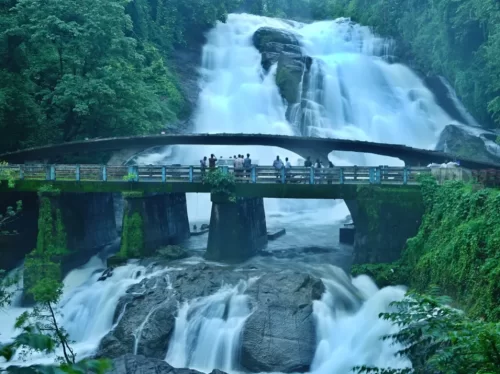
- The main dam bridge provides the most direct viewpoint, capturing the Chalakudy River spillway, forested hills, and water flow patterns in a single wide composition.
- The nearby hanging bridge in the Thumboormuzhy garden area offers elevated angles of the river bend, lush greenery, and the dam reservoir backdrop framed by the Western Ghats.
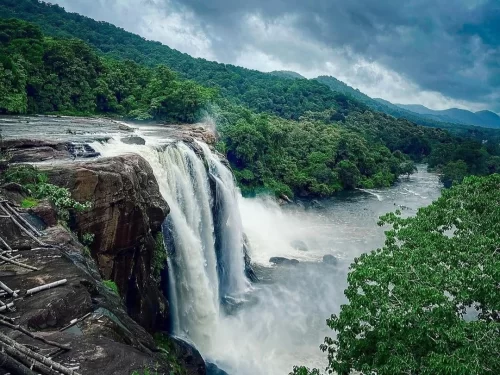
- Morning light enhances clarity over the river and surrounding forest canopy, while late afternoon brings softer tones and deeper contrasts across the valley landscape.
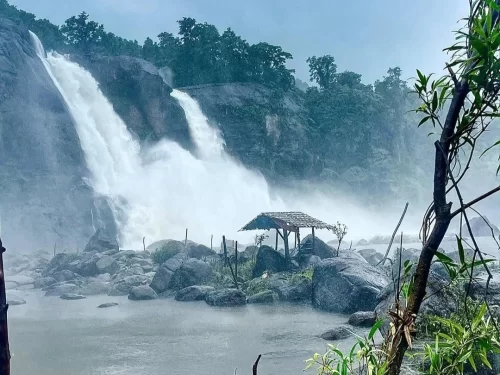
- During monsoon months, increased water discharge at the dam creates strong motion visuals at the spillway, making the bridge viewpoints particularly effective for dynamic river photography.
- Photography is generally permitted in public areas, but visitors should follow local safety signage near the dam structure and avoid restricted zones close to spillways and control gates.
- Weekends, school holidays, and peak tourist season around Athirappilly Falls increase footfall, especially near the garden and hanging bridge, which can limit unobstructed framing.
- Access between viewpoints is easy via short walking paths within the Thumboormuzhy garden complex, though certain river-edge sections may be restricted during high water flow conditions.