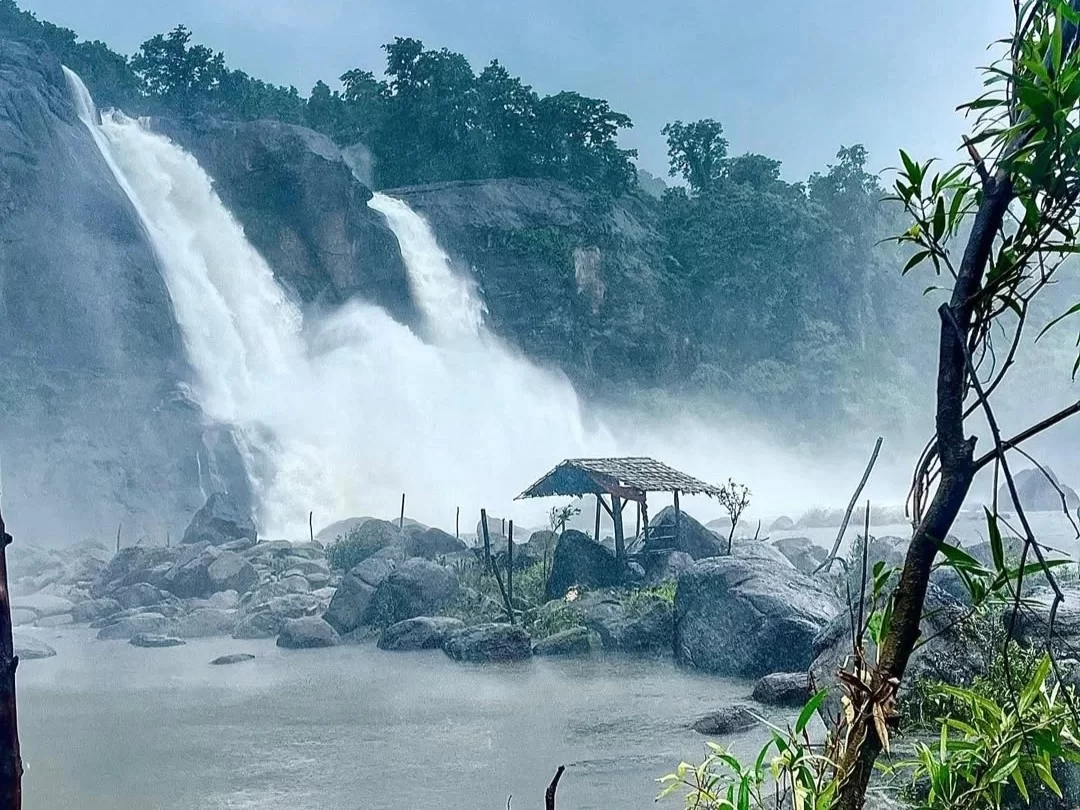
Quick Facts About Athirappilly Waterfall
| Entry Fee |
40 |
| Timings |
08:00 - 16:00 |
| Altitude (m) |
300 |
| Ideal Visit Duration (hrs) |
1.5 |
| Best Time of Day |
Morning |
| Crowd Level |
High |
| Distance from Thrissur (km) |
63 |
| Walking Difficulty |
Moderate |
| Parking Available |
Yes |
| Last Mile Access |
Road |
| Suitable for Kids |
Yes |
| Suitable for Seniors |
No |
| Wheelchair Friendly |
No |
Why Visit Athirappilly Waterfall
Why Visit
Athirappilly Waterfall is Kerala’s most iconic waterfall and one of the grandest natural spectacles in South India. Visitors come to witness the sheer scale and power of the Chalakudy River as it plunges over a wide rock face, especially impressive during the monsoon season. The waterfall is a key highlight of the Western Ghats landscape and a must-visit for nature enthusiasts, photographers, and first-time travellers to the region.
Atmosphere
The atmosphere is dramatic, mist-filled, and immersive, with the roar of cascading water echoing through the surrounding forest. Dense greenery, cool spray, and shifting light create a constantly changing natural scene. Early mornings feel calmer and more atmospheric, while post-monsoon afternoons offer clearer views and stronger visual contrast.
What Makes it Special
What makes Athirappilly Waterfall special is its massive width and volume, often compared to a “Niagara of India” setting (popular comparison; scale differs). Located within a biodiverse stretch of the Western Ghats, the waterfall plays an important ecological role and has been featured in numerous Indian films for its dramatic setting. Seasonal access to lower viewpoints may be restricted during heavy rains for safety reasons; specific closure details should be confirmed.
History of Athirapilly Waterfall
Athirapilly Waterfall is located on the Chalakudy River in Thrissur district, Kerala, at the edge of the Western Ghats. The waterfall is formed where the river descends abruptly from the highlands toward the coastal plains, shaping a dramatic cascade through hard rock formations over long geological periods.
The surrounding region has historically been covered by dense tropical forests and was traditionally inhabited by indigenous communities who depended on the river and forest resources for sustenance. During the colonial period, the area came under formal forest administration, primarily for timber regulation and watershed control, while the waterfall itself remained a naturally occurring feature without human alteration.
With the expansion of road connectivity and regional development in the 20th century, Athirapilly Waterfall emerged as a prominent natural landmark of central Kerala. Today, it is widely recognized for its scale and scenic presence, representing the natural riverine history of the Chalakudy basin and the ecological significance of the Western Ghats rather than any constructed or commemorative origin.
Best Time to Visit – Athirapilly Waterfall
The best time to visit Athirapilly Waterfall in Thrissur district, Kerala, is from September to March, when the Chalakudy River carries a steady post-monsoon flow and weather conditions are safer for visitors. During this period, the waterfall remains impressive without the extreme risks associated with peak monsoon rains, and the surrounding Western Ghats forest is lush and scenic.
- September–October: Post-monsoon peak flow with dramatic cascades and vibrant greenery—ideal for viewing and photography.
- November–February: Cooler and relatively dry months—best for safe access, nature walks, and extended viewing time.
- March: Water volume reduces slightly but remains scenic; mornings are more comfortable.
- June–August (Monsoon): Extremely heavy rainfall and strong currents; entry may be restricted due to safety concerns.
- April–May (Pre-summer): Hot and humid with lower water flow; suitable mainly for brief visits.
Best time of day: 8:00 AM to 11:00 AM is ideal for visiting Athirapilly Waterfall, offering better visibility, cooler temperatures, and safer conditions before crowds and humidity increase later in the day.
- Nature tip: Visit soon after the monsoon season for the most powerful yet accessible waterfall experience.
- Photography tip: Morning light highlights the wide curtain of falling water and surrounding rainforest.
- Safety note: Swimming and approaching the base during high flow is dangerous—follow forest department rules and posted warnings strictly.
How to Reach Athirapilly Waterfall
Athirapilly Waterfall is located on the Chalakudy River in Thrissur district, Kerala, along the Chalakudy–Athirapilly Road. It is Kerala’s largest waterfall and is accessed through a regulated forest entry zone managed by the Forest Department.
- By Air (Nearest airport): The nearest airport is Cochin International Airport (COK), approximately 40 km away. From the airport, hire a taxi or pre-booked cab to Chalakudy and continue toward Athirapilly Waterfall.
- By Train (Nearest railway station): The closest major railhead is Chalakudy Railway Station, around 30 km from Athirapilly. From Chalakudy, take a taxi or bus toward Athirapilly via the forest route.
- By Road (Primary access): KSRTC and private buses operate from Chalakudy to Athirapilly. The waterfall entrance is well marked and accessible directly from the main road.
- Taxi / Private Cab: Hiring a taxi from Chalakudy, Kochi, or Thrissur is the most convenient option. Most local sightseeing routes include Athirapilly as a main stop.
- Self-drive: Self-driving is allowed up to the designated parking area. Drive cautiously through forest stretches due to sharp curves, narrow roads, and occasional wildlife crossings.
- Walking access: From the parking area, a well-defined path with steps leads to the waterfall viewpoints. Visitors should follow marked trails only.
- Travel advisory (EEAT): During the monsoon season (June–September), water flow is very strong and access to lower viewpoints may be restricted. Swimming is prohibited. Entry timings and restrictions are controlled by the Forest Department and may vary seasonally.
What to Expect When You Visit Athirapilly Waterfall
Athirapilly Waterfall is the largest waterfall in Kerala, located on the Chalakudy River in Thrissur district within the Western Ghats. Often called the “Niagara of India,” it offers a powerful natural spectacle surrounded by dense forest, mist, and dramatic cliffs. Expect a visually striking, nature-focused visit with regulated access rather than free movement near the water.
- Massive curtain-style waterfall: the river plunges over a wide rocky edge, creating a thunderous cascade that is especially impressive during the monsoon and post-monsoon months.
- Designated viewpoints and paths: visitor movement is guided along marked trails and viewing platforms to ensure safety and protect the fragile ecosystem.
- Strong seasonal variation in flow: water volume peaks during the monsoon, while summer months offer clearer views of the rock formations with reduced flow.
- Dense forest surroundings: expect thick vegetation, tall trees, and a humid, shaded environment typical of the Western Ghats.
- Restricted access near the base: approaching the waterfall edge or entering the water is unsafe and strictly controlled due to strong currents and slippery rocks.
- Short to moderate walking involved: reaching viewpoints requires walking on forest paths and steps—comfortable, non-slip footwear is essential.
- Photography-friendly but misty: the scale and backdrop make it ideal for photography, though mist and spray can affect lenses during high flow.
- Crowds during peak season: weekends, holidays, and monsoon months attract large numbers of visitors, affecting waiting time and viewing comfort.
- Eco-sensitive and wildlife corridor area: the surrounding forest is part of an elephant corridor—visitor discipline and adherence to rules are critical.
- Managed by forest authorities: entry, timing, and safety measures are overseen by the forest department to balance tourism and conservation.
Tip for a smoother visit: arrive early in the day, follow safety instructions strictly, avoid visiting during heavy rain alerts, and treat Athirapilly as a powerful natural spectacle rather than a place for close water interaction.
Important Visitor Information – Athirappilly Waterfall
- Crowd & Weather Notes: Athirappilly Waterfall is one of Kerala’s most visited natural attractions and gets heavy crowds during peak tourist season (September to March), weekends, and holidays. The Western Ghats climate brings intense rainfall during the monsoon (June to September), when the waterfall is at its most powerful but paths can be slippery and access may be restricted; winters are pleasant.
- Peak / Quiet Hours: Peak hours are late morning to afternoon when tour buses arrive. Early morning on weekdays is quieter and better for photography and relaxed viewing.
- Dress Code: No formal dress code applies. Wear comfortable clothing and sturdy footwear with good grip. Avoid loose or slippery footwear, especially during monsoon.
- Safety Notes: Bathing and approaching the base of the waterfall may be restricted due to strong currents and past accidents—strictly follow Kerala Forest Department rules and barricades. Do not climb rocks or cross safety barriers. Be cautious on wet steps and supervise children closely. Temporary closures during heavy rain are possible.
Photography and Viewpoint – Athirappilly Waterfall
Athirappilly Waterfall, located on the Chalakudy River in Thrissur district, Kerala, is the largest waterfall in the state and one of the most dramatic natural landmarks of the Western Ghats. Often referred to as the “Niagara of Kerala,” the waterfall plunges in a wide curtain over a rocky escarpment, surrounded by dense rainforest. Photography here focuses on scale, power, layered forest landscapes, and seasonal variations in water volume.
- Best time for photography: Monsoon and early post-monsoon months (approximately June to September) offer maximum water flow and visual drama; early morning provides softer light and fewer crowds.
- Main viewpoint platforms: Official viewing points at the top and mid-level provide safe, elevated angles to capture the waterfall’s full width and plunge.
- Wide-angle landscape shots: Use wide lenses to include the waterfall, river bend, and surrounding forest for a complete sense of scale and setting.
- Water-motion photography: Overcast conditions are ideal for longer exposures that smooth the falling water while retaining detail in rocks and foliage.
- Top vs. base perspectives: Upper viewpoints emphasize the breadth and flow, while lower viewpoints (when open and permitted) highlight the height and power of the plunge.
- Rainforest detail compositions: Capture mist-covered trees, wet rocks, and spray patterns to reflect the Western Ghats’ rich biodiversity.
- Mobile photography tips: Stabilize your phone against railings, use HDR sparingly to balance sky and water, and avoid digital zoom in misty conditions.
- Seasonal safety considerations: Rocks and paths can be extremely slippery during monsoon—photograph only from designated areas and obey all safety barriers.
- Crowd & timing awareness: Weekends and holidays can be busy—weekday mornings offer cleaner compositions and quieter ambience.
- Responsible photography etiquette: Do not cross barricades, avoid entering the river, and follow forest department regulations to protect both visitors and this fragile ecosystem.
Near By Attraction
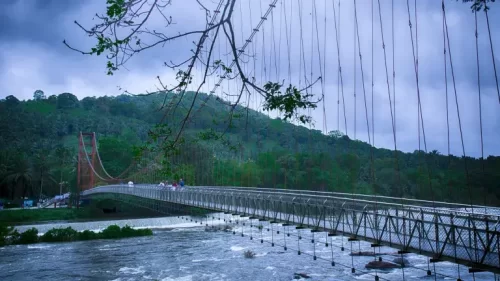 Desert
Thumboormuzhy Dam
Thumboormuzhy Dam is a small check dam located on the Chalakudy River near Athirappilly in Kerala.
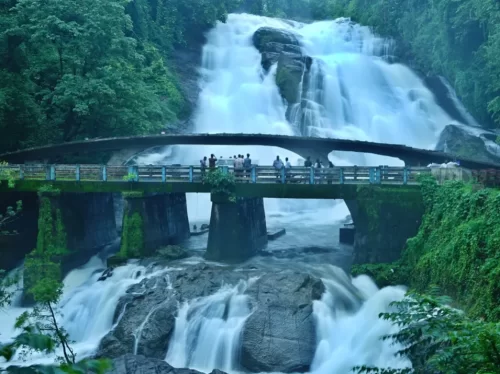 Waterfall
Charpa Waterfalls
Charpa Waterfalls is a beautiful seasonal waterfall near Athirappilly, admired for its cascading streams and lush forest setting.
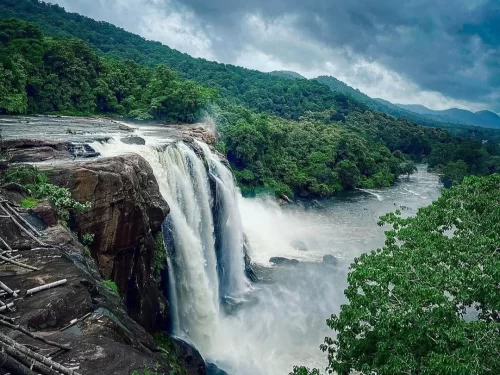 Waterfall
Vazhachal Waterfalls
Vazhachal Waterfalls is a beautiful natural waterfall near Athirappilly, known for its wide cascades and lush green surroundings.