Quick Facts About Tungabhadra Dam And Garden
Tungabhadra Dam and Garden, Hampi Quick Facts
| Entry Fee | Entry to the garden is generally free; charges may apply for select attractions or boating if operational. |
|---|---|
| Timings | Dam viewpoint and garden are generally open from 8:00 AM–6:00 PM; timings may vary during monsoon or maintenance. |
| Altitude (m) | Approximately 490 m |
| Ideal Visit Duration | 2–3 hours |
| Best Time of Day | Late afternoon to evening for pleasant weather and the illuminated musical fountain (when operational). |
| Crowd Level | Moderate on weekdays; high during weekends, holidays, and the peak tourist season. |
| Distance from City Centre (km) | Approximately 16 km from Hampi. |
| Walking Difficulty | Easy; paved pathways and gentle gradients make most areas comfortable to explore. |
| Parking Available | Yes, parking is available near the garden and dam entrance. |
| Last Mile Access | Fully accessible by motorable road with a short walk from the parking area to the viewpoints and garden. |
| Suitable for Kids | Yes |
| Suitable for Seniors | Yes, with seating available in parts of the garden. |
| Wheelchair Friendly | Partially; the main garden paths are accessible, but some viewing areas may have steps or uneven surfaces. |
Why Visit Tungabhadra Dam and Garden, Hampi, Karnataka
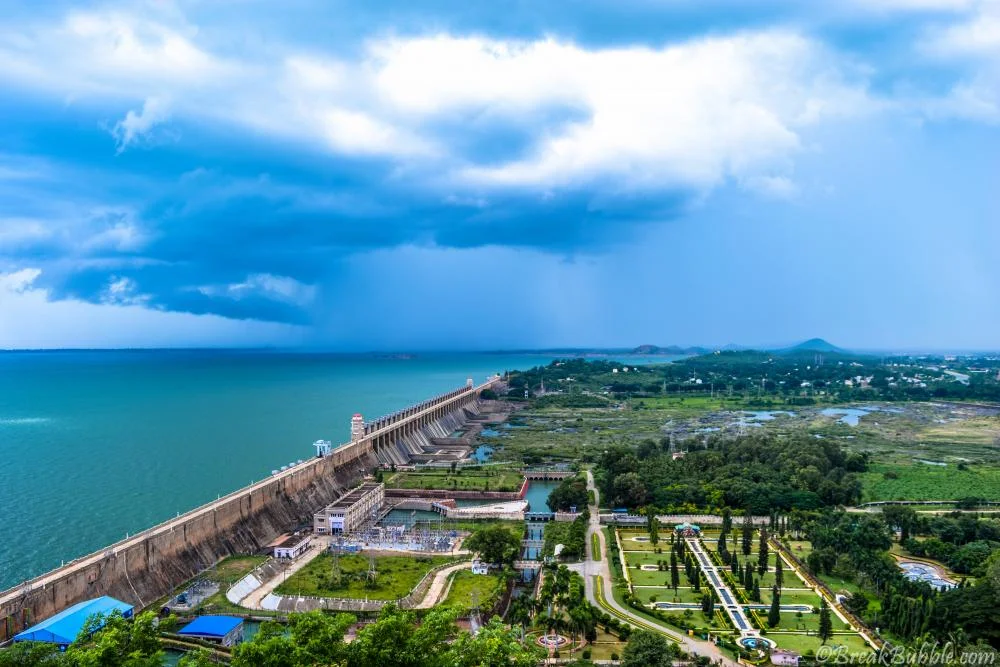
Visitors come to Tungabhadra Dam and Garden to enjoy panoramic views of the Tungabhadra River, the large reservoir, and the landscaped gardens surrounding the dam. It is a popular stop for families, photographers, and travelers exploring Hampi and nearby Hosapete.
The atmosphere is relaxed, with well-maintained lawns, walking paths, fountains, and open spaces overlooking the water. During evenings, the gardens become more lively as visitors gather to enjoy the cooler weather and the illuminated fountains when operational.
What makes Tungabhadra Dam and Garden distinct is its combination of engineering significance, riverside scenery, and recreational green spaces. Unlike Hampi's archaeological monuments, the site offers a refreshing outdoor setting where visitors can unwind while taking in views of one of Karnataka's major dams.
History of Tungabhadra Dam and Garden, Hampi
Tungabhadra Dam is a multipurpose dam built across the Tungabhadra River near Hosapete (Hospet), close to Hampi in Karnataka. Construction began in 1948, and the dam was completed in 1953 as a joint project of the former Hyderabad State and the Madras Presidency, shortly after India's independence.
The dam was developed to provide irrigation, hydroelectric power generation, and water supply to large parts of Karnataka and Andhra Pradesh. It has played a significant role in supporting agriculture and regional development across the Tungabhadra basin.
The landscaped gardens adjoining the dam were created as a recreational space for visitors, complementing the engineering landmark with fountains, lawns, and viewpoints overlooking the reservoir. Today, Tungabhadra Dam and Garden are popular attractions for travelers exploring Hampi and the surrounding region.
Best Time to Visit Tungabhadra Dam and Garden, Hampi
The best time to visit Tungabhadra Dam and Garden is from October to February, when the weather is pleasant for exploring the gardens and enjoying views of the reservoir. The post-monsoon period often offers higher water levels, enhancing the scenic appeal of the dam.
- Ideal months: October to February, when cooler temperatures make walking around the gardens and viewpoints comfortable.
- Best season conditions: Pleasant weather, greener surroundings after the monsoon, and higher reservoir levels provide excellent conditions for sightseeing, photography, and evening visits.
- Periods to avoid: March to May due to intense summer heat, especially during midday. During the monsoon season (June to September), heavy rainfall may affect outdoor activities, although the dam is often at its most impressive when water levels are high.
How to Reach Tungabhadra Dam and Garden, Hampi
- Nearest Airport: The nearest airport is Jindal Vijayanagar Airport (Vidyanagar), approximately 40 km from Tungabhadra Dam and Garden. Hubballi Airport, around 165 km away, is another major option with wider flight connectivity. Taxis are available from both airports.
- Nearest Railway Station: Hosapete (Hospet) Junction Railway Station, about 6 km away, is the nearest railhead. It is well connected to Bengaluru, Hyderabad, Hubballi, and other major cities. Auto-rickshaws, taxis, and local buses are available for the short onward journey.
- By Road: Tungabhadra Dam and Garden is located near Hosapete, around 15 km from Hampi, and is easily accessible via NH 50 and well-maintained local roads. Karnataka State Road Transport buses, private taxis, auto-rickshaws, and self-drive vehicles can reach the site directly. Parking is available near the entrance. Visitors planning to see the illuminated musical fountain should arrive before the evening show timings, as entry may be restricted after closing hours.
What to Expect When You Visit Tungabhadra Dam and Garden, Hampi, Karnataka
- Tungabhadra Dam and its adjoining gardens offer a combination of reservoir views, landscaped lawns, fountains, and walking areas. The site attracts both tourists and local visitors looking for a relaxed outing.
- The gardens feature paved pathways, flower beds, shaded seating areas, and open spaces suitable for leisurely walks. Some sections may involve gentle slopes or steps.
- Visitors can enjoy panoramic views of the Tungabhadra Reservoir from designated viewpoints. Water release from the dam depends on reservoir levels and operational requirements, so spillway gates may not always be open.
- Basic facilities such as parking, restrooms, drinking water, food stalls, and seating are available near the gardens. Additional accommodation and restaurants can be found in Hospet (Hosapete) and Hampi.
- The site is popular with families, photographers, and evening visitors. Weekends, public holidays, and the post-monsoon season usually see higher visitor numbers, which may result in longer queues for parking and popular viewpoints.
- Photography is generally permitted in public areas, but visitors should follow any restrictions near the dam structure or other secured zones.
- Visitors should remain within designated pathways and safety barriers, as access to operational sections of the dam is restricted. Swimming or entering the reservoir is not permitted.
- During the monsoon and immediately after heavy rainfall, weather conditions and reservoir operations can change quickly. Visitors should follow instructions issued by dam authorities and pay attention to safety notices.
Important Visitor Information for Tungabhadra Dam and Garden, Hampi
- Crowd and weather: The dam and garden are busiest during weekends, public holidays, and the cooler months from October to February. During the monsoon, reservoir water levels are higher, and access to certain viewpoints or areas may be restricted depending on operational conditions.
- Peak and quiet visiting hours: Evenings attract the largest number of visitors due to the pleasant weather, landscaped gardens, and musical fountain shows (when operational). Morning hours are generally quieter and suitable for sightseeing.
- Dress code: There is no formal dress code. Lightweight, comfortable clothing and walking shoes are recommended, along with sun protection during the hotter parts of the day.
- Safety and practical cautions: Stay within designated visitor areas and obey safety barriers around the dam. Swimming or entering the reservoir is prohibited due to fluctuating water levels and strong currents. During the monsoon or water release operations, follow instructions from authorities and any temporary access restrictions.
Photography and Viewpoints at Tungabhadra Dam and Garden, Hampi
- The best viewpoints are from the designated observation areas on the dam, offering wide views of the Tungabhadra Reservoir, surrounding hills, and the landscaped gardens below.
- Late afternoon and sunset provide the most attractive lighting, with warm tones reflecting on the reservoir and enhancing panoramic views from the dam.
- The terraced gardens, fountains, flower beds, and walking paths offer multiple angles for landscape photography, particularly when the gardens are well maintained and the fountains are operational.
- Photography is generally permitted in public areas of the dam and gardens. However, visitors should follow any security instructions, as photography may be restricted near certain operational sections of the dam.
- Weekends, public holidays, and evenings attract larger crowds to the gardens and viewpoints. Visiting on weekday mornings or late afternoons usually provides clearer access to popular photography spots.