+91 9910402252
admin@chalbanjare.com


| Entry Fee | No entry fee |
| Timings | 8:00 AM–6:00 PM |
| Altitude (m) | Approximately 540 m above sea level |
| Ideal Visit Duration | 1–2 hours |
| Best Time of Day | Early morning or late afternoon for pleasant weather and photography |
| Crowd Level | Low to moderate; higher during festivals and weekends |
| Distance from City Centre (km) | Approximately 2 km from Badami town centre |
| Walking Difficulty | Easy; short walk from the parking area |
| Parking Available | Yes, limited parking available nearby |
| Last Mile Access | Accessible by road followed by a short walk to the temple |
| Suitable for Kids | Yes |
| Suitable for Seniors | Yes |
| Wheelchair Friendly | Partially; approach is accessible, but some sections have steps and uneven surfaces |
Visitors come to Sri Bhootanatha Temple to offer prayers to Lord Bhootanatha, a form of Lord Shiva, and experience a temple that remains closely connected to local religious traditions. It is an important place of worship for devotees from nearby towns and villages, especially during annual temple festivals.
The on-ground atmosphere is peaceful and devotional, with daily rituals, traditional prayers, and a steady flow of worshippers throughout the day. The temple surroundings reflect the cultural character of the region, offering a simple and authentic spiritual setting.
What makes Sri Bhootanatha Temple distinct is its continued role as a living center of local Shaivite worship rather than a monument focused on tourism. The temple's regional religious significance, active rituals, and traditional Karnataka temple architecture provide visitors with a meaningful cultural and spiritual experience.
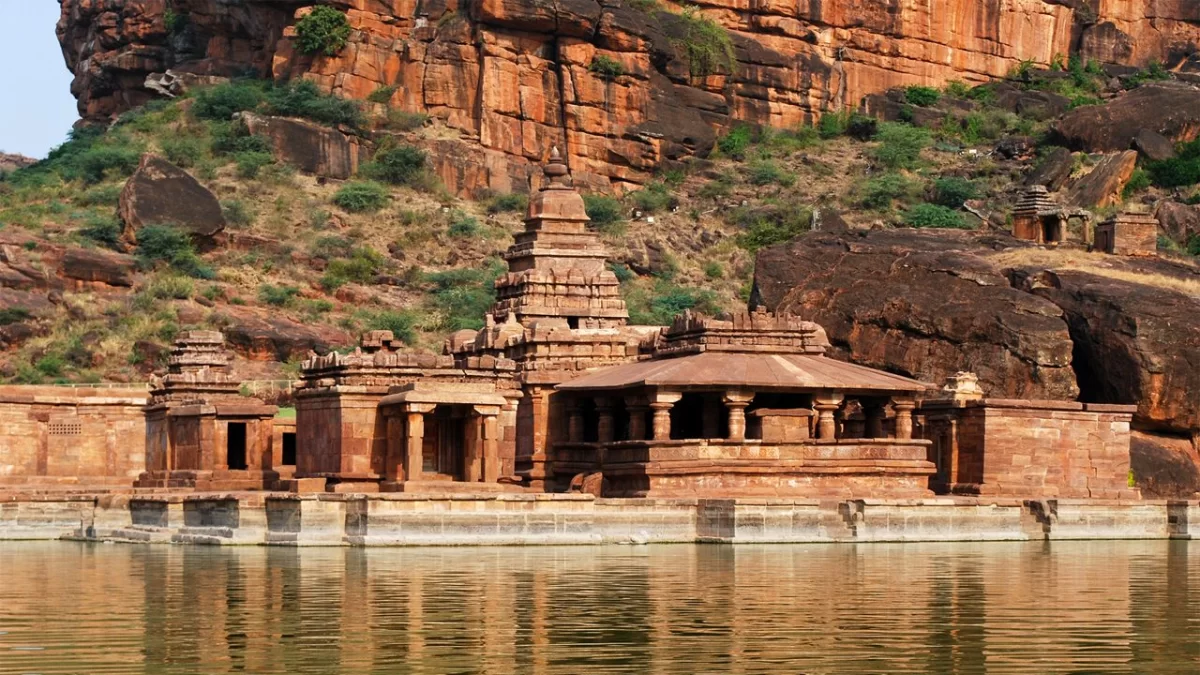
Sri Bhootanatha Temple, located at Badami in Karnataka, dates to the 7th–8th centuries CE and was built during the rule of the Early Chalukya dynasty. Dedicated to Lord Shiva, the temple stands on the eastern bank of Agastya Lake and is one of Badami's most recognizable historic monuments.
The temple complex showcases Early Chalukyan architecture, combining features of the Dravidian style with elements that influenced later South Indian temple design. Its setting beside the lake and the sandstone cliffs of Badami enhances its historical and architectural significance.
As an important Shaivite shrine, Sri Bhootanatha Temple continues to hold religious significance while also serving as a major heritage attraction that reflects the artistic achievements of the Chalukya period.
Sri Bhootanatha Temple, located at Badami in Karnataka, dates to the 7th–8th centuries CE and was built during the rule of the Early Chalukya dynasty. Dedicated to Lord Shiva, the temple stands on the eastern bank of Agastya Lake and is one of Badami's most recognizable historic monuments.
The temple complex showcases Early Chalukyan architecture, combining features of the Dravidian style with elements that influenced later South Indian temple design. Its setting beside the lake and the sandstone cliffs of Badami enhances its historical and architectural significance.
As an important Shaivite shrine, Sri Bhootanatha Temple continues to hold religious significance while also serving as a major heritage attraction that reflects the artistic achievements of the Chalukya period.
 Fort
Fort
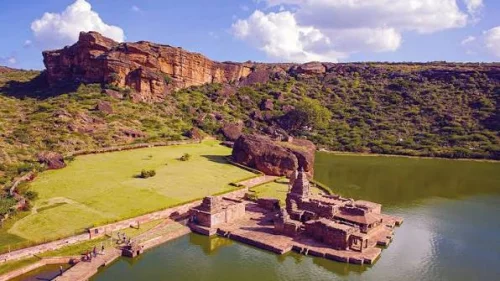
Badami Fort is a historic hilltop fort in Badami, Karnataka, built during the Chalukya period and overlooking the town and Agastya Lake.
 Lake
Lake
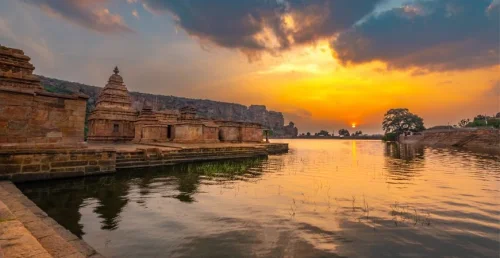
Agastya Lake is a historic man-made lake in Badami, Karnataka, surrounded by ancient temples, sandstone cliffs, and rock-cut cave monuments.
 Tourist Attraction
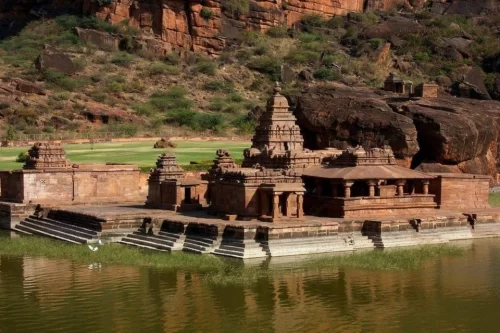
Badami Cave Temples are a group of rock-cut cave temples carved into sandstone cliffs in Badami, Karnataka.
Get customized Karnataka tour planning designed around regional diversity, seasonal weather shifts, road travel distances, and realistic pacing. Whether you are visiting for heritage monuments, temple architecture, hill retreats, wildlife reserves, beach
⚡ Quick Response | 💰 Free consultation | 🕒 24×7 expert support

