+91 9910402252
admin@chalbanjare.com


| Entry Fee | Free |
| Timings | 06:00 - 18:00 |
| Altitude (m) | 900 |
| Ideal Visit Duration (hrs) | 1 |
| Best Time of Day | Morning |
| Crowd Level | Moderate |
| Distance from Srinagar (km) | 165 |
| Distance from Kupwara (km) | 65 |
| Distance from Sadhna Top (km) | 35 |
| Walking Difficulty | Easy |
| Parking Available | Yes |
| Last Mile Access | Road |
| Suitable for Kids | Yes |
| Suitable for Seniors | Yes |
| Wheelchair Friendly | No |
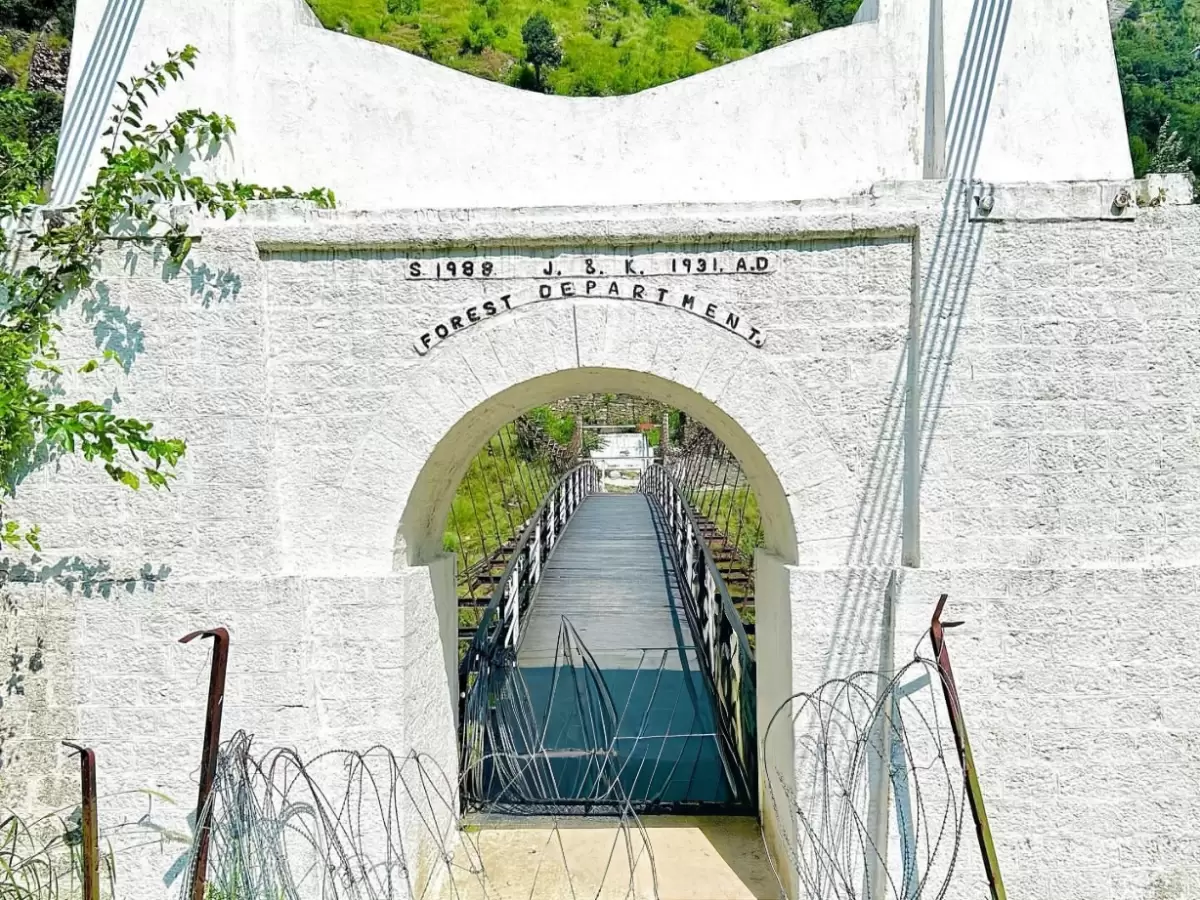
The Teetwal Bridge, also known as the White Knight Bridge, is a historic and strategic crossing point situated on the Kishanganga River, which acts as the Line of Control (LoC) between India and Pakistan-administered Kashmir. Travelers visit this unique location to stand at one of the few places where the international boundary is physically tangible, offering a profound and sobering perspective on the shared geography and divided history of the region.
The atmosphere on the ground is a rare blend of high-security vigilance and peaceful cross-border stillness. Visitors can walk right up to the edge of the river, where the two sides are separated by only a few meters of water. The sound of the rushing Kishanganga is the constant backdrop to a landscape of steep, pine-covered mountains and the quiet, resilient village of Teetwal, where the presence of the Indian Army and the proximity of the "other side" create a visceral sense of being at the very edge of the nation.
What makes the Teetwal Bridge distinct is its role as a "peace bridge" and a site of deep emotional significance for families divided by the border. It is home to the recently reconstructed Sharda Yatra Temple and a Gurudwara, marking it as a vital spiritual gateway to the ancient Sharda Peeth located just across the river. Standing on the bridge offers an unparalleled vantage point to witness the daily life of border communities and serves as a powerful reminder of the cultural and spiritual threads that continue to connect the people of the Himalayas across political lines.
Teetwal Bridge is a significant cross-border structure situated at an elevation of approximately 1,050 meters (3,445 feet) in the Kupwara district of Jammu and Kashmir. Spanning the Kishanganga River, it connects the village of Teetwal on the Indian side with Chilhana in Pakistan-administered Kashmir, serving as one of the few official crossing points along the Line of Control (LoC).
Geographically, the bridge is located at a narrow point of the Kishanganga River, where the water serves as the de facto international boundary. The surrounding terrain is a deep, rugged river valley flanked by steep, forested ridges of the Shamsabari range. This specific location is geographically vital as it provides the only viable low-altitude transit point for the inhabitants of the remote Karnah sector, who are otherwise hemmed in by high mountain passes that become impassable during the winter months.
Historically, Teetwal was a thriving trade hub on the ancient route to Gilgit and Skardu before the partition of the subcontinent. Following the conflict of 1947-48, the original bridge was destroyed and the area became a heavily militarized zone. In 2005, the bridge gained renewed humanitarian importance when it was designated as one of the five "Meeting Points" (TCFs) to facilitate the exchange of relief material and allow divided families to meet following the devastating Kashmir earthquake. Today, the white line marked in the center of the bridge remains a powerful symbol of the regional geopolitical reality, while the nearby reconstructed Sharda Peeth base temple and a newly built Gurudwara have turned the area into a significant site for religious and cultural heritage tourism.
Teetwal Bridge, an emotionally charged suspension bridge spanning the Kishanganga River at approximately 5,500 feet, serves as a significant landmark on the Line of Control (LoC). While the bridge itself is at a lower altitude than the surrounding passes, access to the village is entirely dependent on the status of Sadhna Top. The site has recently grown in spiritual and cultural prominence with the reconstruction of the Sharda Devi Temple nearby, making it a key destination for heritage tourism in the Karnah region.
Teetwal Bridge is a significant border crossing point located on the Kishanganga River in the Kupwara district of Jammu and Kashmir. Situated at the Line of Control (LoC), this bridge—reconstructed as the "Bridge of Peace"—connects Teetwal in India with Chilhana in Pakistan-administered territory. It serves as a vital point for divided families to meet and stands as a symbol of peace and cross-border cultural connection.
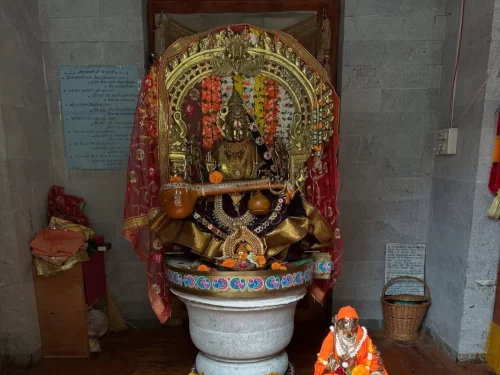 Temple
The Sharda Devi Temple at Teetwal is a recently reconstructed Hindu shrine situated at an elevation of approximately 1,600 meters (5,250 feet) on the banks of the Kishanganga River in the Kupwara district.
Get customized Jammu and Kashmir tour planning designed around seasonal weather patterns, valley travel routes, snow conditions, and realistic hill road timing. Whether you are visiting for scenic landscapes, serene lakes, spiritual journeys, meadow stays
⚡ Quick Response | 💰 Free consultation | 🕒 24×7 expert support

