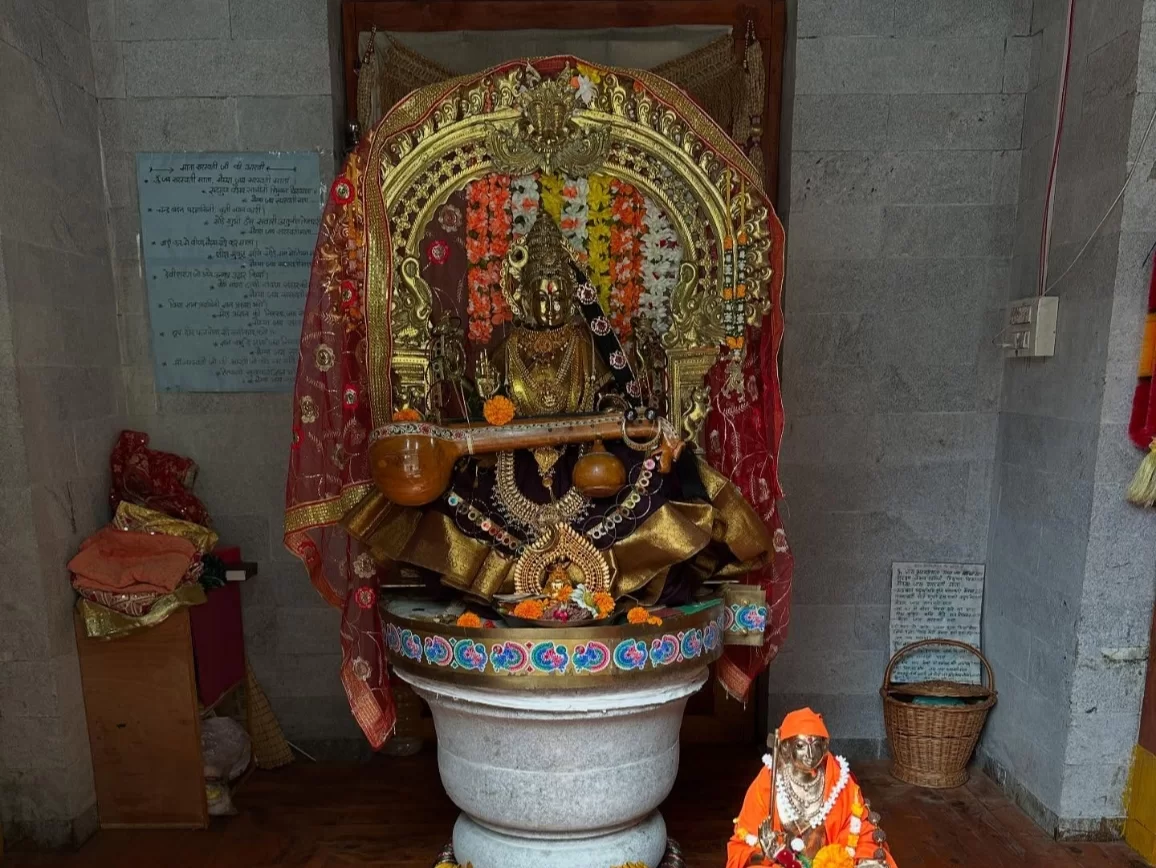
Sharda Devi Temple: Modern Pilgrimage Shrine and Cultural Landmark in Teetwal, Jammu and Kashmir, India

Sharda Devi Temple , Teetwal
Tourists visit the Sharda Devi Temple in Teetwal to witness the revival of an ancient spiritual tradition. The temple was built to serve as a symbolic replacement for the historic Sharada Peeth, an ancient temple-university and one of the 18 Maha Shakti Peethas now located in ruins across the Line of Control in Pakistan-administered Kashmir. Inaugurated in March 2023, the shrine is constructed in traditional Kashmiri architectural style and represents a significant emotional and cultural milestone for the Kashmiri Pandit community. It has rapidly become a central point for border tourism, offering visitors a peaceful environment for prayer and reflection just meters away from the LoC, effectively serving as a base for those seeking a spiritual connection to the \"lost\" seat of learning.

Quick Facts About Sharda Devi Temple

Entry Fee Free
Timings 07:00 - 18:00
Altitude (m) 910
Ideal Visit Duration (hrs) 1
Best Time of Day Morning
Crowd Level Moderate
Distance from Srinagar (km) 165
Distance from Kupwara (km) 65
Walking Difficulty Easy
Parking Available Yes
Last Mile Access Road
Suitable for Kids Yes
Suitable for Seniors Yes
Wheelchair Friendly No

Why Visit Sharda Devi Temple in Teetwal

The Sharda Devi Temple in Teetwal is a profound spiritual landmark situated on the banks of the Kishanganga River, directly on the Line of Control. Travelers visit this sacred site to witness the historic revival of the ancient Sharda Peeth pilgrimage circuit, as this newly reconstructed temple serves as a base for devotees who look across the river toward the ruins of the original Sharda Peeth university located just a few kilometers away in Pakistan-administered Kashmir.

The atmosphere on the ground is one of deep reverence and peaceful resilience, characterized by the sound of temple bells blending with the rushing waters of the border river. The temple architecture follows traditional Kashmiri styles, using local stone and intricate wood carvings, creating a sanctuary of quiet reflection amidst the high-security environment of the frontier. Visitors experience a unique sense of closeness to history, as they stand in a place that has regained its status as a vital center for the Sharda civilization and Kashmiri Pandit heritage.

What makes the Sharda Devi Temple at Teetwal distinct is its role as a "bridge of faith" in one of the most sensitive border zones in the world. It stands as a symbol of cultural reclamation and peace, offering a rare vantage point where spiritual devotion meets the realities of the international boundary. The temple complex, which also includes a Gurudwara, serves as a poignant reminder of the region's pluralistic past and its aspirations for a future where ancient pilgrimage routes are once again accessible to all, making it an essential destination for heritage seekers and spiritual travelers alike.

Historical and Religious Significance of Sharda Devi Temple, Teetwal

The Sharda Devi Temple in Teetwal is a significant religious site situated at an elevation of approximately 1,050 meters (3,445 feet) on the banks of the Kishanganga River in the Kupwara district. It serves as a modern revival of the ancient Sharda Peeth heritage, located just 500 meters from the Line of Control (LoC). The temple was reconstructed and inaugurated in March 2023, marking the restoration of a sacred link that had been severed since the partition of 1947.

Geographically, the temple is positioned in the remote Karnah Valley, nestled between the rugged Shamsabari mountain range and the Kishanganga River, which acts as the natural border in this sector. The site historically served as a base camp and an essential transit point for pilgrims traveling to the original Sharda Peeth, an ancient university and temple located further downstream in present-day Pakistan-administered Kashmir. The proximity to the river and the surrounding high-altitude ridges gives the site a profound spiritual and strategic atmosphere.

Historically, the reconstruction of this temple is seen as a milestone in the preservation of the Sharda civilization and the Sharda script. The project was led by the Save Sharda Committee and built using granite specially brought from Karnataka, following traditional Dravidian and Kashmiri architectural styles. The site also includes a newly constructed Gurudwara, reflecting the pluralistic heritage of the region. Today, it stands as a symbol of cultural resilience and is a primary destination for devotees and heritage enthusiasts who seek to honor the ancient Goddess of Knowledge, Saraswati, at the very edge of the frontier.

Best Time to Visit Sharda Devi Temple Teetwal

The Sharda Devi Temple in Teetwal, located at approximately 5,500 feet on the banks of the Kishanganga River, is a newly reconstructed spiritual landmark on the historic Sharda Peeth pilgrimage route. Situated right on the Line of Control (LoC), the temple’s accessibility is governed by the trans-Himalayan weather at Sadhna Top and the seasonal protocols of the border region.

  • Ideal months: March to October is the most favorable window, with March and April being particularly significant for the annual Navratri celebrations and the Sharda Sthapana Diwas, which attract a high volume of pilgrims.
  • Weather conditions: Summer daytime temperatures are pleasant, ranging from 15°C to 26°C; however, the valley floor can be humid during the day, and the proximity to the rushing Kishanganga River means temperatures drop sharply after sunset.
  • Periods to avoid: Avoid the deep winter months from December to February when the heavy snowpack at Sadhna Top frequently severs road connectivity to the Karnah Valley; additionally, the peak monsoon period in late July and August can lead to road closures due to landslides on the steep Kupwara-Teetwal axis.

How to Reach Sharda Devi Temple Teetwal

The Maa Sharda Devi Temple TweetwalClick to open side panel for more information is a newly constructed pilgrimage site located at the Line of Control (LoC) in the Kupwara district. This temple is architecturally and spiritually inspired by the ancient Sharda Peeth—one of the 18 Maha Shakti Peethas—which is visible just across the Kishanganga River in Pakistan-administered territory.

  • Nearest Airport: Srinagar International Airport (SXR) is the primary air gateway, located approximately 165 km away. The drive to Teetwal takes about 7 to 8 hours and requires crossing the high-altitude Sadhna Top (3,120m).
  • Nearest Railway Station: Baramulla Railway Station is the closest railhead, situated roughly 100 km from the temple. From Baramulla, travelers can hire private vehicles or take shared taxis to Kupwara and then proceed toward Teetwal.
  • Road Access and Route: The journey follows the Srinagar–Kupwara–Chowkibal–Sadhna Pass–Tangdhar route. From Tangdhar, the temple is a further 15 km drive along the banks of the Kishanganga River. The road is paved but involves navigating extreme mountain terrain with multiple hairpin bends.
  • Last-Mile Connectivity: The temple is located in the main Teetwal village and is easily accessible by SUVs, motorcycles, and local shared taxis (Sumos). A short walk from the parking area leads directly to the temple complex.
  • Permits and Security: Because the temple sits directly on the LoC, security is stringent. Indian citizens must carry an original Aadhaar card and register at army checkpoints in Chowkibal, Tangdhar, and at the entrance to Teetwal. Foreign nationals are generally not permitted in this specific border zone due to its strategic sensitivity.
  • Spiritual Significance: The temple was inaugurated in 2023 to revive the ancient Sharda civilization and serve as a base for devotees who cannot visit the original ruins of Sharda Peeth. It features a traditional Kashmiri style of architecture using stone and wood.
  • Practical Amenities: Teetwal is a remote village; basic facilities are available, but for fuel and proper meals, travelers should use Tangdhar. A few homestays have recently opened to accommodate pilgrims. Mobile connectivity is limited, with BSNL being the only network that works intermittently near the river.

What to Expect When You Visit Sharda Devi Temple Teetwal

The Maa Sharda Devi Temple Tweetwal is a newly reconstructed spiritual landmark located on the banks of the Kishanganga River, right on the Line of Control (LoC). This site holds immense historical and religious significance as it served as one of the base camps for the ancient annual pilgrimage to the original Sharda Peeth, which is visible across the river in Pakistan-administered Kashmir. The reconstruction of this temple in 2023 is seen as a major step in reviving the ancient Sharda civilization and culture in the region.
  • Environment and Surroundings: The temple is set against a backdrop of steep, pine-covered mountains and the fast-flowing, turquoise waters of the Kishanganga River. The atmosphere is one of profound serenity mixed with the unique tension of a border zone. Reviewers often mention the emotional experience of standing at the temple site and looking across the narrow river at the Sharda village and the ruins of the original Peeth on the opposite side.
  • Facilities and Amenities: As a relatively new reconstruction, the facilities are basic but well-maintained. The complex includes the main temple built in traditional Kashmiri architectural style using high-quality granite and wood, along with a newly established Sikh Gurudwara and a Ghat for religious rituals. There are no large-scale commercial hotels or restaurants on-site; visitors should rely on the limited guesthouses in the local village or travel back to Tangdhar for more substantial amenities.
  • Accessibility and Movement: Reaching Teetwal involves a long, scenic drive from Srinagar via the Kupwara district and the high-altitude Sadhna Pass. The final stretch of the road runs parallel to the river and the international border. Due to the high-security nature of the location, all visitors must undergo multiple army checks and present valid government identification. Movement around the temple is permitted, but wandering into nearby restricted forest areas or the riverbank is strictly regulated by the military.
  • Typical Visitor Behavior and Conditions: Most visitors are pilgrims and heritage travelers who come to offer prayers and pay homage to the ancient Sharda heritage. Reviewers report that the local community and army personnel are very welcoming to tourists. Visitors typically spend about an hour at the complex, participating in the morning or evening aarti. Photography of the temple is encouraged, but taking photos of military bunkers, bridges, or personnel across the border is strictly forbidden.

Essential Visitor Information for Maa Sharda Devi Temple TweetwalClick to open side panel for more information

  • Crowd and Weather: This newly reconstructed temple is a significant spiritual site located right on the Line of Control (LoC); it attracts pilgrims and heritage enthusiasts but remains peaceful due to its remote location. The weather is pleasant in summer (May to September), while winters are cold and the access route via Sadhna Top may be restricted by heavy snowfall.
  • Peak and Quiet Visiting Hours: Best visited during the morning hours (8:00 AM to 12:00 PM) to experience the serene atmosphere and clear views of the surrounding mountains and the Kishanganga River; ensure you conclude your visit and begin the return journey well before sunset due to border security protocols.
  • Dress Code and Conduct: Modest and traditional attire is expected; visitors must remove their shoes before entering the temple sanctum. As the temple is in a sensitive military zone, maintain a respectful demeanor and strictly follow the instructions of the local temple committee and security personnel.
  • Safety and Practical Cautions: Photography of the temple itself is usually permitted, but taking pictures of military bunkers, bridges, or personnel in the immediate vicinity is strictly forbidden; carry original government-issued photo IDs at all times for verification at the Teetwal check post.
  • Logistics and Significance: The temple was built on the base of an ancient temple that was part of the traditional pilgrimage route to the historic Sharda Peeth (now in Pakistan-administered territory); there are no commercial hotels in Teetwal, so most visitors stay in nearby Tangdhar or return to Kupwara.

Capturing the Spiritual Resilience of Sharda Devi Temple Teetwal

  • LoC Panorama Viewpoint: The temple courtyard offers a direct line-of-sight across the Kishanganga River toward the ruins of the ancient Sharda Peeth in Neelam Valley. Use a telephoto lens to capture the spiritual connection between the newly reconstructed temple and the historic site visible on the opposite ridge.
  • Architectural Symmetry and Detail: The temple is constructed in the traditional Kashmiri Sharda style using high-quality granite and wood. Capturing the symmetrical carvings of the sanctum sanctorum against the backdrop of the rugged Himalayan peaks provides a powerful contrast between man-made precision and raw nature.
  • Golden Hour Alignment: Because the temple is nestled in a deep valley, the sun hits the white stone structures early in the morning. The best lighting occurs between 8:00 AM and 10:00 AM, when the sun illuminates the temple facade without creating the harsh, dark shadows typical of the midday mountain sun.
  • Cross-Border Narrative Shots: Positioning the temple’s shikhara (spire) in the frame with the white-capped mountains of the Line of Control in the background tells a compelling story of the region's geopolitical and religious significance. The fluttering flags in the temple complex add a sense of movement to these static landscape shots.
  • Strict Military Zone Restrictions: As the temple is located within meters of the Line of Control in Teetwal, security is extremely high. While photography of the temple and its immediate surroundings is permitted, it is strictly illegal to photograph military bunkers, personnel, surveillance cameras, or the sensitive bridge infrastructure nearby.
  • Evening Aarti Atmosphere: During the evening prayers, the temple is often illuminated with soft lamps. Using a wide-aperture lens to capture the warm glow of the temple against the "blue hour" sky creates a serene and atmospheric image that highlights the peaceful nature of this frontier pilgrimage site.

Near By Attraction

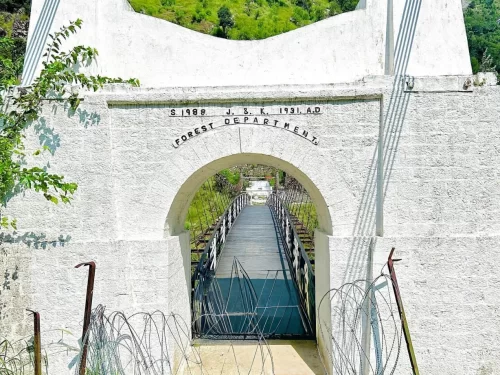
Teetwal Village Forest Department suspension bridge gate during sunny day Kashmir, featuring white arch J&K Forest Dept 1989 greenery wooden bridge barbed wire backdrop, perfect Kashmir tour packages.  Bridge

Teetwal Bridge

Teetwal Bridge is a pedestrian suspension bridge situated at an elevation of approximately 1,600 meters (5,250 feet) in the Karnah region of Kupwara district, directly on the Line of Control.

Frequently Asked Questions About Sharda Devi Temple

Sharda Devi Temple Teetwal is located near the Line of Control in the Kupwara district of Jammu and Kashmir, close to the Kishanganga River. It is situated in a sensitive border region surrounded by mountain landscapes.
Sharda Devi Temple Teetwal can be reached by road from Srinagar via Kupwara, and the journey usually takes 5 to 6 hours depending on road and weather conditions. The final stretch passes through border regulated areas.
Permission is generally required to visit Sharda Devi Temple Teetwal because it lies close to a restricted border zone. Visitors must carry valid identification and follow local security guidelines.
The best time to visit Sharda Devi Temple Teetwal is between May and October when weather conditions are stable and roads remain open. Clear days provide better mountain visibility and smoother travel.
Around one to two hours are usually sufficient to visit Sharda Devi Temple Teetwal and spend time in the temple area. The overall trip requires a full day due to travel distance.
Sharda Devi Temple Teetwal is suitable for families who are comfortable with long road journeys and security checks. The temple visit itself involves minimal walking.
Sharda Devi Temple Teetwal can be visited during most months when access is permitted, but heavy snowfall in winter may affect road connectivity. Checking local travel updates before departure is important.
Visitors to Sharda Devi Temple Teetwal should carry valid identification, water, snacks, and seasonal clothing. Basic facilities are limited due to the remote border location.
Accommodation facilities are limited near Sharda Devi Temple Teetwal, and most travelers prefer staying in larger towns before planning the visit. It is usually managed as a day trip.
Photography may be restricted in certain areas around Sharda Devi Temple Teetwal due to its proximity to security sensitive zones. Visitors should follow instructions given by authorities.
Sharda Devi Temple Teetwal can be combined with scenic drives through mountain valleys during the same trip. The route itself offers views of rivers and forested hills.
Travelers planning a visit to Sharda Devi Temple Teetwal should prepare for security procedures, long travel hours, and limited facilities. Proper planning ensures a smoother and respectful visit in this border region of Jammu and Kashmir.

Loved this place ? Let’s Plan Your Jammu and Kashmir Trip

Get customized Jammu and Kashmir tour planning designed around seasonal weather patterns, valley travel routes, snow conditions, and realistic hill road timing. Whether you are visiting for scenic landscapes, serene lakes, spiritual journeys, meadow stays

⚑ Quick Response | πŸ’° Free consultation | πŸ•’ 24Γ—7 expert support

×

Plan Your Trip