Quick Facts About Shankaracharya Temple
| Entry Fee | Free |
| Timings | 06:00 - 18:00 |
| Altitude (m) | 1070 |
| Ideal Visit Duration (hrs) | 2 |
| Best Time of Day | Morning |
| Crowd Level | Moderate |
| Distance from Lal Chowk (km) | 5 |
| Walking Difficulty | Hard |
| Parking Available | No |
| Last Mile Access | Walk |
| Suitable for Kids | Yes |
| Suitable for Seniors | No |
| Wheelchair Friendly | No |
Why Visit Shankaracharya Temple in Srinagar
Visitors come to Shankaracharya Temple to explore one of Kashmir’s most iconic Hindu shrines, dedicated to Lord Shiva, perched on a hill overlooking Srinagar. It draws pilgrims, architecture enthusiasts, and travelers seeking panoramic views of the city and Dal Lake.
The on-ground atmosphere is peaceful yet elevated, with the temple accessible via a steep climb or a series of steps through rocky terrain. The surrounding hill offers quiet spots for contemplation and uninterrupted views of the valley below.
What makes Shankaracharya Temple distinct for travelers is its combination of spiritual significance, hilltop vantage point, and historic architecture. The temple’s location provides a unique perspective of Srinagar, making it both a pilgrimage site and a prime viewpoint for photography and sightseeing.
History of Shankaracharya Temple, Srinagar
Shankaracharya Temple, perched on Shankaracharya Hill, is dedicated to Lord Shiva and is believed to date back over 2,000 years, with the present structure reconstructed during the 9th century CE. It is named after Adi Shankaracharya, who is traditionally credited with visiting the site to revive Hindu philosophy in Kashmir.
The temple’s location atop a steep hill provides strategic views of Srinagar and Dal Lake, reflecting its historical role not only as a religious site but also as a landmark for the region. Its architecture combines Kashmiri temple design with stone terraces and ornate carvings.
Over centuries, Shankaracharya Temple has remained a major pilgrimage destination for devotees of Shiva, symbolizing the endurance of Hindu religious traditions in Kashmir and serving as a focal point of cultural and spiritual heritage.
Best Time to Visit Shankaracharya Temple
Shankaracharya Temple is best visited during spring and summer when the weather is mild, the hill trails are safe to climb, and panoramic views of Srinagar and Dal Lake are unobstructed.
- Ideal months: March to October, with April to September offering the most comfortable conditions for trekking and sightseeing.
- Weather during the best season: Mild to warm temperatures, clear skies, and minimal rainfall, making the climb and temple visit pleasant.
- Periods to avoid: November to February due to cold weather, snow-covered paths, and slippery steps that increase difficulty and risk.
How to Reach Shankaracharya Temple, Srinagar
Shankaracharya Temple is an ancient Hindu temple situated atop Shankaracharya Hill in Srinagar, Jammu & Kashmir, offering panoramic views of the city and Dal Lake. Access involves a combination of road travel and a short uphill climb.
- Nearest Airport: Srinagar International Airport (Sheikh ul-Alam Airport), approximately 21 km away. Flights connect from Delhi, Mumbai, Bengaluru, and other major cities. Taxis or private cabs from the airport take about 45–60 minutes to reach the base of the hill.
- Nearest Railway Station: Srinagar Railway Station, around 11 km from the temple. Visitors can hire taxis or auto-rickshaws to reach the foot of Shankaracharya Hill.
- Road Access & Last-Mile Connectivity: The temple is accessible via a winding uphill road leading to the base parking area. From there, visitors must climb approximately 200–250 steps to reach the shrine. During winter, icy or slippery steps may require caution. Parking is limited, so private cabs or taxis are recommended for convenience.
What to Expect When You Visit Shankaracharya Temple
- Shankaracharya Temple is perched on a hill overlooking Srinagar and Dal Lake, offering panoramic views of the city and surrounding mountains. Expect a combination of historic architecture and natural rocky terrain along the ascent.
- Facilities are limited at the hilltop. There are basic seating areas and some shaded spots, but no cafes or extensive amenities. Visitors should carry water and wear comfortable clothing for the climb.
- Accessibility involves climbing approximately 300–350 steps from the base to the temple. The path is steep and uneven in parts, making it unsuitable for wheelchairs or those with serious mobility issues.
- Visitors typically walk up at a moderate pace, stopping to enjoy views and take photographs. The atmosphere is peaceful, with devotees performing prayers and tourists observing the architecture and scenery.
- Typical visit duration ranges from 45 minutes to 1.5 hours depending on climbing speed and time spent at the temple top.
- Weather affects the visit: summers are pleasant but can be sunny, while winters are cold and icy, making steps slippery. Proper footwear and layered clothing are recommended.
Important Visitor Information for Shankaracharya Temple, Srinagar
- Crowd and Weather Notes: The temple sees the most visitors during summer months (April to September) and on weekends. Winters are cold, and snowfall may make the hilltop paths slippery. Early mornings provide a quieter and more serene experience.
- Peak and Quiet Visiting Hours: Peak hours are between 10:00 AM and 3:00 PM. Early morning (8:00 AM to 10:00 AM) and late afternoon (after 4:00 PM) visits are less crowded and ideal for photography and peaceful exploration.
- Dress Code: Modest clothing is recommended as it is a religious site. Comfortable footwear is essential due to steep and uneven stone steps leading to the temple.
- Safety Notes and Practical Cautions: The climb involves narrow, uneven steps; caution is advised. Avoid venturing close to ledges and maintain respect for the sanctity of the temple. Carry water and minimal essentials, as facilities are limited at the hilltop.
Photography and Viewpoints at Shankaracharya Temple, Srinagar
- The hilltop location provides panoramic views of Srinagar city and Dal Lake, ideal for wide-angle shots capturing the temple against the valley backdrop.
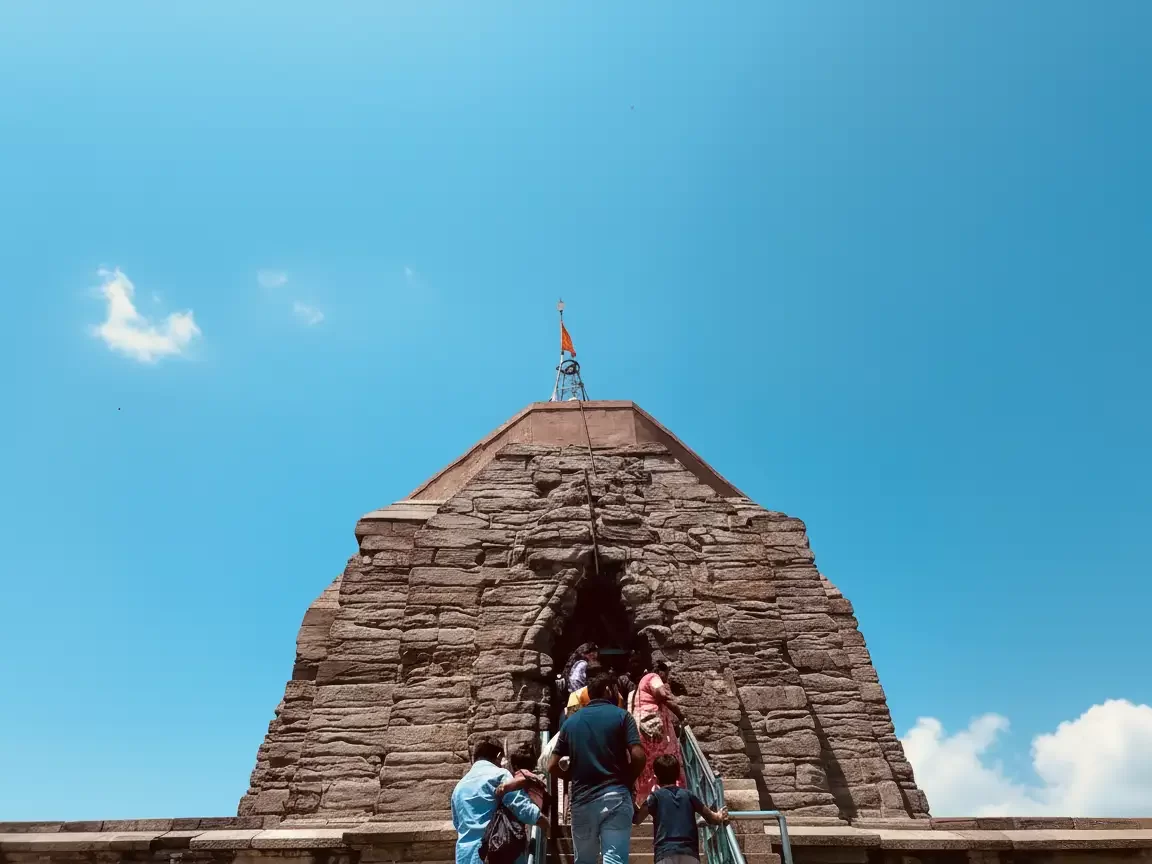
- Approach pathways and staircases leading up to the temple allow framing of the temple’s exterior, stone carvings, and intricate railings from multiple angles.
- Early morning light illuminates the temple façade and reduces shadows in the valley below; late afternoon light highlights textures and adds warmth to stone surfaces.
- Overcast days provide even lighting for detailed photography of carvings and the temple structure without harsh contrasts.
- Photography is allowed for tourists; interior access may have restrictions during rituals, and drones require prior permission from local authorities.
- Weekends and festival days can be crowded; early visits ensure unobstructed viewpoints and clearer frames of both the temple and cityscape below.