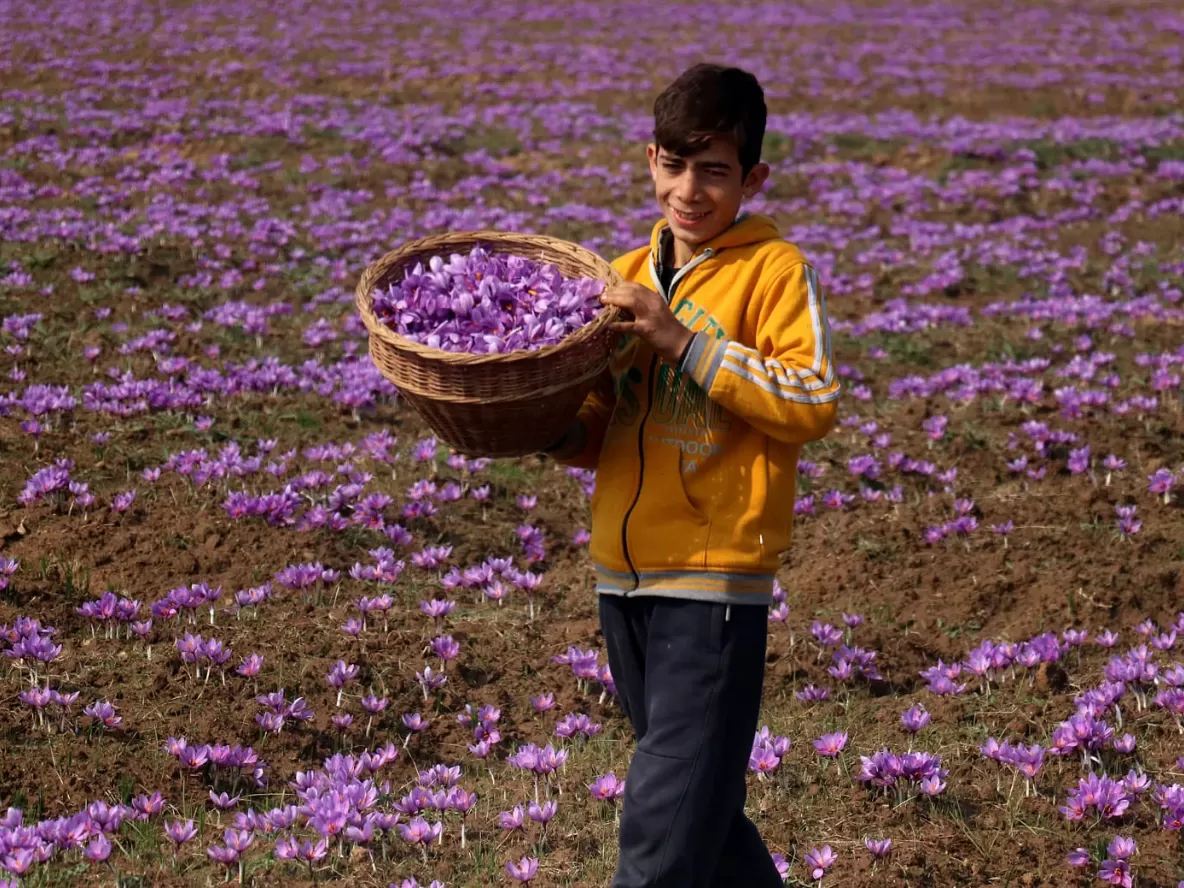
Saffron Fields Pampore: The Saffron Capital of India, Jammu and Kashmir, India

Saffron Fields Pampore , Pahalgam
Tourists visit Pampore to witness the cultivation of \"Kashmiri Saffron\" (Lachha or Guchi), widely regarded as the most expensive and highest-quality saffron in the world due to its intense aroma and deep crimson color. The fields are a major attraction during the peak blooming and harvest season (late October to early November), when the vast plateaus (Karewas) are blanketed in a sea of vibrant purple crocus flowers. Visitors can walk through the fields, participate in traditional hand-picking of the flowers with local farmers, and visit processing units to see how the precious red stigmas are separated and dried. The site offers a unique sensory experience where the air is filled with a distinct floral fragrance, complemented by the opportunity to taste authentic saffron-infused Kashmiri Kahwa directly at the source.

Quick Facts About Saffron Fields Pampore

Entry Fee Free
Timings 00:00 - 23:59
Altitude (m) 1574
Ideal Visit Duration (hrs) 1
Best Time of Day Morning
Crowd Level Moderate
Distance from Srinagar (km) 15
Walking Difficulty Easy
Parking Available Yes
Last Mile Access Road
Suitable for Kids Yes
Suitable for Seniors Yes
Wheelchair Friendly No

Why Visit Saffron Fields in Pampore

Pampore, popularly known as the "Saffron Town of Kashmir," is the only place in the world outside of Spain and Iran where high-quality saffron is grown at scale. Travelers visit these legendary plateaus (karewas) to witness the cultivation of "Crocus sativus," the source of the world’s most expensive spice, which has been part of the region's agricultural fabric since the 1st century BC.

The atmosphere on the ground is most enchanting during the late autumn harvest, typically from late October to mid-November, when the vast, arid fields are transformed into a sea of vibrant purple blossoms. Visitors experience a unique cultural spectacle as local families gather in the early morning light to hand-pick the delicate flowers, creating a landscape filled with a subtle, earthy fragrance and the quiet, rhythmic activity of a harvest that has remained unchanged for generations.

What makes the saffron fields of Pampore distinct is the specific soil quality of the "karewas," which provides the perfect drainage and mineral content for producing "Lacha" and "Mogra" saffron, known for its intense color and potent aroma. It offers travelers a rare opportunity to purchase authentic, GI-tagged saffron directly from the farmers and to learn about the painstaking process of separating the crimson stigmas from the petals, making it a premier destination for culinary enthusiasts and those seeking to understand the deep-rooted traditions of Kashmiri heritage.

Historical and Geographic Significance of Saffron Fields, Pampore

Pampore, situated at an elevation of approximately 1,574 meters (5,164 feet) in the Pulwama district, is famously known as the "Saffron Town of Kashmir." It is one of the few places in the world, and the only one in India, where the high-grade Crocus sativus—the saffron flower—is cultivated on a commercial scale, earning the region the title of the "Saffron Capital of India."

Geographically, the cultivation is unique to the "Karewas" of Pampore—elevated tablelands composed of ancient lacustrine (lake-bed) deposits. This specific soil type is rich in minerals and offers the excellent drainage required for saffron corms to thrive. The fields are spread over vast, treeless plateaus that provide maximum sunlight exposure, a critical factor for the synthesis of crocin, which gives Kashmiri saffron its intense color and medicinal potency. The climate of the Jhelum valley basin, with its distinct cold winters and dry autumns, provides the perfect environmental trigger for the delicate purple blooms that appear in late October.

Historically, saffron cultivation in Pampore is believed to have been introduced by two Sufi saints, Hazrat Khwaja Masood Wali and Hazrat Sheikh Sharif-ud-Din, during the 12th century. However, some ancient records suggest it was grown in the region as early as 500 BC. The spice has been a cornerstone of Kashmiri culture, cuisine, and traditional medicine for over a millennium. Today, the Saffron Fields are protected under a Geographical Indication (GI) tag, ensuring the authenticity of the "Kashmiri Mongra" and "Lacha" varieties. During the harvest season, the fields become a major cultural landmark, drawing visitors from across the globe to witness the traditional hand-picking of the flowers against the backdrop of the Himalayan foothills.

Best Time to Visit Saffron Fields Pampore

Pampore, known as the "Saffron Town of Kashmir," is situated at an altitude of approximately 5,300 feet and is one of the few places in the world where high-quality Crocus sativus is cultivated. The experience of the saffron fields is highly time-sensitive, as the vibrant purple blooming season occurs only once a year for a very short duration, transforming the karewas (tablelands) into a spectacular floral carpet.

  • Ideal months: Late October to early November is the critical window for the saffron bloom; the flowers typically peak during the last week of October, providing the iconic sight of thousands of purple blossoms being harvested by hand.
  • Weather conditions: During the autumn harvest, the weather is crisp and dry with daytime temperatures ranging from 12°C to 18°C; the clear, sunny days of the "Kashmiri autumn" are perfect for photography and witnessing the delicate flower-picking process.
  • Periods to avoid: Avoid visiting from December to August if your goal is to see the flowers, as the fields remain dormant and look like barren brown soil for most of the year; additionally, avoid early October as the fields may still be in the preparation stage before the first buds emerge.

How to Reach Saffron Fields Pampore

Pampore, located on the eastern banks of the Jhelum River, is globally renowned as the "Saffron Town of Kashmir." It is the only place in India and one of the few in the world where the high-quality Crocus sativus (saffron) is cultivated. The sprawling purple fields during the bloom season offer one of the most unique agricultural spectacles in the Himalayas.

  • Nearest Airport: Srinagar International Airport (SXR) is the closest air link, situated just 18 km away. The drive to the saffron fields is very short, typically taking 30 to 45 minutes via the Srinagar-Pulwama road or the National Highway 44.
  • Nearest Railway Station: Pampore has its own railway station (Pampore Railway Station) on the Kashmir Railway line. It is well-connected to Srinagar, Anantnag, and Banihal. From the station, the saffron fields are within a 2-3 km radius and can be reached via local auto-rickshaws.
  • Road Access via NH44: The saffron fields are located directly along the Jammu-Srinagar National Highway (NH44). As you drive from Srinagar toward Anantnag or Pahalgam, the vast plateau (Kerewa) of Pampore appears on both sides of the highway, making it one of the most accessible tourist spots in Kashmir.
  • Last-Mile Connectivity: The fields are situated on flat plateaus. Any vehicle type—from small cars to large tourist buses—can park right at the edge of the fields. Most visitors simply walk a few meters into the plantations from the main highway or the interior Pampore-Lethpora road.
  • Seasonal Accessibility: While the fields are visible year-round, the Saffron Bloom Season is extremely short, lasting only from late October to mid-November. This is when the plateau turns into a sea of purple flowers. Harvest usually takes place early in the morning during this period.
  • Traveler Logistics: There is no entry fee to visit the fields. Travelers are free to walk through the dedicated paths and interact with local farmers. During the bloom, local "Saffron Festivals" are often organized by the Department of Agriculture to showcase the harvesting and drying process.
  • Practical Amenities: Lethpora, a small town just ahead of Pampore on the highway, is the commercial hub for saffron. It is lined with dozens of showrooms where you can buy authentic Kesar, Kahwa, and dry fruits. These outlets also offer clean restrooms and traditional Kashmiri tea (Kahwa) for travelers.

What to Expect When You Visit the Saffron Fields of Pampore

Pampore, often referred to as the "Saffron Town of Kashmir," is the only place in the world besides Spain and Iran where high-quality saffron is cultivated. The Pampore Saffron Fields are located on the vast plateau lands (Karewas) just outside Srinagar. During the peak blooming season, the landscape is transformed into a breathtaking purple carpet of crocuses, offering a sensory experience that combines natural beauty with the rich agricultural heritage of the region.
  • Environment and Surroundings: The fields are situated on unique elevated alluvial plateaus that provide the perfect soil conditions for the Saffron Crocus (Crocus sativus). The area is open and expansive, offering panoramic views of the surrounding mountains. Reviewers note that the air in late autumn carries a distinct, delicate floral fragrance from the millions of blooming flowers.
  • Facilities and Amenities: While the fields are primarily active agricultural lands, the main highway passing through Pampore is lined with numerous shops and government-run outlets. These facilities allow visitors to witness the sorting of saffron threads and purchase authentic, laboratory-tested saffron, dried fruits, and "Kahwa" (Kashmiri tea). Many local shops offer complimentary tastings of saffron-infused tea to travelers.
  • Accessibility and Movement: The fields are highly accessible, located right along the Srinagar-Jammu National Highway (NH44), about 15 kilometers from Srinagar. Visitors can easily pull over and walk into the fields. The ground is generally flat but can be dusty or muddy depending on the weather, so practical footwear is recommended. Most farmers are friendly and allow tourists to walk among the crop, provided they do not step on the delicate flowers.
  • Typical Visitor Behavior and Conditions: The prime time to visit is during the "Saffron Harvest," which typically occurs between late October and mid-November. During this window, visitors often join local families in the early morning to watch the hand-picking of the purple flowers. Reviewers suggest spending 45 to 60 minutes here for photography and visiting a local processing unit to learn about the labor-intensive process of extracting the red stigmas.

Essential Visitor Information for Saffron Fields Pampore

  • Crowd and Weather: Pampore is the global center for Kashmiri Saffron; while the fields are vast and peaceful, they attract significant numbers of tourists and photographers during the brief flowering window. The weather in late autumn is crisp and cool during the day, with temperatures dropping sharply after sunset.
  • Peak and Quiet Visiting Hours: The absolute peak time is the "Saffron Bloom," which typically occurs between late October and mid-November; visit between 9:00 AM and 12:00 PM to see the purple crocuses in full bloom and witness local farmers traditionally hand-picking the flowers before they wilt in the afternoon sun.
  • Dress Code and Conduct: Wear modest, comfortable clothing and sturdy walking shoes or boots, as you will be walking directly on loose, dry soil between the saffron beds. Always stay on the narrow designated paths between the raised mounds to avoid trampling the delicate crocus corms.
  • Safety and Practical Cautions: Be wary of unauthorized "guides" or vendors offering high-priced saffron; it is safer to observe the harvest and then purchase authenticated saffron from government-recognized outlets or established local cooperatives. The fields are located directly along the National Highway (NH44), so exercise caution when parking or crossing the busy road.
  • Experience-Based Notes: The fragrance of the fields is most potent in the early morning; for the best photography, look for fields away from the main highway where the backdrop of the Himalayan foothills is unobstructed. Many farmers are open to brief conversations about the intensive labor required to produce "Kong" (the local name for saffron).

Capturing the Purple Hues of Saffron Fields Pampore

  • Low-Angle Floral Close-ups: The saffron flower (Crocus sativus) grows only a few inches above the ground. To capture the delicate purple petals and the vivid crimson stigmas, photographers should use a macro lens or get down to ground level. Shooting at f/2.8 or f/4 will blur the vast brown earth and focus entirely on the flower's intricate detail.
  • Panoramic Karewa Landscapes: The fields are situated on unique plateau-like formations known as "Karewas." For expansive landscape shots, use a wide-angle lens from the elevated roadside embankments. This perspective captures the contrast between the purple floral carpet and the distant, snow-dusted Pir Panjal Range.
  • Peak Bloom Timing: The blooming window is extremely short, typically lasting only two weeks from late October to early November. The best time for photography is at sunrise (6:30 AM to 8:30 AM), when the flowers are still partially closed and covered in dew, which prevents the colors from looking washed out under the harsh midday sun.
  • Candid Harvest Documentation: Early morning is also when local farmers, often families including women and children, pick the flowers by hand. Capturing the traditional wicker baskets (Kangris) filled with purple blooms provides a rich cultural narrative. Always ask for permission before taking close-up portraits of the workers.
  • Saffron Dust and Light: In the late afternoon, the dry soil of the Karewas can create a fine haze. While this reduces long-distance clarity, it provides a soft, diffused light that is excellent for "moody" agricultural photography, emphasizing the timeless and labor-intensive nature of the saffron harvest.
  • National Highway Access: Most photography occurs in the fields immediately adjacent to the Jammu-Srinagar National Highway (NH44). While access is generally open, be mindful of where you park to avoid traffic hazards, and avoid stepping directly on the flower beds, as the saffron bulbs are sensitive to soil compaction.

Near By Attraction

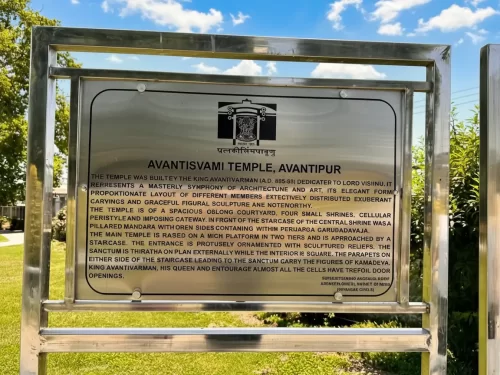
Avantiswami Temple Avantipura information board ruins layout Shiva Vishnu shrines cells pillars ASI protected, Jammu Kashmir heritage tour packages. Archaeological Site

Avantipura Ruins

Avantipura Ruins are the remains of two 9th-century Hindu temples built by King Avantivarman in present-day Awantipora, Pulwama district.
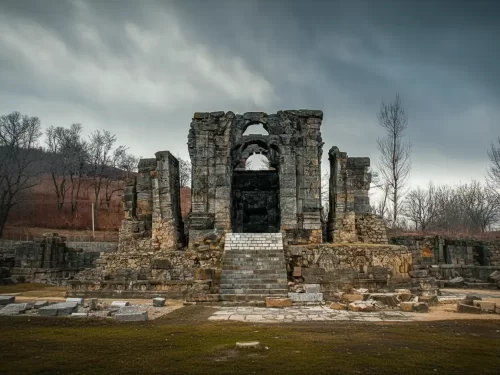
Martand Sun Temple ancient stone ruins arched entrance pillars cloudy sky barren trees Kashmir Jammu, historical heritage tour packages. Temple

Martand Sun Temple

Martand Sun Temple is an 8th-century Hindu temple dedicated to the Sun God, located near Anantnag in Jammu and Kashmir.
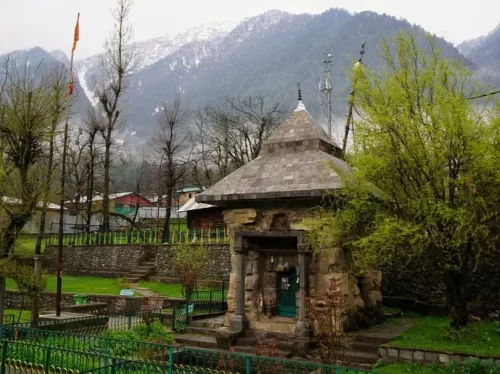
Mamaleshwar Temple Pahalgam ancient Shiva temple with stone architecture set against Himalayan backdrop in Kashmir Temple

Mamaleshwar Temple

Mamaleshwar Temple is an ancient Hindu temple dedicated to Lord Shiva, located near the Lidder River in Pahalgam, Anantnag district of Jammu and Kashmir.

Frequently Asked Questions About Saffron Fields Pampore

Saffron Fields Pampore are located in the Pampore area near Srinagar in Jammu and Kashmir. This region is widely known for cultivating high quality saffron on open plateau style farmland.
Saffron Fields Pampore can be reached by road in about 30 to 40 minutes from Srinagar. Private taxis and local transport operate regularly along the national highway route.
The best time to visit Saffron Fields Pampore is during late October to early November when saffron flowers bloom. This short flowering period offers the most visually striking experience.
Saffron Fields Pampore typically bloom for around two to three weeks in autumn. The exact timing depends on weather conditions each year.
Visitors are usually allowed to walk along the edges of Saffron Fields Pampore, but stepping directly into cultivated areas is restricted to protect crops. Permission from local farmers is important before entering fields.
Around 45 minutes to one hour is generally enough to explore Saffron Fields Pampore and observe the harvesting process if in season. The visit is short and focused on understanding cultivation.
Saffron Fields Pampore are suitable for families and students interested in agriculture and local produce. The terrain is mostly flat farmland, making walking manageable.
Travelers can purchase authentic saffron directly from local growers near Saffron Fields Pampore. Buying from verified sellers helps ensure product quality and authenticity.
There is no formal entry ticket system for Saffron Fields Pampore as they are agricultural lands. Access depends on local arrangements and seasonal activity.
Saffron Fields Pampore are primarily active during the autumn bloom season. Outside flowering months, the fields remain cultivated but do not display the purple blossoms.
Visitors going to Saffron Fields Pampore should carry comfortable footwear, sun protection, and cash for local purchases. Early morning visits provide better lighting and a more active harvesting view.
Saffron Fields Pampore can be combined with other nearby attractions during a half day trip. Their location along the highway makes them convenient to include within a broader regional travel plan.

Loved this place ? Let’s Plan Your Jammu and Kashmir Trip

Get customized Jammu and Kashmir tour planning designed around seasonal weather patterns, valley travel routes, snow conditions, and realistic hill road timing. Whether you are visiting for scenic landscapes, serene lakes, spiritual journeys, meadow stays

⚑ Quick Response | πŸ’° Free consultation | πŸ•’ 24Γ—7 expert support

×

Plan Your Trip