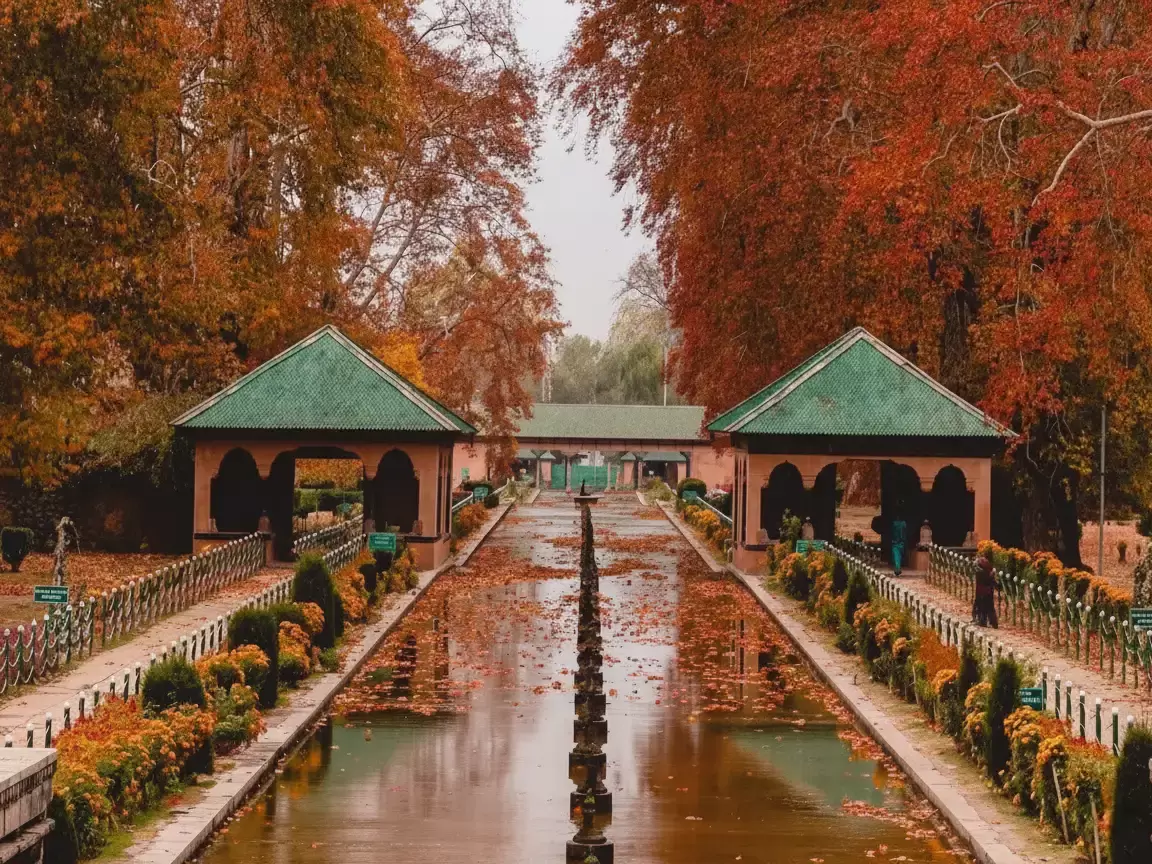
Kokernag Botanical Garden: Largest Freshwater Spring and Floral Reserve in Anantnag, Jammu and Kashmir, India

Kokernag Botanical Garden , Pahalgam
Tourists visit Kokernag Botanical Garden to witness the massive natural spring that divides into several cold-water streams, creating a unique landscape of water channels and cascades. The garden is famous for its collection of exotic medicinal plants, vibrant roses, and towering Chinar trees, making it a major destination for family picnics and nature photography. It also serves as a significant center for trout breeding, featuring one of the largest trout hatcheries in Asia where visitors can observe the fish in specialized ponds and learn about the region\'s aquaculture.

Quick Facts About Kokernag Botanical Garden

Entry Fee 24
Timings 08:00 - 19:30
Altitude (m) 2012
Ideal Visit Duration (hrs) 3
Best Time of Day Morning
Crowd Level Moderate
Distance from Srinagar (km) 80
Distance from Anantnag (km) 25
Walking Difficulty Easy
Parking Available Yes
Last Mile Access Road
Suitable for Kids Yes
Suitable for Seniors Yes
Wheelchair Friendly No

Why Visit Kokernag Botanical Garden in Anantnag

Kokernag Botanical Garden is a magnificent horticultural marvel situated at an elevation of approximately 6,640 feet, famously known for housing the largest fresh water spring in Kashmir. Travelers visit this meticulously landscaped garden to witness the "Pap-shodan-nag" (cleanser of sins) spring, which gushes out from the base of a forested hill and divides into several cold, crystal-clear streams that meander through the lush complex.

The atmosphere on the ground is characterized by a refreshing, cool microclimate created by the abundance of flowing water and the shade of centuries-old Chinar trees. Visitors encounter expansive lawns blanketed with a diverse array of roses and alpine flowers, all set against a backdrop of dense pine forests. The environment is defined by the soothing, rhythmic sound of the cascades and the sight of the famous trout hatchery, where the pure mountain water supports one of the most successful pisciculture centers in the region.

What makes Kokernag distinct is its reputation as a "natural healer," with the spring water widely believed by locals to possess unique medicinal and digestive properties. It offers a premier destination for those seeking a more secluded and tranquil alternative to the busier gardens of Srinagar, providing a unique vantage point to appreciate the intersection of royal-style landscaping and raw Himalayan hydrology. Exploring the garden offers a visceral experience of South Kashmir’s natural bounty, making it an essential stop for families, nature photographers, and travelers seeking quietude in the heart of the Bringhi Valley.

Historical and Geographic Significance of Kokernag Botanical Garden

Kokernag Botanical Garden, situated at an elevation of approximately 2,012 meters (6,601 feet) in the Anantnag district, is home to the largest fresh water spring in Kashmir. The garden is a sprawling manicured landscape that surrounds the famous "Papashudan Nad" (the sin-cleansing spring), which is celebrated for its medicinal and digestive properties and serves as the primary geographic feature of the Breng Valley.

Geographically, the garden is unique due to its multi-channel water distribution system. The main spring gushes out from the base of a forested limestone hill and immediately divides into several smaller streams that resemble the claws of a koker (cockerel), giving the town its name. The garden acts as a massive biodiversity hub, featuring thousands of species of flora, including exotic roses, medicinal herbs, and centuries-old Chinar trees. The cold, oxygenated waters of the spring also support one of Asia's most significant trout hatcheries, managed by the state fisheries department, making the area a critical ecological and economic zone.

Historically, Kokernag has been mentioned in the Ain-i-Akbari, where its water was praised for its ability to cure many ailments and provide unparalleled refreshment. While the Mughals appreciated its beauty, the modern botanical garden was developed to showcase the rich horticultural heritage of the region. It has served as a sanctuary for those seeking health and tranquility for centuries. Today, the garden is a premier destination in the South Kashmir tourist circuit, maintained by the Jammu and Kashmir Tourism Department, offering a serene environment that blends ancient natural wonders with modern botanical preservation.

Best Time to Visit Kokernag Botanical Garden

Kokernag Botanical Garden, situated at an altitude of approximately 6,600 feet in the Breng Valley, is famous for housing the largest fresh water spring in Kashmir. The garden is a sprawling landscape of manicured lawns, ornamental flora, and massive Chinar trees, all fed by the "Papa-shudan" (sin-cleansing) spring that splits into several cold-water streams. While the garden is a year-round destination, its visual appeal is highest when the floral displays are in full bloom or when the autumn foliage creates a vibrant canopy over the water channels.

  • Ideal months: April to June is the peak season for floral enthusiasts, as the roses and high-altitude shrubs are in full bloom; alternatively, October and November are spectacular for witnessing the Chinar trees turn a fiery orange and gold.
  • Weather conditions: Summer daytime temperatures are very pleasant, typically ranging from 15°C to 25°C. The abundance of flowing water and dense tree cover creates a natural cooling effect, making it significantly more comfortable than the lower altitude plains during heatwaves.
  • Periods to avoid: Avoid visiting in January and February if you wish to see the botanical variety, as the garden is mostly dormant and covered in snow during this time; additionally, the peak monsoon weeks in August can bring sudden heavy downpours that make the garden paths wet and restrict outdoor lounging.

How to Reach Kokernag Botanical Garden

The Botanical Garden, KokernagClick to open side panel for more information is one of the largest and most scenic gardens in South Kashmir, situated at an elevation of approximately 2,000m (6,562 ft). It is famous for its trout hatchery and the massive "Papashudan Nad" spring, which splits into several channels as it flows through the terraced landscape of roses and chinar trees.

  • Nearest Airport: Srinagar International Airport (SXR) is the closest air link, located about 85 km away. The drive typically takes 2.5 to 3 hours via the Srinagar-Jammu National Highway (NH44).
  • Nearest Railway Station: Anantnag Railway Station is the nearest railhead, situated roughly 25 km from the garden. From the station, private taxis and shared Sumos provide quick and frequent connectivity to Kokernag.
  • Road Access and Route: The garden is located on the Anantnag-Kokernag-Daksum road. From Anantnag town, it is a straightforward drive on a well-paved, scenic road that passes through Achabal. It is a central landmark in the town of Kokernag.
  • Last-Mile Connectivity: The main entrance to the garden is located directly on the primary road. Any vehicle type, from small cars to luxury coaches, can reach the site easily. The garden itself is vast, and exploring its various levels is best done on foot.
  • Permits and Security: No special permits are required for Indian citizens. Visitors should carry a valid government ID (Aadhaar Card) for general security verification. Foreign nationals should keep their passport and visa copies handy while traveling through the Anantnag district.
  • Seasonal Accessibility: The garden is open year-round, but the best time to visit is from April to October. In spring, the rose garden is in full bloom, while autumn brings the iconic orange glow to the massive chinar trees scattered across the grounds.
  • Practical Amenities: There are several JKTDC tourist bungalows and private hotels located in the immediate vicinity of the garden. The area is well-equipped with local restaurants, ATMs, and shops. Public restrooms and ample parking are available at the main gate.

What to Expect When You Visit Kokernag Botanical Garden

Kokernag Botanical Garden is a sprawling and meticulously maintained landscape in the Anantnag district, famous for housing the largest freshwater spring in Kashmir. The garden is designed around the "Papa-shudan Nad" spring, which naturally splits into several crystalline streams that resemble the claws of a koker (hen), giving the area its name. It is widely regarded as one of the most beautiful and serene botanical sites in the state, offering a more expansive and forested feel than the traditional Mughal gardens.
  • Environment and Surroundings: The garden is characterized by its high-altitude alpine flora, massive ancient Chinar trees, and vibrant rose gardens. The central feature is the cascading spring water that flows through a series of modern and traditional stone channels. Reviewers often highlight the refreshing and cool microclimate created by the dense tree cover and the constant presence of moving water.
  • Facilities and Amenities: This site is very tourist-friendly, featuring well-paved walking paths, public restrooms, and several designated picnic spots. It houses a premium JKTDC tourist bungalow and private hotels nearby for overnight stays. For dining, there are local cafeterias within the garden and several specialized restaurants nearby known for serving fresh trout directly from the local fisheries.
  • Accessibility and Movement: Located approximately 80 kilometers from Srinagar and 25 kilometers from Anantnag town, the garden is easily reachable via a smooth, scenic drive. The internal layout is relatively flat with gentle slopes, making it accessible for families and elderly visitors. A small entry fee is required, and the garden is open daily from early morning until sunset.
  • Typical Visitor Behavior and Conditions: Most visitors spend 2 to 4 hours here, often bringing picnics to enjoy under the shade of the Chinars. Reviewers suggest that the spring water is famous for its medicinal and digestive properties, and many locals can be seen filling bottles at the source. The garden is also a major center for the Department of Fisheries, and visiting the adjacent trout farm is a common activity for travelers.

Essential Visitor Information for Botanical Garden, KokernagClick to open side panel for more information

  • Crowd and Weather: Kokernag is home to the largest botanical garden in Kashmir, famous for its sprawling lawns and the natural "Papashudan Nad" spring; while it is a popular spot for local families and school trips, the vast 26-hectare area ensures it rarely feels overcrowded. The weather is significantly cooler than the surrounding plains due to the dense canopy of ancient Chinar trees and the constant flow of cold spring water.
  • Peak and Quiet Visiting Hours: Best visited during the morning hours (9:00 AM to 12:00 PM) to fully appreciate the floral displays and the clarity of the spring water; weekends and public holidays can be lively with picnickers, so aim for a weekday visit if you prefer a quiet walk through the rose gardens and medicinal plant sections.
  • Dress Code and Conduct: Casual and comfortable attire is suitable, though sturdy walking shoes are recommended for exploring the extensive paved and gravel pathways. Visitors are expected to respect the garden's ecological balance by staying on marked paths and strictly adhering to the "no plastic" policy within the premises.
  • Safety and Practical Cautions: Be mindful of the fast-flowing water channels and deep pools near the main spring, especially when traveling with children. While the garden is well-maintained, some sections of the stone masonry near the water outlets can be slippery due to moss; use the designated bridges to cross the streams.
  • Experience-Based Notes: The garden is renowned for its diverse collection of high-altitude flora, including several varieties of roses and rare shrubs; the spring water is locally celebrated for its digestive properties. The best photography spots are found near the central water cascades where the architectural symmetry of the Mughal-style terraces is most visible.
  • Logistics: Located roughly 25 km from Anantnag, the garden is easily accessible via the NH244; there is a nominal entry fee for adults and children. Basic facilities including restrooms, a small cafeteria, and ample parking are available at the main entrance.

Capturing the Floral Splendor of Kokernag Botanical Garden

  • The Papashudan Nad Spring: The focal point for photography is the massive natural spring where crystal-clear water gushes out from the base of a forested hill. Use a slow shutter speed and a tripod to capture the "silky" flow of the water as it divides into several smaller channels, creating a dynamic foreground for the lush greenery.
  • Symmetrical Flower Bed Vistas: The garden is famous for its meticulously maintained rose gardens and seasonal floral displays. For the best perspective, use a medium-telephoto lens to compress the rows of vibrant blooms, creating a dense carpet of color that leads the eye toward the towering Chinar trees.
  • Reflective Water Channels: The garden features a network of stone-lined canals and ponds. Position yourself at the edge of these channels during the early morning (8:00 AM to 10:00 AM) to capture perfect mirror reflections of the wooden pavilions and the surrounding pine-clad mountains.
  • Ancient Chinar Canopy: Massive, centuries-old Chinar trees provide a dramatic architectural element to the landscape. Low-angle shots from the base of the trunks looking upward are particularly effective in autumn (late October), when the leaves turn a fiery orange and the sunlight creates a "stained-glass" effect through the canopy.
  • High-Angle Terraced Perspectives: To capture the scale and layout of the garden, climb to the higher terraced sections near the forest fringe. From here, a wide-angle lens can document the geometric patterns of the garden paths, the water features, and the village of Kokernag in the distance.
  • Soft Lighting and Morning Mist: Due to the high density of trees and the proximity to the spring, the garden often holds a light mist in the early morning. This soft, diffused light is ideal for macro photography of dewy rose petals and for creating a moody, ethereal atmosphere within the wooded areas.

Near By Attraction

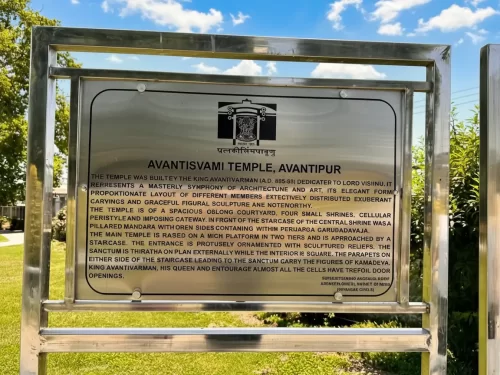
Avantiswami Temple Avantipura information board ruins layout Shiva Vishnu shrines cells pillars ASI protected, Jammu Kashmir heritage tour packages. Archaeological Site

Avantipura Ruins

Avantipura Ruins are the remains of two 9th-century Hindu temples built by King Avantivarman in present-day Awantipora, Pulwama district.
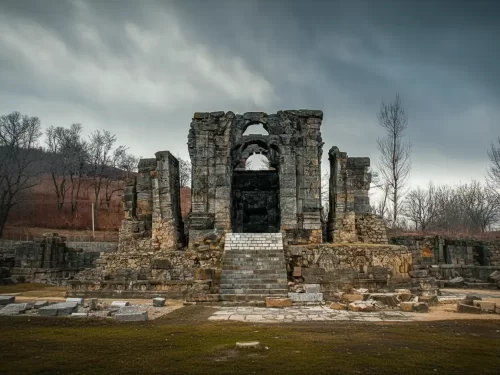
Martand Sun Temple ancient stone ruins arched entrance pillars cloudy sky barren trees Kashmir Jammu, historical heritage tour packages. Temple

Martand Sun Temple

Martand Sun Temple is an 8th-century Hindu temple dedicated to the Sun God, located near Anantnag in Jammu and Kashmir.
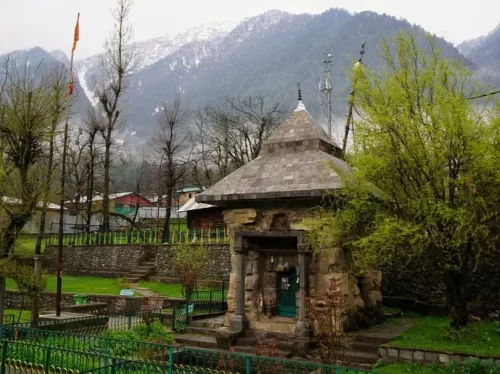
Mamaleshwar Temple Pahalgam ancient Shiva temple with stone architecture set against Himalayan backdrop in Kashmir Temple

Mamaleshwar Temple

Mamaleshwar Temple is an ancient Hindu temple dedicated to Lord Shiva, located near the Lidder River in Pahalgam, Anantnag district of Jammu and Kashmir.

Frequently Asked Questions About Kokernag Botanical Garden

Kokernag Botanical Garden is located in Anantnag district of Jammu and Kashmir near the town of Kokernag, around 70 kilometers from Srinagar city. It is known for its natural springs and landscaped surroundings.
Kokernag Botanical Garden can be reached by road from Srinagar in about two to three hours depending on traffic and weather conditions in Jammu and Kashmir. Private taxis and self drive vehicles are commonly used for this route.
The best time to visit Kokernag Botanical Garden is from spring to early autumn when weather conditions are comfortable in Jammu and Kashmir. The garden appears greener and more vibrant during these months.
Kokernag Botanical Garden is suitable for a full day trip from Srinagar due to its reasonable driving distance. Many travelers combine it with nearby attractions in Anantnag district.
Two to three hours are generally enough to explore Kokernag Botanical Garden at a relaxed pace. Visitors can walk along pathways and spend time near the flowing springs.
Kokernag Botanical Garden usually requires a nominal entry fee collected by local authorities in Jammu and Kashmir. Ticket counters are available at the entrance.
Inside Kokernag Botanical Garden, visitors can see landscaped lawns, flowing freshwater channels, trout ponds, and natural springs in Anantnag district. The garden layout provides a calm and organized environment.
Kokernag Botanical Garden is safe for families and elderly visitors as pathways are structured and mostly level. Walking across the garden is comfortable in Jammu and Kashmir.
Kokernag Botanical Garden can be visited during winter if road access from Srinagar remains open in Jammu and Kashmir. Cold temperatures may limit time spent outdoors.
Basic restroom facilities and small food stalls are available at Kokernag Botanical Garden during visiting hours. More dining options can be found in nearby towns in Jammu and Kashmir.
Photography is allowed at Kokernag Botanical Garden for personal use. The natural spring formations and green landscapes provide suitable scenic backgrounds.
Kokernag Botanical Garden can be combined with other attractions in Anantnag district during a day trip from Srinagar. Its location along a scenic route makes it convenient for extended sightseeing in Jammu and Kashmir.

Loved this place ? Let’s Plan Your Jammu and Kashmir Trip

Get customized Jammu and Kashmir tour planning designed around seasonal weather patterns, valley travel routes, snow conditions, and realistic hill road timing. Whether you are visiting for scenic landscapes, serene lakes, spiritual journeys, meadow stays

⚑ Quick Response | πŸ’° Free consultation | πŸ•’ 24Γ—7 expert support

×

Plan Your Trip