Indira Gandhi Memorial Tulip Garden Srinagar Jammu and Kashmir | Asia’s Largest Tulip Garden

Tulip Garden , Srinagar
Tourists visit the Tulip Garden during spring to see large-scale tulip cultivation laid out in terraced rows, experience short-duration floral displays, and view Dal Lake and surrounding hills from an elevated location.

Quick Facts About Tulip Garden

Entry Fee 75
Timings 09:00 - 19:00
Altitude (m) 1585
Ideal Visit Duration (hrs) 2
Best Time of Day Morning
Crowd Level High
Distance from Srinagar (km) 8
Walking Difficulty Moderate
Parking Available Yes
Last Mile Access Road
Suitable for Kids Yes
Suitable for Seniors Yes
Wheelchair Friendly No

Why Visit Indira Gandhi Memorial Tulip Garden in Srinagar

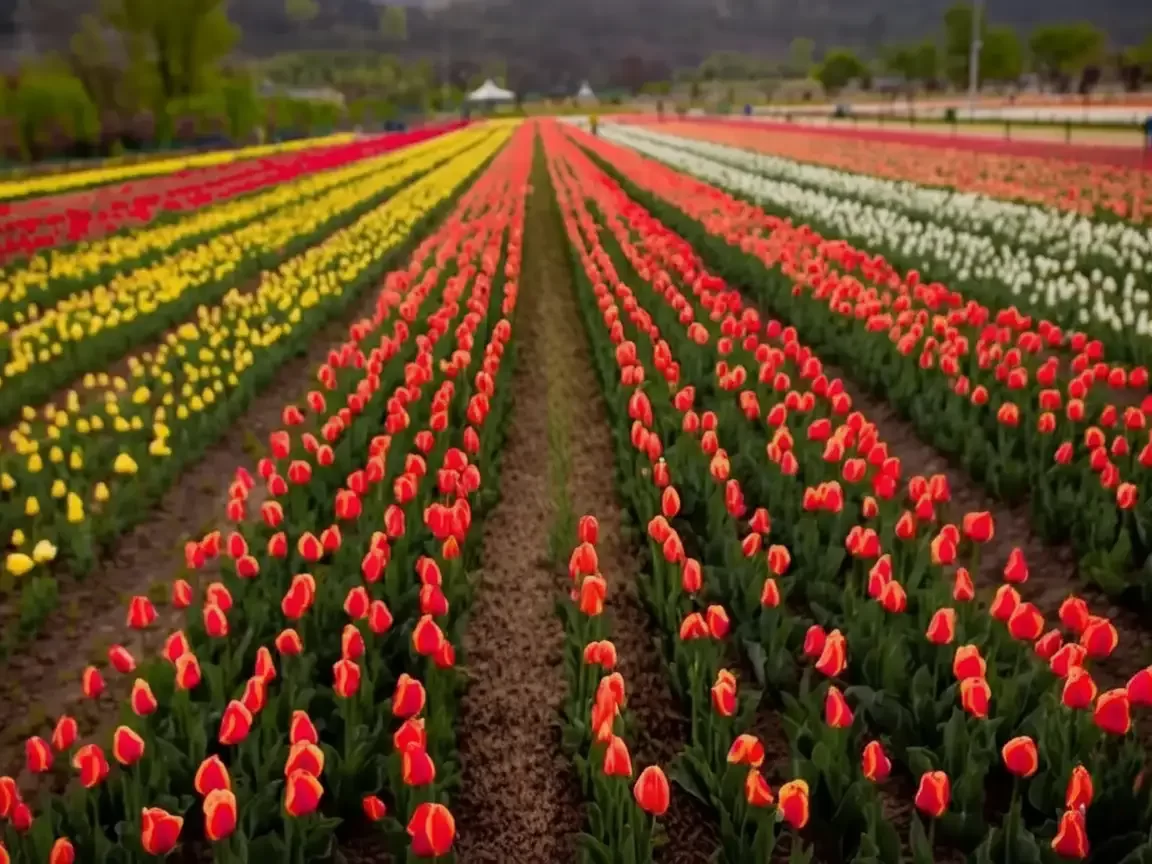
Visitors come to the Indira Gandhi Memorial Tulip Garden to see Asia’s largest tulip display during its short spring season, when thousands of blooms cover the terraced slopes overlooking Dal Lake. It is a time-specific visit, mainly planned by travelers who are in Srinagar between late March and April.

The on-ground atmosphere is lively yet orderly, with well-laid walking paths, floral terraces, and clear views toward the lake and surrounding hills. During peak bloom, the garden is busy but structured, while early mornings and weekdays feel calmer and more comfortable for slow exploration.

What makes this garden distinct for travelers is its scale and seasonal nature, offering a visual experience that changes completely within a few weeks each year. It suits visitors who appreciate short, visually focused stops rather than long nature walks or quiet retreats.

History of Indira Gandhi Memorial Tulip Garden, Srinagar

The Indira Gandhi Memorial Tulip Garden is a modern addition to Srinagar’s landscape, developed in 2007 by the Government of Jammu and Kashmir to promote floriculture and diversify tourism beyond traditional Mughal gardens. It was established on the foothills of the Zabarwan Range, overlooking Dal Lake, using terraced slopes suitable for large-scale tulip cultivation.

Initially conceived as an experimental project, the garden expanded rapidly after the successful introduction of imported tulip bulbs from the Netherlands. Over time, it evolved into Asia’s largest tulip garden, hosting an annual spring bloom that draws visitors during a short seasonal window.

Unlike historical gardens rooted in royal patronage or religious symbolism, the Tulip Garden’s significance lies in its contemporary role in economic revival, seasonal tourism, and horticultural experimentation. Its history is closely tied to modern urban planning and tourism development rather than heritage or cultural tradition.

Best Time to Visit Indira Gandhi Memorial Tulip Garden

Indira Gandhi Memorial Tulip Garden is a strictly seasonal attraction and can only be enjoyed during its short spring bloom, when tulips are in full color and the garden is officially opened to visitors.

  • Ideal months: Late March to mid April, during the annual tulip bloom season.
  • Weather during the best season: Cool to mild spring temperatures, clear skies, and fresh greenery along the Zabarwan foothills, making walking through the terraces comfortable.
  • Periods to avoid: May to February, as the garden remains closed after the bloom season and offers no visitor access outside the scheduled opening period.

What to Expect When You Visit Tulip Garden

  • The environment at Tulip Garden is highly manicured and seasonal, with stepped flower beds laid out on a hillside facing Dal Lake. The experience is visual and structured rather than natural or quiet.
  • Facilities are basic and functional. You will find paved walkways, temporary drinking water points, and portable restrooms during the open season, but no permanent cafés or indoor seating areas.
  • Accessibility is straightforward on main paths, but movement involves walking uphill and downhill on paved slopes. Seniors and visitors with mobility issues may find certain sections tiring due to gradients.
  • Visitor density is very high during the bloom period. Expect queues at entry gates, slow movement on pathways, and frequent stops for photography, especially during late morning and early afternoon.
  • The visit is time-bound and seasonal. The garden is open only for a short period each year, and flower density and quality depend on weather conditions during that season.
  • Weather directly affects comfort. Open areas offer little shade, so sunny days can feel warm, while rain makes paths slippery and limits viewing quality.

What to Expect When You Visit Tulip Garden

  • The environment at Tulip Garden is highly manicured and seasonal, with stepped flower beds laid out on a hillside facing Dal Lake. The experience is visual and structured rather than natural or quiet.
  • Facilities are basic and functional. You will find paved walkways, temporary drinking water points, and portable restrooms during the open season, but no permanent cafés or indoor seating areas.
  • Accessibility is straightforward on main paths, but movement involves walking uphill and downhill on paved slopes. Seniors and visitors with mobility issues may find certain sections tiring due to gradients.
  • Visitor density is very high during the bloom period. Expect queues at entry gates, slow movement on pathways, and frequent stops for photography, especially during late morning and early afternoon.
  • The visit is time-bound and seasonal. The garden is open only for a short period each year, and flower density and quality depend on weather conditions during that season.
  • Weather directly affects comfort. Open areas offer little shade, so sunny days can feel warm, while rain makes paths slippery and limits viewing quality.

Important Visitor Information for Indira Gandhi Memorial Tulip Garden, Srinagar

  • Crowd and Weather Notes: The Tulip Garden experiences very heavy crowds during the annual tulip bloom season, usually from late March to mid April. Weather during this period is cool with occasional rain, which can affect flower conditions and walking comfort.
  • Peak and Quiet Visiting Hours: Peak hours are between 11:00 AM and 3:00 PM when tour groups and local visitors arrive in large numbers. Early mornings right after opening offer fewer crowds, clearer views, and better photography conditions.
  • Dress Code: No formal dress code applies, but comfortable walking shoes are essential due to long pathways and gentle slopes. Light jackets are recommended as temperatures can remain chilly during the bloom season.
  • Safety Notes and Practical Cautions: Walking paths can become muddy or slippery after rain. Visitors should follow marked routes strictly and avoid stepping into flower beds, as fines may apply. Personal belongings should be kept secure during peak crowd hours.

Photography and Viewpoints at Tulip Garden, Srinagar

  • The central stepped terraces of the Tulip Garden offer the most structured viewpoints, with long rows of tulips forming clean leading lines against the backdrop of the Zabarwan Hills.
  • Upper terraces provide wider frames that include Dal Lake and surrounding hills, while lower levels are better suited for close compositions focusing on flower patterns and color contrast.
  • Morning light between 8 am and 10 am is ideal, as sunlight is soft, colors appear saturated, and shadows are minimal across the sloped garden beds.
  • Midday light can be harsh and flatten colors, especially on clear days; late afternoon light adds warmth but creates uneven shadows due to the terraced layout.
  • Photography is permitted for personal use, but tripods, drones, and professional equipment require special permission and are generally restricted during peak bloom days.
  • Crowds increase significantly during the tulip bloom season, particularly late morning onward, which can limit clean frames; early entry improves access to unobstructed viewpoints.

Near By Attraction

Clock tower Ghanta Ghar at Lal Chowk Srinagar with Indian flag mountain backdrop shops featured in Kashmir Srinagar tour packages Market / Bazaar

Lal Chowk

Lal Chowk is a central public square and commercial hub located in the heart of Srinagar city.

Central water channel and fountains at Nishat Garden Srinagar during sunrise, featuring flower beds, lawns and chinar trees, perfect romantic experience in Srinagar tour package.  Garden

Nishat Bagh

Nishat Bagh is a 17th-century Mughal garden located on the eastern side of Dal Lake in Srinagar.

Shalimar Bagh pavilions at Nishat Garden Srinagar during sunset, featuring arched bridges, lake reflections and trees, perfect romantic experience in Srinagar tour package.  Garden

Shalimar Bagh

Shalimar Bagh is a historic Mughal garden built in 1619 by Emperor Jahangir on the eastern banks of Dal Lake in Srinagar.

Frequently Asked Questions About Tulip Garden

Tulip Garden is located on the foothills of the Zabarwan range in Srinagar, Jammu and Kashmir, overlooking Dal Lake. It is officially known as the Indira Gandhi Memorial Tulip Garden and is one of the most visited seasonal attractions in the city.
Tulip Garden can be reached easily from Srinagar city center by taxi or private vehicle within about 20 minutes. It lies along the boulevard road area near other well known Mughal gardens in Jammu and Kashmir.
The best time to visit Tulip Garden in Srinagar is during late March and April when the tulips are in full bloom. Blooming dates depend on weather conditions each year, so checking local updates before planning is important.
Tulip Garden usually opens to visitors for a limited period in spring, typically from late March to mid April in Srinagar. The opening schedule is announced annually by local authorities in Jammu and Kashmir.
Around one to two hours are enough to explore Tulip Garden comfortably. Visitors can walk through the terraced layout, enjoy flower displays, and take photographs at a relaxed pace.
Tulip Garden has a nominal entry fee for visitors in Srinagar. Tickets are purchased at the entrance and help maintain the garden facilities.
Tulip Garden is suitable for families and senior citizens visiting Srinagar, as pathways are well maintained and accessible. The garden is spread across terraces, so some walking on gentle slopes is required.
Tulip Garden cannot be meaningfully visited outside the blooming season because the attraction is seasonal. After the flowering period ends, the garden area remains closed to general visitors.
Basic restroom facilities are available inside Tulip Garden in Srinagar, and small food stalls may operate during the blooming season. Larger dining options are located along the nearby boulevard road.
Photography is allowed inside Tulip Garden in Srinagar for personal use. The colorful flower beds and views of Dal Lake make it a popular spot for pictures.
Tulip Garden becomes crowded during peak bloom weeks, especially on weekends and holidays in Srinagar. Visiting early in the morning on weekdays helps avoid heavier visitor flow.
Tulip Garden can easily be combined with visits to nearby Mughal gardens and Dal Lake in Srinagar. Its location along the main sightseeing route makes it convenient to include within a half day plan in Jammu and Kashmir.

Loved this place ? Let’s Plan Your Jammu and Kashmir Trip

Get customized Jammu and Kashmir tour planning designed around seasonal weather patterns, valley travel routes, snow conditions, and realistic hill road timing. Whether you are visiting for scenic landscapes, serene lakes, spiritual journeys, meadow stays

⚡ Quick Response | 💰 Free consultation | 🕒 24×7 expert support

×

Plan Your Trip