Quick Facts About Chashme Shahi
| Entry Fee | 25 |
| Timings | 09:00 - 18:00 |
| Altitude (m) | 1730 |
| Ideal Visit Duration (hrs) | 1 |
| Best Time of Day | Morning |
| Crowd Level | Moderate |
| Distance from Srinagar (km) | 9 |
| Walking Difficulty | Moderate |
| Parking Available | No |
| Last Mile Access | Road |
| Suitable for Kids | Yes |
| Suitable for Seniors | Yes |
| Wheelchair Friendly | No |
Why Visit Chashme Shahi Garden in Srinagar
Visitors come to Chashme Shahi to experience one of Srinagar’s most peaceful Mughal gardens, known primarily for its natural spring water and calm hillside setting above Dal Lake. It is often included as a short, unhurried stop for travelers who want a break from crowded markets and long sightseeing circuits.
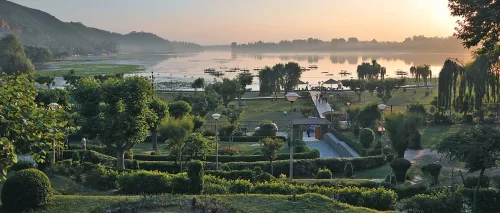
The on-ground atmosphere is quiet and refreshing, with terraced lawns, gentle water channels, and cool air even during summer afternoons. The garden feels compact and intimate, making it easy to explore at a relaxed pace while enjoying views over Dal Lake and the surrounding Zabarwan hills.
What makes Chashme Shahi distinct for travelers is its spring-fed water source, which locals still consider drinkable, and its elevated position that offers a more secluded experience compared to other Mughal gardens in Srinagar. It suits visitors looking for a brief, scenic stop rather than a long or crowded sightseeing session.
History of Chashme Shahi, Srinagar
Chashme Shahi was built in 1632 during the Mughal period by Ali Mardan Khan, the Mughal governor of Kashmir, under the patronage of Emperor Shah Jahan. The garden was created to harness and showcase a natural freshwater spring emerging from the Zabarwan Hills, which was considered valuable for both its purity and continuous flow.
The name Chashme Shahi translates to “Royal Spring,” and the garden is traditionally associated with Princess Jahanara Begum, Shah Jahan’s daughter, for whom it was developed as a place of retreat. Unlike larger Mughal gardens in Srinagar, Chashme Shahi was designed on a compact scale, emphasizing the spring itself rather than expansive landscaping.
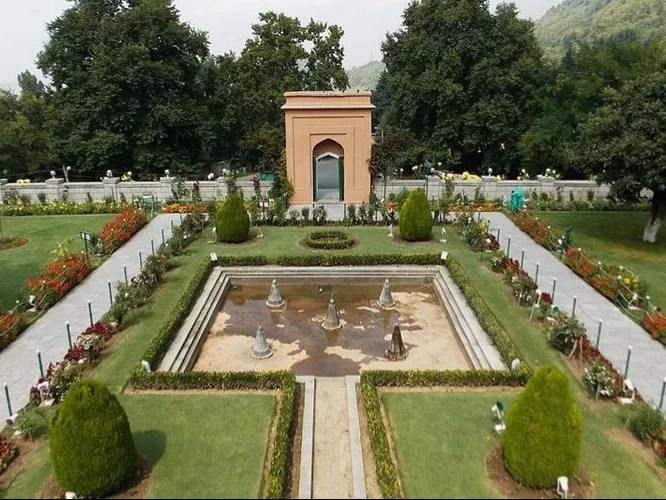
Architecturally, the garden reflects classic Mughal terrace planning with stone channels and fountains aligned along a central axis. Over time, it has remained an important example of Mughal garden design in Kashmir, valued more for its historical layout and natural spring than for ornamental grandeur.
Best Time to Visit Chashme Shahi
Chashme Shahi can be visited most comfortably during the warmer months when the Mughal garden is fully accessible, the spring water flows steadily, and the surrounding Zabarwan hills are clear and green. Seasonal weather plays a major role in how enjoyable and practical the visit feels.
- Ideal months: April to October, with May to September being the most pleasant for walking through the terraced garden and enjoying Dal Lake views.
- Weather during the best season: Mild to warm daytime temperatures, blooming gardens in spring and summer, clear skies, and comfortable conditions for short sightseeing visits.
- Periods to avoid: December to February due to cold temperatures, possible snowfall, icy pathways, and partial closure or limited access during peak winter conditions.
How to Reach Chashme Shahi, Srinagar
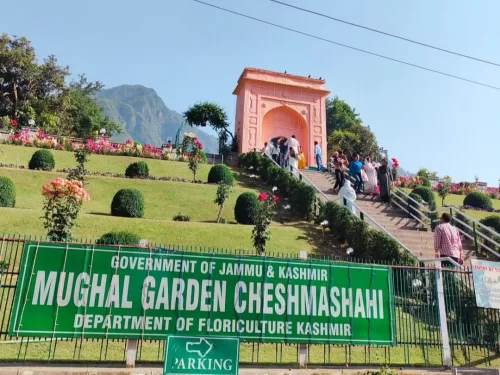
Chashme Shahi is located on the lower slopes of the Zabarwan Range in Srinagar, Jammu & Kashmir, overlooking Dal Lake. As a well-known Mughal garden within city limits, it is easily accessible by air, rail, and road, with reliable last-mile connectivity.
- Nearest Airport: Srinagar International Airport (Sheikh ul-Alam Airport), approximately 18 km away. The airport has regular direct flights from Delhi, Mumbai, Bengaluru, and other major Indian cities. From the airport, prepaid taxis and app-based cabs are available; travel time to Chashme Shahi is usually 40–60 minutes depending on traffic and security checks.
- Nearest Railway Station: Srinagar Railway Station (Nowgam), about 14 km from Chashme Shahi. It is connected to Banihal and the wider Indian rail network via the Banihal–Baramulla line. Taxis and local cabs are readily available outside the station for direct access to the garden.
- Road Access & Last-Mile Connectivity: Chashme Shahi is reached via Boulevard Road, one of Srinagar’s main tourist routes. The garden is well-signposted, and taxis, auto-rickshaws, and private vehicles can reach the entrance gate. The final approach includes a short uphill road; during peak tourist season or winter months, traffic congestion or icy conditions may slow travel, so extra time is advisable.
What to Expect When You Visit Chashme Shahi
- The surroundings at Chashme Shahi are calm and structured, with terraced Mughal-style gardens set against the lower slopes of the Zabarwan Range overlooking Dal Lake. Expect a clean, landscaped environment rather than a natural spring area.
- Facilities are basic but adequate. You will find paved walkways, stepped terraces, benches, drinking water from the historic spring, and limited shaded areas. There are no cafés or restaurants inside the garden complex.
- Accessibility involves walking on stone paths and climbing shallow steps across different levels of the garden. The site is manageable for most visitors but may be tiring for seniors or those with mobility issues, as wheelchair access is limited.
- Visitors typically move slowly through the garden, stopping for photographs and short rests. The atmosphere is generally quiet, though it can feel crowded during peak tourist hours and summer afternoons.
- Time spent here is usually brief, around 20 to 30 minutes. There is little to do beyond walking, viewing the garden layout, and tasting the spring water, making it a short stop rather than a long sightseeing activity.
- Weather conditions directly affect the experience. On sunny days the garden feels pleasant, while rain or winter cold can make the stone paths slippery and the visit less comfortable.
Important Visitor Information for Chashme Shahi, Srinagar
- Crowd and Weather Notes: Chashme Shahi remains pleasant during spring and summer, with cool air due to its hillside location. Crowds increase significantly from April to October, especially during tulip season and peak summer afternoons. Winters are cold, and water flow from the spring may reduce during extreme cold spells.
- Peak and Quiet Visiting Hours: Peak visiting hours are between 11:00 AM and 4:00 PM, when most tourists visit as part of city sightseeing tours. Early mornings (9:00 AM to 10:30 AM) and late afternoons offer a quieter experience with better views over Dal Lake.
- Dress Code: No formal dress code is enforced, but modest clothing is recommended as it is a historic Mughal garden frequently visited by families and locals. Comfortable footwear is advised due to stepped garden terraces.
- Safety Notes and Practical Cautions: Stone steps and pathways can become slippery during rain or early morning dew, so walk carefully. The spring water is traditionally considered potable, but visitors should avoid direct consumption unless advised locally. Guard personal belongings during crowded hours.
Photography and Viewpoints at Chashme Shahi, Srinagar
- The main terraced garden aligned along the hillside offers the most balanced compositions, with the Mughal-style water channels leading the eye toward Dal Lake and the Zabarwan Range in the background.
- The upper terrace provides the widest viewpoint, ideal for capturing the layered garden layout and surrounding mountains; lower terraces work better for close framing of fountains, stone pavilions, and flowing spring water.
- Morning light, especially between 9 am and 11 am, gives soft illumination on the garden terraces and reduces harsh shadows from the hillside; late afternoon light is stronger and can wash out stone details.
- Overcast days are well-suited for photography here, as cloud cover enhances the greens of the garden and keeps contrast under control, particularly during spring and early summer.
- Photography is generally allowed for personal use, but tripods and professional equipment may be restricted during busy hours or special security checks; always follow instructions from on-site staff.
- Weekends and peak tourist months can get crowded, making wide shots harder from lower levels; visiting early in the day improves access to clear viewpoints and uninterrupted frames.