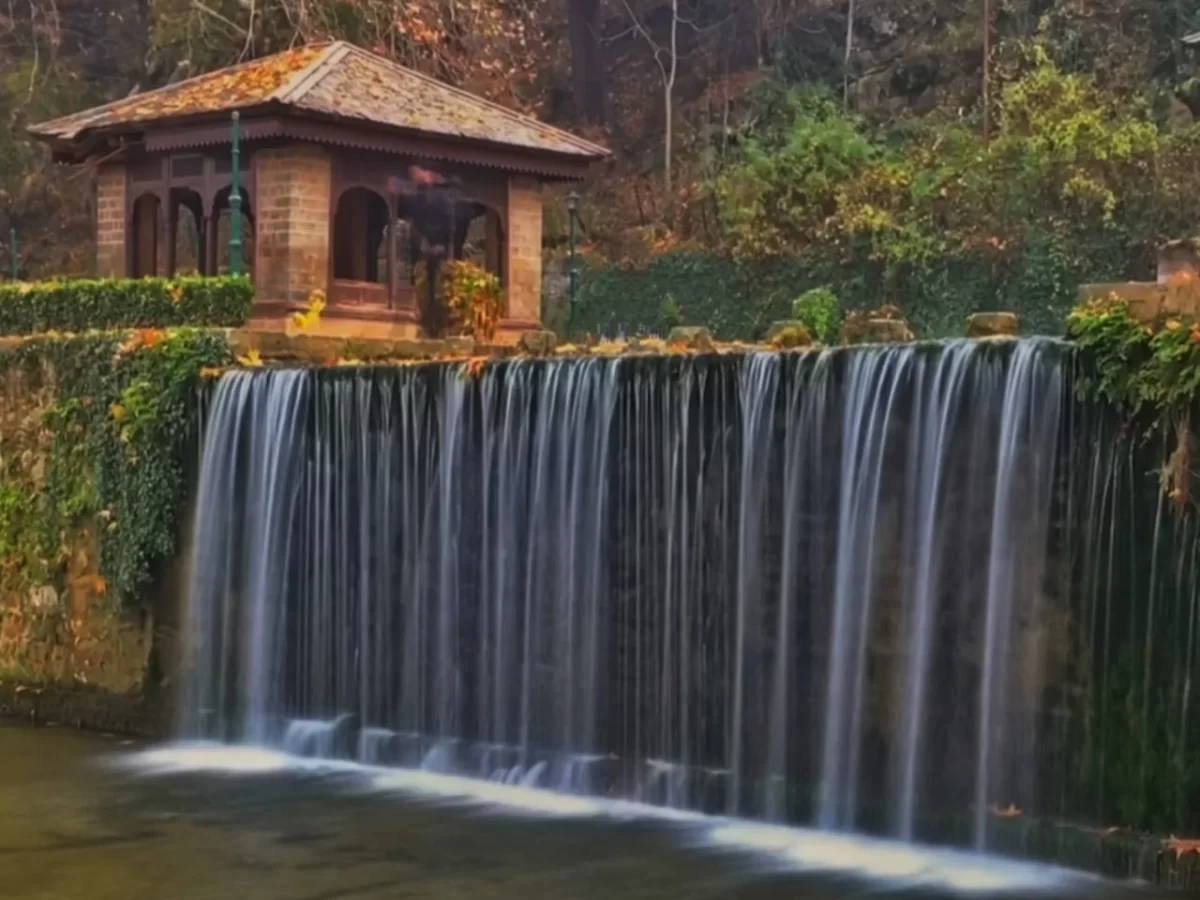
Achabal Garden: Historic Mughal Pleasure Garden in Anantnag, Jammu and Kashmir, India

Achabal Garden , Pahalgam
Tourists visit Achabal Garden to explore one of the most well-preserved examples of Mughal garden architecture in the Kashmir Valley. Commissioned by Empress Nur Jahan in 1620 AD, the garden is celebrated for its masterful use of water, sourced from a massive natural spring that gushes out of the limestone hills. The layout features a traditional Persian Charbagh design with terraced lawns, majestic Chinar trees, and a sophisticated canal system that feeds various fountains and waterfalls (chads). The site offers a tranquil atmosphere where visitors can witness the blend of natural springs and structured stone pavilions, making it a major destination for history enthusiasts and nature lovers alike.

Quick Facts About Achabal Garden

Entry Fee 24
Timings 08:00 - 20:30
Altitude (m) 1677
Ideal Visit Duration (hrs) 2
Best Time of Day Morning
Crowd Level Moderate
Distance from Srinagar (km) 58
Distance from Anantnag (km) 9
Walking Difficulty Easy
Parking Available Yes
Last Mile Access Road
Suitable for Kids Yes
Suitable for Seniors Yes
Wheelchair Friendly No

Why Visit Achabal Garden in Anantnag

Achabal Garden is a masterpiece of Mughal landscape architecture, built in 1620 by Empress Nur Jahan at the foot of a densely forested hill. Travelers visit this site to witness one of the most well-preserved examples of a "Chahar Bagh" (four-fold garden) in Kashmir, where the design focuses on the masterful use of gravity-fed water systems and ancient Chinar trees that provide a majestic, emerald-green canopy.

The atmosphere on the ground is defined by the powerful, rhythmic sound of gushing water originating from a natural mountain spring. Visitors encounter three terraced levels where water flows through stone-carved channels (canals) and over traditional "chadars" (inclined stone sheets) into large, ornate tanks. The air remains remarkably cool even in peak summer, creating a serene and meditative environment that reflects the royal Mughal desire to create a "paradise on earth" in the heart of the Himalayas.

What makes Achabal distinct is its unique focus on the sheer volume and force of its natural spring water, which remains ice-cold throughout the year. Unlike other Mughal gardens that rely on distant streams, Achabal’s spring emerges directly within the complex, fueling a sophisticated network of fountains and cascades that have functioned for centuries without modern pumps. It offers a premier destination for history enthusiasts and photographers seeking to capture the timeless elegance of stone masonry, royal hammams, and the vibrant floral displays that define the horticultural heritage of South Kashmir.

Historical and Geographic Significance of Achabal Garden

Achabal Garden, also known as "The Places of the Princes," is a masterpiece of Mughal garden architecture situated at an elevation of approximately 1,677 meters (5,502 feet) in the Anantnag district. Built around 1620 AD, it is renowned for hosting one of the most spectacular mountain springs in the Kashmir Valley, which serves as the primary water source for the garden's elaborate canal system.

Geographically, the garden is located at the foot of a densely forested hill characterized by limestone formations. The natural spring gushes out of the mountain and is immediately channeled into three distinct terraces, creating a series of cascading waterfalls and fountains. This design utilizes the natural slope of the terrain to maintain water pressure without the need for mechanical pumps. The surrounding area is rich in Himalayan flora, with massive centuries-old Chinar trees providing a dense canopy that maintains a cool microclimate even during the peak of summer.

Historically, Achabal Garden was commissioned by Empress Nur Jahan, the wife of Emperor Jahangir, who was deeply enamored by the natural beauty of the site. It was designed as a pleasure retreat and remains one of the best-preserved examples of a "Charbagh" layout in the region. The garden's architecture features traditional Persian influences, including stone-carved water courses and pavilions that reflect the aesthetic sophistication of the Mughal era. Today, the garden is maintained by the Jammu and Kashmir Tourism Department and stands as a significant heritage site, offering a serene glimpse into the royal history and hydraulic engineering brilliance of 17th-century Kashmir.

Best Time to Visit Achabal Garden

Achabal Garden, a 17th-century Mughal masterpiece located at an altitude of approximately 5,500 feet in the Anantnag district, is renowned for its sophisticated hydraulic engineering. Fed by the crystal-clear waters of the "Achabal Nag" spring, the garden is famous for its cascading fountains and massive Chinar trees. Unlike higher-altitude alpine sites, Achabal remains accessible for most of the year, though its aesthetic appeal is defined by the seasonal flow of the spring and the changing foliage of its historic groves.

  • Ideal months: April to October is the peak window for travel; May and June are particularly spectacular as the spring water volume is at its highest, ensuring all fountains are operational, while October offers the iconic "fire" of the Chinar leaves turning deep crimson.
  • Weather conditions: Summer daytime temperatures range from 20°C to 30°C, providing a cool and shaded environment thanks to the dense tree cover and the constant spray from the water cascades; spring and autumn offer crisper air with temperatures between 10°C and 20°C.
  • Periods to avoid: Avoid the deep winter months of December and January if you wish to see the water features, as the fountains are often turned off to prevent pipe freezing and the garden can look desolate under heavy snow; additionally, late July can be quite humid, though the garden’s microclimate remains cooler than the surrounding open plains.

How to Reach Achabal Garden

Achabal Garden, also known as the "Enclosure of the Princes," is a 17th-century Mughal garden located at the foot of a forested hill in the Anantnag district. Situated at an elevation of approximately 1,670m (5,479 ft), it is renowned for having the most magnificent spring in Kashmir, which gushes out of the limestone mountains and flows through the garden's traditional water channels (ab-rawans) and terraces.

  • Nearest Airport: Srinagar International Airport (SXR) is the closest air gateway, located about 70 km away. The drive typically takes 2 to 2.5 hours via the National Highway 44.
  • Nearest Railway Station: Anantnag Railway Station is the nearest railhead, situated only 8 km from the garden. This makes Achabal one of the most accessible Mughal gardens for travelers using the Kashmir Railway service.
  • Road Access and Route: The garden is located on the Anantnag-Pahalgam road via Achabal. From Anantnag town, it is a short 15-minute drive on a well-maintained, paved road. It is a common stop for travelers heading toward the Daksum or Sinthan Top regions.
  • Last-Mile Connectivity: The garden entrance is located directly on the main road of Achabal town. Any vehicle type, including large tourist buses, can easily reach the site. Local auto-rickshaws and shared taxis are frequently available from the Anantnag bus stand.
  • Seasonal Accessibility: The garden is open year-round, but the best time to visit is from April to October. During spring and summer, the chinar trees are lush, and the water discharge from the spring is at its peak. In autumn, the garden transforms with vibrant orange and red hues.
  • Practical Amenities: As a popular tourist spot, the area around the garden features several local eateries and shops selling Kashmiri handicrafts. There is a JKTDC tourist bungalow nearby for overnight stays. Public restrooms and parking facilities are available at the entrance.
  • Water System Logistics: The unique feature of Achabal is its gravity-based water system, which remains functional today. The water from the spring is ice-cold even in mid-summer and feeds the fountains without the use of modern pumps.

What to Expect When You Visit Achabal Garden

http://googleusercontent.com/map_location_reference/1

The [ACHABAL GARDEN](http://googleusercontent.com/map_location_reference/0), also known as [Mughal Garden Achabal, (Anantnag)](http://googleusercontent.com/map_location_reference/2), is one of the most well-preserved and smaller Mughal gardens in Kashmir, originally built by Empress Nur Jahan in 1620. Located at the foot of a densely forested hill in Anantnag, the garden is celebrated for its masterful use of water, featuring a massive natural mountain spring that cascades through three terraced levels. It offers a more intimate and serene experience compared to the larger gardens in Srinagar, retaining much of its original 17th-century layout and aesthetic.
  • Environment and Surroundings: The garden is famous for its "Chinar" trees and the spectacular natural spring that gushes from the base of the hill. The layout follows the classic Persian "Charbagh" style, with stone lined water channels (canals) and fountains that are powered entirely by gravity. Visitors often describe the atmosphere as remarkably cool and refreshing, even during the peak of summer, due to the constant flow of glacial water and the shade of ancient trees.
  • Facilities and Amenities: The site is well-maintained by the J&K Floriculture Department and includes basic amenities such as paved walking paths, benches, and clean public restrooms. There is a small cafeteria and local tea stalls near the entrance serving traditional snacks and Kahwa. A government tourist bungalow is located adjacent to the garden for those wishing to stay overnight in a quiet, rural setting.
  • Accessibility and Movement: Achabal is located approximately 58 kilometers from Srinagar and about 9 kilometers from Anantnag town. It is easily accessible by taxi or private car via a well-maintained road. The garden is relatively compact, making it easy to explore on foot within an hour. The terrain is terraced with stone steps, so comfortable footwear is recommended for navigating the different levels.
  • Typical Visitor Behavior and Conditions: The garden is a popular spot for picnicking families and history enthusiasts who appreciate the authentic Mughal stonework. Reviewers often suggest visiting in the early morning to enjoy the sound of the cascading water without the afternoon crowds. It is also a frequent stop for travelers on their way to the nearby Daksum or Sinthan Top, and it is known for being a major center of trout fish culture in the region.

Essential Visitor Information for Achabal Garden

  • Crowd and Weather: Built by Empress Nur Jahan in 1620, Achabal Garden is a masterpiece of Mughal horticultural design; it remains far less crowded than the gardens of Srinagar, offering a peaceful and cool microclimate even in the height of summer due to the dense chinar shade and constant flow of glacial spring water.
  • Peak and Quiet Visiting Hours: Best visited between 9:00 AM and 11:00 AM to witness the natural light hitting the cascading water fountains before the afternoon heat; weekdays are significantly quieter than Sundays, which often see local families visiting for picnics.
  • Dress Code and Conduct: Casual, comfortable attire is appropriate, but ensure you wear walking shoes with good grip as the ancient stone paths and stepped terraces can be damp and slippery near the water channels. Avoid littering in the heritage water system to preserve the ecological health of the spring.
  • Safety and Practical Cautions: Be mindful of the deep water tanks and fast-flowing channels (canals), especially if traveling with children. While the garden is well-maintained, some of the higher terraces have uneven stone steps; use the railings where available and avoid climbing on the historic masonry walls.
  • Experience-Based Notes: The primary highlight is the massive natural spring that emerges at the foot of a pine-covered hill; the sound of the rushing water is a central part of the experience. Look for the "Hamam" (ancient bathroom) structures which showcase the sophisticated hydraulic engineering of the Mughal era.
  • Logistics: Located about 8-10 km from Anantnag town, the garden is easily accessible by road; there is a nominal entry fee, and basic snacks and tea are available at the entrance. Mobile connectivity is generally good throughout the site.

Capturing the Mughal Symmetry of Achabal Garden

  • Central Water Cascade (Chadar): The most iconic shot is the main stone water chute where the spring water cascades over a carved surface to create a "sheet" effect. Position your camera at a low angle to capture the texture of the moving water with the majestic Chinar trees and the wooden pavilion framed perfectly in the background.
  • Mughal Pavilion Reflections: The geometric water tanks (haouz) provide mirror-like reflections of the traditional Kashmiri-Mughal wooden structures. For the best reflection shots, photograph from the edge of the first terrace during early morning when the water surface is undisturbed and the light is soft.
  • Upper Terrace Panorama: Climb to the highest terrace near the mountain spring source to capture a wide-angle view of the garden’s layout. This perspective highlights the "Charbagh" symmetry, showing the water channels (nels) bisecting the lush green lawns and flower beds.
  • Ancient Chinar Canopy: Achabal is home to some of the oldest Chinar trees in the region. For dramatic scale, use a wide-angle lens from the base of a tree looking upward to capture the massive gnarled trunks and the dense canopy, which is particularly vibrant during the autumnal orange phase in late October.
  • Golden Hour Lighting: Because the garden is located at the foot of a densely forested hill, it falls into shadow earlier than the surrounding plains. The "Golden Hour" here occurs between 3:30 PM and 5:00 PM in summer, offering warm, directional light that emphasizes the texture of the limestone masonry and the vibrant colors of the seasonal flowers.
  • Water Motion Photography: The constant flow from the spring allows for long-exposure photography. Using a tripod and a neutral density filter, you can capture the "silky" motion of the water in the canals, contrasting it against the static, ancient stone walls of the Mughal era.

Near By Attraction

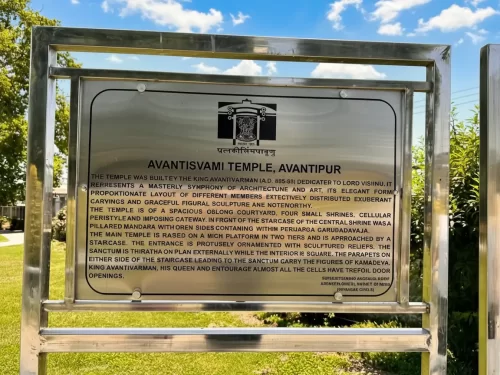
Avantiswami Temple Avantipura information board ruins layout Shiva Vishnu shrines cells pillars ASI protected, Jammu Kashmir heritage tour packages. Archaeological Site

Avantipura Ruins

Avantipura Ruins are the remains of two 9th-century Hindu temples built by King Avantivarman in present-day Awantipora, Pulwama district.
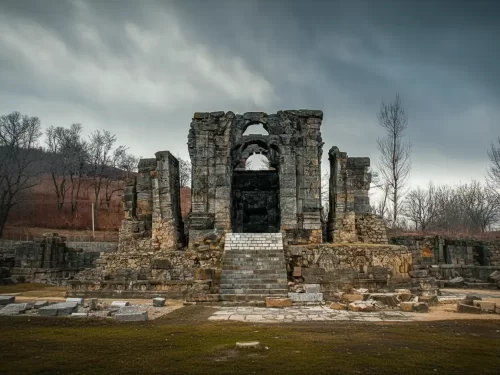
Martand Sun Temple ancient stone ruins arched entrance pillars cloudy sky barren trees Kashmir Jammu, historical heritage tour packages. Temple

Martand Sun Temple

Martand Sun Temple is an 8th-century Hindu temple dedicated to the Sun God, located near Anantnag in Jammu and Kashmir.
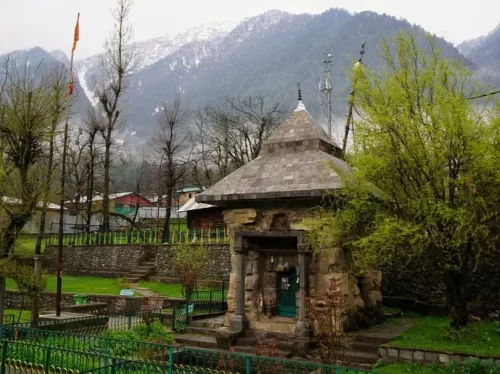
Mamaleshwar Temple Pahalgam ancient Shiva temple with stone architecture set against Himalayan backdrop in Kashmir Temple

Mamaleshwar Temple

Mamaleshwar Temple is an ancient Hindu temple dedicated to Lord Shiva, located near the Lidder River in Pahalgam, Anantnag district of Jammu and Kashmir.

Frequently Asked Questions About Achabal Garden

Achabal Garden is located in the Anantnag district of Jammu and Kashmir, around 60 kilometers from Srinagar. It is a historic Mughal garden built around natural spring sources and terraced landscapes.
Achabal Garden can be reached by road from Srinagar in about 1.5 to 2 hours via Anantnag. Private taxis and local transport options are available, and the garden is easily accessible from the main town area.
The best time to visit Achabal Garden is between April and October when the weather in Jammu and Kashmir is pleasant and the garden remains green and well maintained. Spring and early autumn offer especially comfortable conditions.
Achabal Garden usually remains open from morning until early evening. Timings may vary slightly depending on season, so checking locally before visiting is practical.
Achabal Garden has a nominal entry fee for visitors. Tickets are issued at the entrance and contribute to the maintenance of the garden.
Around one to two hours are generally enough to explore Achabal Garden at a relaxed pace. Visitors can walk through the terraces, water channels, and shaded areas comfortably.
Achabal Garden is suitable for families and senior citizens because pathways are maintained and the garden layout allows easy walking. Some stepped terraces are present, but overall access is manageable.
Achabal Garden can be visited during winter, although greenery may be reduced due to colder temperatures in Jammu and Kashmir. Clear winter days still allow peaceful walks and scenic surroundings.
Inside Achabal Garden, visitors can see terraced Mughal style landscaping, flowing water channels, fountains, and natural springs. The combination of architecture and greenery creates a calm environment.
Basic restroom facilities are available within Achabal Garden. Food options inside the garden are limited, but small eateries can be found in nearby Anantnag town.
Photography is generally allowed at Achabal Garden for personal use. The structured water channels and tree lined pathways make it suitable for landscape photography.
Achabal Garden can be combined with other attractions in the Anantnag district during the same day trip from Srinagar. Its location makes it convenient to include within a broader sightseeing plan in Jammu and Kashmir.

Loved this place ? Let’s Plan Your Jammu and Kashmir Trip

Get customized Jammu and Kashmir tour planning designed around seasonal weather patterns, valley travel routes, snow conditions, and realistic hill road timing. Whether you are visiting for scenic landscapes, serene lakes, spiritual journeys, meadow stays

⚑ Quick Response | πŸ’° Free consultation | πŸ•’ 24Γ—7 expert support

×

Plan Your Trip