Quick Facts About Tabo Monastery
| Entry Fee | Free |
| Timings | 08:00 - 18:00 |
| Altitude (m) | 3280 |
| Ideal Visit Duration (hrs) | 2 |
| Best Time of Day | Morning |
| Crowd Level | Moderate |
| Distance from Tabo (km) | 0 |
| Walking Difficulty | Easy |
| Parking Available | Yes |
| Last Mile Access | Road |
| Suitable for Kids | Yes |
| Suitable for Seniors | Yes |
| Wheelchair Friendly | No |
Why Visit Tabo Monastery
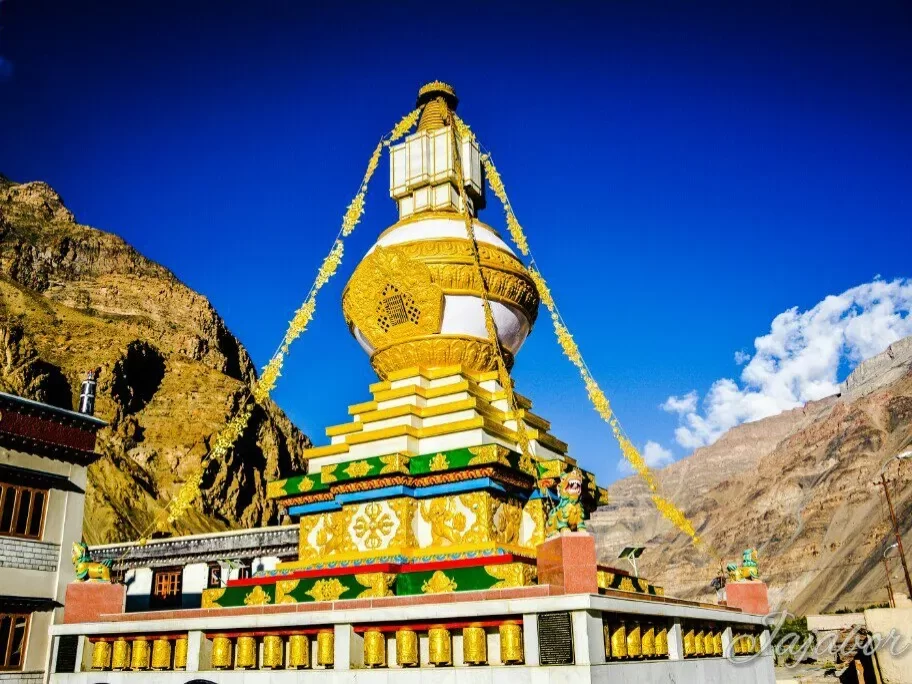
Travelers visit Tabo Monastery to experience one of the oldest continuously operating Buddhist monastic complexes in the Himalayan region, known for its preserved wall paintings, clay sculptures, and active monastic life. It is a key spiritual and cultural stop for visitors exploring Spiti Valley.
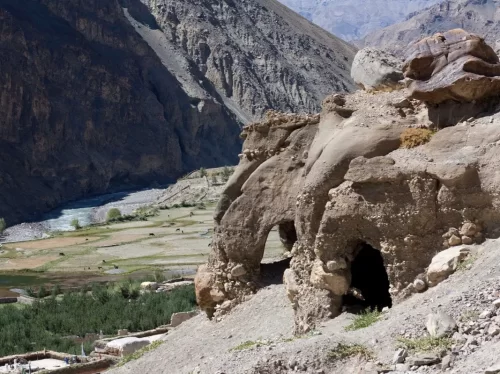
The atmosphere inside the monastery complex is calm and contemplative, with prayer halls, courtyards, and small temples set against a stark high-altitude desert landscape. Visitors often encounter monks engaged in daily rituals, study sessions, and maintenance of the shrines.
What distinguishes Tabo Monastery is its rare collection of 10th-century Indo-Tibetan murals and sculptures, earning it recognition as the “Ajanta of the Himalayas,” along with its setting within a living village rather than an isolated hilltop site.
Context of Tabo Monastery
Tabo Monastery was founded in 996 CE and remains one of the oldest continuously functioning Buddhist monasteries in the Himalayas. Its original mud-brick structures, temples, and assembly halls have been carefully preserved, allowing visitors to see rare examples of early Indo-Tibetan Buddhist art in their original setting.
The monastery follows the Gelug school of Tibetan Buddhism and continues to function as an active center for religious education, rituals, and community ceremonies. Its wall paintings, clay sculptures, and sacred texts play a central role in teaching Buddhist philosophy and preserving traditional artistic practices in Spiti Valley.
Best Time to Visit Tabo Monastery
The best time to visit Tabo Monastery is from May to October, when roads into Spiti Valley remain open and daytime conditions allow comfortable walking within the monastery complex.
- Ideal months:May to October
- Weather during best season:Dry conditions, clear skies, daytime temperatures suitable for outdoor exploration; cold nights year-round
- Periods to avoid:November to April due to heavy snowfall, sub-zero temperatures, and frequent road closures limiting access
How to Reach Tabo Monastery
- Nearest airport:Bhuntar Airport (Kullu), approx. 245 km away; onward travel by road via Manali–Kaza route or Shimla–Reckong Peo–Kaza route depending on seasonal access
- Nearest railway station:Shimla Railway Station (narrow gauge), approx. 360 km away; requires full road transfer to reach Tabo
- Road access and last-mile connectivity:Located directly on NH-505 in Tabo village; accessible by bus, taxi, or private vehicle from Kaza (48 km); roads remain open mainly from May to October, with frequent winter closures due to snow
What to Expect When You Visit Tabo Monastery
- High-altitude cold desert environment with minimal vegetation and strong sunlight, even during summer months
- Multiple small temples, assembly halls, and courtyards with uneven stone paths and steps between structures
- Limited on-site facilities; basic restrooms and small local shops are available in Tabo village nearby
- Quiet, respectful atmosphere with monks and visitors observing prayer times and restricted areas
- Photography allowed outdoors; interior photography may be restricted during rituals or in specific shrines
- Altitude-related breathlessness possible; slow walking and hydration recommended
Important Visitor Information for Tabo Monastery
- Crowd and weather notes:Visitor numbers increase between June and August; weather is dry year-round with strong sun exposure and cold mornings and evenings
- Peak and quiet visiting hours:Most visitors arrive between 10:00 AM and 2:00 PM; early mornings and late afternoons are quieter and better for exploring prayer halls
- Dress code:Modest clothing covering shoulders and knees is required; shoes must be removed before entering temples
- Safety notes and practical cautions:Altitude sickness is possible at 3,280 m; walk slowly, stay hydrated, and avoid strenuous activity; winter access is limited due to snow and road closures
Photography and Viewpoints at Tabo Monastery
- Best viewpoints include the outer courtyard and village-side paths overlooking the monastery complex with the Spiti River valley backdrop
- Soft light in early morning and late afternoon works best for photographing mud-brick structures, wall textures, and surrounding mountains
- Interior photography is restricted in several temples and during prayer sessions; permission must be obtained from resident monks
- Midday crowds between June and August can limit clear shots inside courtyards and temple entrances
- Wind and dust are common in open areas, requiring lens protection during outdoor photography