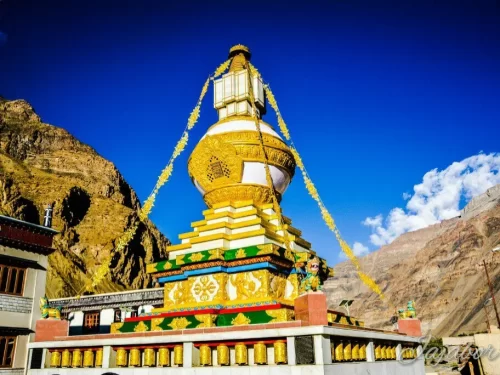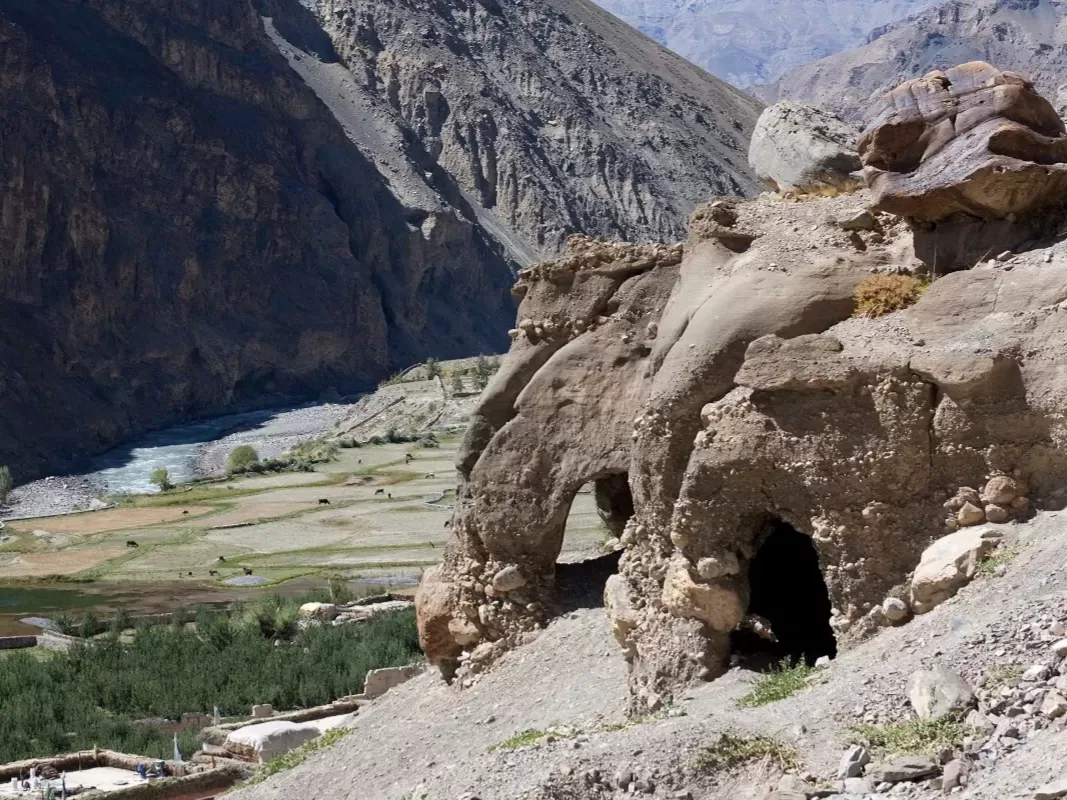
Quick Facts About Tabo Caves
| Entry Fee | Free |
| Timings | 08:00 - 18:00 |
| Altitude (m) | 3280 |
| Ideal Visit Duration (hrs) | 2 |
| Best Time of Day | Morning |
| Crowd Level | Moderate |
| Distance from Tabo (km) | 0 |
| Walking Difficulty | Easy |
| Parking Available | Yes |
| Last Mile Access | Road |
| Suitable for Kids | Yes |
| Suitable for Seniors | Yes |
| Wheelchair Friendly | No |
Why Visit Tabo Monastery
Visitors come to Tabo Monastery to see its exceptionally preserved wall paintings, clay sculptures, and functioning prayer halls within one of Spiti Valley’s most important Buddhist complexes.
The on-ground atmosphere is quiet and contemplative, with monks conducting daily prayers and visitors moving through small temples, courtyards, and narrow village paths around the complex.
What makes Tabo Monastery distinct is its cluster of 10th–15th century temples built within a living village setting, offering close access to both active religious life and rare Himalayan Buddhist art.
Context of Tabo Monastery
Tabo Monastery was founded in 996 CE and is among the oldest continuously functioning Buddhist monasteries in the Himalayan region. Its original mud-brick temples and assembly halls remain largely intact, preserving rare examples of early Indo-Tibetan Buddhist architecture and mural traditions.
The monastery follows the Gelug school of Tibetan Buddhism and serves as an active center for monastic education, prayer ceremonies, and community religious life in Spiti Valley, rather than functioning as a museum or heritage-only site.
Best Time to Visit Tabo Monastery
Tabo Monastery is best visited between May and October, when road access to Spiti Valley is reliable and walking within the monastery complex is comfortable.
- Ideal months:May to October
- Weather during best season:Dry conditions, strong sunlight, cool daytime temperatures, and cold mornings and nights
- Periods to avoid:November to April due to heavy snowfall, sub-zero temperatures, and frequent road closures restricting access
How to Reach Tabo Monastery
- Nearest airport:Bhuntar Airport (Kullu), approx. 245 km away; onward road travel via Manali–Kaza route (seasonal) or Shimla–Reckong Peo–Kaza route (longer but more reliable)
- Nearest railway station:Shimla Railway Station (narrow gauge), approx. 360 km away; full road journey required beyond this point
- Road access and last-mile connectivity:Located directly on NH-505 in Tabo village; accessible by bus, shared taxi, or private vehicle from Kaza (48 km); roads are usually open from May to October, with winter closures common due to snow
What to Expect When You Visit Tabo Monastery
- Cold desert surroundings with open valley views, strong sunlight, and cool winds even during summer months
- Cluster of small temples, prayer halls, and courtyards connected by uneven stone paths and short steps
- Basic visitor amenities; restrooms and small shops available in Tabo village, not inside the temple interiors
- Quiet, respectful environment with monks conducting prayers and visitors asked to maintain silence in shrines
- Restricted photography inside temples; outdoor photography generally permitted
- Altitude at 3,280 m may cause mild breathlessness; slow walking and hydration recommended
Important Visitor Information for Tabo Monastery
- Crowd and weather notes:Visitor numbers rise between June and August; weather remains dry with strong sun exposure and cold mornings and evenings throughout the year
- Peak and quiet visiting hours:10:00 AM to 2:00 PM is busiest; early mornings and late afternoons are quieter and better for entering prayer halls
- Dress code:Modest clothing covering shoulders and knees is required; footwear must be removed before entering temple interiors
- Safety notes and practical cautions:Altitude at 3,280 m may cause breathlessness; walk slowly and hydrate; winter travel is limited due to snow-related road closures
Photography and Viewpoints at Tabo Monastery
- Best viewpoints include the outer courtyard and village paths overlooking the monastery complex with the Spiti River valley and surrounding cliffs in the background
- Early morning and late afternoon provide softer light for capturing murals on exterior walls and the mud-brick temple structures
- Photography is restricted inside most temples and during prayer sessions; permission must be requested from resident monks
- Midday visitor groups, especially in summer, can limit clear shots in courtyards and temple entrances
- Wind and dust are common in open areas, affecting outdoor photography conditions