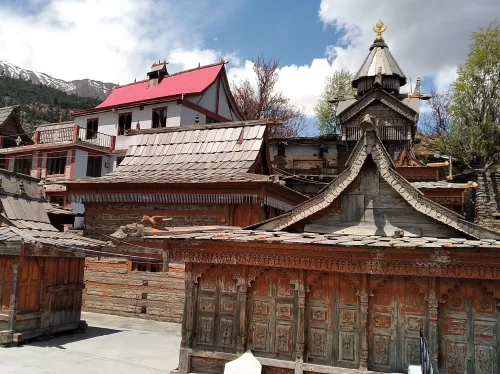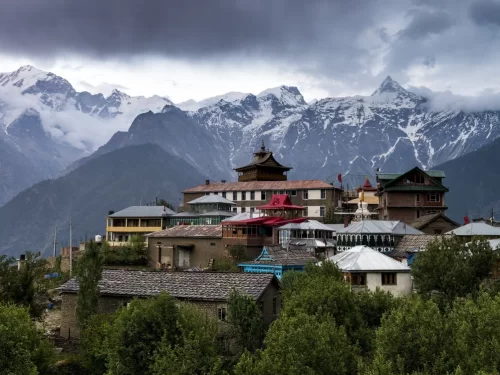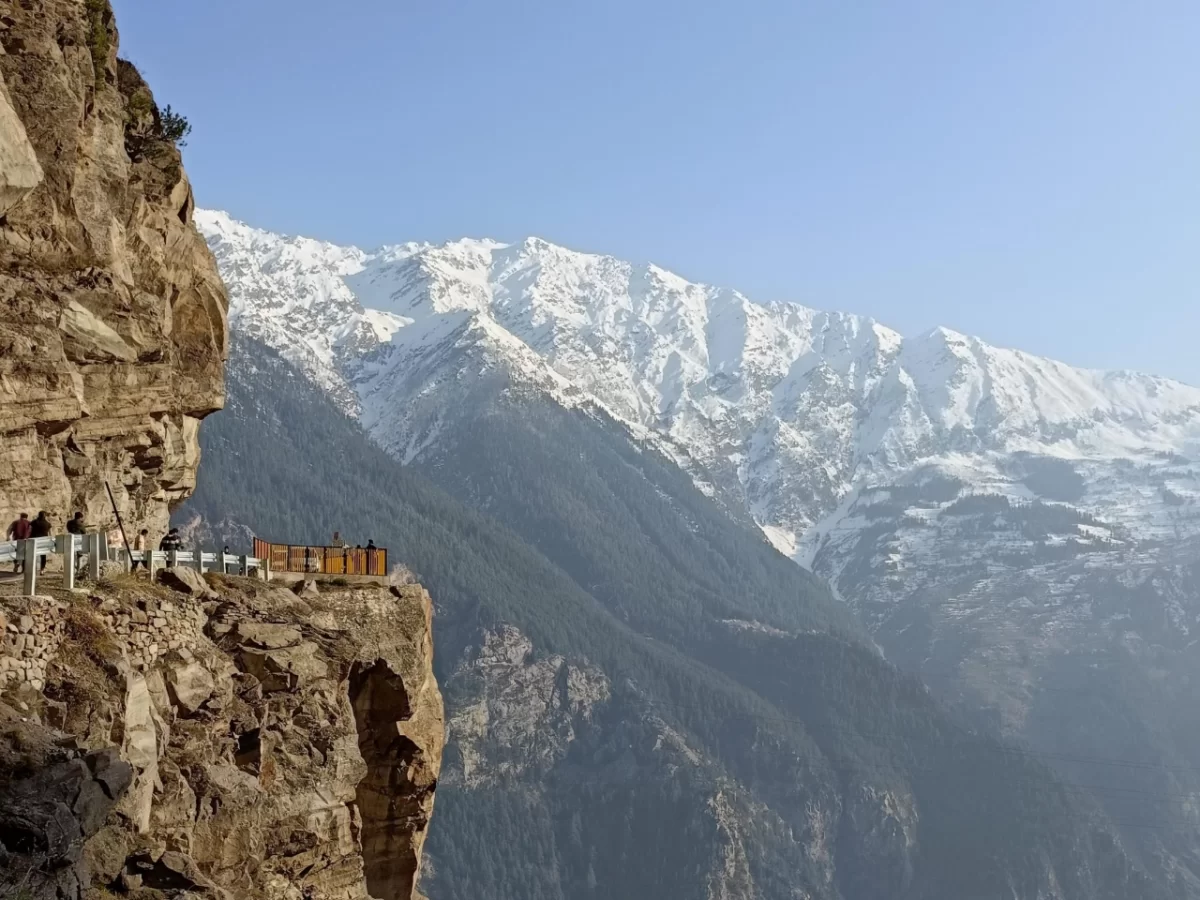
Quick Facts About Suicide Point
| Entry Fee | Free |
| Timings | 00:00 - 23:59 |
| Altitude (m) | 2960 |
| Ideal Visit Duration (hrs) | 1 |
| Best Time of Day | Morning |
| Crowd Level | Moderate |
| Distance from Kalpa (km) | 3 |
| Walking Difficulty | Easy |
| Parking Available | No |
| Last Mile Access | Road |
| Suitable for Kids | No |
| Suitable for Seniors | Yes |
| Wheelchair Friendly | No |
Why Visit Key Monastery, Spiti Valley
Visitors come to Key Monastery to observe daily monastic life, explore its complex of temples and courtyards, and experience one of the largest active Buddhist monasteries in the Spiti Valley.
The on-ground atmosphere is serene yet structured, with monks performing rituals, students moving between classes, and occasional chants echoing through the high-altitude valley.
What makes Key Monastery distinct is its combination of architectural complexity, elevated location on a hilltop, and the immersive experience of Tibetan Buddhist culture within a functioning spiritual community.
Context of Key Monastery, Spiti Valley
Key Monastery is a prominent Tibetan Buddhist monastery, serving as the main religious and educational center for monks in the Spiti Valley.
The monastery holds cultural and spiritual significance, hosting daily prayers, festivals, and religious teachings that are central to the local Buddhist community.
Best Time to Visit Key Monastery, Spiti Valley
The best time to visit Key Monastery is during the warmer months when access roads are open and the high-altitude weather is stable, allowing safe travel and comfortable exploration.
- Ideal months: June to September, when snow-free roads and moderate temperatures facilitate easier access and outdoor movement.
- Weather conditions during the best season: Mild daytime temperatures, clear skies, and low risk of snow or landslides on approach roads.
- Periods to avoid: October to May, due to heavy snowfall, road closures, and hazardous trekking conditions at high altitude.
How to Reach Key Monastery, Spiti Valley
- Nearest airport: Kullu-Manali Airport (Bhuntar), approximately 200 km from Kaza; requires a full-day road journey to the monastery.
- Nearest railway station: Joginder Nagar Railway Station, about 200 km away; limited train services, followed by road travel.
- Road access: Kaza is connected via NH505 from Manali or Shimla; Key Monastery is 15 km from Kaza on a hilltop with a narrow, paved road.
- Last-mile access: Short uphill walk from parking areas to the main monastery complex; steep steps and uneven surfaces require caution.
- Travel conditions: Roads can be affected by landslides or snow during winter and monsoon; summer months are safest for vehicle access.
What to Expect When You Visit Key Monastery, Spiti Valley
- The monastery is perched on a hilltop, surrounded by barren mountains and wide valley views, with open courtyards and steep pathways.
- Facilities are minimal, including small prayer halls, benches, and basic shelter; no shops or eateries are available within the complex.
- Accessibility involves climbing steps and navigating uneven stone paths; some areas may be steep and require careful movement.
- Visitors are mostly pilgrims, monks, and small tourist groups; quiet and respectful behavior is expected within the monastery grounds.
- High altitude and exposure to sun and wind can affect stamina; short visits and acclimatization are recommended for first-time travelers.
Important Visitor Information for Key Monastery, Spiti Valley
- Crowds are highest in the late morning and early afternoon, especially during festivals; early mornings are quietest.
- Weather can be cold and windy even in summer; layered clothing and sun protection are recommended.
- Visitors should wear modest clothing covering shoulders and knees inside prayer halls.
- Steep steps and uneven stone paths require careful movement; trekking shoes with grip are advised.
- Altitude may affect some travelers; short acclimatization in Kaza is recommended before visiting the monastery.
Photography and Viewpoints at Key Monastery, Spiti Valley
- The best photography angles are from the courtyard and the adjacent hillside, capturing the monastery against the backdrop of the Spiti Valley.
- Morning light offers soft illumination on the monastery façade, while afternoons can produce strong shadows on the stone structures.
- Photography is restricted inside the prayer halls; visitors should follow posted signs and monk instructions.
- Peak hours with more visitors can limit unobstructed shots; early mornings provide quieter conditions for photography.
- Nearby trails and elevated paths allow panoramic shots of the monastery complex and surrounding valley landscapes.