Quick Facts About Kalpa Monastery
| Entry Fee | Free |
| Timings | 06:00 - 18:30 |
| Altitude (m) | 2960 |
| Ideal Visit Duration (hrs) | 1 |
| Best Time of Day | Morning |
| Crowd Level | Moderate |
| Distance from Kalpa (km) | 0.5 |
| Walking Difficulty | Easy |
| Parking Available | No |
| Last Mile Access | Walk |
| Suitable for Kids | Yes |
| Suitable for Seniors | Yes |
| Wheelchair Friendly | No |
Why Visit Kalpa Monastery
Visitors come to Kalpa Monastery to observe Buddhist rituals, explore the peaceful temple complex, and experience the spiritual practices of resident monks.
The on-ground atmosphere is calm and contemplative, with the sound of prayer bells, chanting, and occasional visits from local devotees creating a serene environment.
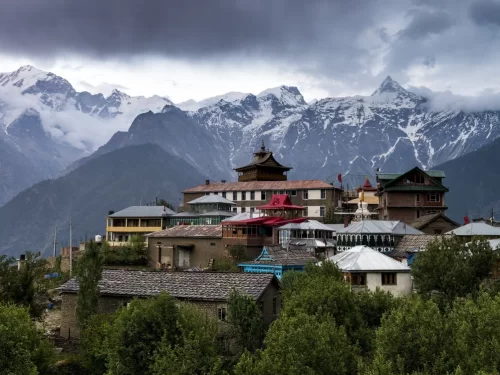
What makes Kalpa Monastery distinct is its hilltop location overlooking the Sutlej Valley, combining active worship with panoramic Himalayan views that few other local monasteries offer.
Context of Kalpa Monastery
Kalpa Monastery is a Tibetan Buddhist temple that serves as a spiritual center for local monks and the surrounding community.
It holds cultural and religious significance, hosting daily prayers and regional festivals that reflect the traditions of the Kinnaur region.
Best Time to Visit Kalpa Monastery
The ideal time to visit Kalpa Monastery is during the warmer months when the access paths are clear, weather is stable, and valley views are unobstructed.
- Ideal months: April to October, when roads and footpaths are free of snow and trekking is comfortable.
- Weather conditions during the best season: Mild daytime temperatures, clear skies, and low risk of rain or snow.
- Periods to avoid: November to March, due to heavy snowfall, icy paths, and potentially unsafe walking conditions.
How to Reach Kalpa Monastery
- Nearest airport: Kullu-Manali Airport (Bhuntar), approximately 210 km from Kalpa; requires a full-day road journey.
- Nearest railway station: Shimla Railway Station, about 245 km away; onward travel to Kalpa is by road.
- Road access: Kalpa is connected via NH5 from Shimla and NH505 from Reckong Peo; the monastery is a short walk from the town center.
- Last-mile access: Paved paths and a few steps lead from nearby parking to the monastery entrance; vehicles cannot enter the courtyard.
- Travel conditions: Hilly and narrow roads; landslides can occur during monsoon, and snow may block access in winter months.
What to Expect When You Visit Kalpa Monastery
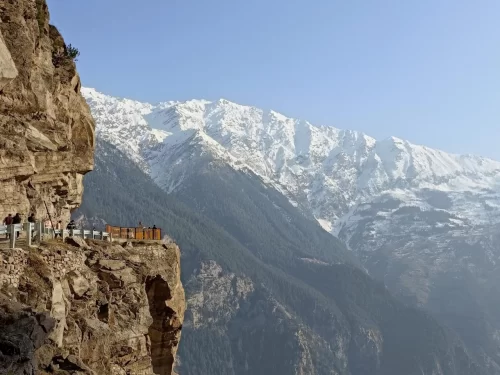
- The monastery is perched on a hilltop, offering clear views of the Sutlej Valley and surrounding Himalayan peaks.
- Facilities are minimal, including a few benches, small prayer halls, and limited shelter; no shops or eateries are on site.
- Accessibility involves short paved paths and a few steps from parking; elderly or differently-abled visitors may require assistance.
- Visitors are mainly local devotees and small groups of tourists; quiet and respectful behavior is expected.
- Paths can be slippery during rain or snow, and parking is limited, requiring a brief walk to reach the monastery entrance.
Important Visitor Information for Kalpa Monastery
- Crowds are generally low; mornings are quietest, while festival days attract more local devotees.
- Weather can be cold and windy even in summer; layered clothing and sun protection are recommended.
- Visitors should wear modest clothing covering shoulders and knees inside the monastery premises.
- Stone steps and paved paths can be slippery during rain or snow; caution is advised for elderly and children.
- Parking near the monastery is limited; plan for a short walk from available parking areas to the entrance.
Photography and Viewpoints at Kalpa Monastery
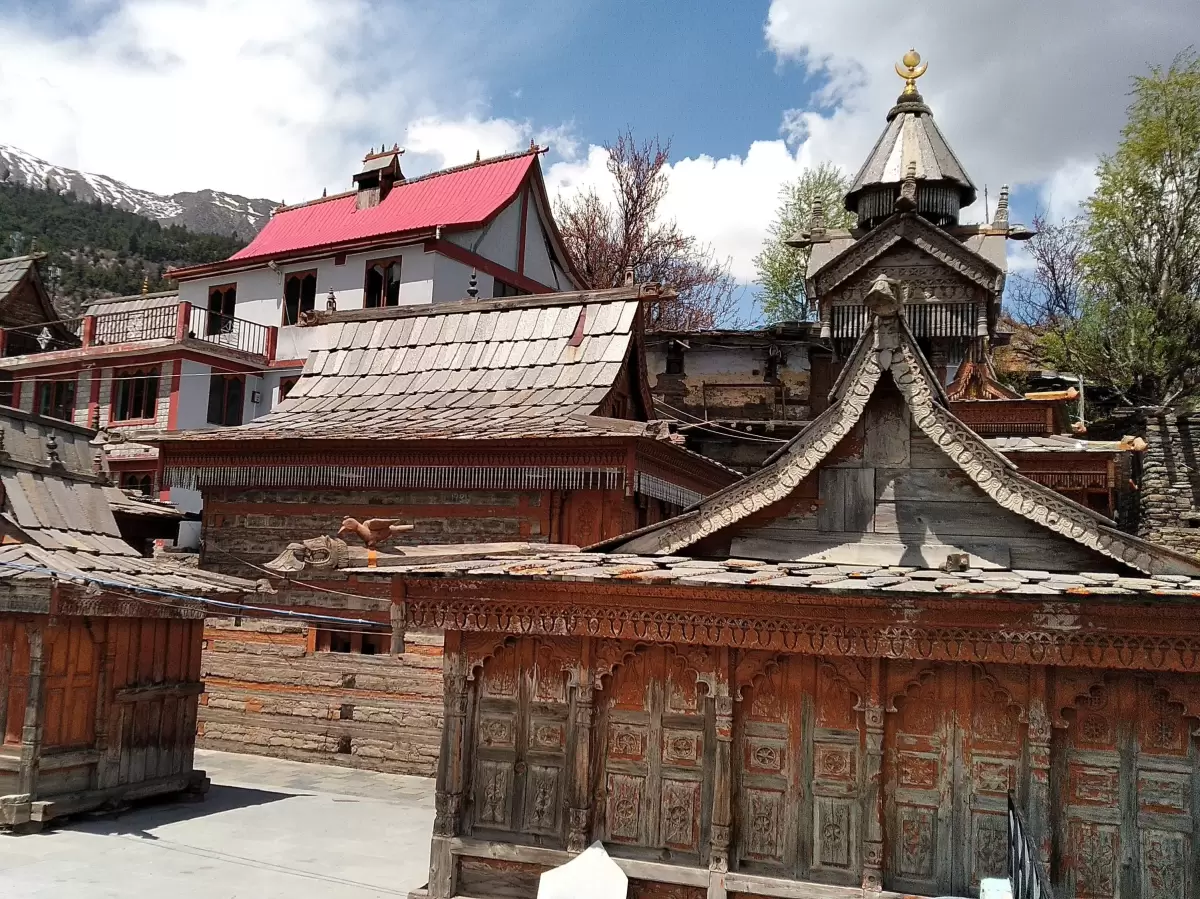
- Best photography angles are from the monastery courtyard and nearby hill paths, capturing the temple against the Sutlej Valley and Himalayan peaks.
- Morning light provides soft illumination for clear temple and valley shots; late afternoon offers warm tones on the façade.
- Photography is restricted inside prayer halls; visitors should follow posted signs and monk instructions.
- Low visitor numbers allow unobstructed shots most of the day, except during morning prayers or festivals.
- Nearby terraces and footpaths provide elevated perspectives for panoramic views of the monastery and surrounding landscape.