Quick Facts About Rewalsar Lake
Rewalsar Lake Quick Facts
| Entry Fee | No entry fee |
| Timings | Accessible throughout the day; monasteries and temples around the lake follow their own operating hours. |
| Altitude (m) | Approximately 1,360 m above sea level |
| Ideal Visit Duration | 2–3 hours |
| Best Time of Day | Morning or late afternoon for peaceful lake views and monastery visits |
| Crowd Level | Moderate; higher during Buddhist festivals and local religious events |
| Distance from City Centre (km) | Approximately 25 km from Mandi town centre |
| Walking Difficulty | Easy; the lakeside promenade and main attractions require minimal walking |
| Parking Available | Yes, parking facilities are available near the lake area |
| Last Mile Access | Direct road access to the lakeside; major monasteries and temples are reachable on foot |
| Suitable for Kids | Yes |
| Suitable for Seniors | Yes |
| Wheelchair Friendly | Partially; lakeside pathways are relatively accessible, though some religious sites have steps |
Why Visit Rewalsar Lake
Visitors come to Rewalsar Lake for its serene waters, lakeside monasteries and temples, and its importance as a spiritual destination for multiple faith communities.
The atmosphere is peaceful and contemplative, with pilgrims, monks, and travelers walking along the lakefront, visiting places of worship, and enjoying the calm surroundings.
What makes Rewalsar Lake distinct is its unique blend of Hindu, Buddhist, and Sikh religious heritage, combined with a scenic Himalayan setting that offers both cultural and natural appeal.
History of Rewalsar Lake
Rewalsar Lake, located in the Mandi district of Himachal Pradesh, is a site of remarkable religious significance for Hindus, Buddhists, and Sikhs. The lake has been revered for centuries and is deeply woven into the spiritual traditions of the Himalayan region.
According to Buddhist tradition, Guru Padmasambhava, also known as Guru Rinpoche, is believed to have meditated here before carrying Buddhism to Tibet in the 8th century. This association has made Rewalsar an important pilgrimage destination for Buddhist devotees from across the Himalayan world.
The lake is also linked to Hindu traditions associated with Sage Lomas and is home to several temples, monasteries, and a historic gurdwara commemorating the visit of Guru Gobind Singh. Today, Rewalsar Lake remains a unique cultural and spiritual landmark where multiple faiths continue to coexist around a shared sacred landscape.
Best Time to Visit Rewalsar Lake
Rewalsar Lake is best visited from March to June and September to November when the weather is pleasant for lakeside walks, monastery visits, and exploring the town's unique blend of Hindu, Buddhist, and Sikh heritage.
- Ideal months: March to June and September to November offer the most comfortable conditions for visiting Rewalsar Lake, with pleasant temperatures and clear views of the surrounding hills.
- Weather conditions during the best season: Spring and autumn bring mild weather, comfortable sightseeing conditions, and excellent visibility for exploring the monasteries, temples, gurudwara, and the scenic lakeside promenade.
- Periods to avoid: July and August can experience heavy monsoon rainfall, which may affect outdoor activities and reduce visibility. December to February is considerably colder, especially during mornings and evenings, though the destination remains accessible throughout winter.
How to Reach Rewalsar Lake
- Nearest Airport: Bhuntar Airport (Kullu–Manali Airport), located approximately 55 km from Rewalsar Lake, is the nearest airport. Taxis are readily available for onward travel via Mandi.
- Nearest Railway Station: Joginder Nagar Railway Station, about 35 km away, is the nearest railway station. Chandigarh Railway Station is another commonly used railhead due to its wider connectivity.
- Road Access and Last-Mile Connectivity: Rewalsar Lake is situated in Rewalsar town of Mandi district and is well connected by road from Mandi, Kullu, Manali, and Shimla. Private vehicles, taxis, and Himachal Road Transport buses operate regularly to the town. The lake, monasteries, and temples are located within walking distance of the main market area, making last-mile access convenient for visitors. Road access remains reliable throughout the year, though travel times may increase during the monsoon season due to mountain road conditions.
What to Expect When You Visit Rewalsar Lake
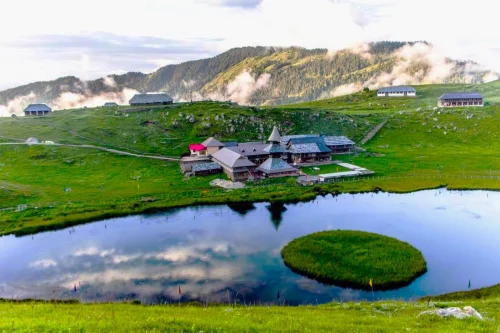
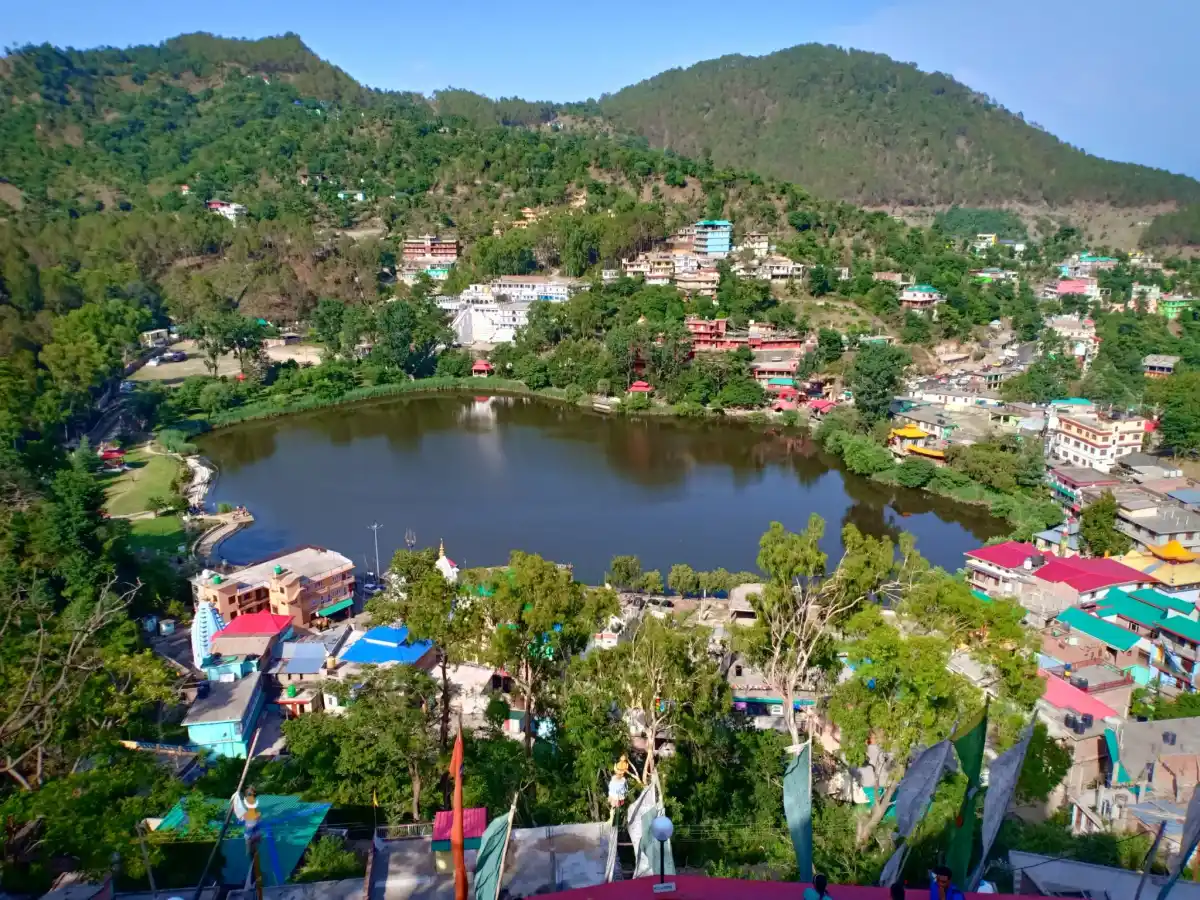
- Environment and Surroundings: Rewalsar Lake is a sacred mountain lake surrounded by monasteries, temples, prayer flags, and forested hills. The town reflects a blend of Buddhist, Hindu, and Sikh traditions, creating a peaceful spiritual atmosphere around the lakeside.
- Facilities and Amenities: Visitors can find basic amenities including restaurants, cafés, guesthouses, shops, public seating areas, and religious establishments around the lake. Essential services are available within the town, though options are more limited than in larger hill stations.
- Accessibility and Movement: The lake is easily accessible by road from Mandi. The lakeside promenade and surrounding religious sites can be explored on foot, with mostly level pathways and short walks between attractions.
- Visitor Conditions: Visitors typically spend time walking around the lake, visiting monasteries and temples, feeding fish, and observing local religious practices. The area remains active throughout the year, with increased visitor numbers during religious festivals, special ceremonies, and holiday periods.
Important Visitor Information for Rewalsar Lake
- Rewalsar Lake experiences its highest visitor numbers during Buddhist festivals, Hindu religious events, weekends, and the peak travel seasons of spring and autumn.
- Early mornings generally offer a peaceful atmosphere for walking around the lake, visiting monasteries and temples, and enjoying unobstructed views of the surrounding hills.
- Weather remains pleasant for most of the year, though monsoon rains can make lakeside pathways slippery and occasionally affect local travel conditions.
- Modest attire is recommended when visiting the religious sites surrounding the lake, including monasteries, temples, and sacred shrines.
- Visitors should respect religious customs, avoid littering around the sacred lake, and exercise caution on wet steps and pathways during rainy weather.
Photography and Viewpoints at Rewalsar Lake
- The lakeside promenade offers the best photography opportunities, where Rewalsar Lake, floating prayer flags, monasteries, temples, and surrounding hills can be captured together in a single frame.
- Early morning provides the calmest water conditions and the clearest reflections of the monasteries and temples, making it the preferred time for landscape photography.
- The elevated viewpoints near the Buddhist monasteries surrounding the lake offer panoramic perspectives of the entire lake basin and the town nestled within the hills.
- Sunset creates particularly attractive lighting across the lake, with reflections of illuminated religious structures and colorful prayer flags enhancing the scene.
- The giant statue of :contentReference[oaicite:0]{index=0} and the surrounding monastery complexes provide distinctive architectural and cultural photography subjects.
- Photography is generally permitted around the lake and public areas, but visitors should seek permission before photographing inside prayer halls, temples, or during religious ceremonies.
- Festivals, religious gatherings, and weekends can increase visitor numbers around the lakeside walkway, while early mornings usually offer quieter conditions and unobstructed views.