Quick Facts About Bhimakali Temple
| Entry Fee | Free |
| Timings | 06:00 - 20:00 |
| Altitude (m) | 760 |
| Ideal Visit Duration (hrs) | 1 |
| Best Time of Day | Morning |
| Crowd Level | Moderate |
| Distance from Mandi (km) | 1 |
| Walking Difficulty | Easy |
| Parking Available | No |
| Last Mile Access | Road |
| Suitable for Kids | Yes |
| Suitable for Seniors | Yes |
| Wheelchair Friendly | No |
Why Visit Bhimakali Temple, Mandi
Visitors come to Bhimakali Temple in Mandi primarily for worship, quiet reflection, and to experience one of the town’s most active local shrines near the Beas River.
The atmosphere is calm but functional, with steady foot traffic of local devotees, temple bells during prayer hours, and the sound of nearby river flow.
What sets this temple apart is its central location within Mandi town, allowing travelers to combine a religious visit with easy access to markets, river walks, and daily local life.
Context of Bhimakali Temple, Mandi
Bhimakali Temple in Mandi is a functioning Hindu shrine dedicated to Goddess Bhimakali, revered locally for her protective and benevolent aspects.
The temple is culturally significant to the residents of Mandi, serving as a focal point for daily worship, local festivals, and traditional rituals linked to the region’s spiritual practices.
Best Time to Visit Bhimakali Temple, Mandi
The best time to visit Bhimakali Temple is during the cooler months when weather is comfortable for walking and temple areas are dry, ensuring a smooth and safe visit.
- Ideal months: March to June and September to November, when temperatures are moderate and skies are generally clear.
- Weather conditions during the best season: Mild to warm days with low humidity, minimal rainfall, and pleasant mornings for darshan.
- Periods to avoid: July to August (monsoon) due to slippery pathways and occasional waterlogging near the temple entrance.
How to Reach Bhimakali Temple, Mandi
- Nearest airport: Kullu-Manali Airport (Bhuntar), approximately 50 km away, with limited daily flights; road transfer required.
- Nearest railway station: Joginder Nagar Railway Station, about 10 km from Mandi; small station with infrequent trains.
- Road access: Mandi is well-connected via NH3; the temple is within 1 km of the town centre. Last-mile access involves a short walk along paved streets, with limited parking near the entrance.
- Travel conditions: Roads can be narrow and congested during festivals; monsoon season may cause minor landslides or slippery surfaces along connecting routes.
What to Expect When You Visit Bhimakali Temple, Mandi
- The temple is located in the heart of Mandi town, with open courtyards, surrounding shops, and views of the Beas River nearby.
- Facilities are basic, including small footwear stands, drinking water taps, and local stalls selling offerings.
- Movement within the temple involves walking on paved paths with a few steps; the main sanctum has narrow entrances that may limit crowd flow.
- Visitors are mostly local devotees, with peak activity during morning prayers and festivals, creating short lines and moderate noise levels.
- Pathways can become slippery during the monsoon season, and parking is limited close to the temple, requiring a short walk from nearby streets.
Important Visitor Information for Bhimakali Temple, Mandi
- Crowds are highest during morning aarti hours and on festival days such as Navratri; weekdays remain quieter.
- Morning hours between 6:00 am and 8:00 am are ideal for minimal crowds and clearer darshan.
- Visitors are expected to wear modest clothing covering shoulders and knees, as it is an active place of worship.
- Stone and paved surfaces can become slippery during monsoon; caution is needed on steps and near river-adjacent areas.
- Belongings and mobile phones may need to be left outside the sanctum, following temple regulations.
Photography and Viewpoints at Bhimakali Temple, Mandi
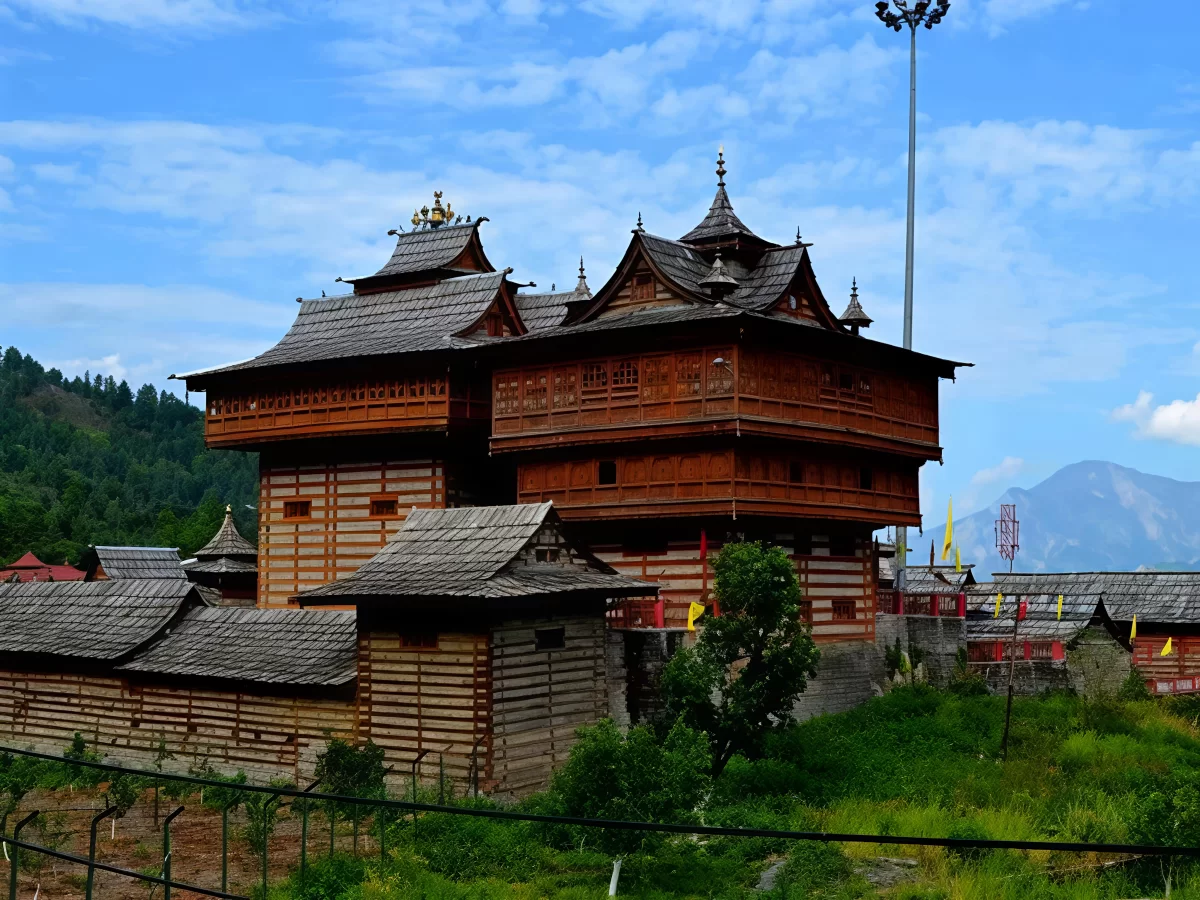
- The best views for photography are from the entrance courtyard and adjacent streets, capturing the temple’s shikhara against the river and town backdrop.
- Early morning light provides the clearest visibility with softer shadows, while afternoons can have harsher sunlight and more crowds.
- Photography is allowed in the outer areas but strictly prohibited inside the sanctum; follow temple staff instructions.
- Peak visiting hours during festivals and morning prayers can make it difficult to get uninterrupted shots; quiet periods are early mornings or late evenings.
- Side streets and small stairways around the temple offer elevated angles for capturing the temple complex and surrounding Mandi architecture.