Quick Facts About Deshu Temple
Deshu Temple Quick Facts
| Entry Fee | No entry fee |
| Timings | Open 24 hours (generally accessible sunrise to sunset recommended due to forest trail conditions) |
| Altitude (m) | Approximately 3,300 m |
| Ideal Visit Duration | 2–3 hours (including trek and darshan) |
| Best Time of Day | Morning hours for safer trek and clear views |
| Crowd Level | Low to moderate; increases during weekends and local pilgrimage days |
| Distance from City Centre (km) | Approximately 10–12 km from Kufri / Fagu route diversion point |
| Walking Difficulty | Moderate to difficult (steep ascent and long stair stretch) |
| Parking Available | Limited roadside parking near base point |
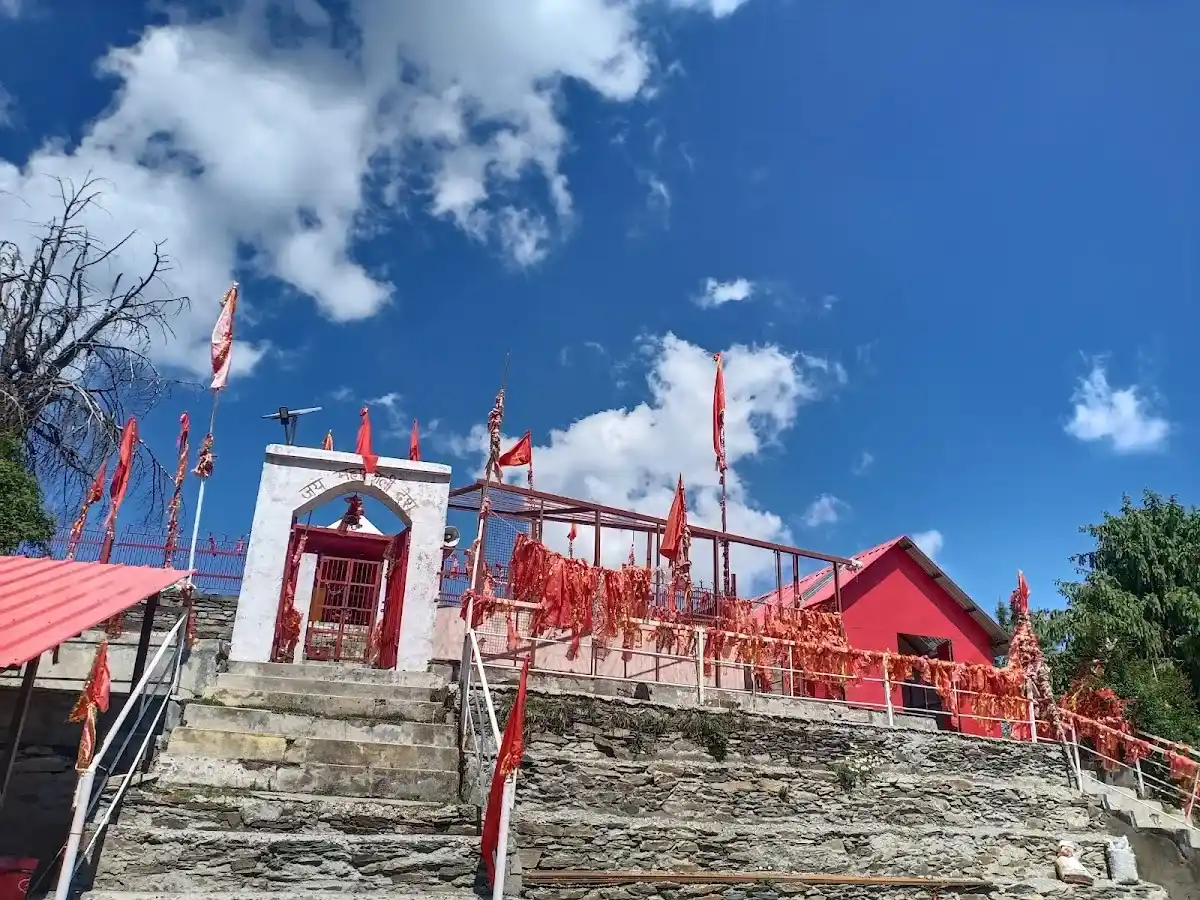
| Last Mile Access | Requires uphill trek with approx. 400+ stairs after initial forest road approach |
| Suitable for Kids | No; not recommended due to steep climb |
| Suitable for Seniors | No; physically demanding ascent |
| Wheelchair Friendly | No |
Why Visit Deshu Temple
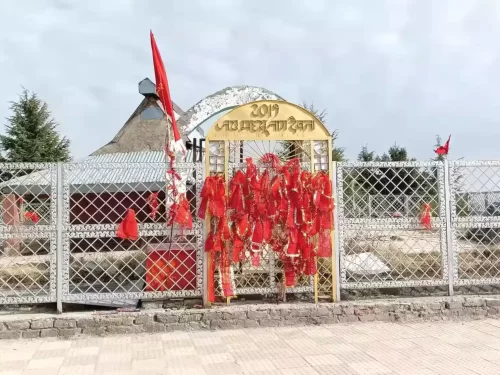
Visitors come to Deshu Temple to offer prayers and experience a peaceful local place of worship that holds significance for nearby communities and regular devotees.
The on-ground atmosphere is quiet and simple, with a devotional setting where visitors often find a calm environment for short visits, reflection, and traditional ???? rituals.
What makes Deshu Temple distinct is its local cultural importance and understated surroundings, giving travelers a chance to experience an authentic, community-focused spiritual space rather than a commercial tourist site.
History of Deshu Temple
Deshu Temple is a local place of worship dedicated to a regional deity known as Deshu, venerated within nearby communities. The temple’s origins are based on oral traditions rather than well-documented historical records, reflecting its long-standing role in local belief systems.
Over time, the temple has remained an important spiritual site for residents of the surrounding area, where it is associated with traditional rituals, village-level customs, and seasonal religious gatherings. Its significance is primarily rooted in community faith and continuity of worship practices.
Today, Deshu Temple continues to be visited by devotees who come to offer prayers and participate in local ceremonies, maintaining its cultural relevance as a living place of worship within the region.
Best Time to Visit Deshu Temple
Deshu Temple is best visited during the stable travel months of the Himalayan region when weather conditions are comfortable for local travel and temple visits are not affected by heavy rain or winter cold. Since detailed public seasonal data for this specific temple is limited, visitors generally follow the broader regional hill travel window for planning.
- Ideal Months: March to June and September to November.
- Best Season Conditions: Pleasant daytime temperatures, clear surroundings, and easy local accessibility for darshan and short visits.
- Periods to Avoid: July to August due to monsoon rainfall that may affect road conditions; peak winter months (December to January) due to cold weather and reduced travel comfort in higher hill areas.
How to Reach Deshu Temple
- By Air: The nearest airport is Shimla Airport (Jubbarhatti), located around 35–45 km from Deshu Temple. However, due to limited flight connectivity and weather dependency, most travellers prefer Chandigarh Airport (approx. 120–130 km away) for better frequency and reliability, followed by a road journey to Kufri.
- By Train: The nearest major railway station is Shimla Railway Station, about 20–25 km from Kufri. It is connected via the historic Kalka–Shimla toy train route. For wider connectivity, Chandigarh Railway Station (around 120–130 km) is the most practical option, offering regular trains from major Indian cities.
- By Road: Deshu Temple is accessible from Kufri via the Kufri–Fagu stretch on NH-5. The last approach involves a steep uphill route with a short trekking section (locally reported steps and incline path), which may be physically demanding. Roads are narrow and winding, and during winter snowfall or monsoon, travel can become slow or temporarily restricted. Local taxis from Kufri and Shimla are the most commonly used option for last-mile access.
What to Expect When You Visit Deshu Temple
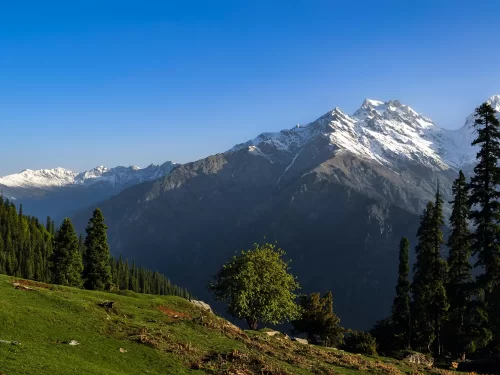
- The temple is located in the Kufri region, set within a hilly Himalayan environment with forested slopes, cold climate, and seasonal tourist activity around nearby attractions.
- Visitors can expect a quiet and simple temple atmosphere, with limited crowds compared to major pilgrimage sites, though footfall may increase during weekends and local travel seasons.
- Accessibility involves uphill travel through mountain roads, and the final approach may require walking on narrow paths depending on vehicle access and weather conditions.
- Basic or minimal facilities are available in the immediate vicinity, so visitors should not expect organized amenities, shops, or structured visitor services at the temple site.
- The area experiences cold temperatures for most of the year, with snowfall during winter months that can affect road access and walking conditions.
- Visitor behavior is generally calm, with devotees and tourists visiting briefly before continuing to nearby Kufri sightseeing points.
- Mobile connectivity may be inconsistent due to hilly terrain, and network signals can weaken depending on weather and exact location.
- The surroundings are scenic but undeveloped, so visitors should be prepared for natural terrain, limited seating, and basic on-ground comfort.
Safety Tips and Important Visitor Information for Deshu Temple
- Deshu Temple in Kufri experiences higher visitor movement during peak tourist season in summer and winter weekends, while early mornings and late afternoons are comparatively quieter.
- During winter months, Kufri receives heavy snowfall, making access roads and walking paths around the temple area slippery and sometimes partially blocked.
- Visitors should wear warm, layered clothing in winter and sturdy footwear year-round due to uneven hill terrain and occasional icy patches.
- Foggy conditions are common in Kufri, which can reduce visibility during early mornings and evenings, requiring extra caution while traveling to the site.
- The temple is located in a high-altitude hill environment, so visitors should move slowly and take breaks if experiencing breathlessness or altitude discomfort.
Photography and Viewpoints at Deshu Temple
- The temple premises in :contentReference[oaicite:0]{index=0} offer framed views of surrounding pine forests and Himalayan slopes, with the best composition captured from the outer courtyard area facing the valley side.
- Early morning hours provide soft misty light, especially during winter, which enhances the atmospheric backdrop of the temple and nearby forest ridges.
- Winter snowfall creates clean white contrast around the temple structure, but access paths can become slippery, limiting movement for stable framing.
- Midday light is generally harsh due to open hill exposure, so shaded angles around the temple boundary are preferred for balanced exposure shots.
- Nearby elevated viewpoints along the Kufri ridge road offer wider landscape shots where the temple can be included subtly within the larger Himalayan setting.
- During peak tourist season, especially weekends and snowfall days, crowd movement around the temple entrance can restrict uninterrupted photography angles.