Quick Facts About Jama Masjid Ahmedabad
Quick Facts About Jama Masjid, Ahmedabad
| Entry Fee | Free |
|---|---|
| Timings | Open daily (usually 9:00 AM – 6:00 PM; closed during prayer times for non-worshippers) |
| Altitude (m) | Approx. 53 m |
| Ideal Visit Duration | 30 minutes – 1 hour |
| Best Time of Day | Morning or late afternoon |
| Crowd Level | Moderate (busier during Fridays and festivals) |
| Distance from City Centre (km) | Located in central Ahmedabad |
| Walking Difficulty | Easy (flat courtyards and paved areas) |
| Parking Available | Limited parking nearby |
| Last Mile Access | Auto-rickshaw, taxi, or private vehicle access available |
| Suitable for Kids | Yes (safe for short visits with supervision) |
| Suitable for Seniors | Yes (easy walking, seating available in some areas) |
| Wheelchair Friendly | Partially (main areas accessible; some sections may have steps) |
Why Visit Jama Masjid, Ahmedabad
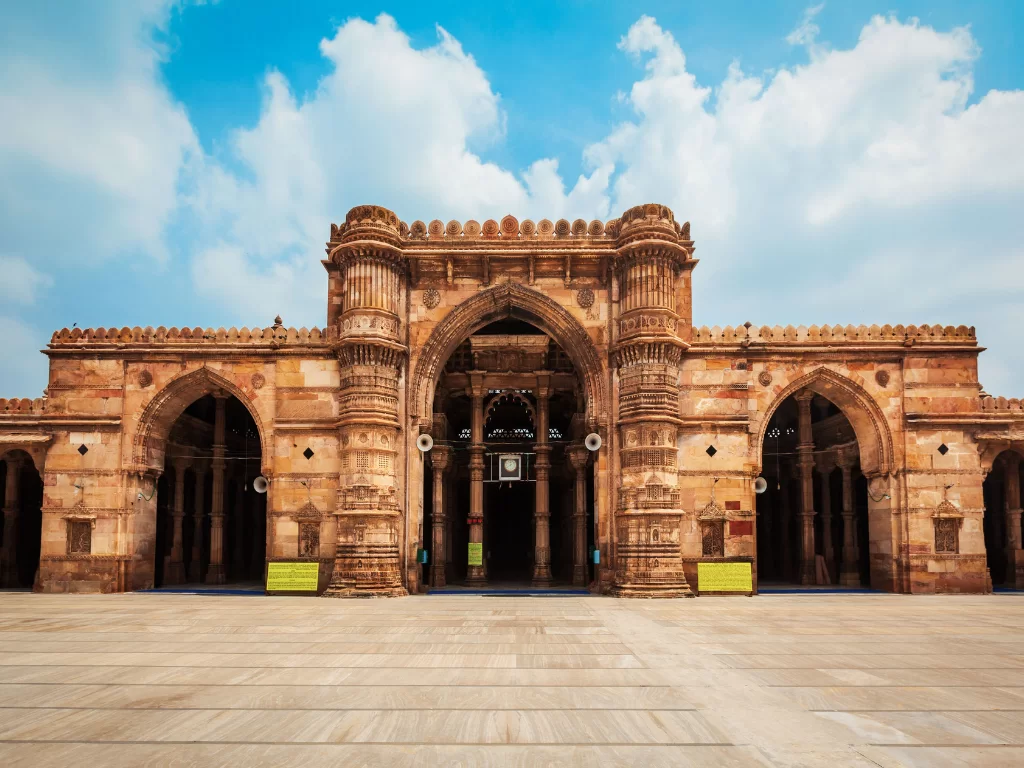
Jama Masjid in Ahmedabad is a historic mosque attracting visitors for its architectural grandeur and religious significance. Tourists come here to admire the intricately carved stone arches, domes, and minarets, and to experience the spiritual ambiance of one of the city’s most important Islamic landmarks. It is a key stop for travelers exploring Ahmedabad’s heritage sites.
The atmosphere at Jama Masjid is serene and contemplative, with the echo of prayers, quiet courtyards, and spacious interiors creating a reflective environment. Visitors can walk through the mosque, observe the intricate carvings, and spend time appreciating the architectural details. The site remains calm outside of prayer times, providing a peaceful experience for exploration and photography.
What makes Jama Masjid special is its blend of architectural excellence, historical importance, and religious heritage. The mosque’s design, scale, and location in the old city of Ahmedabad offer travelers both cultural insight and visual appeal. For visitors, it is a culturally enriching and spiritually significant destination.
History of Jama Masjid, Ahmedabad
Jama Masjid in Ahmedabad, Gujarat, is a historic mosque built in 1424 CE by Sultan Ahmed Shah, the founder of the city. Constructed to serve as the principal congregational mosque, it reflects the grandeur of Indo-Islamic architecture during the Gujarat Sultanate period.
The mosque features intricately carved stone pillars, spacious courtyards, and domes, showcasing a blend of Islamic and local architectural styles. Historically, it served as a central place for daily prayers, community gatherings, and significant religious ceremonies in Ahmedabad.
Today, Jama Masjid remains one of Ahmedabad’s most important heritage landmarks. Visitors come to admire its architectural elegance, understand the city’s medieval Islamic history, and experience the mosque’s spiritual and cultural significance.
Best Time to Visit Jama Masjid, Ahmedabad
Jama Masjid in Ahmedabad is best visited during the cooler months when the weather is comfortable for exploring the mosque, walking around the premises, and appreciating the intricate Indo-Islamic architecture. Pleasant conditions enhance sightseeing, photography, and heritage exploration.
- Ideal Months: October to February (best for heritage visits, walking, and photography).
- Weather During Best Season: Mild daytime temperatures with low humidity, ideal for walking around the mosque, observing architectural details, and capturing photographs comfortably.
- Periods to Avoid: April to June due to intense summer heat, which can make outdoor exploration tiring, and July to September during monsoon when heavy rains may affect accessibility and comfort.
How to Reach Jama Masjid, Ahmedabad
- Nearest Airport: The nearest airport is Sardar Vallabhbhai Patel International Airport, Ahmedabad, located around 9–11 km from Jama Masjid. From the airport, tourists can hire a taxi or app-based cab via Ashram Road or Relief Road to reach the mosque.
- Nearest Railway Station: The nearest railway station is Ahmedabad Junction Railway Station, approximately 4–5 km from Jama Masjid. It is well-connected to major cities like Mumbai, Delhi, Jaipur, and Vadodara.
- Road Access & Last-Mile Connectivity: Jama Masjid is located in the old city area near Manek Chowk and is accessible via Relief Road and adjoining narrow streets. Private vehicles, taxis, and auto-rickshaws provide last-mile connectivity. Walking from nearby parking areas is required due to narrow lanes in the old city.
- Travel Conditions to Note: The area can get crowded during weekends, evenings, and festival seasons. Early morning visits are recommended for a peaceful experience and better photography. Roads in the old city are narrow and busy, so careful navigation is advised. Mobile connectivity is generally stable.
What to Expect When You Visit Jama Masjid, Ahmedabad
- Historic mosque environment: Expect a 15th-century Indo-Islamic mosque featuring large courtyards, intricately carved arches, domes, and minarets, reflecting Ahmedabad’s rich heritage.
- Peaceful yet culturally vibrant atmosphere: The mosque remains calm for most of the day, though Fridays and religious occasions attract more worshippers and visitors.
- Walking and exploration: Visitors can walk across spacious courtyards, climb steps to certain elevated sections, and observe architectural details. Comfortable footwear is recommended.
- Religious and cultural significance: Active place of worship for Muslims, with regular prayers and rituals. Respectful behavior and modest attire are expected inside the mosque premises.
- Facilities and amenities: Basic facilities such as seating areas, shaded spots, and drinking water may be available. Food or commercial facilities are generally outside the mosque complex.
- Photography guidelines: Photography is typically allowed in the courtyards and exterior areas, but may be restricted inside prayer halls. Visitors should respect worshippers and signage.
- Accessibility considerations: Some steps and uneven flooring may pose challenges for seniors, children, or wheelchair users. Most outdoor courtyards are walkable.
- Visitor behavior: Quiet and respectful conduct is expected. Visitors often spend time observing architecture, taking photographs, and learning about the mosque’s historical significance.
- Crowd conditions: The mosque is moderately busy on weekdays, while Fridays, weekends, and religious festivals see higher footfall.
- Visit duration: Most visitors spend 30 minutes to 1 hour exploring courtyards, photographing details, and appreciating the mosque’s historical and architectural features.
Important Visitor Information for Jama Masjid, Ahmedabad
- Crowd & Weather Notes: Jama Masjid in Ahmedabad is a historic mosque and a major tourist attraction, drawing devotees, tourists, and history enthusiasts year-round. Winter months (October to February) are the most comfortable for visiting. Summers can be hot and humid, while monsoon rains may make stone courtyards and steps slippery.
- Peak Visiting Hours: The mosque is busiest during morning and evening prayer times (7:00 AM to 10:00 AM and 5:00 PM to 7:00 PM), particularly on Fridays, weekends, and public holidays.
- Quiet Visiting Hours: Mid-mornings on weekdays and early afternoons are generally quieter, ideal for sightseeing, photography, and exploring the mosque architecture without heavy crowds.
- Dress Code (If Applicable): Modest clothing is required. Visitors should cover shoulders and knees, and footwear must be removed before entering the mosque premises. Women may need to cover their heads with a scarf.
- Safety & Practical Cautions: Walk carefully on stone floors and steps, especially during or after rain. Supervise children closely. Photography is allowed in most areas, but avoid disrupting worshippers. Carry water and sun protection during summer visits.
Photography and Viewpoints at Jama Masjid, Ahmedabad
- Best viewpoint for wide mosque shots: The main courtyard provides a panoramic view of Jama Masjid, capturing its central domes, minarets, and arches in a wide-angle frame.
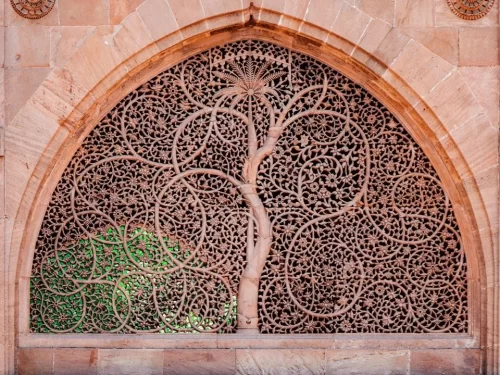
- Most photogenic spot: Elevated side terraces and courtyard corners allow photographers to frame the mosque façade, arches, and intricate stone carvings, adding depth and perspective.
- Best time of day for natural lighting: Early morning (6 AM to 9 AM) offers soft, diffused sunlight that illuminates the mosque façade and carvings evenly without harsh shadows.
- Golden hour advantage: Late afternoon (4 PM to 6 PM) casts warm light across domes and minarets, producing dramatic shadows and visually striking architectural photographs.
- Midday lighting conditions: Between 11 AM and 3 PM, strong sunlight can flatten intricate carvings and create glare on light-colored stone surfaces, making morning or late afternoon preferable.
- Best photography subjects: Central domes, minarets, arches, carved pillars, prayer halls, and the main courtyard are ideal for both wide-angle and detailed close-up shots.
- Interior photography restrictions: Photography inside prayer halls may be restricted, especially during prayers. Flash is generally prohibited to maintain sanctity and respect for worshippers.
- Crowd factors affecting photography: Weekends, festivals, and prayer times can attract higher footfall, limiting unobstructed shots of the mosque façade and courtyard.
- Best crowd-free photography window: Weekday mornings offer the calmest environment for photographing the mosque exterior and permitted interior areas without visitors in the frame.
- Drone and professional shoot rules: Drone photography and commercial filming require prior permission from mosque authorities and local administration to ensure safety, heritage protection, and minimal disturbance to visitors and worshippers.