Quick Facts About Baroda Museum & Picture Gallery
Quick Facts About Baroda Museum & Picture Gallery
| Entry Fee | Ticketed entry (fee varies for Indian and foreign visitors; confirm latest rates at the counter) |
|---|---|
| Timings | Generally open during daytime hours; weekly closure may apply (confirm official timing before visit) |
| Altitude (m) | Approx. 35–40 m above sea level (Vadodara city elevation range) |
| Ideal Visit Duration | 1.5 to 3 hours |
| Best Time of Day | Morning to early afternoon (for quieter galleries and better time to explore exhibits) |
| Crowd Level | Moderate on weekdays; high on weekends, school holidays, and tourist season months |
| Distance from City Centre (km) | Approx. 2–4 km (near Sayaji Baug area in central Vadodara) |
| Walking Difficulty | Easy to moderate (multiple indoor galleries with walking and standing time) |
| Parking Available | Yes (parking available in the Sayaji Baug / museum vicinity, subject to availability) |
| Last Mile Access | Easily accessible by auto-rickshaw, taxi, and app-based cabs; short walk from parking or gate entry |
| Suitable for Kids | Yes (natural history and curated displays are suitable for families) |
| Suitable for Seniors | Yes (indoor visit with seating options in parts of the museum) |
| Wheelchair Friendly | Partially (some sections may have steps or limited ramp access; assistance may be needed) |
Why Visit Baroda Museum & Picture Gallery
Baroda Museum & Picture Gallery is visited by tourists who want to explore a wide range of curated collections in one place, including art, archaeology, and natural history exhibits. Visitors come here to see original artefacts, sculptures, paintings, and themed galleries that provide a structured museum experience in Vadodara.
The on-ground atmosphere is quiet and academic, with indoor halls designed for slow movement and detailed viewing. Most visitors spend time reading exhibit labels, walking through multiple gallery sections, and taking short breaks between displays, especially during weekends when footfall is higher.
What makes the museum distinct is the variety of collections under one roof, including internationally themed sections such as Egyptian displays alongside Indian heritage artefacts. For travelers, it works as a practical half-day cultural visit, especially useful during hot afternoons when outdoor sightseeing is uncomfortable.
History of Baroda Museum & Picture Gallery
Baroda Museum & Picture Gallery was established during the Gaekwad era as part of Vadodara’s efforts to develop formal public institutions for education, art, and heritage preservation. The museum building and its collections were created with royal patronage and later became an important public museum under government administration.
Over time, the museum developed a reputation for housing diverse collections, including archaeology, fine art, ethnography, and natural history exhibits. Today, it remains one of Gujarat’s prominent museums and continues to serve as a key cultural and educational landmark within the Sayaji Baug complex in Vadodara.
Best Time to Visit Baroda Museum & Picture Gallery
Baroda Museum & Picture Gallery can be visited throughout the year since it is an indoor museum, but the best overall experience is during Vadodara’s cooler months when reaching the Sayaji Baug complex and walking between museum sections feels more comfortable. Seasonal weather mainly affects travel convenience and crowd levels rather than the gallery visit itself.
- Ideal months: October to March for comfortable temperatures and easier movement within the Sayaji Baug area.
- Best seasonal experience: Winter months are ideal for combining the museum visit with nearby attractions inside Sayaji Baug.
- Weather during the best season: Cooler daytime conditions and lower humidity, making entry and walking between museum areas more comfortable.
- Period to avoid for comfort: April to June afternoons due to high heat, which can make travel and walking inside the Sayaji Baug complex uncomfortable.
- Monsoon limitation: July to September can bring heavy rain and humidity, which may affect travel conditions and cause crowding in indoor galleries.
- Best time of day: Morning hours for quieter galleries and better time to explore exhibits without school-group rush.
How to Reach Baroda Museum & Picture Gallery
- Nearest airport: Vadodara Airport (BDQ), approximately 6–9 km away; taxis and app-based cabs are available for direct access to the Sayaji Baug area.
- Nearest railway station: Vadodara Junction Railway Station (BRC), around 2–3 km from the museum, making it one of the easiest cultural attractions to reach after arriving by train.
- Road access: The museum is located inside Sayaji Baug (Kamati Baug) in central Vadodara and is well connected by major city roads from Alkapuri, Sayajigunj, and Mandvi areas.
- Local transport: Auto-rickshaws, city taxis, and app-based cab services are widely available throughout Vadodara for convenient access.
- Bus connectivity: Local city buses operate near Sayaji Baug, but visitors may need to walk a short distance from the bus stop to reach the museum entrance.
- Last-mile access: Entry is through the Sayaji Baug gates, followed by a short walk inside the park complex to reach the museum building.
- Travel limitation: During weekends and public holidays, traffic near Sayaji Baug can be slow and parking may fill quickly due to zoo and garden visitors.
What to Expect When You Visit Baroda Museum & Picture Gallery
- Park-based location: Expect the museum to be located inside Sayaji Baug (Kamati Baug), so a short walk through the garden complex is required to reach the entrance.
- Indoor gallery experience: The visit is mainly indoors, with multiple sections covering archaeology, art, natural history, and curated cultural displays.
- Quiet museum atmosphere: The galleries are generally calm, with visitors moving slowly and spending time reading labels and observing artefacts.
- Popular exhibits: Visitors commonly spend more time in art and picture gallery sections, along with themed heritage collections such as Egyptian exhibits.
- Facilities: Basic amenities are available within the Sayaji Baug area, but museum-specific facilities are limited to entry and viewing areas.
- Accessibility and movement: Walking is moderate due to multiple rooms and display halls; some areas may involve steps depending on gallery layout.
- Visitor conditions: Weekends and school holiday periods can bring group visits, which may increase noise and reduce viewing comfort in smaller sections.
- Photography limitations: Photography may be restricted in some galleries or around specific exhibits, and visitors must follow on-site instructions.
- Time planning: The museum is often combined with the Sayaji Baug Zoo or nearby attractions, so visitors commonly plan a longer slot in the area.
Important Visitor Information for Baroda Museum & Picture Gallery
- Crowd and visitor flow: The museum sees higher footfall on weekends, public holidays, and during school vacations due to its location inside Sayaji Baug.
- Weather note: The museum visit is indoors, but heat and humidity affect comfort while walking inside Sayaji Baug and waiting at entry points.
- Peak visiting hours: Late morning to early afternoon is usually busiest, especially when school groups and families visit the park complex.
- Quiet visiting hours: Early mornings generally offer a quieter gallery experience with fewer group visitors.
- Dress code: No specific dress code is enforced, as it is a public museum, but comfortable clothing is recommended for walking within the Sayaji Baug complex.
- Photography rules: Photography may be restricted in some galleries and around sensitive exhibits; visitors should follow museum signage and staff instructions.
- Entry and ticketing: Ticket counters can get busy on weekends, so arriving early helps reduce waiting time.
- Safety and movement: Some gallery areas may have narrow viewing spaces, so visitors should move carefully around glass displays and artefact sections.
- Parking limitation: Parking near Sayaji Baug can become crowded due to zoo and garden visitors, so travel by auto-rickshaw is often easier during peak hours.
Photography and Viewpoints at Baroda Museum & Picture Gallery
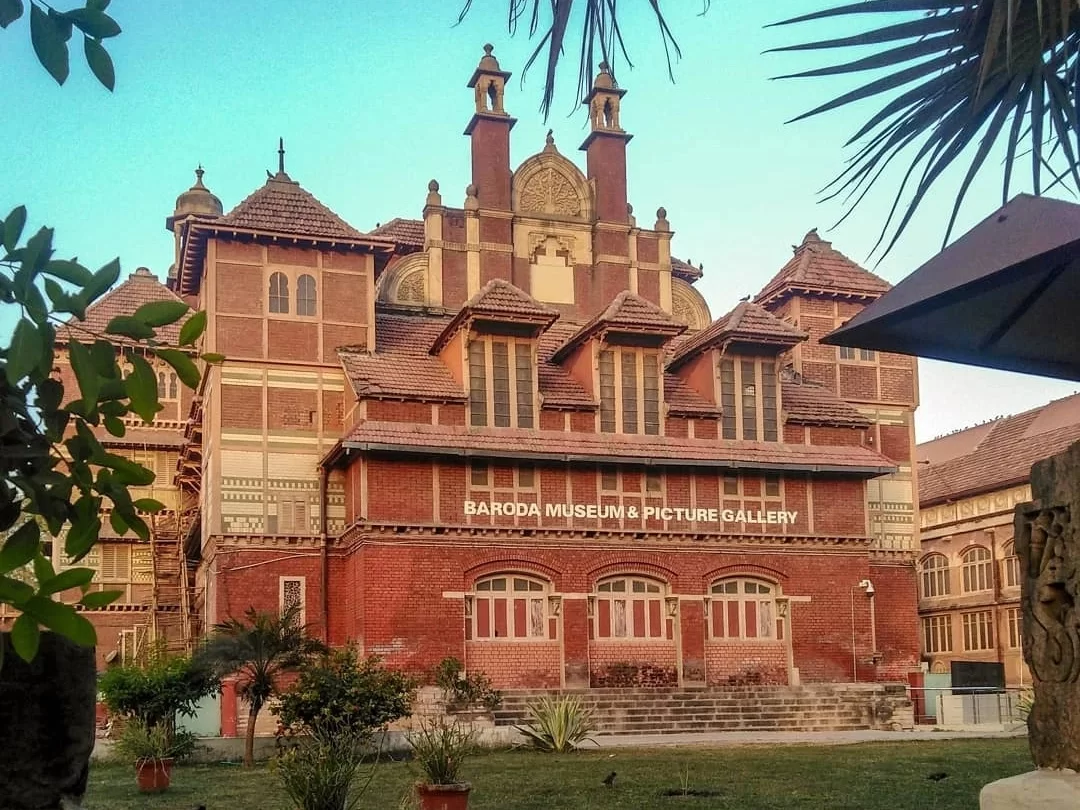
- Best exterior viewpoint: The open space near the museum entrance inside Sayaji Baug offers the best angle to capture the museum’s heritage-style building and front façade.
- Architectural photography focus: Visitors often photograph the exterior structure, arched entry sections, and the landscaped garden surroundings that frame the museum.
- Indoor photography limitation: Photography inside the galleries may be restricted or controlled, especially in art and picture sections, depending on museum rules and exhibit protection guidelines.
- Best time for outdoor lighting: Morning hours provide clearer daylight and fewer crowds around the entrance, making it easier to capture clean exterior shots.
- Gallery lighting conditions: Indoor lighting is designed for display viewing, and reflections on glass cases may affect photography even where photos are permitted.
- Crowd impact: Weekends and school holidays can create crowding in smaller exhibit halls, reducing space for stable photography and slower movement.
- Best viewpoint for Sayaji Baug context: Wider frames from the garden pathways near the museum can capture the building along with greenery, giving a complete setting view.
- Rule-based restriction: Some artefact zones may have strict no-photo signage, and visitors are expected to follow staff instructions without exceptions.