Quick Facts About Ashok Shilalekh
Quick Facts About Ashok Shilalekh, Junagadh
| Entry Fee | Free |
|---|---|
| Timings | Open daily (best visited during daylight hours) |
| Altitude (m) | Approx. 80 m |
| Ideal Visit Duration | 20 – 40 minutes |
| Best Time of Day | Morning or late afternoon |
| Crowd Level | Low (usually quiet except for small tourist groups) |
| Distance from City Centre (km) | Approx. 5 km from Junagadh city centre |
| Walking Difficulty | Easy (short walk to the stone inscription site) |
| Parking Available | Limited roadside parking nearby |
| Last Mile Access | Auto-rickshaw, taxi, or private vehicle recommended |
| Suitable for Kids | Yes (educational and historical site) |
| Suitable for Seniors | Yes (easy access and minimal walking) |
| Wheelchair Friendly | Partially (main area accessible; some uneven terrain) |
Why Visit Ashok Shilalekh, Junagadh
Ashok Shilalekh in Junagadh is a historic rock edict engraved by Emperor Ashoka, attracting visitors interested in ancient history, archaeology, and epigraphy. Tourists come here to see one of the earliest inscriptions from the Mauryan period, which offers insights into Ashoka’s governance, messages of Dharma, and the spread of Buddhism. It is an important destination for history enthusiasts and students exploring Gujarat’s heritage.
The atmosphere at Ashok Shilalekh is solemn and contemplative, with the inscription set against a natural rock surface surrounded by quiet greenery. Visitors can closely observe the engraved text and study the historical details while enjoying the calm and open surroundings. The site is typically uncrowded, providing an educational and reflective environment.
What makes Ashok Shilalekh special is its historical authenticity and connection to Emperor Ashoka’s reign, making it one of the most significant archaeological sites in Junagadh. The preserved rock edict allows travelers to directly engage with India’s ancient past. For visitors, it provides a unique experience of historical discovery and cultural significance within a serene natural setting.
History of Ashok Shilalekh, Junagadh
The Ashok Shilalekh in Junagadh, Gujarat, is an ancient rock edict attributed to Emperor Ashoka of the Maurya dynasty, dating back to the 3rd century BCE. It is historically significant as one of the earliest inscriptions that convey Ashoka’s messages on governance, morality, and the principles of Dharma.
Carved directly onto a rock surface, the Ashok Shilalekh reflects the spread of Ashoka’s influence into the Saurashtra region. The inscription provides insight into the political, social, and religious ethos of the time, highlighting Ashoka’s efforts to promote non-violence, ethical conduct, and administrative directives across his empire.
Today, the Ashok Shilalekh is an important archaeological and heritage landmark in Junagadh. Visitors come to study its historical significance, appreciate the ancient script, and understand the region’s connection to one of India’s most notable emperors and early expressions of governance and moral philosophy.
Best Time to Visit Ashok Shilalekh, Junagadh
Ashok Shilalekh is best visited during the cooler months when the weather is comfortable for exploring the inscription site and surrounding historical areas. Pleasant conditions enhance walking, photography, and appreciating the ancient carvings without discomfort from heat or humidity.
- Ideal Months: October to February (best for heritage sightseeing and outdoor exploration).
- Weather During Best Season: Mild daytime temperatures with clear skies, ideal for walking around the site, reading the inscriptions, and taking photographs.
- Periods to Avoid: April to June due to high summer heat, which can make outdoor exploration tiring, and July to September during monsoon when rain may affect accessibility and safety around the site.
How to Reach Ashok Shilalekh, Junagadh
- Nearest Airport: The nearest airport is Rajkot International Airport (Hirasar Airport), located around 95–100 km from Ashok Shilalekh. From the airport, tourists can hire a taxi or private car via NH 27 and local roads to reach Junagadh.
- Nearest Railway Station: The nearest railway station is Junagadh Railway Station, approximately 4–5 km from Ashok Shilalekh. It is well-connected to major cities like Rajkot, Ahmedabad, and Surat through regular trains.
- Road Access & Last-Mile Connectivity: Ashok Shilalekh is located near the city center of Junagadh and is accessible via well-maintained urban roads. Tourists can use private vehicles, taxis, auto-rickshaws, or local buses for last-mile connectivity. The site is well-known among locals, so navigation is straightforward.
- Travel Conditions to Note: The area can get moderately crowded during weekends and public holidays. Parking is available nearby but may be limited during peak visiting hours. Early morning visits are recommended for a peaceful experience and optimal photography.
What to Expect When You Visit Ashok Shilalekh, Junagadh
- Historic rock inscription site: Expect an ancient stone engraving attributed to Emperor Ashoka, carved into a rock face, with inscriptions in Brahmi script documenting edicts and historical details.
- Quiet and contemplative atmosphere: The site is generally calm, with few visitors, offering an educational and reflective environment for history enthusiasts and scholars.
- Walking and terrain considerations: Access involves walking on rocky paths and uneven terrain. Comfortable shoes and moderate mobility are recommended to navigate safely.
- Minimal visitor facilities: Facilities are basic or absent. Visitors should carry water and prepare for a self-guided experience. Seating and rest areas are generally not available on-site.
- Photography expectations: Photography is allowed in outdoor areas, capturing the inscriptions and surrounding rock formations. Proper lighting during morning or late afternoon improves visibility of the carvings.
- Accessibility limitations: Uneven surfaces and small inclines make the site challenging for seniors, children, or wheelchair users.
- Educational and historical interest: Most visitors come to study or admire the Ashokan edicts, making it an important site for students, historians, and cultural tourists.
- Weather impact: Being an open rock site, exposure to sun or rain affects the experience. Hot afternoons can be tiring, and monsoon rains may make paths slippery.
- Visitor behavior: Quiet observation and respectful conduct are expected, especially near the inscriptions and any protected areas.
- Visit duration: Visitors typically spend 20 to 45 minutes at the site, depending on interest in reading inscriptions and exploring the surrounding rock area.
Important Visitor Information for Ashok Shilalekh, Junagadh
- Crowd & Weather Notes: Ashok Shilalekh is a historic and archaeological site in Junagadh that attracts history enthusiasts and tourists interested in ancient inscriptions. Visitor flow is generally moderate, with higher numbers during winter (October to February) when the weather is pleasant. Summers can be hot and humid, making midday visits uncomfortable.
- Peak Visiting Hours: The site sees the most visitors during late morning to early afternoon (10:00 AM to 1:00 PM) and during early evenings (4:00 PM to 6:00 PM) on weekends and public holidays.
- Quiet Visiting Hours: Early mornings (7:00 AM to 9:00 AM) and weekday afternoons are quieter, offering a peaceful environment for reading inscriptions and photographing the site.
- Dress Code (If Applicable): There is no formal dress code. Comfortable casual clothing and walking shoes are recommended, especially if exploring nearby open grounds and archaeological areas.
- Safety & Practical Cautions: Visitors should avoid touching the ancient inscriptions to prevent damage. The ground may be uneven, so watch your step and supervise children closely. Carry water and sun protection during summer. Photography is allowed, but stay within designated areas and avoid stepping into restricted zones.
Photography and Viewpoints at Ashok Shilalekh, Junagadh
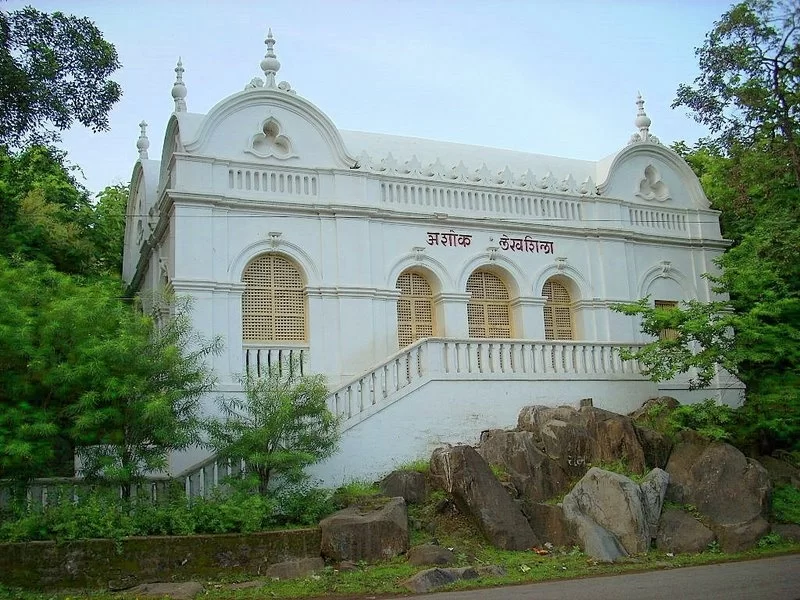
- Best viewpoint for wide shot: The front of the Ashok Shilalekh offers the clearest view, allowing photographers to capture the inscription slab along with surrounding stone and landscaped areas for context.
- Most photogenic spot: Slightly angled side views help highlight the engraved text and reliefs on the stone, giving depth and perspective to architectural and historical details.
- Best time of day for natural lighting: Early morning (7 AM to 9 AM) provides soft, diffused light that enhances inscriptions and reduces harsh shadows on the stone surface, ideal for detailed photography.
- Golden hour advantage: Late afternoon (4 PM to 6 PM) casts warm light across the stone surfaces, enhancing textures and making reliefs and carvings more prominent in photographs.
- Midday lighting conditions: Between 11 AM and 3 PM, harsh sunlight may cause glare on the stone, reducing legibility of inscriptions and flattening details in photos.
- Best photography subjects: Engraved inscriptions, stone reliefs, surrounding terraces, and historical context features provide compelling close-up and wide-angle shots.
- Crowd factors affecting photography: The site is typically quiet, but local visitors may appear during weekends or holidays, requiring patience for unobstructed frames.
- Best crowd-free photography window: Weekday mornings are ideal for capturing the inscription and surrounding features without visitor interference.
- Photography restrictions: Avoid using flash directly on the inscriptions to prevent damage, and be mindful of restricted or fragile areas around the stone.
- Drone and professional shoot rules: Drone photography and commercial filming require prior permission from local heritage authorities to ensure preservation and safety.