Quick Facts About Mahabat Maqbara Palace
Quick Facts About Mahabat Maqbara, Junagadh
| Entry Fee | Free |
|---|---|
| Timings | Open daily (usually 9:00 AM – 6:00 PM) |
| Altitude (m) | Approx. 78 m |
| Ideal Visit Duration | 30 minutes – 1 hour |
| Best Time of Day | Morning or late afternoon |
| Crowd Level | Low to Moderate (busier on weekends and holidays) |
| Distance from City Centre (km) | Approx. 2 – 3 km from Junagadh city centre |
| Walking Difficulty | Easy (short walking inside the palace premises) |
| Parking Available | Limited parking near the palace |
| Last Mile Access | Auto-rickshaw, taxi, and private vehicle |
| Suitable for Kids | Yes (educational and historical site) |
| Suitable for Seniors | Yes (easy walking, seating available) |
| Wheelchair Friendly | Partially (main areas accessible; some sections may have steps) |
Why Visit Mahabat Maqbara Palace, Junagadh
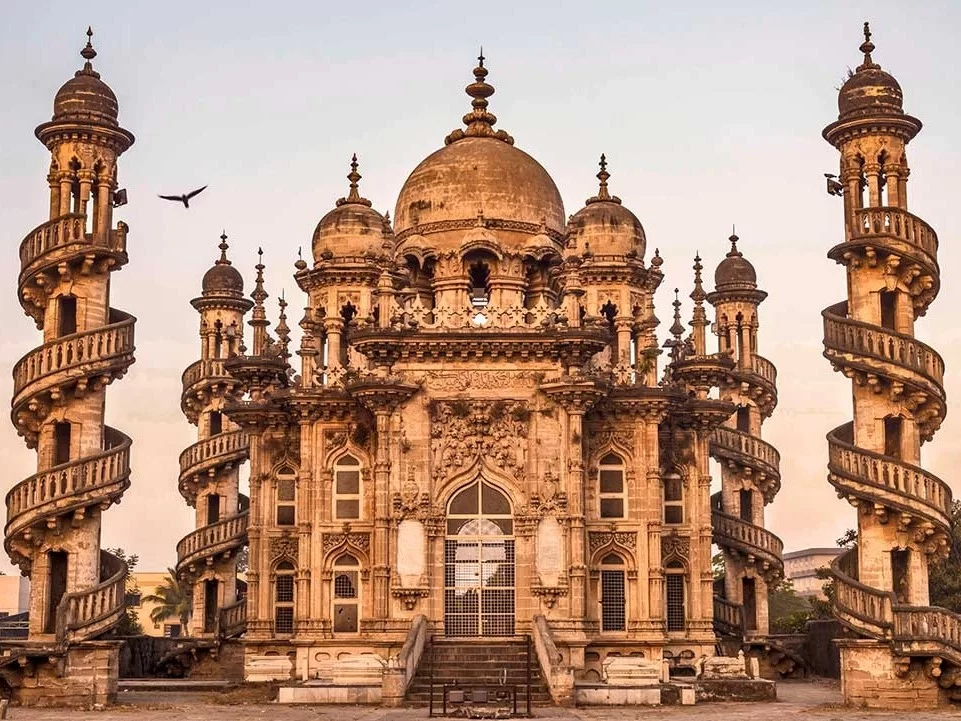
Mahabat Maqbara Palace in Junagadh is a striking architectural landmark attracting visitors interested in Indo-Islamic and Gothic design. Tourists come here to admire the intricate domes, minarets, and ornamental carvings, as well as to capture the palace’s dramatic aesthetic through photography. It is a prominent stop for travelers exploring Junagadh’s historic and cultural sites.
The atmosphere at Mahabat Maqbara Palace is serene and visually captivating, with the detailed architecture creating a sense of grandeur. Visitors can walk around the palace grounds, appreciate the ornamental work, and enjoy the quiet surroundings. The site is generally lightly visited, allowing travelers to explore at leisure and soak in the historical ambiance.
What makes Mahabat Maqbara Palace special is its unique blend of Gothic and Indo-Islamic architectural styles, which is rare in Gujarat. The ornate details, elegant arches, and intricately carved facades make it a visually striking heritage monument. For visitors, it provides a rich cultural experience and a picturesque stop in Junagadh’s historic landscape.
History of Mahabat Maqbara Palace, Junagadh
Mahabat Maqbara in Junagadh, Gujarat, is a historic mausoleum built during the late 19th and early 20th centuries by Nawab Mahabat Khan II. The structure was constructed to serve as a royal tomb and is renowned for its unique blend of Indo-Islamic, Gothic, and European architectural styles.
The palace-mausoleum reflects the cultural and artistic influences prevalent during the princely era in Junagadh. Intricate carvings, domes, minarets, and stained glass work highlight the craftsmanship and aesthetic sensibilities of the period, making it a symbol of the city’s royal heritage.
Today, Mahabat Maqbara is an important historical and architectural landmark in Junagadh. Tourists visit to admire its ornate design, learn about the city’s princely history, and experience the grandeur of royal memorial architecture in Gujarat.
Best Time to Visit Mahabat Maqbara Palace, Junagadh
Mahabat Maqbara Palace is best visited during the cooler months when the weather is comfortable for exploring the intricate architecture, landscaped grounds, and taking photographs. Pleasant conditions make walking around the palace and enjoying its historic charm more enjoyable.
- Ideal Months: October to February (best for sightseeing, photography, and leisurely exploration of the palace).
- Weather During Best Season: Mild daytime temperatures with low humidity, creating comfortable conditions for walking, observing architectural details, and spending time in the surrounding gardens.
- Periods to Avoid: April to June due to intense summer heat, which can make outdoor exploration tiring, and July to September during monsoon when rainfall may affect accessibility and photography.
How to Reach Mahabat Maqbara Palace, Junagadh
- Nearest Airport: The nearest airport is Rajkot International Airport (Hirasar Airport), located around 95–100 km from Mahabat Maqbara Palace. From the airport, tourists can hire a taxi or private car via NH 27 and local roads to reach Junagadh city.
- Nearest Railway Station: The nearest railway station is Junagadh Railway Station, approximately 2–3 km from the palace. It is well-connected with Rajkot, Ahmedabad, and other major cities in Gujarat.
- Road Access & Last-Mile Connectivity: Mahabat Maqbara Palace is located within the heart of Junagadh city and is easily accessible via city roads. Visitors can use taxis, auto-rickshaws, private vehicles, or local buses for last-mile connectivity. The palace is a well-known landmark, making navigation straightforward.
- Travel Conditions to Note: The area can be moderately crowded during weekends and public holidays. Parking is available nearby but may be limited during peak hours. Early morning visits are recommended for a peaceful experience and optimal photography.
What to Expect When You Visit Mahabat Maqbara, Junagadh
- Historic mausoleum architecture: Expect a striking palace-like mausoleum featuring Gothic, Islamic, and European architectural influences, with intricately carved stonework, domes, and minarets.
- Peaceful and contemplative atmosphere: The site is generally quiet, allowing visitors to admire the architecture, take photographs, and explore the grounds without heavy crowds.
- Walking and exploration: Visitors walk along paved paths and open courtyards. Some areas may have steps or slightly uneven surfaces, so comfortable footwear is recommended.
- Photography opportunities: The monument’s elaborate facades, minarets, and interior spaces provide excellent photography options. Early morning or late afternoon offers the best natural lighting.
- Limited facilities: Amenities are basic, typically including small benches or shaded spots. Restrooms and food options are minimal or found outside the monument area.
- Accessibility considerations: Stone steps, uneven surfaces, and narrow passageways may make certain sections challenging for seniors or visitors with mobility issues.
- Visitor behavior: Most visitors come to observe architecture, take photographs, and learn about the site’s history. Quiet and respectful conduct is expected due to its historical and cultural significance.
- Crowd conditions: The site is moderately visited, with slightly higher footfall during weekends, holidays, and school trips, but it generally maintains a calm atmosphere.
- Historical context: Mahabat Maqbara holds cultural and architectural significance, showcasing Junagadh’s heritage during the Nawab era, which visitors often read about via plaques and information boards.
- Visit duration: Most tourists spend 30 minutes to 1 hour exploring the monument, taking photographs, and appreciating the intricate design.
Important Visitor Information for Mahabat Maqbara Palace, Junagadh
- Crowd & Weather Notes: Mahabat Maqbara Palace is a prominent heritage site in Junagadh, attracting history enthusiasts, photographers, and local tourists. Winter months (October to February) are the most comfortable for visiting. Summers can be hot, and monsoon rains may make outdoor walkways and courtyards slippery.
- Peak Visiting Hours: The palace sees the highest number of visitors during late morning to early afternoon (10:00 AM to 1:00 PM) and in the late afternoon (4:00 PM to 6:00 PM), especially on weekends, public holidays, and during local tourism peak periods.
- Quiet Visiting Hours: Early mornings soon after opening and weekday afternoons are generally quieter, allowing visitors to explore the intricate architecture and photograph the palace without crowds.
- Dress Code (If Applicable): There is no formal dress code, but modest and comfortable clothing is recommended. Walking shoes are advisable for navigating the palace grounds and courtyards.
- Safety & Practical Cautions: Some areas may have uneven stone floors or steps. Visitors should walk carefully and supervise children closely. Photography is generally allowed, but avoid restricted areas or touching fragile architectural features. Carry water during summer visits and be cautious on wet surfaces during monsoon.
Photography and Viewpoints at Mahabat Maqbara, Junagadh
- Best viewpoint for wide palace shots: The main entrance plaza provides a symmetrical view of Mahabat Maqbara, capturing its intricate domes, minarets, and façade details in one wide-angle frame.
- Most photogenic spot: Side angles from the courtyard and staircases highlight the intricate stone carvings, arches, and ornate windows, offering depth and perspective for architectural photography.
- Best time of day for natural lighting: Early morning (7 AM to 9 AM) provides soft sunlight that illuminates the façade evenly and enhances the textures of the stonework.
- Golden hour advantage: Late afternoon (4 PM to 6 PM) casts warm light on the domes and minarets, producing dramatic shadows and enhancing the rich details of the palace architecture.
- Midday lighting conditions: Between 11 AM and 3 PM, harsh sunlight may create glare on lighter stone surfaces and flatten intricate carvings, reducing visual detail.
- Best photography subjects: Domes, minarets, arches, courtyards, and decorative stone panels are ideal for both wide-angle and close-up photography.
- Interior photography restrictions: Photography inside tomb chambers or restricted areas may not be allowed. Visitors should follow on-site rules and avoid using flash in sensitive areas.
- Crowd factors affecting photography: The palace sees moderate visitor traffic, with higher numbers on weekends and public holidays, which may limit unobstructed shots in courtyards and entrances.
- Best crowd-free photography window: Weekday mornings provide the most peaceful environment for capturing both exterior architecture and accessible interior areas.
- Drone and professional shoot rules: Drone photography and commercial shoots require prior permission from local authorities to ensure safety and preserve the heritage site.