Quick Facts About Shree Mahalaxmi Temple Panjim
| Entry Fee | Free |
| Timings | 06:00 - 20:30 |
| Altitude (m) | 10 |
| Ideal Visit Duration (hrs) | 1 |
| Best Time of Day | Morning |
| Crowd Level | Moderate |
| Distance from Panaji (km) | 1 |
| Walking Difficulty | Easy |
| Parking Available | No |
| Last Mile Access | Walk |
| Suitable for Kids | Yes |
| Suitable for Seniors | Yes |
| Wheelchair Friendly | No |
Why Visit Mahalaxmi Temple
Visitors come to Mahalaxmi Temple in Panaji to pay respects to Goddess Mahalaxmi, the presiding deity of the city, and to experience one of North Goa’s prominent Hindu temples within an urban setting. The temple attracts regular local worshippers, especially during daily aarti rituals and festival periods such as Navratri.
On the ground, the atmosphere is devotional and community-focused, with visitors removing footwear before entering the courtyard and lining up briefly near the sanctum for darshan. The temple complex is compact, with a simple façade, tiled courtyard, and the steady sound of bells and chants during prayer times.
What makes Mahalaxmi Temple distinct for travelers is its role as a living neighborhood temple in the heart of Panaji rather than a large standalone pilgrimage complex. Its central location allows visitors to observe everyday Goan Hindu practices while exploring the nearby markets and streets of the capital city.
History of Mahalaxmi Temple, North Goa
Mahalaxmi Temple in North Goa, located in Panaji, is dedicated to Goddess Mahalaxmi, the Hindu deity associated with prosperity and well-being. The temple was originally established in the 16th century and later reconstructed in the 18th century after periods of relocation during Portuguese rule.
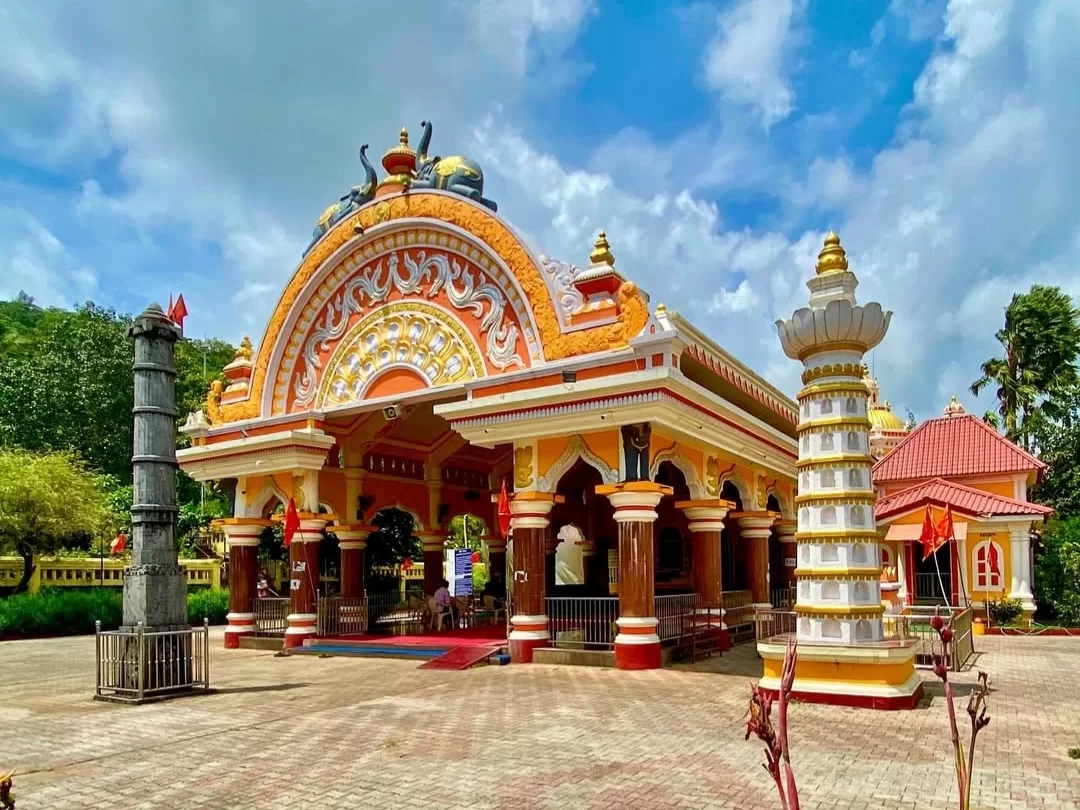
The present structure reflects Goan temple architecture with a modest entrance, pillared hall, and a sanctum housing the idol of Goddess Mahalaxmi. The temple serves as an active place of worship for the local Hindu community, with daily rituals and special observances during Navaratri and other festival periods.
Its location in central Panaji makes it one of the city’s prominent Hindu religious sites. Visitors are expected to remove footwear before entering and follow customary temple decorum while inside the premises.
Best Time to Visit Mahalaxmi Temple, North Goa
The most comfortable time to visit Mahalaxmi Temple in Panaji is during Goa’s cooler, dry months, when temple visits and walking through the surrounding market lanes are easier in pleasant weather.
- Ideal months: November to February
- Best season weather: Comfortable daytime temperatures (around 20–32°C), relatively lower humidity, and dry conditions that make queueing, temple darshan, and exploring nearby streets more manageable.
- Periods to avoid: June to September due to heavy monsoon rainfall that can cause waterlogging in market areas; April and May afternoons can be intensely hot and humid, making waiting times inside and outside the temple less comfortable.
How to Reach Mahalaxmi Temple, North Goa
- Nearest airport: Manohar International Airport (GOX), Mopa – approx. 30 km; Goa International Airport (GOI), Dabolim – approx. 28 km. Prepaid taxis and app-based cabs are available at both airports. Travel time generally ranges from 45 minutes to 1.5 hours depending on traffic conditions.
- Nearest railway station: Karmali Railway Station – approx. 13 km. Madgaon (Margao) Railway Station – approx. 35 km for broader rail connectivity. From Karmali, taxis are the most convenient option as direct bus services to the temple are limited.
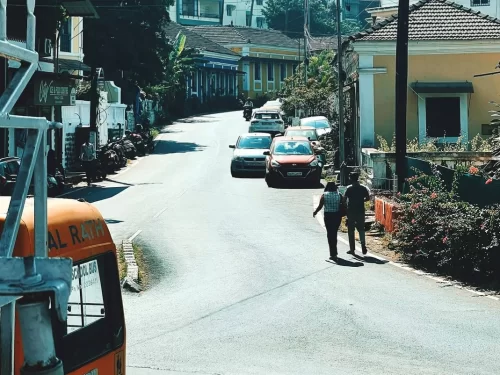
- Road access: Mahalaxmi Temple is located in Panaji city, near Dada Vaidya Road. It is accessible via NH66 and internal city roads. Roads are well maintained, though traffic congestion is common during evenings and festival days.
- Last-mile connectivity: Taxis, rental scooters, and auto-rickshaws can reach directly near the temple entrance. Panaji’s Kadamba Bus Stand is about 1 km away, followed by a short walk. On-street parking is limited in the surrounding lanes.
What to Expect When You Visit Mahalaxmi Temple, North Goa
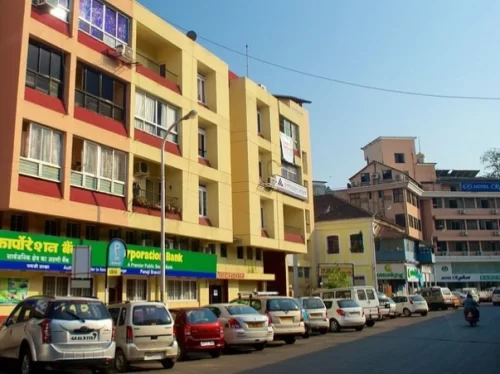
- Environment and surroundings: Mahalaxmi Temple in Panaji is located within a busy urban neighborhood, close to local markets and residential lanes. The temple complex is compact, with a traditional Goan-style structure, tiled roof elements, and a central shrine dedicated to Goddess Mahalaxmi. The surroundings can feel active due to nearby shops and daily local movement.
- Facilities and amenities: Basic temple facilities include a footwear stand and space for devotees to queue during prayer times. There are no large commercial establishments within the temple premises, but small flower and prasad stalls operate outside. Public restrooms are not always available inside the temple compound and may need to be accessed in the surrounding area.
- Accessibility and movement: The temple is accessible by road from central Panaji, with limited street parking nearby. Entry is via a few steps at the main entrance. The inner prayer hall is modest in size, so movement can slow during aarti or festival days. Wheelchair access may be partially restricted due to steps and tight internal space.
- Typical visitor behavior and conditions: The temple primarily serves local devotees, especially during morning and evening aarti. Visitors are expected to dress modestly and maintain quiet behavior inside the sanctum area. Photography inside the main shrine may be restricted. Crowd levels increase during Navratri and other Hindu festivals.
- Practical limitations to plan for: The compact layout means limited seating and standing space during peak hours. Traffic congestion in the surrounding streets can affect access, especially during festival days. Visiting outside major prayer timings generally allows for a calmer experience.
Important Visitor Information and Safety for Mahalaxmi Temple, North Goa
- Crowd and weather notes: The temple sees increased footfall during Navratri and other Hindu festivals, as well as on weekends. From November to February, visitor numbers remain steady, while summer afternoons (March–May) can feel hot within the courtyard area. Monsoon months bring damp entrance steps and wet surrounding lanes.
- Peak and quiet visiting hours: Mornings during aarti time and early evenings are the busiest. Late mornings on weekdays, outside prayer timings, are generally quieter for darshan.
- Dress code: Modest attire is expected. Visitors should wear clothing that covers shoulders and knees. Footwear must be removed before entering the temple premises.
- Safety notes and practical cautions: The tiled flooring can become slippery during monsoon season. Keep personal belongings secure during festival days, follow queue arrangements during aarti, and maintain decorum inside the sanctum area.
Photography and Viewpoints at Mahalaxmi Temple, North Goa
- Best viewpoints and angles: The temple’s white façade and traditional Goan temple architecture are best captured from the entrance courtyard, where you can frame the full front elevation along with the deepastambha (lamp tower) if visible. Step slightly to the side to include both the tiled rooflines and surrounding structures for context. Interior photography is typically restricted near the sanctum, but wider hall views (if permitted) can be taken from the rear of the prayer hall to include ceiling details and pillars.
- Time-of-day and lighting: Morning light provides even illumination on the white exterior and reduces glare. Midday sun can create harsh highlights on the façade. During evening aarti, interior lighting becomes warmer and more atmospheric, though low light conditions make handheld photography more challenging.
- Rules and restrictions: Photography is generally allowed in the outer courtyard but restricted inside the sanctum area. Flash photography is discouraged during prayer times. Always follow posted signage and temple staff instructions. Drone use is not permitted due to religious and urban regulations.
- Crowds and access factors: The temple sees steady local footfall, with higher numbers during festivals and evening aarti. Narrow internal spaces can limit positioning for wide shots. Visiting during non-peak morning hours allows clearer exterior compositions and easier movement within permitted areas.