Quick Facts About Shanta Durga Temple
Shanta Durga Temple Quick Facts
| Entry Fee | No entry fee |
| Timings | 5:00 AM – 12:00 PM; 3:00 PM – 8:30 PM (may extend during festivals) |
| Altitude (m) | Approximately 39 m above sea level |
| Ideal Visit Duration | 45–60 minutes |
| Best Time of Day | Early morning (5:00 AM – 9:00 AM) |
| Crowd Level | Moderate; high during Navratri and major Hindu festivals |
| Distance from City Centre (km) | Approximately 33 km from Panaji city centre |
| Walking Difficulty | Easy (short walk within temple complex) |
| Parking Available | Yes (onsite parking available) |
| Last Mile Access | Motorable road up to the temple entrance |
| Suitable for Kids | Yes |
| Suitable for Seniors | Yes |
| Wheelchair Friendly | Partially (ground areas accessible; some inner sections have steps) |
Why Visit Shanta Durga Temple in Ponda, Goa
Visitors come to Shanta Durga Temple in Kavlem, Ponda, to seek blessings from Goddess Shantadurga, the deity believed to mediate between Lord Shiva and Lord Vishnu. It is one of Goa’s most revered Hindu temples and an important pilgrimage site, especially during Navratri and the annual zatra (temple festival). Many travelers include it in a temple circuit covering Mangeshi, Mahalakshmi, and other prominent shrines in central Goa.
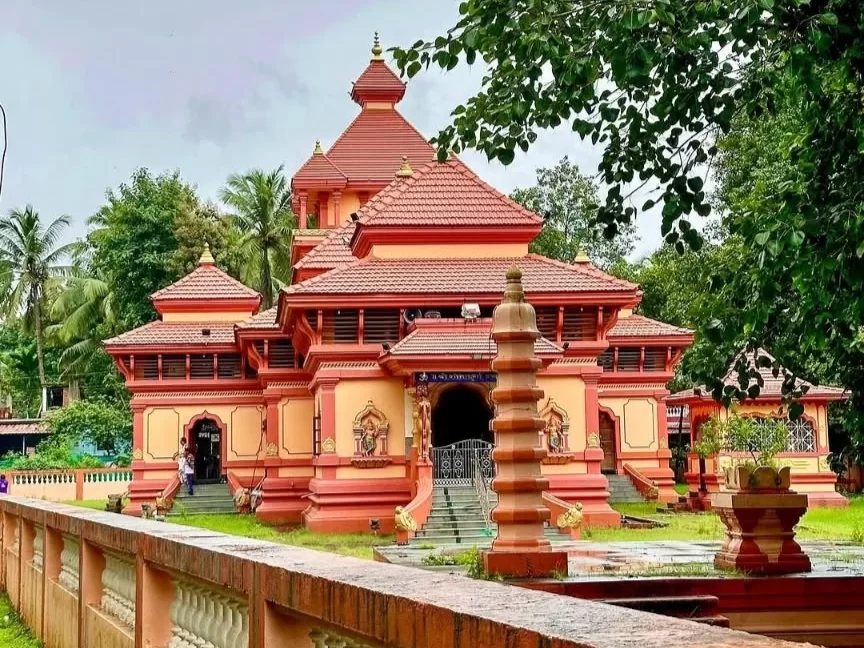
The atmosphere inside the temple complex is calm and orderly, with a spacious courtyard, a distinctive red-and-white façade, and a tall seven-storey deepastambha (lamp tower) that is lit during festivals. Mornings are peaceful with devotional chants and regular aartis, while evenings see steady footfall from local devotees. Footwear must be left outside, and modest attire is expected.
What distinguishes Shanta Durga Temple for travelers is its unique Indo-Portuguese architectural style, visible in its sloping tiled roofs, arched windows, and octagonal deepastambha—features uncommon in many other Indian temples. Located about 33 km from Panaji in a green, village setting, it offers a quieter cultural experience compared to Goa’s coastal attractions.
History of Shanta Durga Temple, Kavlem, Goa
Shanta Durga Temple, originally built in the 16th century, is dedicated to Goddess Shantadurga, revered for mediating between Vishnu and Shiva. The temple was reconstructed in 1738 in the Sabhamandap style after being relocated from its original site due to Portuguese colonial pressures. It remains a key center for religious festivals and rituals in Goa, reflecting the region's Hindu heritage and architectural traditions.
Best Time to Visit Shanta Durga Temple, Kavlem, Goa
The best time to visit Shanta Durga Temple is during the cooler and drier months when the temple grounds are comfortable to explore and crowds are moderate.
- Ideal Months: November to February, when temperatures range between 20°C and 30°C, providing pleasant conditions for walking and photography.
- Weather Conditions: Clear skies, low humidity, and minimal rainfall make these months suitable for a full visit of the temple complex and surrounding gardens.
- Periods to Avoid: June to September during the monsoon season, as heavy rains make the temple pathways slippery and some areas of the complex may be partially inaccessible.
How to Reach Shanta Durga Temple, Kavlem, Goa
- Nearest Airport: Dabolim Airport (GOI), approximately 40 km away; taxis and rental cars are available for the 1–1.5 hour drive to the temple.
- Nearest Railway Station: Madgaon (Margao) Railway Station, about 30 km from Kavlem; local taxis or auto-rickshaws provide onward connectivity to the temple.
- Road Access: The temple is accessible via the NH66 and state highways; parking is limited near the temple, so arriving early is recommended to avoid crowding.
- Last-Mile Connectivity: Auto-rickshaws and local taxis are the main options for reaching the temple from nearby towns; buses do not drop visitors directly at the temple entrance.
What to Expect When You Visit Shanta Durga Temple, Kavlem, Goa
- The temple is set amidst peaceful greenery with well-maintained gardens and a central temple tank (Pushkarini) providing a calm atmosphere.
- Basic facilities include public restrooms near the entrance, a small shoe storage area, and limited parking; there are no on-site cafes or restaurants.
- Movement within the temple requires removing footwear; pathways are mostly stone-paved but can be uneven, so wear suitable shoes and expect some walking.
- Visitors typically maintain silence and respect devotional practices; photography is allowed in most areas except the inner sanctum.
- The temple grounds can be crowded during festivals; expect longer wait times to enter the main sanctum during these periods.
Important Visitor Information and Safety for Shanta Durga Temple, Kavlem, Goa
- Temple sees the highest crowds during weekends and annual festivals like Shigmo; early mornings on weekdays are the quietest times to visit.
- Opening hours are 6:00 AM to 1:00 PM and 3:00 PM to 6:30 PM; mornings are cooler and more comfortable for walking around the temple complex.
- Visitors must dress modestly, covering shoulders and knees, and remove footwear before entering the inner sanctum or temple halls.
- Photography is allowed in the outer areas but flash is prohibited inside the sanctum; maintain decorum around devotees.
- During the monsoon (June to September), pathways can become slippery; exercise caution and use handrails where available.
Photography and Viewpoints at Shanta Durga Temple, Kavlem, Goa
- Main Entrance Arch: Capture the temple's traditional Goan-Portuguese architecture in the morning when sunlight highlights the carvings.
- Temple Courtyard: Early morning or late afternoon provides soft light for detailed shots of the idol and surrounding structures; weekends may be crowded, limiting tripod use.
- Temple Tank (Pushkarini): Best photographed during sunrise for calm reflections; drone photography is not permitted.
- Wooden Pillars and Mandap: Midday light brings out the texture of the wooden carvings; photography is allowed but maintain respectful distance from devotees.
- Perimeter Gardens: Ideal for wide-angle shots of the temple against greenery; weekdays are less crowded for clear, unobstructed views.