+91 9910402252
admin@chalbanjare.com


| Entry Fee | No entry fee free to visit the main fort complex |
|---|---|
| Timings | Open daily from 9 30 AM to 6 00 PM |
| Altitude (m) | Located at approximately 80 meters above sea level overlooking the Arabian Sea |
| Ideal Visit Duration | One to two hours to explore fort walls lighthouse and sea viewpoints |
| Best Time of Day | Late afternoon for cooler weather and panoramic sunset views |
| Crowd Level | Moderate to high especially during peak tourist season from October to March |
| Distance from City Centre (km) | About 18 kilometers from Panaji and around 15 kilometers from Mapusa |
| Walking Difficulty | Moderate walking difficulty with sloped pathways and open fort grounds |
| Parking Available | Yes parking available near the fort entrance area |
| Last Mile Access | Accessible by taxi scooter or private vehicle via Candolim road |
| Suitable for Kids | Yes suitable for children under supervision due to open fort edges |
| Suitable for Seniors | Moderate suitability due to sloped paths and open walking areas |
| Wheelchair Friendly | Partially wheelchair accessible on main pathways but uneven surfaces may limit access |
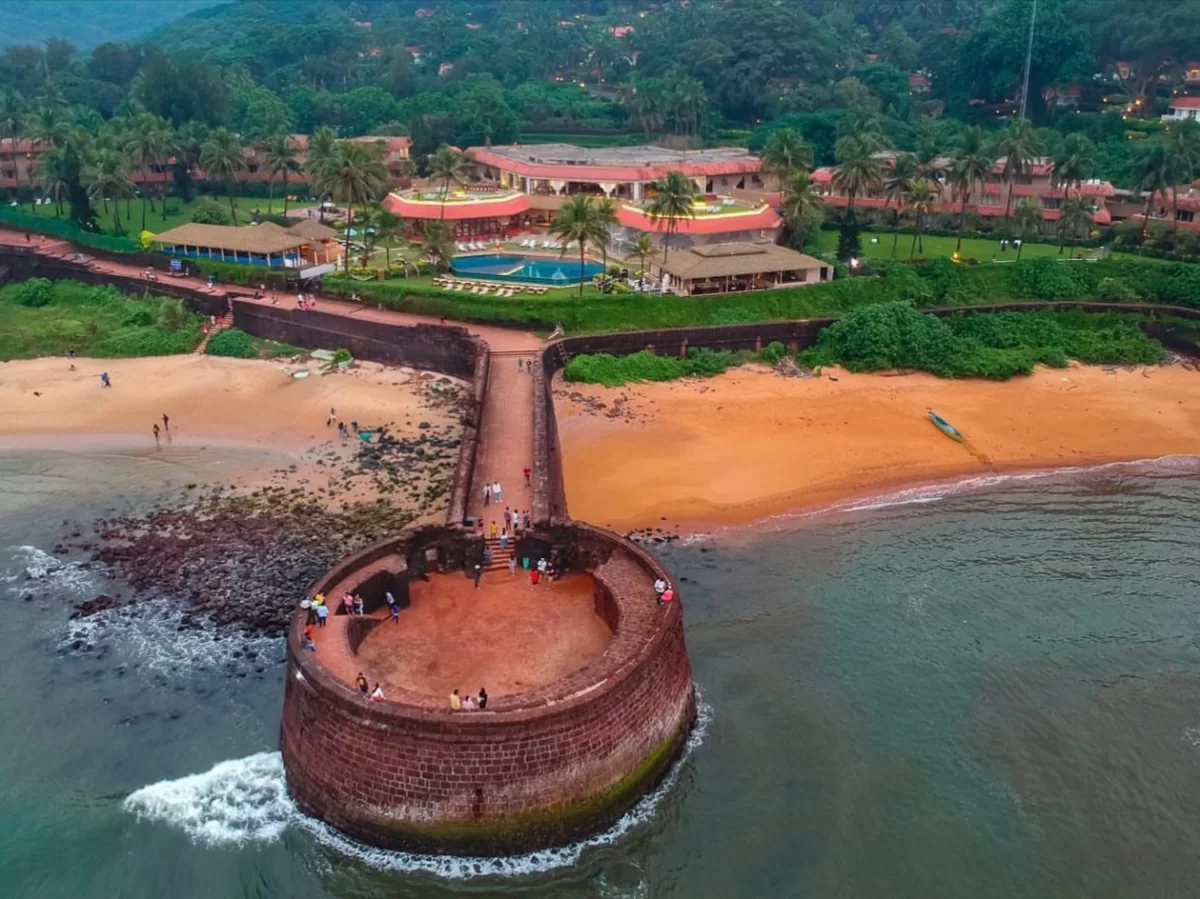
Atmosphere at Fort Aguada is commanding and historic, set atop a hill overlooking the Arabian Sea. The strong sea breeze, expansive ocean views, and massive laterite stone walls create an environment that feels both powerful and scenic. Standing on the ramparts offers a sweeping perspective of the coastline, making the experience immersive and visually striking.
What makes Fort Aguada special is its strategic importance during the Portuguese colonial era and its well-preserved architecture dating back to the early 17th century. Built to guard against naval threats and protect Old Goa, the fort also housed a freshwater storage system that supplied passing ships, which inspired its name “Aguada,” meaning water. Visitors can explore the lighthouse, bastions, and defensive structures while learning about Goa’s maritime history. The panoramic sunset views from the fort further enhance its appeal.
Beyond its architectural grandeur, Fort Aguada represents Goa’s colonial resilience and coastal defense heritage. It attracts history enthusiasts, photographers, and travelers seeking a blend of scenic beauty and historical insight. The visit leaves guests with lasting impressions of ocean vistas, enduring fortifications, and the rich maritime legacy of Goa.
Fort Aguada, located in North Goa overlooking the Arabian Sea, was constructed in 1612 by the Portuguese as a major coastal defense fortification. Built to guard against Dutch and Maratha naval attacks, the fort strategically protected the entrance to the Mandovi River, which was crucial for safeguarding Old Goa, the then capital of Portuguese India. Its elevated position provided a commanding view of the sea, making it one of the most important maritime strongholds in the region.
The name “Aguada” is derived from the Portuguese word for water, referring to the freshwater spring within the fort that supplied drinking water to ships docking along the coast. The fort also housed one of Asia’s oldest lighthouses, constructed in 1864, further emphasizing its importance in maritime navigation and trade. Over time, sections of the fort complex were used as a prison during Portuguese rule.
After Goa’s liberation in 1961, Fort Aguada transitioned from a colonial military installation to a protected heritage monument. Today, it stands as one of Goa’s most iconic historical landmarks, reflecting the architectural strength, naval strategy, and colonial legacy that shaped the region’s coastal history.
The best time to visit Fort Aguada in North Goa depends on weather comfort and visibility, as the fort offers panoramic views of the Arabian Sea and the Mandovi River. Seasonal planning enhances the experience of exploring its historic ramparts and lighthouse surroundings.
November to March is considered the ideal period to visit. During these months, the weather is cool and pleasant with clear skies, making it comfortable to walk around the expansive fort complex and enjoy uninterrupted coastal views without excessive heat.
Summer months from April to June can be warm and humid, particularly during midday. Early morning or late afternoon visits are recommended to avoid peak heat while enjoying scenic vistas and photography opportunities.
Monsoon season from June to September brings heavy rainfall and dramatic coastal scenery. While the fort appears especially picturesque against monsoon skies, stone pathways may become slippery, and visitors should exercise caution.
 Beach
Beach
A stunning beach in North Goa known for its dramatic red cliffs, lively parties, and breathtaking sunsets.
 Tourist Attraction
Offshore floating casino operating on the Mandovi River with gaming floors, live entertainment, and dining facilities.
 Church
UNESCO-listed 17th-century Baroque church housing the mortal remains of St. Francis Xavier.
Get customized Delhi tour planning designed around traffic flow, seasonal weather comfort, heritage site exploration time, and realistic city pacing. Whether you are visiting for historical monuments, cultural experiences, food walks, shopping districts,
⚡ Quick Response | 💰 Free consultation | 🕒 24×7 expert support

