Quick Facts About Anjuna Beach
Anjuna Beach – Quick Facts for Visitors
| Entry Fee | Free public access; charges apply for parking and optional activities |
| Timings | Open 24 hours; some sources mention approx. 6:00 AM–10:00 PM active hours; facilities vary by operator |
| Altitude (m) | 0 |
| Ideal Visit Duration | 1–3 hours depending on activities |
| Best Time of Day | Morning to early evening; strong sun at midday |
| Crowd Level | High during peak season (Nov–Feb), weekends, and Wednesday flea market; moderate otherwise |
| Distance from City Centre (km) | Approx. 18 km from Panaji city centre |
| Walking Difficulty | Easy to moderate; sandy stretches with uneven rocky areas |
| Parking Available | Yes; designated paid parking near main access points; limited during peak times |
| Last Mile Access | Motorable roads up to beach access areas; short walk required to shoreline |
| Suitable for Kids | Yes with supervision; rocky patches and waves require caution |
| Suitable for Seniors | Partially; uneven sand and rocks may limit mobility |
| Wheelchair Friendly | No dedicated infrastructure; beach sand and rocks limit accessibility |
Why Visit Anjuna Beach, North Goa, Goa, India
Visitors come to Anjuna Beach for its mix of sandy stretches and rocky outcrops, weekly Wednesday flea market, and access to water sports and beachside dining. The shoreline attracts travelers looking for a casual coastal stop within reach of popular North Goa hubs.
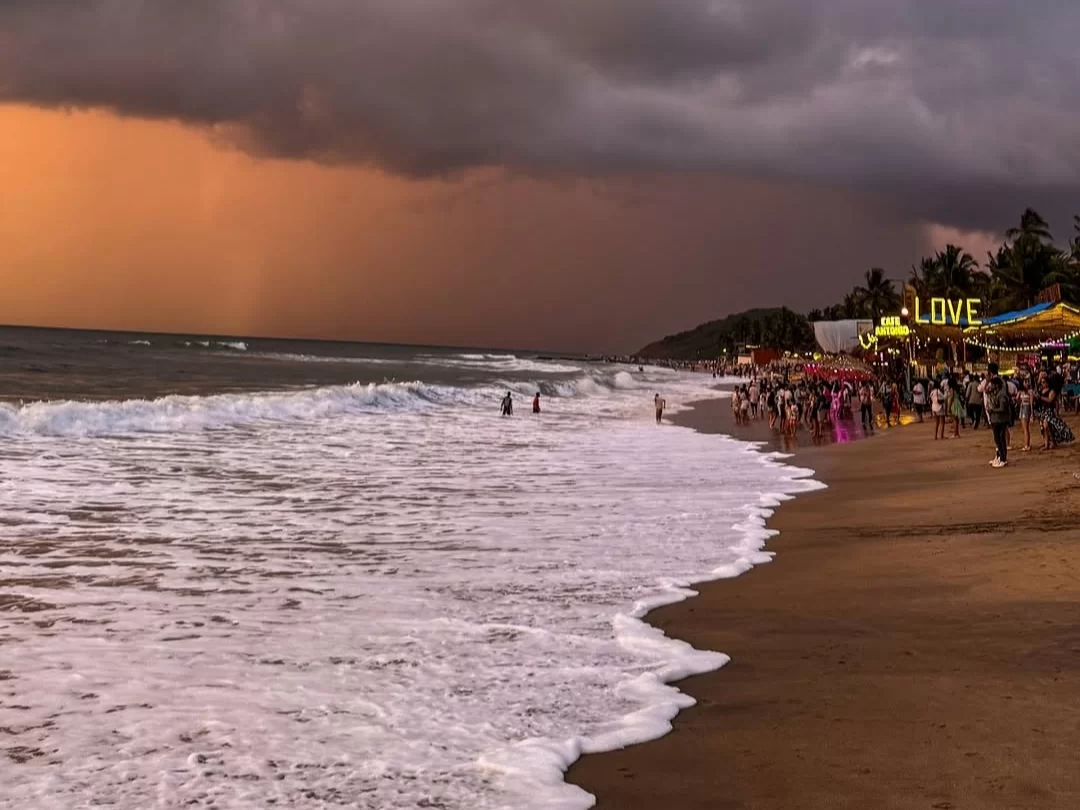
The on-ground atmosphere shifts through the day, with quieter mornings, active afternoons near shacks and activity zones, and busier evenings during sunset. Music from nearby cafés and steady foot traffic create a lively but informal beach setting.
What distinguishes Anjuna is its uneven rocky coastline combined with long-standing market culture and a concentration of small eateries overlooking the Arabian Sea. The beach offers varied viewpoints and access points rather than one continuous sandy promenade.
History of Anjuna Beach, North Goa, Goa, India
Anjuna Beach gained international attention in the late 1960s and 1970s when long-stay foreign travelers settled along its rocky coastline, forming informal beach communities that influenced the area’s early tourism culture.
The Anjuna Flea Market developed from small-scale exchanges between travelers and local vendors and remains an active weekly market today. Over time, guesthouses, cafés, and seasonal beach shacks expanded around the shoreline, shaping Anjuna into an established coastal destination in North Goa.
Best Time to Visit Anjuna Beach, North Goa, Goa, India
Anjuna Beach is most practical to visit during the dry winter season when beach access, flea markets, and seasonal shacks operate consistently; monsoon months bring restricted sea activity and fewer on-ground facilities.
- Ideal months: Late November to February
- Weather conditions during the best season: Mostly dry days, daytime temperatures around 25–32°C, lower rainfall, calmer sea compared to monsoon period, active beach operations
- Periods to avoid: June to September due to heavy monsoon rain, rough surf with swimming restrictions, and many temporary beach businesses closed
How to Reach Anjuna Beach, North Goa, Goa, India
- Nearest airport: Manohar International Airport (Mopa) approx. 28–30 km; Goa International Airport (Dabolim) approx. 43–45 km; taxis and app-based cabs available, travel time varies with coastal traffic.
- Nearest railway station: Thivim Railway Station approx. 18–20 km; Madgaon Junction approx. 55–60 km for wider train connectivity; onward travel typically by taxi or rented two-wheeler.
- Road access and last-mile connectivity: Connected via Mapusa–Anjuna roads from NH66; final approach through narrow village lanes with limited parking near beach access points; short walk required to reach the shoreline.
What to Expect When You Visit Anjuna Beach, North Goa, Goa, India
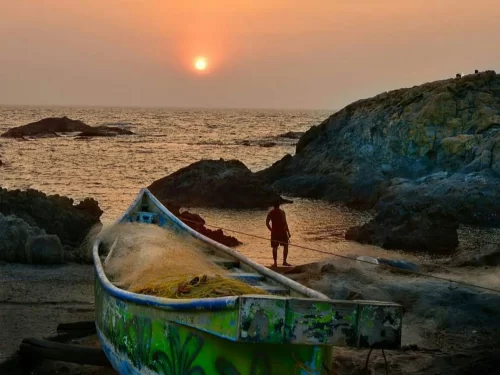
- Environment and surroundings: Mixed sandy and rocky shoreline with uneven terrain, small cliffs, and multiple access paths; sunset viewpoints common along elevated sections.
- Facilities and amenities: Seasonal beach shacks, cafés, paid sunbeds, water sports operators during dry season, public restrooms limited and dependent on nearby businesses.
- Accessibility and movement: Narrow village roads lead to parking areas; final access requires walking on sand or rocks; uneven surfaces may slow movement.
- Typical visitor behavior and conditions: Busy on Wednesdays during the flea market and in peak winter months; quieter mornings; music from nearby cafés; strong sun exposure and occasional high waves requiring caution.
Important Visitor Information and Safety – Anjuna Beach, North Goa, Goa, India
- Crowd and Weather Notes: Popular beach with steady tourist activity, especially during peak season (November–February); strong sun exposure year-round; monsoon season (June–September) brings rough seas and limited beach use.
- Peak and Quiet Visiting Hours: Peak from late afternoon to sunset and weekends; quieter early mornings between 7:00 AM and 10:00 AM.
- Dress Code: Beachwear common along the shore; modest cover-ups advised when visiting nearby cafes, markets, or village areas.
- Safety Notes and Practical Cautions: Swim in lifeguard-monitored areas due to rocky seabed sections and occasional strong currents; watch personal belongings on crowded stretches; avoid poorly lit isolated areas after dark.
Photography and Viewpoints at Anjuna Beach, North Goa, Goa, India
- Best viewpoints or angles: Elevated rocky outcrops at the southern and central sections provide wide coastal frames; cliffside café areas offer higher vantage points overlooking the Arabian Sea.
- Lighting conditions and time-of-day considerations: Late afternoon to sunset gives side lighting across rocks and water; mornings provide clearer skies and fewer people along main stretches.
- Rules or restrictions on photography: No formal public photography restrictions on the beach; permission expected before photographing vendors, flea market stalls, or private café spaces.
- Crowd or access factors that affect photography: Wednesday flea market and winter evenings create dense foot traffic; uneven rocks and tide changes can limit access to certain viewpoints.