Quick Facts About Altinho Hill
| Entry Fee | Free |
| Timings | 00:00 - 23:59 |
| Altitude (m) | 50 |
| Ideal Visit Duration (hrs) | 1 |
| Best Time of Day | Morning |
| Crowd Level | Low |
| Distance from Panaji (km) | 2 |
| Walking Difficulty | Moderate |
| Parking Available | No |
| Last Mile Access | Road |
| Suitable for Kids | Yes |
| Suitable for Seniors | No |
| Wheelchair Friendly | No |
Why Visit Altinho Hill
Visitors come to Altinho Hill in Panaji for its elevated views over the city, the Mandovi River, and parts of North Goa’s coastline. The area is also home to important buildings such as the Archbishop’s Palace and government residences, making it a quieter, scenic contrast to the busy streets below.
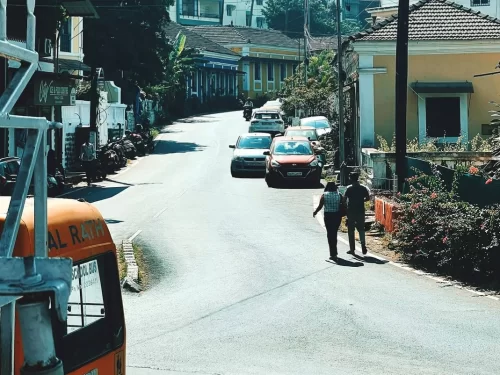
On the ground, the atmosphere feels residential and calm, with tree-lined roads, old villas, and minimal commercial activity. The uphill drive or walk is gradual, and traffic is light compared to central Panaji, making it suitable for a slow exploration or a short scenic stop.
What makes Altinho Hill distinct for travelers is its vantage-point setting within the capital city, offering wide views without leaving Panaji. Unlike beaches or church complexes, it functions more as a scenic residential ridge, giving visitors perspective on the layout of the city and river from above.
History of Altinho Hill, North Goa
Altinho Hill in North Goa is an elevated residential and administrative area overlooking Panaji city. Developed during the Portuguese period, it was planned as a hilltop quarter for officials and continues to house key government residences and institutions.
The area is characterised by tree-lined roads, Portuguese-era villas, and institutional buildings such as the Archbishop’s Palace and the official residence of the Governor of Goa (Raj Bhavan). Its higher elevation provides clear views over Panaji, the Mandovi River, and parts of Miramar.
Altinho functions primarily as a quiet residential and administrative zone rather than a commercial attraction. Visitors typically come for short scenic drives, photography of the city skyline, and to observe the preserved colonial-era architecture within Panaji’s urban landscape.
Best Time to Visit Altinho Hill, North Goa
The most comfortable time to visit Altinho Hill is during Goa’s dry winter months, when the uphill drive or walk is pleasant and visibility from the viewpoints is clearer.
- Ideal months: November to February
- Best season weather: Mild to warm temperatures (around 20–32°C), lower humidity, and clearer skies, offering better panoramic views over Panaji and the Mandovi River without heat fatigue.
- Periods to avoid: June to September because heavy monsoon showers can make roads slippery and reduce visibility from the hilltop; April and May afternoons can be very hot and humid, making uphill walks uncomfortable.
How to Reach Altinho Hill, North Goa
- Nearest airport: Manohar International Airport (GOX), Mopa – approx. 31 km; Goa International Airport (GOI), Dabolim – approx. 28 km. Prepaid taxis and app-based cabs are available at both airports. Travel time generally ranges from 45 minutes to 1.5 hours depending on traffic conditions.
- Nearest railway station: Karmali Railway Station – approx. 14 km. Madgaon (Margao) Railway Station – approx. 34 km for wider connectivity. From Karmali, taxis are the most convenient option as bus connectivity to Altinho is indirect.
- Road access: Altinho Hill is located in Panaji and is accessible via NH66 and internal city roads leading uphill toward the Goa State Assembly and All India Radio area. Roads are paved but narrow and steep in sections, requiring cautious driving.
- Last-mile connectivity: Taxis and rental scooters can reach most viewpoints directly. Public buses run to central Panaji (Kadamba Bus Stand, approx. 2 km away), followed by a taxi ride or uphill walk. Parking is limited along the hill roads.
What to Expect When You Visit Altinho Hill, North Goa
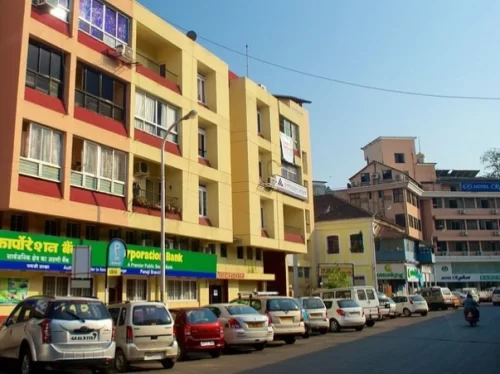
- Environment and surroundings: Altinho Hill rises above Panaji and is primarily a residential and administrative area, with government buildings, old villas, tree-lined roads, and quiet viewpoints overlooking the Mandovi River and city below. The setting is calmer than central Panaji, with less commercial activity and more greenery.
- Facilities and amenities: There are no dedicated tourist facilities on Altinho Hill itself. You will not find ticket counters, visitor centers, or structured attractions. Basic amenities such as cafés, shops, and public restrooms are located in Panaji city at the base of the hill rather than on top.
- Accessibility and movement: The hill is accessible by road via private vehicle, taxi, or scooter. Walking uphill is possible but involves steep gradients and can be physically demanding in humid weather. Roads are paved and generally well maintained, though footpaths are not continuous in all sections.
- Typical visitor behavior and conditions: Visitors usually come for short stops to enjoy panoramic views or photography, especially around sunset. The area remains largely residential, so noise levels are low and traffic is moderate. There are no crowd-control systems, and footfall is lighter compared to major tourist attractions.
- Practical limitations to plan for: Shade is available along tree-lined stretches, but there are limited seating areas or marked viewpoints. Street lighting exists along main roads, yet certain stretches can feel quiet after dark. Since it is not a designated tourist site, signage and interpretive information are minimal.
Important Visitor Information and Safety for Altinho Hill, North Goa
- Crowd and weather notes: Altinho Hill remains relatively quiet compared to central Panaji, with light visitor movement throughout the year. The exposed viewpoints can feel hot in the afternoon from March to May, while monsoon months bring wet roads and reduced visibility due to rain and mist.
- Peak and quiet visiting hours: Early mornings and late afternoons attract walkers and visitors heading to the viewpoints, but the area is generally calm even during peak tourist season. Midday hours are typically the quietest.
- Dress code: There is no formal dress code, as it is a residential and administrative area, but comfortable footwear is advisable due to sloped roads and uneven pavements.
- Safety notes and practical cautions: Roads are narrow with occasional vehicle movement, so stay alert while walking. During monsoon, surfaces can become slippery. Some viewpoints are near open edges without barriers, so exercise caution, especially with children.
Photography and Viewpoints at Altinho Hill, North Goa
- Best viewpoints and angles: The clearest panoramic views are from the approach road near the Archbishop’s Palace and the surrounding open bends along the hilltop, where you can frame Panaji city, the Mandovi River, and the distant bridges in a single composition. Slightly elevated roadside clearings allow layered shots of red-roofed houses below with the river beyond. Sunset-facing angles toward the Mandovi bridge create strong skyline silhouettes.
- Time-of-day and lighting: Early morning offers softer light over Panaji and reduced haze above the river. Late afternoon and sunset provide warmer tones and dramatic sky color, especially when clouds reflect over the Mandovi. Midday light can appear flat due to strong overhead sun and open exposure.
- Rules and restrictions: Altinho Hill is primarily a residential and institutional area, so exterior landscape photography from public roads is generally allowed. Avoid photographing private homes or government buildings at close range. Drone use is not permitted without proper authorization due to its urban location.
- Crowds and access factors: The area is quieter than central Panaji, but roads are narrow with limited parking space. Evenings attract visitors for sunset views, which can limit tripod placement along roadside viewpoints. Early morning provides clearer access and less traffic interference.