Quick Facts About Mandrem Beach
Quick Facts: Mandrem Beach, North Goa
| Entry Fee | No entry fee |
|---|---|
| Timings | Open 24 hours (no restricted entry timings) |
| Altitude (m) | ~2 m above sea level |
| Ideal Visit Duration | 1–2 hours |
| Best Time of Day | Early morning for quiet walks; late afternoon for sunset views |
| Crowd Level | Low to moderate; busier during peak tourist season (November–February) |
| Distance from City Centre (km) | ~30 km from Panaji city centre |
| Walking Difficulty | Easy; flat sandy shoreline with wooden footbridges across tidal creeks in some sections |
| Parking Available | Limited paid parking near beach access points |
| Last Mile Access | Accessible by road to Mandrem village; short walk through sandy paths to reach the beach |
| Suitable for Kids | Yes; supervision required due to sea currents and tidal streams |
| Suitable for Seniors | Yes; easier access near main entry points |
| Wheelchair Friendly | Partly; access roads manageable, but soft sand limits mobility on the beach |
Why Visit Mandrem Beach
Visitors come to Mandrem Beach primarily for its quiet and spacious shoreline, which allows for undisturbed walks, sunbathing, and low-key beach activities. The beach attracts those looking for a calmer alternative to the more crowded beaches in North Goa, including small groups, solo travelers, and wellness enthusiasts.
The on-ground atmosphere at Mandrem Beach is relaxed and unhurried, with gentle waves, scattered palm groves, and modest beach shacks offering food and drinks. Early mornings feature few people, ideal for yoga or meditation, while evenings see locals and tourists gathering to watch the sunset.
Mandrem Beach is distinct for its combination of natural space and accessibility. Unlike many other Goan beaches, it has minimal commercial development, allowing travelers to experience open sand, tidal pools, and walking paths, making it suitable for families, seniors, and those seeking a peaceful coastal environment.
History of Mandrem Beach
Mandrem Beach does not have significant historical events recorded directly at the site. The area has traditionally been a fishing village, and local communities continue to rely on small-scale fishing along the coastline.
The beach itself does not hold specific cultural or religious significance, but nearby villages occasionally host local festivals and temple events that reflect the traditions of North Goa's coastal communities.
Best Time to Visit Mandrem Beach
Mandrem Beach is best visited during the cooler, dry months when the sea is calm and outdoor activities are most comfortable. Monsoon months bring heavy rainfall, making beach access and water activities difficult.
- Ideal Months: November to February, when temperatures are moderate and rainfall is minimal
- Weather Conditions: Pleasant coastal climate with clear skies, gentle breezes, and calm waters suitable for swimming and beach walks
- Periods to Avoid: June to September, due to monsoon rains causing rough seas, slippery sand, and occasional flooding along the shoreline
How to Reach Mandrem Beach
- Nearest Airport: Dabolim Airport (Goa International Airport), approximately 45?km south; taxi or rental car required, journey takes around 1.5–2 hours depending on traffic
- Nearest Railway Station: Thivim Railway Station, about 18 km from Mandrem; taxis and auto-rickshaws provide the final leg to the beach
- Road Access and Last-Mile Connectivity: Mandrem is accessible via the main NH66 highway and local coastal roads. Last-mile access involves short walks over sand or small wooden bridges; narrow roads may slow travel during peak tourist season
What to Expect When You Visit Mandrem Beach
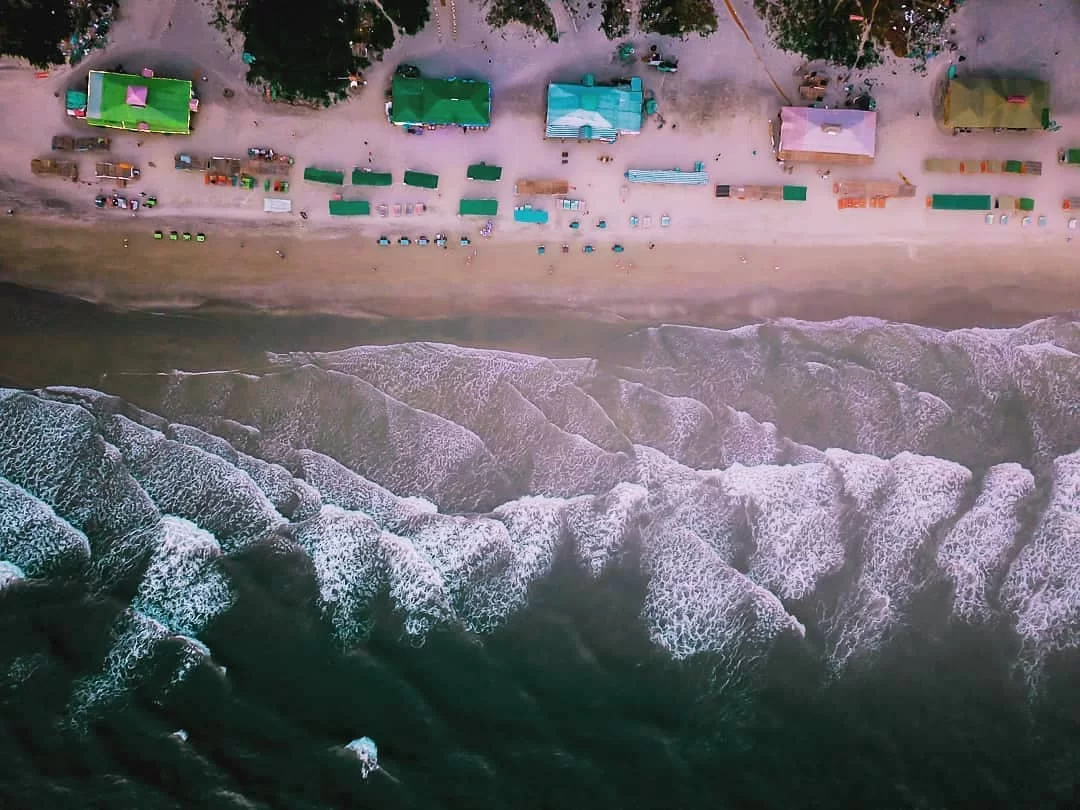
- Environment and Surroundings: Wide sandy shoreline with scattered palm trees, gentle waves, and tidal pools; relatively quiet compared to other North Goa beaches
- Facilities and Amenities: Small number of beach shacks offering food, drinks, and basic seating; limited public restrooms; no large commercial establishments directly on the beach
- Accessibility and Movement: Easy walking along most of the sand; some areas have small footbridges over estuaries or streams; soft sand can be challenging for strollers or wheelchairs
- Typical Visitor Behavior and Conditions: Low to moderate crowds; visitors primarily engage in walking, sunbathing, or yoga; swimming is common but caution advised during strong currents; early morning and sunset are the most popular times
Photography and Viewpoints at Mandrem Beach, North Goa
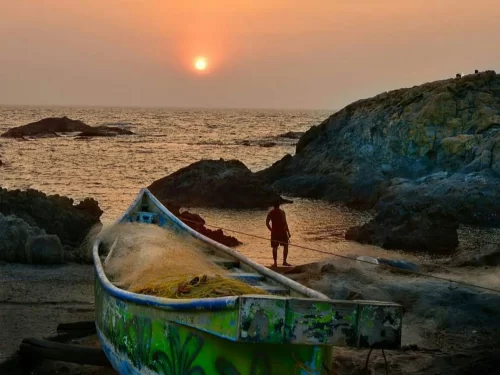
- Best viewpoints and angles: The northern stretch near the Mandrem River estuary offers varied compositions, where wooden footbridges, small fishing boats, and the meeting point of river and sea create layered frames. From the central beach, shoot along the shoreline to capture the long, relatively undeveloped sweep of sand. During low tide, position yourself near shallow water pools for reflections of the sky and distant headlands.
- Time-of-day and lighting: Sunset is the most favorable time, with the sun descending over the Arabian Sea and casting warm tones across the open shoreline. Early morning provides softer light and minimal beach activity, making it easier to photograph uninterrupted sandscapes. Midday light can be harsh due to the beach’s open exposure and limited shade.
- Rules and restrictions: Photography is generally unrestricted on the public beach. Drone usage is subject to coastal aviation regulations and may require permission. Avoid photographing individuals closely without consent, especially around yoga retreats and private beach properties.
- Crowds and access factors: Mandrem is quieter than nearby beaches like Baga or Calangute, but sunset hours attract visitors and beach shack activity. Seasonal structures and loungers can obstruct wide-angle frames. Visiting early in the morning offers clearer access and fewer obstructions along the shoreline.