Quick Facts About Calangute Beach
Quick Facts for Calangute Beach, North Goa, India
| Entry Fee | No entry fee |
| Timings | Open all day; lifeguard-monitored swimming typically daytime hours only |
| Altitude (m) | 0 |
| Ideal Visit Duration | 2–3 hours; longer if using beach shacks or water sports |
| Best Time of Day | Early morning or late afternoon for lower heat and clearer light |
| Crowd Level | High, especially weekends, holidays, and peak tourist season (Nov–Feb) |
| Distance from City Centre (km) | Approx. 15 km from Panaji city centre |
| Walking Difficulty | Easy on flat sand; soft sand may slow movement |
| Parking Available | Yes; paid parking areas and roadside parking nearby, fills quickly in peak hours |
| Last Mile Access | Motorable road access up to beach approach lanes; short walk to shoreline |
| Suitable for Kids | Yes, with supervision due to crowds and sea conditions |
| Suitable for Seniors | Partially; access roads are easy but loose sand may be challenging |
| Wheelchair Friendly | No dedicated beach access; promenade areas partly accessible |
Why Visit Calangute Beach Goa
Visitors come to Calangute Beach for its long sandy shoreline, active water sports zone, and easy access from North Goa’s main tourist areas. It serves as a central base for travelers who want beach time alongside nearby markets, restaurants, and nightlife.
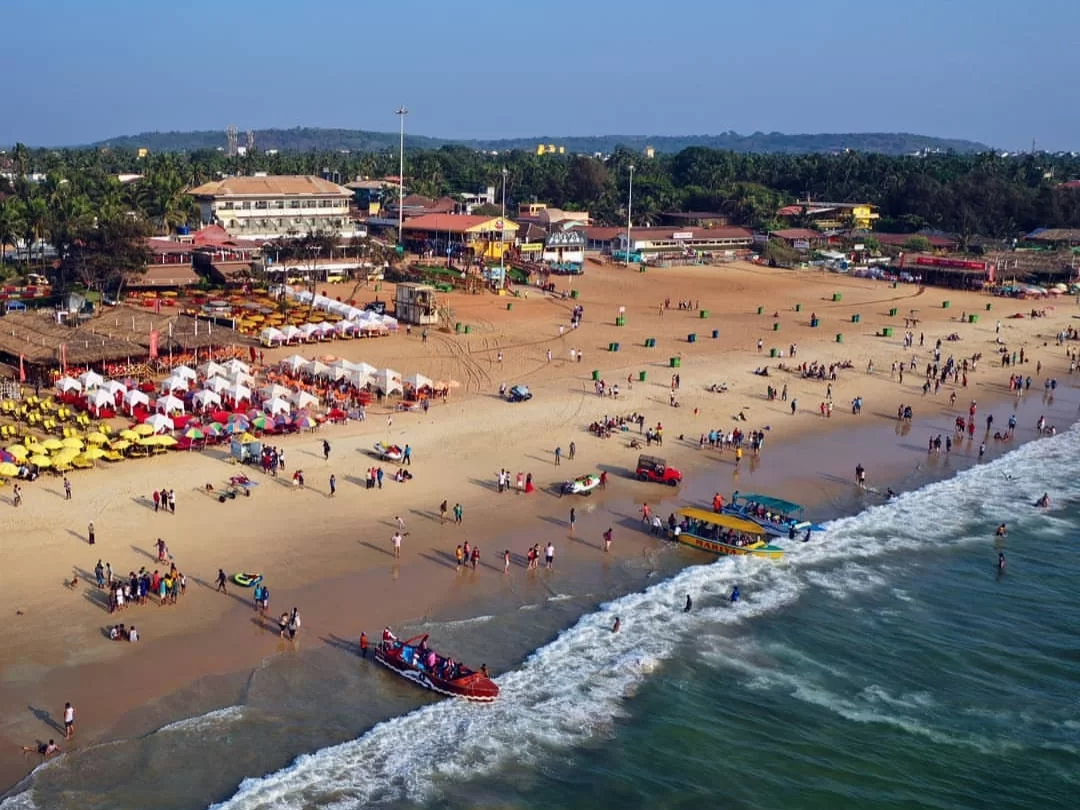
The on-ground atmosphere is busy for most of the year, with dense clusters of shacks, vendors, and organized activities along the main stretch. Expect a mix of domestic and international tourists, especially during winter and holiday periods.
What distinguishes Calangute is its combination of high visitor infrastructure and continuous beach activity, making it practical for first-time Goa visitors who prefer a well-connected, service-heavy coastal area rather than a quiet or remote beach.
History of Calangute Beach Goa
Calangute was historically a coastal village known for fishing and agriculture before becoming one of Goa’s earliest beach tourism centers in the 1960s and 1970s, when international travelers began visiting North Goa’s shoreline.
Over time, improved road connectivity and the growth of beach shacks, guesthouses, and local markets transformed Calangute into a major tourist hub, shaping its present-day identity as one of the busiest and most developed beaches in the state.
Best Time to Visit Calangute Beach Goa
Calangute Beach is most suitable for visits during the dry winter season when sea conditions are safer, beach activities operate regularly, and humidity is relatively manageable compared to other months.
- Ideal months: November to February, when tourism infrastructure and water sports are fully active.
- Weather during best season: Warm sunny days, lower rainfall, and comparatively comfortable coastal conditions suitable for beach walks and daytime activities.
- Periods to avoid: June to September due to heavy monsoon rain, rough seas, and frequent suspension of water sports and beach shacks.
How to Reach Calangute Beach Goa
- Nearest airport: Manohar International Airport (Mopa) approximately 30 km away; Goa International Airport (Dabolim) around 40 km away. Travel time varies due to coastal traffic during peak tourist season.
- Nearest railway station: Thivim Railway Station about 19 km away is the closest practical railhead; Karmali Railway Station around 24 km away is another option with limited local connectivity.
- Road access and last-mile connectivity: Well connected by road from Panaji (approx. 15 km) and North Goa towns via taxis, rental scooters, and local buses. Narrow beachside lanes and heavy peak-hour traffic can slow final approach near the main beach area.
What to Expect When You Visit Calangute Beach Goa
- Environment and surroundings: A wide sandy shoreline lined with beach shacks, water sports operators, and dense commercial activity along the main access roads.
- Facilities and amenities: Sunbeds, changing areas at some shacks, paid parking zones, restrooms in select areas, and multiple food and drink outlets operating during peak tourist months.
- Accessibility and movement: Easy beach entry from multiple points, though main access lanes can become congested; walking along the sand is generally flat but crowded near central zones.
- Typical visitor behavior and conditions: High footfall during weekends and peak season, active water sports areas marked by operators, frequent vendors approaching visitors along the shoreline.
Important Visitor Information for Calangute Beach Goa
- Crowd and weather notes: Very crowded during December–January, weekends, and public holidays; hot and humid conditions most of the year; monsoon months (June–September) bring rough seas and limited beach activity.
- Peak and quiet visiting hours: Late mornings to sunset are the busiest; early mornings see fewer visitors and less commercial activity.
- Dress code: No formal dress restrictions; typical beachwear is common, though visitors are expected to dress modestly when moving through nearby local markets and streets.
- Safety notes and practical cautions: Swim only in lifeguard-monitored zones marked by flags; strong currents can occur; watch for persistent vendors and crowded access roads, especially during peak season evenings.
Photography and Viewpoints at Calangute Beach Goa
- Best viewpoints or angles: Wide shoreline views near the central lifeguard towers, northern stretch toward Baga for sweeping beach scenes, and southern quieter sections for less obstructed frames.
- Lighting and time of day: Soft morning light offers clearer skies and fewer shadows; sunset provides warm coastal colors but heavy crowds along the main beach belt.
- Rules or restrictions: Photography is generally allowed on public beach areas; avoid photographing individuals, lifeguard operations, or private shacks without permission.
- Crowd and access factors: Dense crowds, water sports zones, and beach furniture during peak hours can limit clear compositions, especially between late morning and evening.