


Uttarakhand in January – Weather, Snowfall & Travel Guide
Plan a January trip to Uttarakhand with practical information on weather, snowfall, temperatures, road conditions, places to visit and winter activities.
+91 9910402252
admin@chalbanjare.com


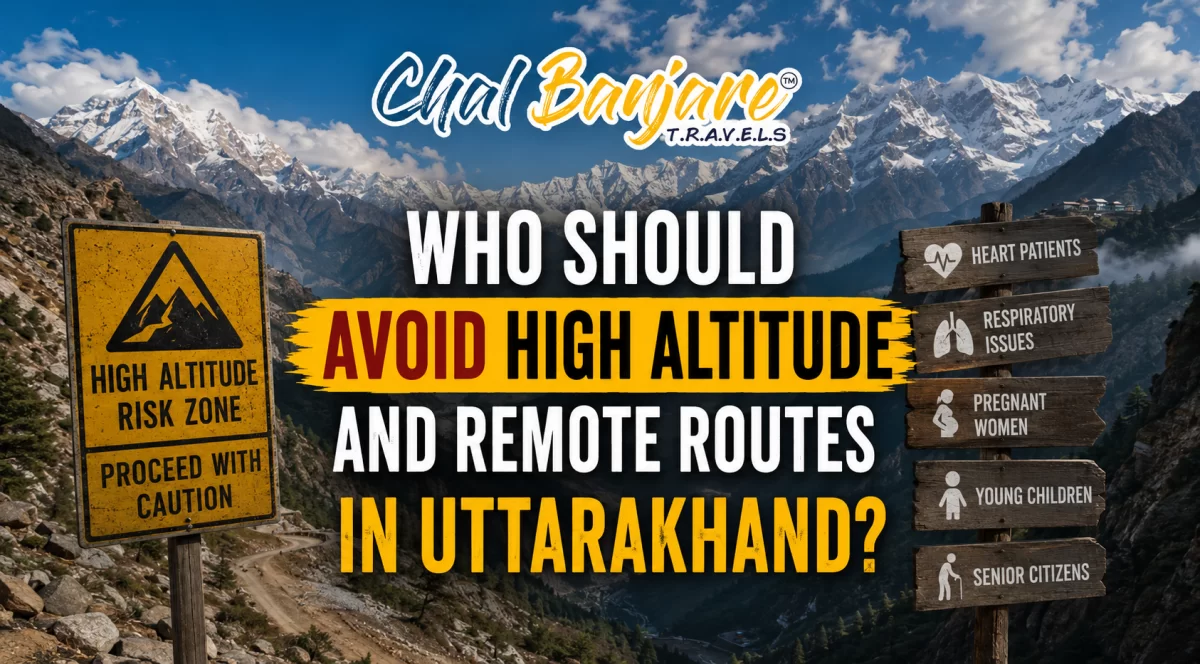
Uttarakhand’s high-altitude and remote Himalayan routes offer extraordinary mountain scenery and spiritual experiences, but difficult roads, altitude challenges, and limited facilities can make these journeys unsuitable for certain travelers.
Many remote destinations in Uttarakhand, particularly around Badrinath, Kedarnath, Mana, Valley of Flowers, Hemkund Sahib, Auli, Chopta, Tungnath, and other Himalayan regions, are located at moderate to high altitudes where oxygen levels gradually decrease. Most healthy travellers adjust naturally, but individuals with existing heart disease, severe asthma, chronic obstructive pulmonary disease, or other significant respiratory illnesses may experience greater difficulty as elevation increases.
Lower oxygen availability can increase physical effort during walking, climbing stairs, carrying luggage, or trekking. Cold temperatures and dry mountain air may further affect breathing comfort in sensitive individuals. Even destinations accessible by road often require short uphill walks, uneven pathways, or stair climbing, making physical exertion greater than many visitors initially expect.
High-altitude travel is not automatically unsuitable for everyone with medical conditions, but it does require careful planning and realistic expectations. Understanding how altitude affects the body allows travellers to make better-informed decisions before visiting Uttarakhand's Himalayan regions.
Travellers with significant heart or respiratory conditions should discuss their travel plans with their treating physician before undertaking journeys into remote Himalayan areas. A doctor familiar with the traveller's medical history can advise whether the planned altitude, expected physical activity, and travel duration are appropriate. Medical advice is particularly valuable for visitors planning pilgrimages, trekking routes, or destinations located well above normal living elevations.
Visitors should also carry sufficient medication for the entire journey because pharmacies and specialised medical services become less accessible in remote mountain regions. Copies of prescriptions, emergency contact information, and details of existing medical conditions may also prove useful during longer trips through isolated areas.
Consulting a healthcare professional before travelling allows visitors to understand personal limitations while reducing unnecessary health risks during remote mountain journeys.
Every traveller responds differently to altitude, weather, and physical activity. Visitors should honestly evaluate their current health rather than relying only on previous travel experiences at lower elevations. Those who experience breathlessness during moderate activity, unstable heart conditions, or frequent respiratory symptoms may need to reconsider demanding itineraries or select destinations located at lower elevations.
Remote Uttarakhand offers many scenic locations that do not require reaching the highest mountain areas. Selecting destinations that match current health and fitness allows travellers to enjoy the Himalayas more comfortably while reducing unnecessary physical strain. Slower travel schedules, shorter daily journeys, and additional rest days often improve the overall experience significantly.
Thoughtful planning allows many travellers to enjoy Uttarakhand safely while respecting personal health limitations. Choosing realistic routes often leads to a more enjoyable mountain journey than attempting overly demanding itineraries.
Many of Uttarakhand's remote destinations require long road journeys through mountainous terrain before visitors reach the final destination. Even locations connected by motorable roads often involve walking across uneven paths, climbing steps, navigating sloping roads, or covering short distances on foot between parking areas and important attractions. These conditions may become physically demanding for elderly travellers with limited stamina or reduced mobility.
The combination of altitude, colder weather, and extended travel hours can increase overall fatigue, particularly during multi-day journeys. Visitors should avoid planning long sightseeing schedules without allowing adequate time for rest. A slower pace generally provides a much more comfortable experience than attempting to cover several mountain destinations within a short period.
Travelling at a relaxed pace allows elderly visitors to appreciate Uttarakhand's scenery without unnecessary physical strain. Thoughtful itinerary planning often makes the journey far more enjoyable than trying to visit numerous locations quickly.
Remote Himalayan destinations generally prioritise natural landscapes over developed tourist infrastructure. As a result, wheelchair-friendly pathways, ramps, smooth pavements, and modern accessibility facilities may be limited or unavailable in many mountain villages, temples, trekking routes, and scenic viewpoints. Visitors with mobility challenges should carefully research each destination before travelling.
Accommodation, parking areas, and access roads also vary considerably between destinations. Some hotels may require climbing stairs, while viewpoints may involve walking across uneven ground. Selecting accommodation close to major attractions and reducing unnecessary walking helps improve overall comfort during the journey.
Understanding accessibility limitations before departure helps elderly travellers make informed choices and enjoy Uttarakhand's mountain landscapes with greater confidence and comfort.
A slower itinerary is often the key to comfortable mountain travel for elderly visitors. Rather than spending long hours on the road every day, travellers should consider shorter driving distances, additional overnight stops, and regular opportunities to rest. Travelling with family members or companions also provides practical support while navigating unfamiliar mountain environments.
Hydration, warm clothing, nutritious meals, and adequate sleep contribute significantly to maintaining energy levels during high-altitude travel. Visitors should avoid skipping meals or rushing between attractions simply to complete a busy itinerary. The mountain experience is usually more rewarding when sufficient time is available to enjoy each destination comfortably.
With realistic planning and adequate support, many elderly travellers can comfortably enjoy Uttarakhand's mountain destinations. Prioritising comfort over speed creates a far more pleasant and memorable Himalayan journey.
Travelling through Uttarakhand's Himalayan regions with infants and very young children requires additional planning because mountain conditions differ considerably from lowland destinations. Long road journeys, changing altitudes, cold mornings and evenings, strong sunlight during the day, and rapidly changing weather can make travel more tiring for young children. Infants may also become restless during extended hours on winding mountain roads, especially when frequent breaks are not possible.
Weather can change quickly even within the same day. Families may begin their journey in pleasant sunshine and later encounter cold winds, rainfall, or significantly lower temperatures at higher elevations. Dressing children in multiple light layers instead of one heavy jacket makes it easier to adjust clothing as temperatures change throughout the journey.
Young children generally enjoy mountain travel more when families maintain a relaxed schedule. Allowing extra time for rest and adapting plans according to weather conditions helps create a more comfortable journey for everyone.
Many remote destinations in Uttarakhand have only basic healthcare facilities, while specialised paediatric services and advanced hospitals are usually located in larger towns and cities. Families travelling with infants should understand that immediate access to specialised medical care may not always be available, particularly in isolated valleys or high-altitude pilgrimage regions.
Parents should carry sufficient medicines, baby food, feeding supplies, diapers, warm clothing, and other essential childcare items because suitable products may not always be easily available in smaller mountain settlements. Keeping emergency contact numbers and basic medical information readily accessible also helps families prepare for unexpected situations during longer journeys.
Proper preparation helps families travel with greater confidence through remote Himalayan regions. Carrying essential supplies reduces dependence on local availability and improves overall travel comfort.
Not every Himalayan destination is equally suitable for families travelling with infants or toddlers. Parents should consider road conditions, altitude, weather, walking requirements, accommodation facilities, and daily travel duration before selecting an itinerary. Shorter driving distances and destinations with easier road access generally provide a more comfortable experience for young children than ambitious multi-destination mountain circuits.
Families should also avoid planning packed sightseeing schedules. Spending more time at fewer destinations often allows children to adjust better to the surroundings while reducing travel fatigue. Accommodation with heating during colder months, convenient access to food, and comfortable sleeping arrangements further improves the overall experience.
Families who prioritise comfort over covering many destinations usually enjoy Uttarakhand far more. A slower pace allows children to remain comfortable while parents can fully appreciate the Himalayan surroundings.
Many of Uttarakhand's most scenic destinations are connected by mountain roads that include continuous curves, steep gradients, narrow valley sections, and significant elevation changes. Although these roads provide spectacular Himalayan scenery, they also require longer travel times than similar distances on plains. Visitors unfamiliar with mountain driving may find the journey more tiring than expected, particularly on routes leading towards Badrinath, Kedarnath access points, Mana, Auli, Munsiyari, or other remote regions.
Travellers should understand that average travel speeds remain much lower than on highways because of mountain terrain, weather conditions, local traffic, and road maintenance work. A journey that appears short on a map may require several hours to complete safely. Planning realistic daily distances helps reduce fatigue throughout the trip.
Travellers who understand the realities of Himalayan road travel are less likely to feel rushed or frustrated. Accepting slower travel as part of the mountain experience makes the journey much more enjoyable.
Unlike major highways in urban regions, remote mountain roads often have fewer fuel stations, restaurants, washrooms, and organised rest areas. Although villages and small towns provide basic facilities along many routes, travellers should not expect services to be available at frequent intervals throughout the journey. Careful preparation before beginning each travel day helps avoid unnecessary inconvenience.
Carrying drinking water, light snacks, required medicines, and personal essentials is advisable, particularly during longer stretches between larger towns. Travellers should also use available facilities whenever passing through major settlements because suitable stopping points may become less frequent further into the mountains.
Preparing for longer stretches between service centres helps travellers remain comfortable throughout remote mountain journeys. Good planning reduces unnecessary stress and allows greater enjoyment of the surrounding landscapes.
Travellers who are uncomfortable with extended mountain driving do not need to avoid Uttarakhand completely. Instead, they can choose destinations requiring shorter road journeys or remain within regions that provide easier access from major towns. Planning fewer destinations with longer stays often creates a more relaxed travel experience than attempting ambitious road circuits covering multiple valleys.
Breaking long journeys into shorter travel days with overnight stops also helps reduce fatigue. Families, senior travellers, and visitors new to Himalayan roads frequently benefit from this approach because it provides more time for sightseeing while limiting continuous hours on winding mountain routes.
Choosing mountain routes that match personal comfort allows visitors to experience Uttarakhand without unnecessary travel fatigue. A slower itinerary often leads to a more rewarding Himalayan journey than trying to cover too much within a limited timeframe.
Many of Uttarakhand's remote mountain destinations are known for their natural beauty, pilgrimage routes, alpine landscapes, and peaceful villages rather than luxury tourism infrastructure. While larger towns such as Dehradun, Rishikesh, Mussoorie, and Nainital offer a wider range of premium accommodation and services, remote Himalayan regions often provide simpler facilities that are designed primarily for practicality and local conditions.
Visitors travelling towards destinations such as Badrinath, Mana, Kedarnath access points, Munsiyari, or high-altitude valleys should expect mountain lodges, guesthouses, homestays, and basic hotels rather than luxury resorts. Facilities such as room heating, uninterrupted internet connectivity, premium dining options, or extensive recreational amenities may be limited depending on the location and season.
Travellers who appreciate nature, peaceful surroundings, and authentic mountain experiences generally enjoy these destinations the most. Understanding the practical nature of remote Himalayan travel helps avoid unrealistic expectations.
Accommodation options become more limited as visitors travel deeper into Uttarakhand's mountain regions. During pilgrimage seasons, weekends, and holiday periods, available rooms may fill quickly, leaving fewer choices for last-minute travellers. Restaurants, cafés, vehicle repair services, ATMs, and shopping facilities may also be less frequent than visitors are accustomed to in larger tourist destinations.
Planning accommodation well in advance is particularly important for remote areas because alternative options may be located several kilometres away. Visitors should also expect occasional interruptions in mobile connectivity, internet access, and electricity during adverse weather, especially in isolated valleys and higher-altitude settlements.
Visitors who prepare for simpler facilities usually enjoy a much smoother journey. Remote Himalayan travel rewards thoughtful planning rather than expecting urban levels of convenience throughout the route.
Remote Uttarakhand is best appreciated for its mountain landscapes, cultural heritage, spiritual significance, and peaceful natural surroundings rather than luxury hospitality. Travellers who arrive expecting premium entertainment, extensive shopping, nightlife, or resort-style experiences may find these destinations quieter than anticipated. Instead, the focus remains on scenic beauty, traditional communities, and outdoor exploration.
Adjusting expectations before departure allows visitors to appreciate the strengths of Himalayan travel. Waking up to mountain views, interacting with local communities, exploring forests and valleys, and experiencing the simplicity of village life often become the highlights of the journey. Understanding this difference helps travellers enjoy the destination for what it genuinely offers.
Travellers who embrace the simplicity of Uttarakhand's remote regions often leave with memorable experiences that luxury facilities alone cannot provide. The Himalayan landscape itself remains the destination's greatest attraction.
Several destinations in Uttarakhand are situated at elevations where some travellers may begin experiencing symptoms associated with higher altitude. Although many visitors adapt naturally, others may notice mild discomfort as elevation increases, particularly if they travel quickly from lower areas to high mountain destinations without allowing sufficient time for adjustment. Higher regions such as Badrinath, Hemkund Sahib, Valley of Flowers, Auli, and surrounding Himalayan routes require greater awareness of altitude-related conditions.
Common symptoms may include headache, unusual tiredness, dizziness, reduced appetite, disturbed sleep, or mild breathlessness during physical activity. These symptoms vary greatly between individuals and cannot always be predicted by age or physical fitness alone. Travellers should remain attentive to how they feel throughout the journey rather than assuming everyone reacts to altitude in the same way.
Understanding how altitude affects the body allows visitors to prepare realistically for Himalayan travel. Listening to personal health signals is far more important than comparing experiences with other travellers.
One of the most effective ways to improve comfort at higher elevations is to gain altitude gradually rather than travelling rapidly to the highest destination. Breaking long mountain journeys into multiple stages, spending a night at intermediate elevations, and avoiding unnecessary physical exertion immediately after arrival often help the body adjust more comfortably to reduced oxygen levels.
Visitors planning extended Himalayan itineraries should avoid rushing directly from the plains to the highest destinations in a single day whenever practical. Maintaining a relaxed travel pace, drinking sufficient water, eating balanced meals, and sleeping adequately all contribute to better acclimatization during mountain journeys.
Allowing the body time to adjust naturally often improves the overall travel experience. A gradual approach usually provides greater comfort than attempting to reach the highest destinations as quickly as possible.
Every traveller has different physical limits, and recognising those limits is an important part of responsible mountain travel. Visitors who have previously experienced significant discomfort at altitude, or who become unusually tired during moderate activity, should consider choosing lower-altitude destinations or simplifying their itinerary. There is no requirement to visit the highest locations in order to enjoy Uttarakhand's Himalayan beauty.
If symptoms become more severe or fail to improve with rest, travellers should avoid continuing to higher elevations and seek appropriate medical assistance. Planning alternative sightseeing options at lower elevations allows visitors to continue enjoying the journey while reducing unnecessary health risks.
Successful Himalayan travel is measured by enjoying the journey safely rather than reaching the highest possible destination. Respecting personal health limits allows visitors to experience Uttarakhand's mountains with greater confidence and comfort.
Weather in Uttarakhand's Himalayan region is often less predictable than in the plains. A clear morning can gradually change into cloudy conditions, light rain, snowfall, or strong mountain winds within a few hours, especially at higher elevations. These rapid changes are a natural part of mountain environments and can occur during different seasons, making flexibility an important aspect of travel planning.
Remote destinations such as Badrinath, Auli, Chopta, Tungnath, Kedarnath route, Valley of Flowers, Hemkund Sahib, and other Himalayan locations may experience noticeable temperature differences between daytime and nighttime. Visitors who are uncomfortable with changing weather or who expect consistent temperatures throughout the day should understand these conditions before planning their journey.
Travellers who understand the realities of Himalayan weather generally enjoy their journey more because they arrive prepared for changing conditions rather than expecting stable weather throughout the trip.
Preparing for different weather conditions is one of the most important parts of travelling through Uttarakhand's mountains. Even during warmer months, higher-altitude destinations can experience cool evenings and occasional rain. During winter, snowfall and icy winds become common in many regions, while the monsoon season may bring prolonged rainfall, slippery roads, and temporary travel delays.
Layered clothing provides the greatest flexibility because visitors can easily adjust to changing temperatures. Waterproof jackets, insulated outerwear during colder months, comfortable walking shoes with good grip, umbrellas or rain protection, and extra clothing help travellers remain comfortable regardless of changing weather throughout the journey.
Proper preparation allows visitors to continue enjoying mountain destinations even when weather changes unexpectedly. Suitable clothing often makes a much greater difference than travellers initially expect.
Travellers who prefer milder temperatures should carefully select the season that best matches their comfort level. Spring and autumn often provide pleasant weather across many parts of Uttarakhand, while summer offers comfortable conditions in higher mountain regions compared to the plains. Winter is ideal for visitors seeking snowfall but may not suit those who dislike cold temperatures or icy conditions.
The monsoon season creates lush green landscapes but also brings increased rainfall, occasional road disruptions, and reduced visibility in some areas. Rather than choosing a destination solely because of its popularity, visitors should consider how seasonal weather may affect personal comfort, planned activities, and overall travel enjoyment.
Selecting the right travel season according to personal comfort helps visitors enjoy Uttarakhand far more than simply following peak tourist periods. Weather preferences play an important role in planning a successful Himalayan journey.
Mountain roads throughout Uttarakhand contain numerous bends, continuous elevation changes, narrow valleys, and long uphill or downhill sections. Although these routes offer spectacular Himalayan scenery, they can be uncomfortable for travellers who are highly sensitive to motion sickness. Journeys towards destinations such as Badrinath, Kedarnath access points, Mana, Munsiyari, Auli, Chopta, and other remote areas often involve several hours of winding mountain driving.
Motion sickness affects individuals differently, and even experienced travellers may occasionally experience discomfort during longer mountain journeys. Planning realistic travel days, sitting where movement feels most comfortable, avoiding heavy meals immediately before travel, and taking regular breaks often improve comfort throughout the journey.
Understanding the nature of Himalayan roads allows travellers to prepare realistically before departure. Simple planning measures often make long mountain journeys considerably more comfortable.
Preparation is especially important for travellers who know they are prone to motion sickness. Carrying prescribed medication if recommended by a healthcare professional, staying hydrated, eating light meals before travel, and avoiding excessive screen use while driving are common strategies many travellers find helpful. Wearing comfortable clothing and ensuring good ventilation inside the vehicle may also improve overall comfort.
Drivers and tour planners should avoid scheduling unnecessarily long travel days whenever possible. Breaking the journey into shorter sections with overnight stays or longer sightseeing breaks allows travellers to recover before continuing further into the mountains.
Travellers who prepare before beginning the journey often experience fewer difficulties on winding mountain roads. Small adjustments throughout the day can make extended travel significantly more comfortable.
Visitors sensitive to motion sickness should choose itineraries that balance sightseeing with manageable driving distances. Rather than attempting multiple remote destinations within a few days, spending longer at fewer locations usually reduces overall travel fatigue. Travelling during daylight hours also allows better visibility of road conditions and surrounding landscapes, which many visitors find more comfortable than night driving.
Private vehicles or well-planned organised tours often provide greater flexibility for rest stops compared to fixed transport schedules. Travellers should communicate their requirements to drivers or travel companions before departure so that suitable breaks can be included throughout the journey whenever needed.
Carefully planned travel arrangements allow visitors with motion sickness to enjoy Uttarakhand's mountain landscapes while minimising discomfort. A slower, more flexible itinerary often provides the most rewarding Himalayan experience.
One of the most common planning mistakes in Uttarakhand is underestimating the amount of time required to reach remote Himalayan destinations. Although distances may appear manageable on a map, mountain roads include steep gradients, continuous bends, narrow valleys, occasional traffic congestion, weather-related slowdowns, and road maintenance work. As a result, travel times are significantly longer than on highways across the plains.
Visitors with only two or three available travel days often attempt to include multiple distant destinations within a single itinerary. This usually results in spending most of the holiday inside a vehicle rather than enjoying the attractions themselves. Choosing fewer destinations with adequate sightseeing time generally provides a much better travel experience than covering long distances every day.
Travellers with limited time usually enjoy Uttarakhand more by selecting a smaller region instead of attempting ambitious road circuits. A realistic itinerary leaves enough time to appreciate the Himalayan landscape rather than constantly rushing between destinations.
Mountain travel always carries the possibility of unexpected delays caused by rainfall, snowfall, landslides, road maintenance, traffic, or temporary route closures. These situations are not unusual in Himalayan regions and should be considered while planning any journey through remote Uttarakhand. Visitors with tightly scheduled itineraries often experience unnecessary stress when travel takes longer than anticipated.
Including at least one flexible day within longer mountain trips allows travellers to adjust plans without cancelling important sightseeing opportunities. Buffer time is particularly valuable during the monsoon season, winter snowfall, and pilgrimage periods when traffic volumes and weather conditions can affect road travel.
Planning additional time is one of the simplest ways to improve a Himalayan journey. Visitors who allow flexibility are usually better prepared to handle changing mountain conditions without compromising their overall experience.
High-altitude travel should never be rushed simply to complete a sightseeing checklist. Remote destinations often require visitors to adapt gradually to elevation, colder temperatures, and longer travel days. Moving too quickly between multiple high-altitude locations may reduce enjoyment while increasing physical fatigue, especially for travellers unfamiliar with Himalayan conditions.
Instead of attempting to visit every famous destination during a short holiday, visitors should prioritise experiences that genuinely interest them. Spending additional time at one or two locations allows opportunities for photography, local exploration, cultural experiences, and peaceful enjoyment of the surrounding mountains rather than constantly travelling between destinations.
A well-paced itinerary allows visitors to appreciate Uttarakhand's mountain landscapes far more deeply than an overloaded travel schedule. Giving each destination enough time often creates a richer and more memorable Himalayan experience.
Travellers visiting the Himalayas for the first time are often surprised by how different mountain travel is from visiting cities or lowland tourist destinations. Weather changes quickly, driving takes longer, temperatures decrease with altitude, and facilities become more limited in remote areas. Good preparation helps first-time visitors understand these differences before beginning the journey, reducing unnecessary surprises once they reach higher elevations.
Mountain travel rewards patience and flexibility rather than strict schedules. Visitors who prepare for slower road journeys, occasional weather delays, and changing daily conditions generally enjoy their trip far more than those expecting predictable urban travel conditions.
Understanding the realities of mountain travel before departure allows first-time visitors to approach the journey with confidence and realistic expectations, creating a more enjoyable overall experience.
Proper packing is essential for comfortable travel through Uttarakhand's Himalayan regions. Temperatures often change considerably between lower towns and higher mountain destinations, making layered clothing the most practical option. Waterproof jackets, warm sweaters, gloves during colder seasons, comfortable walking shoes, sunglasses, sunscreen, reusable water bottles, and rain protection all contribute to a smoother journey.
Visitors should also carry personal medicines, identification documents, power banks, emergency contact information, and any essential daily items because availability may become more limited in remote villages. Packing carefully before departure reduces dependence on local shopping opportunities during the trip.
Thoughtful packing eliminates many common travel difficulties. Visitors who prepare for mountain conditions before departure usually spend more time enjoying the journey and less time searching for essential items.
Before visiting Uttarakhand's higher regions, first-time mountain travellers should understand a few basic travel principles. Staying hydrated, avoiding unnecessary physical exertion immediately after reaching higher elevations, following local weather updates, respecting road conditions, and allowing additional travel time all contribute to a safer and more comfortable journey.
Travellers should also recognise that mountain itineraries rarely operate with absolute precision because weather and road conditions can change unexpectedly. Remaining patient, listening to local advice, and respecting natural conditions help visitors adapt more easily to Himalayan travel while reducing unnecessary stress throughout the trip.
First-time Himalayan travel becomes much more enjoyable when visitors prepare carefully and remain flexible throughout the journey. Simple planning and realistic expectations allow travellers to fully appreciate Uttarakhand's remarkable mountain landscapes.
Remote routes across Uttarakhand are well suited to travellers who enjoy nature, mountain scenery, peaceful surroundings, and slow-paced journeys rather than fast-paced sightseeing. Visitors who are reasonably fit, comfortable with long road journeys, prepared for changing weather, and willing to adapt to basic facilities generally find these Himalayan regions highly rewarding. These routes appeal to photographers, nature enthusiasts, trekkers, pilgrims, road trip travellers, and anyone seeking quieter destinations away from heavily urbanised tourist areas.
Travellers who understand that mountain journeys involve patience, flexibility, and respect for natural conditions usually enjoy these destinations the most. The experience is centred on valleys, forests, rivers, alpine meadows, traditional villages, temples, and panoramic Himalayan landscapes rather than entertainment or luxury tourism.
Remote Uttarakhand rewards visitors who appreciate the journey as much as the destination. Travellers who value natural beauty and authentic mountain experiences generally return with some of their most memorable travel experiences.
Safe travel through Uttarakhand begins with careful planning before leaving home. Visitors should choose destinations that match their physical fitness, available travel time, and previous mountain travel experience. Understanding seasonal weather, checking road conditions, arranging accommodation in advance, and carrying appropriate clothing all contribute to a smoother and safer Himalayan journey.
Health awareness is equally important, particularly for higher-altitude destinations. Travellers should remain hydrated, avoid unnecessary physical strain, allow time for acclimatization where needed, and seek medical advice before travelling if they have significant health concerns. Responsible planning reduces unnecessary risks while improving the overall quality of the journey.
Preparation does not remove the adventure of Himalayan travel; instead, it allows visitors to enjoy the experience with greater confidence. Careful planning makes even remote routes far more comfortable and enjoyable.
Travellers who arrive with realistic expectations often enjoy Uttarakhand's remote regions far more than those expecting city-style convenience. Mountain villages, scenic roads, rivers, forests, glaciers, temples, and high-altitude valleys are the primary attractions, while modern entertainment, shopping, and luxury facilities remain limited in many areas. Appreciating the simplicity of these destinations is an important part of the overall experience.
Visitors should also understand that weather, road conditions, and natural events occasionally influence travel schedules. Remaining patient, allowing flexibility within the itinerary, and respecting local advice help travellers enjoy the mountains safely while avoiding unnecessary frustration when plans change unexpectedly.
Visitors who embrace the natural rhythm of mountain travel often discover that remote Uttarakhand offers experiences that cannot be replicated in more commercial tourist destinations. Realistic expectations remain the foundation of a successful Himalayan journey.
The most enjoyable Himalayan journeys begin with selecting destinations that match individual health, fitness, and previous mountain travel experience. Visitors should honestly evaluate their comfort with long road journeys, cold weather, altitude, basic facilities, and physical activity before choosing remote routes. Travellers who select destinations suited to their personal capabilities are more likely to enjoy Uttarakhand comfortably without unnecessary fatigue or health concerns.
Rather than choosing an itinerary based solely on popularity, visitors should consider practical factors such as daily travel distance, accommodation availability, accessibility, weather conditions, and the level of physical effort required. A thoughtfully planned itinerary usually provides a far more rewarding experience than an ambitious schedule covering numerous distant destinations.
Selecting the right destinations is the foundation of a successful Uttarakhand journey. Matching travel plans to personal ability allows visitors to experience the Himalayas safely while enjoying every stage of the trip.
Seasonal planning plays a major role in determining the overall travel experience. Spring and autumn generally provide pleasant weather and clear mountain views, while summer offers comfortable temperatures in higher regions. Winter attracts visitors interested in snowfall, whereas the monsoon season requires additional caution because of rainfall and occasional road disruptions. Choosing the appropriate season according to personal interests and comfort greatly improves the journey.
Preparation should include booking accommodation in advance during busy periods, checking weather forecasts and road conditions, packing layered clothing, carrying personal medicines, and ensuring sufficient travel time between destinations. These simple steps help visitors adapt more easily to changing Himalayan conditions throughout the trip.
Good preparation reduces uncertainty while allowing visitors to focus on enjoying Uttarakhand's remarkable landscapes. Planning ahead is one of the most effective ways to ensure a smooth Himalayan adventure.
Before beginning any high-altitude journey, travellers should confirm accommodation bookings, review weather forecasts, check road conditions, carry valid identification, pack sufficient medicines, wear suitable clothing, and inform family members about their travel plans where appropriate. Visitors should also ensure that vehicles are in good condition if travelling independently through remote mountain regions.
Throughout the journey, travellers should remain patient, stay hydrated, follow local guidance, avoid unnecessary physical strain, and respect the natural environment by disposing of waste responsibly and following designated routes. Responsible travel protects both visitors and the fragile Himalayan ecosystem while ensuring that future travellers can continue enjoying these remarkable landscapes.
Thoughtful preparation, realistic expectations, and responsible behaviour allow travellers to experience Uttarakhand's high-altitude regions with confidence. The Himalayas reward visitors who approach the journey with patience, awareness, and respect for the unique mountain environment.


Get customized Uttarakhand tour planning designed around seasonal weather changes, hill road travel timing, pilgrimage flow, and comfort-based pacing. Whether you are visiting for spiritual journeys, Himalayan views, wildlife reserves, river valleys, or p
⚡ Quick Response | 💰 Free consultation | 🕒 24×7 expert support

