


Uttarakhand in January – Weather, Snowfall & Travel Guide
Plan a January trip to Uttarakhand with practical information on weather, snowfall, temperatures, road conditions, places to visit and winter activities.
+91 9910402252
admin@chalbanjare.com


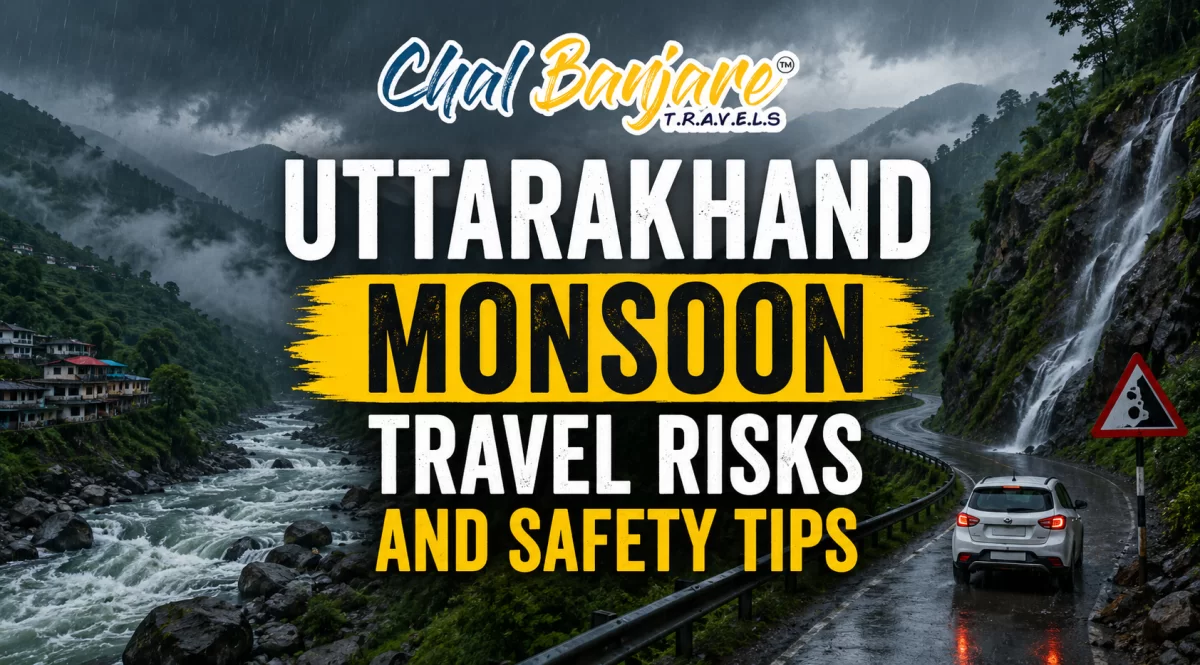
Uttarakhand becomes incredibly green and beautiful during monsoon season, but heavy rainfall, landslides, slippery roads, and unpredictable mountain weather can create serious travel challenges across the state.
The monsoon season transforms Uttarakhand into one of the greenest regions of the Himalayas. Forests become lush, waterfalls flow at full strength, rivers swell with fresh rainwater, and mountain landscapes appear vibrant. At the same time, this season also brings significant travel challenges because rainfall intensity varies across different districts and elevations. Some areas receive continuous light showers for several days, while others may experience sudden heavy rainfall within a short period.
Mountain weather is naturally unpredictable during the monsoon. Bright sunshine in the morning may quickly change to thick clouds, heavy rain, fog, or reduced visibility during the afternoon. Valleys, high passes, pilgrimage routes, and forested regions often experience rapidly changing conditions that influence driving, sightseeing, trekking, and photography. Visitors should understand that the beauty of the monsoon comes with the need for greater flexibility and careful planning.
Travellers who understand the nature of Himalayan monsoon weather are better prepared to enjoy Uttarakhand safely. Accepting occasional changes in plans is an important part of travelling during this beautiful but unpredictable season.
Successful monsoon travel begins with selecting destinations that remain reasonably accessible during the rainy season. While many popular tourist locations continue welcoming visitors, road conditions, local weather, and temporary maintenance work may influence travel times. Routes leading to higher Himalayan regions generally require closer attention because rainfall affects mountain roads more significantly than lower-altitude destinations.
Travellers should avoid planning extremely tight schedules during the monsoon. Allowing additional travel time between destinations provides flexibility if weather temporarily slows road traffic or sightseeing plans. Booking accommodation in advance and monitoring local travel conditions before departure also contribute to a smoother journey.
Planning according to seasonal realities rather than fixed schedules helps visitors travel more comfortably during Uttarakhand's monsoon season. Flexibility often becomes the most valuable part of a successful itinerary.
Preparation is essential because weather conditions can change quickly while travelling through the Himalayas. Visitors should carry waterproof jackets, umbrellas, rain covers for luggage, waterproof footwear with good grip, extra clothing, and protective covers for electronic devices. Layered clothing remains useful because temperatures may decrease noticeably after rainfall, particularly at higher elevations.
Travellers should begin each day by checking weather forecasts and local road information before leaving their accommodation. While forecasts cannot predict every local weather change, they provide useful guidance for planning travel routes and outdoor activities. Remaining prepared for changing conditions allows visitors to continue exploring comfortably even when rain becomes part of the day's experience.
Thoughtful preparation allows travellers to experience Uttarakhand's spectacular monsoon scenery with greater confidence. Proper equipment and realistic expectations make rainy season travel far more comfortable and enjoyable.
Heavy rainfall occasionally increases the possibility of landslides along mountain roads in Uttarakhand, particularly on routes passing through steep valleys, narrow gorges, and higher Himalayan regions. Pilgrimage routes, remote villages, and roads connecting mountain districts may experience temporary disruptions when prolonged rainfall loosens soil or rock surfaces. Although authorities continuously monitor important roads, natural conditions remain unpredictable during periods of intense rain.
Travellers should understand that landslide-prone sections are a normal characteristic of many Himalayan road networks rather than a permanent indication of unsafe travel. Most journeys continue safely when visitors follow current road advisories, avoid unnecessary travel during severe weather, and remain patient if temporary delays occur.
Understanding how mountain weather affects road conditions helps visitors prepare realistically for monsoon travel. Flexible planning allows travellers to manage occasional disruptions without unnecessary stress.
Before beginning long road journeys, visitors should review current road conditions through reliable travel information and local advisories. Weather conditions may differ considerably between neighbouring valleys, making route-specific information more useful than general regional forecasts. Drivers, accommodation providers, and local authorities often have valuable knowledge about recent road conditions affecting nearby destinations.
Travellers should begin longer journeys early in the day whenever practical because weather often becomes less predictable later in the afternoon during the monsoon. Allowing additional travel time also reduces pressure to continue driving during unsuitable conditions.
Travellers who regularly monitor local road conditions are better prepared to adapt their itinerary safely. Good planning often prevents unnecessary difficulties during rainy season travel.
During periods of exceptionally heavy rainfall, visitors should avoid unnecessary travel through affected mountain sections until local authorities indicate that conditions have improved. Continuing into areas experiencing active landslides, flooding, or road instability increases unnecessary risk and may also delay emergency response operations.
If travel plans are affected by severe weather, remaining at a safe location and waiting for updated guidance is usually the most sensible decision. Hotels, guesthouses, and local administration can often provide useful information regarding expected road reopening times and alternative travel options where available.
Responsible decision-making is essential during periods of extreme mountain weather. Waiting for safer conditions often protects both travellers and local emergency services while ensuring a more comfortable continuation of the journey.
Driving through Uttarakhand during the monsoon requires greater attention than during drier months because rainfall affects road grip, visibility, and overall driving conditions. Mountain roads naturally include steep gradients, hairpin bends, narrow valley sections, and uneven surfaces. When these roads become wet, braking distances may increase and careful driving becomes even more important.
Rain, mist, low clouds, and fog frequently reduce visibility, particularly during early mornings, evenings, and periods of continuous rainfall. Drivers may also encounter water flowing across roads, fallen branches, loose gravel, or small rock debris after heavy showers. These conditions require patience, reduced speed, and continuous attention rather than hurried driving.
Understanding how rain changes mountain driving conditions allows travellers to prepare for slower journeys without unnecessary stress. Careful driving is the safest approach throughout Uttarakhand's monsoon season.
Visitors should expect longer travel times during the rainy season because safe driving naturally requires lower speeds. Traffic congestion, temporary road maintenance, rainfall, and reduced visibility all contribute to slower journeys between destinations. Attempting to maintain normal travel schedules despite difficult conditions may increase unnecessary pressure on drivers.
Rather than planning multiple distant destinations in a single day, travellers should reduce daily driving distances and allow additional time between overnight stops. This approach creates a more comfortable journey while providing flexibility if weather conditions temporarily affect road travel.
Travellers who build flexibility into their itinerary usually experience far less stress during the rainy season. A relaxed schedule allows everyone to enjoy the journey despite occasional weather-related delays.
Driving through Himalayan roads during the monsoon demands confidence, experience, and familiarity with mountain conditions. Visitors hiring taxis should choose experienced local drivers who regularly operate on these routes and understand seasonal weather patterns. Those travelling in private vehicles should ensure the vehicle is well maintained before beginning the journey.
Tyres, brakes, headlights, windscreen wipers, and other essential safety components should be checked before travelling. Selecting a vehicle appropriate for mountain roads and avoiding unnecessary driving after dark during heavy rainfall further improves travel safety throughout Uttarakhand.
Experienced drivers and properly maintained vehicles significantly improve monsoon travel safety. Careful preparation allows visitors to enjoy Uttarakhand's scenic mountain roads with greater confidence.
During periods of heavy rainfall, rivers, mountain streams, waterfalls, and seasonal water channels across Uttarakhand may experience rapid increases in water flow. Fast-moving water can develop quickly after intense rain, even if rainfall occurs upstream rather than at the visitor's current location. Low-lying riverbanks and areas close to streams may therefore become unsuitable for sightseeing during severe weather.
Travellers visiting destinations near rivers such as the Ganga, Alaknanda, Mandakini, Bhagirathi, Yamuna, or other Himalayan waterways should remain aware that water levels can change without much warning during the monsoon. Respecting local safety barriers and avoiding unnecessary proximity to fast-flowing water is an important part of responsible travel.
Understanding river behaviour during the monsoon helps visitors enjoy Uttarakhand's natural beauty while avoiding unnecessary exposure to changing water conditions.
Activities such as swimming, crossing streams, sitting close to river edges, or entering flooded areas should be avoided during periods of heavy rainfall. Rivers that appear calm may contain strong currents beneath the surface, while slippery rocks along riverbanks increase the possibility of falls. Adventure activities also depend on weather and river conditions, and responsible operators may suspend operations whenever safety requires.
Visitors should not attempt to cross temporary water crossings, flooded bridges, or fast-flowing streams simply because other travellers appear to be doing so. Following local guidance remains the safest approach throughout the monsoon season.
Responsible behaviour near rivers protects both visitors and rescue teams. Waiting for safer conditions is always preferable to taking unnecessary risks around fast-flowing mountain water.
Local authorities regularly monitor weather conditions, river levels, and road safety throughout the monsoon season. Visitors should pay close attention to official warnings, temporary restrictions, and travel advisories issued for affected districts. These measures are introduced to protect travellers whenever weather conditions become hazardous.
If accommodation providers, local administration, police, or emergency services recommend postponing travel or avoiding certain routes, visitors should follow their advice without delay. Remaining informed and flexible allows travellers to continue their journey safely once conditions improve.
Following official guidance is one of the most effective ways to travel safely during Uttarakhand's rainy season. Patience and informed decision-making allow visitors to enjoy the Himalayas while respecting the power of mountain weather.
Travellers visiting Uttarakhand during the monsoon should expect occasional delays caused by weather-related conditions rather than assuming that every journey will follow its original schedule. Heavy rainfall may temporarily slow traffic, reduce driving speeds, or require maintenance work on mountain roads. In some situations, authorities may briefly restrict movement along particular routes until road inspections or clearing operations are completed.
Popular highways leading towards pilgrimage destinations, hill stations, trekking regions, and remote Himalayan villages often experience higher traffic volumes during holidays and weekends. When rain coincides with increased tourist movement, travel times may become considerably longer than usual. Visitors should view these delays as a normal part of monsoon mountain travel rather than unexpected disruptions.
Understanding that delays are sometimes unavoidable allows travellers to remain patient throughout the journey. Flexible expectations contribute greatly to a safer and more enjoyable monsoon travel experience.
One of the most valuable planning strategies during the rainy season is including additional time between destinations. Buffer time allows travellers to manage slower road journeys, temporary weather delays, or sightseeing adjustments without affecting the overall itinerary. Visitors who schedule every hour of the trip often experience unnecessary pressure whenever mountain weather changes unexpectedly.
Additional time is particularly important for travellers catching flights, trains, or long-distance buses after visiting higher Himalayan regions. Reaching departure points a day earlier, whenever practical, provides greater confidence if road conditions temporarily slow travel.
Travellers who include additional time within their itinerary usually adapt much more comfortably to changing mountain conditions. Flexibility is one of the most practical advantages during Uttarakhand's monsoon season.
Rather than planning every sightseeing activity on fixed dates and times, visitors should organise monsoon itineraries that allow adjustments if weather conditions change. Outdoor attractions, trekking routes, waterfalls, viewpoints, and adventure activities are more enjoyable when visited during suitable weather instead of trying to follow rigid schedules despite heavy rainfall.
Flexible itineraries also allow travellers to spend additional time exploring museums, cafés, temples, local markets, or cultural attractions whenever outdoor conditions become less favourable. Adapting daily plans according to current weather often leads to a richer travel experience while maintaining safety throughout the journey.
Flexible planning allows visitors to experience Uttarakhand comfortably regardless of changing weather. Adapting to mountain conditions is often the key to enjoying monsoon travel successfully.
The Char Dham pilgrimage routes pass through some of Uttarakhand's most spectacular yet challenging mountain landscapes. During the monsoon season, these routes may experience heavy rainfall, temporary traffic congestion, slower road movement, and changing weather conditions that influence travel schedules. Pilgrims should understand that mountain travel naturally requires greater flexibility during this period.
Road improvement work, weather-related maintenance, and temporary restrictions may occasionally affect travel towards Badrinath, Kedarnath access points, Gangotri, Yamunotri, and surrounding pilgrimage destinations. While authorities continuously monitor these important routes, visitors should remain prepared for itinerary adjustments whenever necessary.
Travellers who understand the realities of monsoon pilgrimage travel generally complete their journey with greater confidence. Careful planning allows visitors to focus on the spiritual significance of the Char Dham Yatra rather than weather-related uncertainty.
Higher Himalayan roads demand careful preparation during the rainy season because conditions can change quickly. Visitors should carry waterproof clothing, warm layers, suitable footwear, medicines, drinking water, and essential travel supplies throughout the journey. Temperatures may decrease considerably after rainfall, particularly during mornings, evenings, and at higher elevations.
Travellers should also begin each travel day with updated weather information and sufficient time to complete planned road journeys safely. Avoiding unnecessary travel after dark during periods of heavy rainfall further improves overall travel safety on mountain routes.
Proper preparation allows visitors to travel comfortably despite changing Himalayan weather. Carrying suitable equipment significantly improves the overall pilgrimage experience.
High-altitude destinations require thoughtful planning regardless of season, but the monsoon introduces additional weather-related considerations. Visitors should allow sufficient time for acclimatization where appropriate, remain attentive to changing weather, and avoid unnecessary physical exertion immediately after long road journeys. Selecting accommodation before sunset and allowing adequate rest also contribute to a safer travel experience.
Travellers should understand that mountain conditions occasionally require changes to sightseeing plans. Following local advice, respecting temporary restrictions, and prioritising safety over maintaining a fixed itinerary allow visitors to experience Uttarakhand's higher regions responsibly during the rainy season.
Responsible planning allows travellers to experience Uttarakhand's sacred Himalayan destinations safely while respecting the challenges created by monsoon weather. Patience and preparation remain the foundation of a successful pilgrimage journey.
Monsoon transforms Uttarakhand's forests, alpine meadows, and mountain valleys into vibrant green landscapes, making trekking routes exceptionally beautiful. However, continuous rainfall also creates slippery trails, muddy sections, loose rocks, flowing streams, and reduced visibility in many trekking areas. Popular routes around Chopta, Valley of Flowers, Har Ki Dun, Kedarkantha approaches, Dayara Bugyal, and several other mountain trails require greater caution during this season.
Trail conditions can change rapidly after even a few hours of rainfall. Paths that were dry during the morning may become wet and unstable later in the day. Small mountain streams may also carry significantly more water after heavy rain, making certain crossings more challenging. Trekkers should remain alert throughout the journey rather than assuming trail conditions will remain unchanged.
Understanding how rainfall affects mountain trails allows trekkers to plan more responsibly. A slower, cautious approach greatly improves safety while allowing visitors to enjoy Uttarakhand's spectacular monsoon landscapes.
Carrying appropriate equipment is one of the most important aspects of monsoon trekking and camping. Waterproof jackets, rain covers for backpacks, quick-drying clothing, trekking poles, waterproof footwear with strong grip, extra socks, headlamps, personal medicines, drinking water, and emergency supplies all contribute to safer travel through wet mountain environments.
Camping equipment should also be suitable for rainy conditions. Waterproof tents, properly insulated sleeping arrangements, dry storage bags, and reliable lighting become especially important because prolonged rainfall may continue throughout the evening or overnight. Packing carefully before departure reduces discomfort during changing weather.
Proper equipment cannot eliminate mountain risks, but it greatly improves comfort and safety during rainy-season trekking. Well-prepared trekkers are better able to adapt to changing Himalayan conditions.
Not every trekking route is equally suitable during the monsoon season. Before selecting a trail, visitors should consider current rainfall, local weather forecasts, trail conditions, altitude, route accessibility, and recent guidance from local authorities or trekking organisers. Some routes remain relatively manageable during light rain, while others may become temporarily unsuitable after prolonged or intense rainfall.
Trekkers should avoid choosing routes solely because they are popular during other seasons. Instead, selecting trails appropriate for current weather conditions provides a safer and more enjoyable experience. Guided treks led by experienced local teams can also provide valuable knowledge regarding changing mountain conditions.
Choosing trekking routes according to current mountain conditions rather than fixed plans helps visitors experience Uttarakhand's natural beauty more safely. Responsible decisions protect both trekkers and the fragile Himalayan environment.
Monsoon travel in Uttarakhand often exposes visitors to varying weather conditions within a single day. Lower-altitude destinations may feel warm and humid after rainfall, while higher mountain regions become cool, windy, or noticeably colder during mornings and evenings. Continuous exposure to wet clothing combined with changing temperatures can reduce overall travel comfort if visitors are not adequately prepared.
Layered clothing remains the most practical solution because travellers can easily adjust according to changing weather throughout the day. Waterproof outerwear, quick-drying garments, and spare clothing help visitors remain comfortable while exploring different elevations during the rainy season.
Remaining comfortable during changing weather helps travellers enjoy Uttarakhand's rainy season more fully. Simple clothing choices often make a significant difference during extended mountain journeys.
Travellers should carry personal medicines sufficient for the entire journey, particularly when visiting remote mountain destinations where pharmacies may not always be nearby. A small personal health kit containing prescribed medicines, basic first-aid supplies, antiseptic products, waterproof bandages, insect protection where appropriate, and personal hygiene items can be useful during monsoon travel.
Visitors should also keep medicines protected from moisture by storing them inside waterproof pouches or sealed containers. Organising medical supplies before departure reduces unnecessary dependence on unfamiliar local shops during the journey.
Thoughtful preparation allows travellers to respond comfortably to minor health needs while travelling through remote Himalayan regions. Organised medical supplies provide additional confidence during longer journeys.
Continuous rainfall, muddy pathways, damp clothing, and extended road journeys make personal hygiene particularly important during the monsoon season. Visitors should wash hands regularly, keep clothing dry whenever possible, drink safe water, and maintain clean footwear to reduce discomfort during travel. Small towels, hand sanitiser, waterproof bags, and spare clothing are practical additions to daily travel supplies.
Accommodation should be kept well ventilated whenever weather allows, and damp clothing should be dried before reuse. Paying attention to these simple habits helps travellers remain comfortable throughout extended journeys while enjoying Uttarakhand's lush monsoon landscapes.
Good hygiene practices contribute significantly to a comfortable monsoon journey. Small daily precautions help visitors remain healthy while enjoying Uttarakhand's beautiful rainy-season landscapes.
During the monsoon season, many travellers prefer destinations that offer reliable road connectivity, established tourism infrastructure, and readily available accommodation. Places such as Mussoorie, Nainital, Rishikesh, Haridwar, Dehradun, and several well-developed hill towns generally provide better access to medical facilities, transport services, restaurants, and accommodation than more isolated Himalayan regions. Although rainfall still affects these destinations, visitors often find it easier to adjust travel plans when facilities are nearby.
Travellers with families, senior citizens, young children, or limited mountain travel experience may find these destinations more comfortable during the rainy season. Easier accessibility also allows visitors to modify sightseeing plans without travelling long distances if weather conditions change unexpectedly.
Selecting destinations with stronger tourism infrastructure helps many visitors enjoy Uttarakhand more comfortably during the monsoon. Practical planning often improves both safety and overall travel convenience.
Rainfall patterns are not identical throughout Uttarakhand. Lower valleys, central hill districts, higher Himalayan regions, and forested areas may all experience different weather conditions on the same day. Some destinations receive only light showers while others experience continuous rainfall, reduced visibility, or temporary road disruptions. Understanding these regional differences helps visitors make more informed travel decisions before beginning their journey.
Higher Himalayan pilgrimage routes and remote mountain roads generally require closer attention during the monsoon because weather conditions change more rapidly at higher elevations. Travellers should therefore review destination-specific forecasts instead of relying only on general state-wide weather information.
Understanding that weather varies significantly across Uttarakhand allows visitors to select destinations more wisely. Local weather information provides much greater value than broad regional forecasts during the rainy season.
Every traveller has a different level of comfort with rainy weather. Some visitors enjoy mist-covered mountains, lush forests, and flowing waterfalls, while others prefer lighter rainfall and easier road conditions. Planning a trip according to personal comfort, travel experience, available time, and the purpose of the journey often results in a much more enjoyable holiday.
Travellers should also consider the type of activities they wish to enjoy. Those interested primarily in nature photography, peaceful scenery, or short sightseeing trips may be comfortable visiting destinations receiving moderate rainfall, whereas visitors planning trekking, long road trips, or high-altitude exploration may prefer waiting for more stable weather conditions.
Choosing destinations according to weather conditions and personal comfort creates a more enjoyable monsoon experience. Flexible planning allows visitors to appreciate Uttarakhand's beauty while travelling responsibly.
Monitoring weather forecasts and current road conditions should become part of every travel day during the monsoon season. Conditions in the Himalayas can change rapidly, and updated information helps visitors decide whether to continue with planned routes or make necessary adjustments. Reviewing forecasts before leaving accommodation each morning allows travellers to prepare appropriately for changing weather throughout the day.
Visitors should also monitor route-specific information rather than relying only on forecasts for major cities. Weather may vary significantly between valleys, hill stations, and higher-altitude destinations, making local travel information much more useful during monsoon journeys.
Regularly checking weather and road information allows travellers to make informed decisions throughout the journey. Good preparation significantly improves both safety and travel comfort.
Monsoon travel becomes much more comfortable when visitors pack suitable equipment before arriving in Uttarakhand. Waterproof jackets, umbrellas, rain covers, quick-drying clothing, sturdy footwear, power banks, waterproof bags, flashlights, medicines, drinking water, and spare clothing all contribute to smoother travel through changing mountain weather.
Electronic devices, travel documents, and cameras should remain protected inside waterproof storage whenever rain is expected. Packing thoughtfully before departure reduces dependence on finding suitable equipment after reaching remote destinations.
Appropriate travel gear allows visitors to continue exploring comfortably despite changing weather. Good preparation helps minimise inconvenience throughout the monsoon journey.
Local residents, accommodation providers, transport operators, and authorities have valuable experience regarding weather patterns, road conditions, and seasonal travel challenges. Visitors should respect local guidance, temporary road closures, and weather advisories whenever conditions become uncertain. Attempting to continue travelling despite official warnings may increase unnecessary risk.
Responsible monsoon travel also means avoiding flooded areas, unstable slopes, closed trekking routes, or restricted riverbanks. Remaining patient and adjusting travel plans according to current conditions allows visitors to enjoy Uttarakhand safely while respecting the natural environment.
Following local advice remains one of the most effective ways to travel safely during Uttarakhand's rainy season. Responsible decisions allow visitors to enjoy the Himalayas while respecting the challenges of mountain weather.
A successful monsoon journey through Uttarakhand begins with selecting destinations that match current weather conditions, personal travel experience, and available time. Instead of planning an itinerary around the maximum number of attractions, visitors should focus on routes that remain practical during the rainy season. Hill stations with established tourism infrastructure, lower-altitude destinations, and locations with dependable road connectivity often provide a more comfortable experience than ambitious journeys into remote Himalayan regions during periods of continuous rainfall.
Travellers should also consider the purpose of their trip before choosing destinations. Visitors interested in photography, waterfalls, forest landscapes, spiritual travel, or peaceful mountain holidays may enjoy the monsoon differently from trekkers or road trip enthusiasts. Selecting destinations that suit both seasonal conditions and personal expectations creates a more enjoyable and realistic itinerary.
Choosing destinations according to real monsoon conditions rather than fixed travel plans allows visitors to experience Uttarakhand more safely. Flexible planning helps travellers appreciate the state's natural beauty while adapting comfortably to changing Himalayan weather.
Transportation, accommodation, and daily sightseeing should all be planned with enough flexibility to accommodate weather-related changes. Mountain travel during the rainy season may occasionally require later departures, longer driving times, temporary route changes, or additional overnight stays. Visitors who leave space within their itinerary generally adapt more comfortably than those following tightly scheduled plans.
Accommodation should ideally be reserved before arrival, especially in destinations where visitor numbers remain high despite the rainy season. Travellers should also confirm cancellation policies, monitor transport availability, and avoid scheduling important return flights or train journeys immediately after travelling from remote Himalayan areas. Extra buffer time provides valuable protection against unexpected delays.
Flexible planning provides peace of mind throughout monsoon travel. Visitors who allow sufficient time for changing conditions are better positioned to enjoy Uttarakhand without unnecessary stress caused by weather-related delays.
Before beginning a monsoon journey, travellers should confirm accommodation bookings, review destination-specific weather forecasts, check current road conditions, inspect vehicle readiness if driving independently, and pack waterproof clothing, suitable footwear, personal medicines, travel documents, emergency contacts, and electronic device protection. Organising these essentials before departure significantly improves travel comfort.
Throughout the trip, visitors should continue monitoring weather updates, follow official travel advisories, respect temporary road closures, avoid flooded areas and unstable slopes, remain patient during delays, and maintain flexibility whenever plans need adjustment. Responsible travel protects both visitors and Uttarakhand's fragile Himalayan environment while allowing everyone to enjoy the remarkable beauty of the rainy season.
Monsoon reveals a unique side of Uttarakhand, with mist-covered mountains, flowing waterfalls, vibrant forests, and refreshing landscapes. Visitors who prepare carefully, remain flexible, and respect mountain weather can enjoy an unforgettable journey while travelling safely through one of India's most beautiful Himalayan regions.


Get customized Uttarakhand tour planning designed around seasonal weather changes, hill road travel timing, pilgrimage flow, and comfort-based pacing. Whether you are visiting for spiritual journeys, Himalayan views, wildlife reserves, river valleys, or p
⚡ Quick Response | 💰 Free consultation | 🕒 24×7 expert support

