

How to Plan a Tamil Nadu Trip for the First Time
Planning your first Tamil Nadu trip becomes easier when you understand the best destinations, travel routes, weather, budget, and itinerary options before you begin your journey.
+91 9910402252
admin@chalbanjare.com


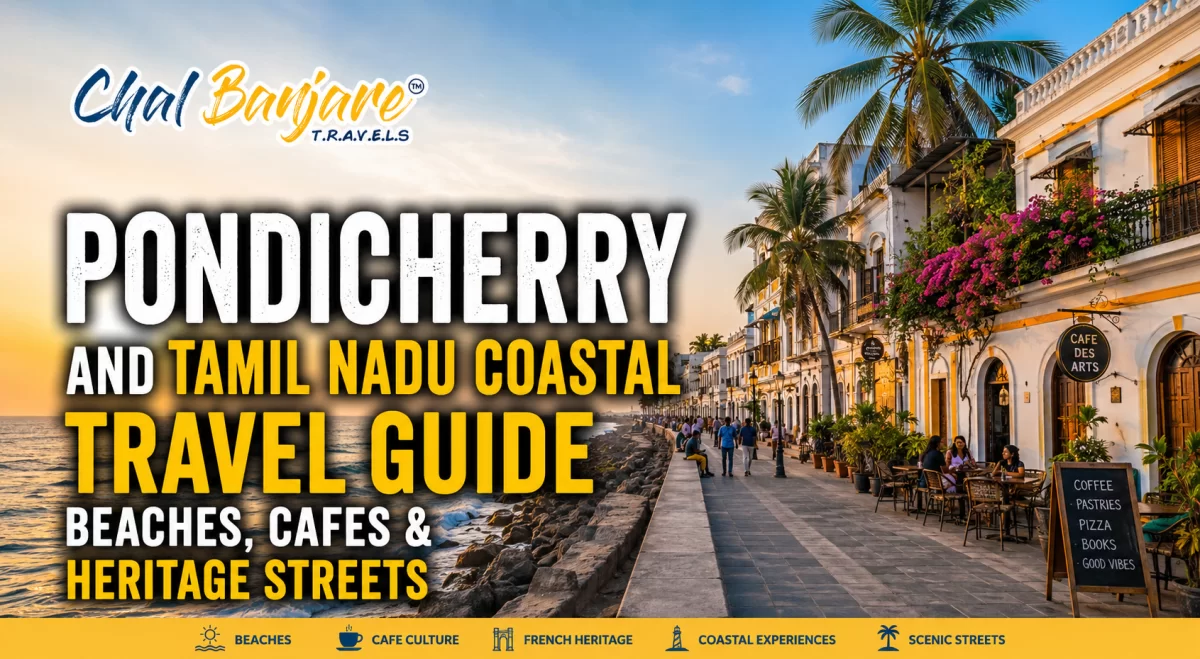
Pondicherry and the Tamil Nadu coast offer a unique blend of French heritage, colonial architecture, scenic beaches, vibrant cafés, spiritual attractions, and relaxed coastal experiences.
Pondicherry, officially known as Puducherry, is one of India's most distinctive coastal destinations where French colonial heritage blends naturally with Tamil traditions. Situated along the Bay of Bengal on Tamil Nadu's eastern coastline, the city is known for its elegant colonial architecture, peaceful beaches, tree-lined avenues and relaxed atmosphere that differs significantly from many larger Indian cities. Walking through the historic French Quarter reveals colourful villas, heritage churches, boutique hotels and charming cafés that continue to preserve the character of the former French settlement while remaining closely connected to local Tamil culture.
The coastal landscape further enhances Pondicherry's appeal through scenic promenades, quiet beaches and refreshing sea breezes that encourage leisurely sightseeing. Visitors often alternate between heritage walks, café visits and beachfront relaxation, creating a travel experience that balances history, culture and nature. Unlike destinations focused primarily on monuments or beaches alone, Pondicherry offers an integrated experience where architecture, cuisine, spirituality and coastal scenery complement one another throughout every season.
Pondicherry offers visitors a refreshing combination of history, architecture and coastal beauty, making it one of South India's most rewarding destinations for travelers seeking both cultural exploration and peaceful seaside experiences.
Most visitors find that two to three days provide sufficient time to experience Pondicherry's principal attractions without rushing. One day can be dedicated to exploring White Town, Promenade Beach, heritage churches and colonial streets, while another allows visits to Auroville, nearby beaches and local cultural attractions. Travelers interested in photography, café culture or slow-paced holidays often choose longer stays because the city's relaxed atmosphere encourages leisurely exploration rather than fast sightseeing.
Planning additional time also makes it easier to enjoy sunrise walks along the promenade, quiet afternoons in heritage cafés and evening strolls through beautifully illuminated colonial streets. Those travelling by road frequently combine Pondicherry with Mahabalipuram, Chennai or the East Coast Road, creating a longer coastal itinerary that showcases several of Tamil Nadu's finest seaside destinations.
A balanced itinerary allows visitors to appreciate Pondicherry's cultural depth while leaving sufficient time to enjoy its peaceful beaches, heritage streets and unique coastal lifestyle.
An ideal Pondicherry itinerary combines heritage sightseeing with coastal recreation and local cultural experiences. Mornings are well suited for exploring White Town, churches, museums and heritage buildings before temperatures rise. Afternoons can include café visits, shopping for handicrafts or excursions to Auroville, while evenings are best spent along Promenade Beach enjoying sea breezes and the city's relaxed waterfront atmosphere.
Travelers interested in beaches may also include Paradise Beach and Serenity Beach, while those exploring the wider region often extend their journey toward Mahabalipuram, Covelong or Chennai. The compact nature of Pondicherry allows visitors to cover major attractions efficiently while still enjoying the slower pace that makes the destination so appealing. Flexible planning ensures time for both structured sightseeing and spontaneous exploration of quiet streets and local cafés.
A thoughtfully planned itinerary helps visitors experience Pondicherry's unique blend of French heritage, Tamil traditions and coastal beauty while maintaining the relaxed atmosphere that defines this remarkable seaside destination.
The French Quarter, commonly known as White Town, represents the historical and architectural heart of Pondicherry. Wide tree-lined streets, elegant colonial villas, pastel-coloured buildings and decorative balconies create a distinctive atmosphere rarely found elsewhere in India. The carefully preserved urban layout reflects French planning principles established during the colonial period, while restored heritage buildings continue to function as hotels, museums, restaurants and private residences. Walking through these peaceful streets allows visitors to appreciate the unique architectural identity that defines Pondicherry.
Many buildings display traditional European features such as arched entrances, shuttered windows, courtyards and ornamental facades, yet they exist harmoniously alongside Tamil cultural influences. The quiet streets encourage slow exploration, allowing visitors to admire architectural details while discovering hidden cafés, galleries and boutiques. Early morning and late afternoon provide particularly pleasant conditions for walking tours because the soft light enhances the colourful facades and shaded avenues.
The French Quarter remains the defining attraction of Pondicherry, offering visitors an immersive experience where colonial architecture, peaceful streets and cultural heritage combine beautifully.
French cultural influences remain visible throughout White Town, particularly in its cafés, bakeries, boutiques and art galleries. Many cafés occupy restored colonial buildings where traditional European interiors blend naturally with tropical surroundings, creating welcoming spaces for visitors seeking relaxed dining experiences. Fresh pastries, artisan breads, coffee and locally inspired fusion cuisine contribute to the city's distinctive culinary atmosphere while reflecting its multicultural heritage.
Art galleries, handicraft stores and boutique shops further enrich the neighbourhood by showcasing local creativity alongside French-inspired design. Visitors exploring these cultural spaces often discover handcrafted products, contemporary art and heritage exhibitions that illustrate the continuing relationship between French and Tamil traditions. Together, these experiences transform White Town into more than a historical district by making it a vibrant centre of modern cultural life.
White Town's cafés and cultural venues allow visitors to experience the continuing influence of French heritage while enjoying the creativity and hospitality that characterise modern Pondicherry.
Unlike many busy urban centres, White Town offers a remarkably calm environment where slow travel becomes part of the experience. Quiet residential streets, carefully maintained gardens and limited traffic encourage visitors to explore on foot while appreciating the district's elegant architecture and relaxed atmosphere. Morning walks reveal peaceful surroundings accompanied by birdsong and sea breezes drifting inland from the nearby Bay of Bengal.
Evenings are equally enjoyable as heritage buildings become softly illuminated and cafés welcome visitors seeking relaxed outdoor dining. The combination of colonial architecture, coastal climate and tranquil public spaces creates a setting that encourages visitors to spend time appreciating the city's unique character rather than simply moving between attractions. This slower pace remains one of Pondicherry's greatest strengths and distinguishes it from many other tourist destinations.
White Town offers one of India's most relaxing urban environments where visitors can fully appreciate architecture, culture and coastal charm at an unhurried pace, making it the true heart of the Pondicherry experience.
Promenade Beach is the most visited waterfront destination in Pondicherry and serves as the city's social and cultural gathering place. Stretching along the Bay of Bengal beside White Town, the promenade offers wide pedestrian pathways, sea-facing viewpoints and heritage landmarks that create one of the most enjoyable walking experiences on India's eastern coast. Although the rocky shoreline is not intended for swimming, visitors come here throughout the day to admire the coastline, enjoy fresh sea breezes and observe the peaceful rhythm of daily life. Early mornings are especially popular for sunrise walks, jogging and photography as the Bay of Bengal is illuminated by soft golden light.
The promenade is lined with landmarks including the Gandhi Statue, French War Memorial, Old Lighthouse and Dupleix Statue, making every walk a combination of coastal scenery and historical exploration. During evenings, the atmosphere becomes particularly lively as residents and tourists gather to relax after sunset. With vehicle restrictions during certain hours, the promenade remains a comfortable place for families, photographers and travelers looking to experience Pondicherry's relaxed coastal lifestyle.
Promenade Beach introduces visitors to Pondicherry's distinctive coastal atmosphere where colonial heritage, open sea views and community life come together to create one of the city's most memorable experiences.
Paradise Beach is among Pondicherry's most scenic coastal destinations and is reached by a short boat ride across the Chunnambar backwaters. The journey itself adds to the experience as visitors pass mangroves and calm waterways before arriving at a wide sandy beach bordered by the Bay of Bengal. The clean shoreline, open sea views and relatively peaceful environment make Paradise Beach an excellent destination for relaxation, photography and leisurely walks.
Serenity Beach offers a different coastal experience with its relaxed atmosphere, fishing community and growing popularity among surfers. The beach is known for its gentle waves during suitable conditions and its attractive sunrise views overlooking the Bay of Bengal. Small cafés, artisan shops and nearby guesthouses contribute to a welcoming environment where travelers can spend several hours enjoying the coastline away from busier urban areas.
Paradise Beach and Serenity Beach complement the Promenade by offering quieter coastal settings where visitors can enjoy nature, photography and the refreshing atmosphere of Pondicherry's eastern shoreline.
Beyond its famous beaches, Pondicherry offers several quieter coastal stretches where visitors can enjoy uninterrupted sea views and a slower pace of travel. Smaller beaches along the East Coast Road, fishing villages and secluded shoreline viewpoints reveal a more tranquil side of the region that often remains overlooked by first-time visitors. These peaceful locations are particularly attractive during the early morning when fishing boats return to shore and the coastline remains calm.
Although the eastern coastline is best known for spectacular sunrises, the soft evening light creates beautiful coastal scenery suitable for photography and relaxed walks. Watching waves break against rocky shores while enjoying cool sea breezes has become one of Pondicherry's most relaxing experiences. Exploring these quieter coastal locations provides visitors with opportunities to appreciate the natural beauty of the Bay of Bengal beyond the city's main attractions.
Pondicherry's beaches provide diverse coastal experiences ranging from lively promenades to secluded shorelines, allowing visitors to enjoy the beauty of the Bay of Bengal at their own pace.
Pondicherry has earned a reputation as one of India's finest café destinations, particularly within the historic White Town district where beautifully restored colonial buildings house elegant cafés inspired by French traditions. Many establishments feature charming courtyards, shaded terraces, vintage interiors and colourful facades that create welcoming environments for relaxed dining. Visitors often begin their mornings with freshly brewed coffee, artisan breads and pastries before continuing their heritage walks through the surrounding colonial streets.
The café culture reflects Pondicherry's unique multicultural identity where French culinary influences blend naturally with local hospitality. Walking between cafés becomes an enjoyable sightseeing activity in itself as each neighbourhood offers distinctive architectural styles, artistic interiors and peaceful surroundings. Many cafés also display artwork, handcrafted décor and books that further contribute to the city's creative atmosphere.
Exploring White Town's cafés allows visitors to experience Pondicherry's distinctive French heritage while enjoying architecture, food and hospitality within beautifully preserved colonial surroundings.
Café visits form an essential part of the Pondicherry experience because they encourage visitors to slow down and appreciate the city's relaxed lifestyle. Traditional French pastries, croissants, baguettes, handmade desserts and freshly brewed coffee remain popular choices, while many establishments also serve breakfast and light meals throughout the day. Comfortable seating, quiet music and heritage interiors create peaceful environments where travelers can take a break between sightseeing activities.
Several cafés are located close to Promenade Beach, allowing visitors to combine coastal walks with leisurely dining overlooking heritage streets or garden courtyards. Morning breakfasts, afternoon coffee breaks and evening meals each offer different atmospheres depending on the time of day. Together these dining experiences contribute significantly to Pondicherry's reputation as one of India's most enjoyable coastal destinations for food lovers.
Pondicherry's café culture combines quality cuisine with architectural charm, creating memorable dining experiences that perfectly match the city's relaxed coastal atmosphere.
One of Pondicherry's most distinctive culinary characteristics is the way cafés combine French techniques with Tamil ingredients and regional recipes. Menus frequently include both European-style dishes and South Indian favourites, allowing visitors to experience two culinary traditions within the same establishment. Fresh seafood, locally sourced vegetables, tropical fruits and traditional spices complement classic baking methods, producing flavours unique to Pondicherry.
Many cafés also support local artists, musicians and cultural events, transforming dining spaces into creative community centres. Visitors often discover handmade crafts, exhibitions and live performances while enjoying regional cuisine in heritage surroundings. These multicultural influences reflect Pondicherry's historical development and contribute to the city's reputation as one of India's most distinctive gastronomic destinations.
The cafés of Pondicherry offer more than excellent food by reflecting the city's multicultural heritage through architecture, hospitality and creative cuisine that blends European traditions with the rich flavours of Tamil Nadu.
Auroville is one of the most distinctive cultural destinations near Pondicherry and attracts visitors from around the world because of its philosophy of universal harmony, sustainable living and international cooperation. Established in 1968, the township welcomes people from many countries who contribute to education, environmental conservation, arts and community development. The Matrimandir, recognised by its striking golden spherical structure, serves as the spiritual and architectural centre of Auroville. Surrounded by landscaped gardens and peaceful green spaces, the area offers a calm environment for reflection while introducing visitors to the township's unique vision.
Beyond the Matrimandir, Auroville contains artisan workshops, eco-friendly communities, organic farms, handicraft centres and educational institutions that demonstrate sustainable development in practice. Visitors often spend a full day exploring these cultural spaces, learning about traditional crafts and experiencing a lifestyle focused on environmental responsibility. The contrast between Auroville's peaceful atmosphere and the lively streets of Pondicherry provides a balanced travel experience that combines spirituality, creativity and modern ecological thinking.
Auroville complements Pondicherry's colonial heritage by offering visitors a completely different cultural experience centred on sustainability, creativity and international cooperation.
Pondicherry's heritage is reflected through its beautifully preserved churches, colonial buildings and elegant streets that continue to display strong French architectural influences. Landmarks such as the Basilica of the Sacred Heart of Jesus, Immaculate Conception Cathedral and Our Lady of Angels Church represent different periods of colonial history while contributing to the city's multicultural identity. Their stained-glass windows, Gothic architectural elements and peaceful interiors attract both pilgrims and architecture enthusiasts throughout the year.
The surrounding heritage streets of White Town further showcase colourful colonial villas, government buildings, heritage hotels and traditional residences that have been carefully maintained over generations. Walking through these neighbourhoods allows visitors to appreciate the city's distinctive urban planning, decorative facades and tree-lined avenues while discovering art galleries, boutique stores and cafés hidden among the historic buildings.
The churches and colonial streets of Pondicherry preserve centuries of architectural heritage while creating one of India's most attractive historic urban landscapes.
One of Pondicherry's greatest strengths is the harmonious way French and Tamil traditions continue to coexist in everyday life. Local festivals, cafés, markets, cuisine and neighbourhood customs reflect influences from both cultures while maintaining their own unique identity. Visitors exploring traditional Tamil districts alongside White Town experience two distinct yet interconnected aspects of the city's heritage, each contributing to Pondicherry's multicultural atmosphere.
Community events, local handicrafts, art exhibitions and culinary traditions further illustrate this cultural blending. Traditional Tamil temples stand not far from colonial churches, while local restaurants often combine South Indian recipes with French-inspired cooking techniques. This remarkable cultural diversity makes Pondicherry far more than a heritage destination by allowing visitors to experience a living community shaped by multiple historical influences.
Pondicherry's cultural richness lies not only in its buildings but also in its everyday traditions, making every walk through the city an opportunity to experience its remarkable multicultural heritage.
The East Coast Road, commonly known as ECR, is one of South India's most scenic coastal highways, connecting Chennai with Pondicherry while passing beaches, fishing villages, estuaries and coastal landscapes overlooking the Bay of Bengal. The route is admired for its well-maintained roads, sea views and numerous stopping points where travelers can enjoy beaches, local seafood and panoramic ocean scenery. Driving along this highway allows visitors to experience the changing character of Tamil Nadu's coastline while enjoying one of India's most enjoyable road trips.
Throughout the journey, travelers encounter peaceful stretches of coastline that remain less crowded than urban beaches. Coconut groves, coastal vegetation and traditional fishing communities contribute to the natural charm of the region while providing opportunities for photography and relaxed exploration. The combination of scenic driving, ocean views and cultural experiences makes the East Coast Road an essential part of many Pondicherry itineraries.
The East Coast Road combines natural beauty with convenient travel, offering visitors a memorable coastal journey through some of Tamil Nadu's finest seaside landscapes.
Mahabalipuram is one of the most important stops along the East Coast Road and is internationally recognised for its UNESCO World Heritage monuments. The Shore Temple, Pancha Rathas, Arjuna's Penance and numerous rock-cut caves demonstrate the artistic brilliance of the Pallava dynasty while overlooking the Bay of Bengal. These monuments combine archaeological significance with dramatic coastal scenery, making Mahabalipuram one of Tamil Nadu's most visited heritage destinations.
The town's beaches, sculpture workshops and relaxed coastal atmosphere further enhance the visitor experience. Local artisans continue carving granite sculptures using techniques that have been practised for generations, allowing travelers to observe traditional craftsmanship while exploring the heritage district. Combining Mahabalipuram with Pondicherry creates an itinerary rich in architecture, history and coastal beauty.
Mahabalipuram offers one of India's finest combinations of heritage and coastal landscapes, making it an essential destination for travelers exploring Tamil Nadu's eastern shoreline.
Covelong, officially known as Kovalam, is a peaceful beach destination located along the East Coast Road between Chennai and Mahabalipuram. The beach is well known for its calm atmosphere, fishing harbour and growing reputation as a surfing destination. Gentle coastal scenery, clean beaches and open sea views attract visitors seeking relaxation away from busier urban beaches while providing excellent opportunities for photography and leisurely walks.
Adventure enthusiasts frequently visit Covelong for surfing, paddleboarding and other water-based recreational activities conducted under suitable weather conditions. The surrounding coastal villages maintain traditional fishing practices that add authenticity to the destination while nearby resorts and cafés provide comfortable facilities for day visitors. Together these features make Covelong an enjoyable stop for travelers exploring the wider East Coast region.
Covelong demonstrates the quieter side of Tamil Nadu's coastline where beaches, adventure activities and traditional coastal communities combine to create an enjoyable seaside experience.
The French Quarter, popularly known as White Town, is the most rewarding photography destination in Pondicherry because of its beautifully preserved colonial architecture and peaceful streets. Pastel-coloured villas, decorative balconies, elegant arches, shuttered windows and tree-lined avenues create compositions that reflect the city's distinctive French heritage. Morning light gently illuminates the colourful facades while the relatively quiet streets allow photographers to capture architectural details without heavy crowds. Walking through the neighbourhood reveals countless opportunities to photograph heritage buildings that have been carefully restored while maintaining their historical character.
Many streets also feature charming cafés, art galleries, boutique hotels and flowering bougainvillea that add vibrant colours to architectural scenes. Wide-angle photography works particularly well for capturing entire streetscapes, while close-up compositions highlight decorative doors, windows and ornamental details. Exploring White Town on foot allows photographers to appreciate the rhythm of the neighbourhood while discovering hidden corners that reflect Pondicherry's unique blend of French and Tamil influences.
The French Quarter remains Pondicherry's finest photography location where architecture, colour and heritage combine to create one of India's most visually appealing historic districts.
Pondicherry's coastline provides excellent opportunities for landscape photography throughout the year. Promenade Beach remains the city's most photographed waterfront because its broad pedestrian walkway, historic monuments and uninterrupted views across the Bay of Bengal create attractive compositions from sunrise onwards. Early morning offers particularly soft natural light while fishing boats, gentle waves and walkers contribute authentic elements to coastal photographs.
Paradise Beach and Serenity Beach introduce different coastal environments where sandy shorelines, fishing communities and open sea views provide additional variety. Long stretches of beach allow photographers to experiment with wide-angle landscapes while capturing changing weather conditions and reflections across the water. The East Coast Road between Chennai and Pondicherry also presents numerous scenic viewpoints where coastline, vegetation and ocean combine into memorable photographic settings.
Pondicherry's beaches provide diverse photographic experiences where changing light, coastal landscapes and everyday life combine to showcase the beauty of Tamil Nadu's eastern shoreline.
Beyond architecture and beaches, Pondicherry offers rich opportunities for street photography through its cafés, traditional markets and everyday community life. White Town cafés feature elegant interiors, colourful courtyards and carefully designed spaces that reflect the city's multicultural identity. Local markets, flower vendors and neighbourhood streets reveal another side of Pondicherry where Tamil traditions remain an essential part of daily life despite the city's colonial heritage.
Festival celebrations, artisan workshops and community gatherings provide additional opportunities to document local culture with sensitivity and respect. Visitors photographing people should always seek permission where appropriate while remaining mindful of religious ceremonies and private spaces. Capturing these authentic interactions creates meaningful photographs that represent Pondicherry not only as a heritage destination but also as a vibrant living community.
Photography in Pondicherry extends beyond monuments by capturing the city's people, traditions and relaxed lifestyle, creating a complete visual story of this unique coastal destination.
Pondicherry's culinary identity is shaped by the remarkable combination of Tamil traditions and French influences that have developed over centuries. Visitors can enjoy authentic South Indian meals featuring idli, dosa, pongal, seafood curries and rice-based dishes alongside French-inspired recipes that include freshly baked breads, creamy sauces and carefully prepared desserts. This fusion creates a distinctive dining culture rarely found elsewhere in India while reflecting the city's multicultural history.
Seafood occupies an important place in local cuisine because of Pondicherry's coastal location along the Bay of Bengal. Fresh fish, prawns, crab and other regional specialties are prepared using aromatic Tamil spices while some restaurants combine traditional ingredients with European cooking techniques. Dining in Pondicherry therefore becomes more than a meal by introducing visitors to a culinary tradition that reflects centuries of cultural exchange.
Pondicherry's unique culinary heritage offers visitors an opportunity to experience two rich food cultures within a single destination while enjoying flavours found nowhere else in Tamil Nadu.
White Town's cafés and bakeries remain central to Pondicherry's dining culture, serving freshly baked croissants, baguettes, pastries, cakes and artisan coffee throughout the day. Many establishments occupy beautifully restored colonial buildings where elegant interiors and peaceful courtyards encourage visitors to enjoy leisurely breakfasts, afternoon refreshments and relaxed evening meals. Walking between cafés has become an essential part of exploring the heritage district.
Beyond White Town, local food streets introduce travelers to authentic Tamil flavours through traditional restaurants and neighbourhood eateries. Fresh snacks, regional sweets, vegetarian meals and seafood dishes demonstrate the diversity of local cuisine while providing affordable opportunities to experience everyday dining. Together, cafés and food streets create a balanced culinary journey reflecting both European and South Indian traditions.
Exploring Pondicherry's cafés and local restaurants allows visitors to experience the city's remarkable culinary diversity while enjoying its relaxed and welcoming atmosphere.
Pondicherry's restaurants showcase regional ingredients including coconut, fresh seafood, rice, tropical fruits and aromatic spices that define the cuisine of Tamil Nadu's eastern coastline. Many chefs combine these local products with French cooking methods to create dishes that celebrate both traditions while maintaining authentic regional flavours. Seasonal produce further influences menus throughout the year, ensuring fresh and varied dining experiences.
Dining in Pondicherry is also closely connected with the city's cultural identity because many restaurants preserve heritage architecture while supporting local artists, musicians and community events. Visitors often discover that meals become memorable cultural experiences rather than simple dining occasions. Whether choosing traditional Tamil cuisine or French-inspired menus, Pondicherry consistently offers high-quality food within welcoming surroundings.
Pondicherry's food culture perfectly represents the city's historical and cultural diversity, offering travelers memorable dining experiences where French elegance and Tamil hospitality come together naturally.
Pondicherry offers an ideal combination of heritage, coastal beauty, cuisine and cultural diversity that appeals to many different travel styles. Heritage enthusiasts often prioritise White Town, colonial churches, museums and Auroville, while beach lovers focus on Promenade Beach, Paradise Beach and Serenity Beach. Travelers interested in food enjoy exploring French cafés, traditional Tamil restaurants and bakeries that together reflect the city's unique multicultural identity.
Photography enthusiasts benefit from combining colonial architecture with coastal landscapes, while families appreciate the city's relaxed pace, walkable heritage districts and peaceful atmosphere. Visitors extending their journey can include Mahabalipuram, Covelong and Chennai along the East Coast Road, creating a broader itinerary that highlights the remarkable diversity of Tamil Nadu's eastern coastline.
Selecting attractions according to personal interests allows visitors to experience the many different dimensions of Pondicherry while enjoying a balanced combination of heritage, beaches and local culture.
A two to four day itinerary allows visitors to comfortably explore Pondicherry while including nearby coastal attractions. The first day can focus on White Town, Promenade Beach and heritage landmarks, followed by Auroville, Paradise Beach and local cafés on the second day. Additional days allow excursions to Mahabalipuram, Covelong or Chennai via the scenic East Coast Road, creating an enjoyable coastal circuit through northern Tamil Nadu.
Beginning sightseeing early each morning helps visitors experience pleasant weather while avoiding midday heat. Evenings are ideal for waterfront walks, café visits and photography along the promenade. Grouping nearby attractions together minimises travel time and provides greater opportunities to appreciate the relaxed atmosphere that distinguishes Pondicherry from larger cities.
A carefully planned itinerary allows travelers to experience Pondicherry's architectural heritage, beaches, cafés and surrounding coastal attractions without rushing between destinations.
Preparing appropriately enhances every visit to Pondicherry's coastal environment. Lightweight clothing, comfortable walking shoes, sunscreen, sunglasses, reusable water bottles and hats are recommended throughout most of the year because of the warm coastal climate. Visitors planning church or temple visits should also wear modest clothing while respecting local customs and photography regulations. Cameras, power banks and lightweight backpacks prove especially useful for long walking tours through White Town and along the waterfront.
Responsible tourism helps preserve Pondicherry's heritage buildings, beaches and natural surroundings for future visitors. Avoiding litter, supporting local businesses, respecting heritage structures and following environmental guidelines contribute positively to the city's sustainable tourism efforts. With careful preparation and flexible planning, visitors can comfortably experience one of South India's most distinctive coastal destinations while enjoying its remarkable blend of French heritage, Tamil culture and Bay of Bengal landscapes.
Pondicherry rewards travelers with a memorable blend of architecture, culture, beaches and cuisine. Careful planning ensures a relaxed and enjoyable journey while revealing the many unique experiences that define this remarkable coastal destination on Tamil Nadu's eastern shoreline.


Get customized Tamil Nadu tour planning designed around temple visit timing, seasonal weather comfort, road travel distances, and realistic pacing across regions. Whether you are visiting for architectural heritage, spiritual journeys, coastal relaxation,
⚡ Quick Response | 💰 Free consultation | 🕒 24×7 expert support

