

How to Plan a Tamil Nadu Trip for the First Time
Planning your first Tamil Nadu trip becomes easier when you understand the best destinations, travel routes, weather, budget, and itinerary options before you begin your journey.
+91 9910402252
admin@chalbanjare.com


Tamil Nadu is one of India’s richest heritage destinations, home to UNESCO World Heritage Sites, ancient temples, royal palaces, colonial towns, archaeological wonders, and centuries of cultural history.
Brihadeeswarar Temple, locally known as Peruvudaiyar Kovil or the Big Temple, is one of the greatest architectural achievements of the Chola Empire and stands as a defining symbol of Tamil Nadu's cultural heritage. Constructed during the reign of Emperor Rajaraja Chola I in the early eleventh century, the temple represents the peak of Dravidian temple architecture. Built almost entirely from granite, despite the absence of nearby granite quarries, the monument demonstrates the extraordinary engineering knowledge and planning abilities of the Chola builders. Today it forms part of the UNESCO-listed Great Living Chola Temples and continues to function as an active place of worship while welcoming visitors from around the world.
The temple complex is organized around a massive central sanctum crowned by an impressive vimana that rises dramatically above the surrounding courtyard. Wide open spaces, monumental gateways, symmetrical layouts and carefully planned stone structures create an atmosphere of grandeur immediately visible upon entering the complex. Unlike many temple towns where buildings surround the monument closely, Brihadeeswarar Temple enjoys a spacious setting that allows visitors to appreciate its scale from multiple viewpoints. Morning and late afternoon visits are especially rewarding because softer sunlight enhances the texture of the granite while making outdoor exploration more comfortable.
Visitors should spend time walking around the entire temple instead of remaining near the entrance. Observing the monument from different angles reveals the precision of its architectural proportions and allows a deeper appreciation of why Brihadeeswarar Temple continues to be regarded as one of the finest examples of South Indian temple construction.
The artistic details of Brihadeeswarar Temple are as remarkable as its overall architectural design. Intricately carved pillars, sculpted walls, decorative niches and finely executed stone figures cover various parts of the temple, reflecting the extraordinary craftsmanship achieved during the Chola period. The temple also preserves numerous inscriptions carved directly into the stone, documenting royal donations, administrative records, cultural activities and religious practices. These inscriptions have become invaluable historical sources that help scholars understand the political, social and economic life of the Chola Empire.
Inside the complex, visitors encounter beautifully sculpted deities, guardian figures and ornamental carvings that demonstrate the artistic maturity of Chola sculpture. Every section of the monument reflects careful planning, where decoration complements architectural design without overwhelming it. The enormous Nandi statue positioned before the sanctum further enhances the visual balance of the temple and remains one of its most admired features.
Rather than viewing the temple only as a religious monument, visitors should also appreciate it as a masterpiece of engineering, sculpture and historical documentation. Every carved surface contributes to understanding the artistic vision that made the Chola Empire one of the greatest cultural powers in South India.
Brihadeeswarar Temple continues to serve as both a living place of worship and one of Tamil Nadu's most celebrated heritage attractions. Daily rituals, festivals and religious ceremonies maintain the temple's spiritual role while visitors explore its architectural and historical significance. During important Hindu festivals, the complex becomes especially vibrant as devotees gather for traditional celebrations that connect present-day religious life with centuries of continuous worship.
The temple is also a major destination for students, historians, architects and travelers interested in South Indian civilization. Its UNESCO recognition has increased international interest while encouraging conservation efforts that preserve the monument for future generations. Visitors often combine the temple with nearby attractions such as Thanjavur Palace, museums and traditional art centers to gain a broader understanding of the city's rich cultural heritage.
A visit to Brihadeeswarar Temple offers far more than architectural sightseeing. The combination of living religious traditions, remarkable engineering and centuries of preserved history makes it one of the most rewarding heritage experiences anywhere in Tamil Nadu and an essential destination for travelers interested in India's cultural legacy.
Mahabalipuram, also known as Mamallapuram, is one of Tamil Nadu's most important UNESCO World Heritage destinations and preserves some of the finest surviving examples of Pallava architecture. Located beside the Bay of Bengal, the town combines monumental stone carvings with a scenic coastal setting that distinguishes it from inland heritage sites. Visitors can comfortably explore multiple monuments within a compact area, making Mahabalipuram one of the most accessible historical destinations in southern India.
The Shore Temple stands as the town's best-known monument, overlooking the sea from its historic coastal location. Nearby, the Pancha Rathas present five monolithic temple structures carved from individual granite outcrops, each displaying different architectural forms that influenced later South Indian temple construction. Additional cave temples, sculpted shrines and open-air monuments demonstrate the artistic innovation achieved during the Pallava dynasty. Walking through these sites allows visitors to appreciate the gradual evolution of Dravidian temple architecture.
Visitors should explore the monuments gradually rather than rushing between landmarks. Spending time studying the carved details, architectural forms and surrounding landscape reveals why Mahabalipuram remains one of India's most significant archaeological and artistic destinations.
The monuments of Mahabalipuram illustrate the remarkable achievements of the Pallava dynasty, whose rulers transformed naturally occurring granite formations into elaborate temples, caves and sculptures. Unlike monuments constructed using separate building materials, many structures here were carved directly from massive rock formations, requiring extraordinary planning and craftsmanship. This close relationship between architecture and natural geology gives Mahabalipuram a distinctive identity among India's heritage sites.
The coastal location also influenced the town's historical importance as an active maritime center connected with international trade. Standing beside the Bay of Bengal, visitors can appreciate how the Shore Temple served both religious and symbolic purposes while overlooking ancient sea routes. The surrounding open landscape allows uninterrupted views of monuments against the sea, creating one of the most recognizable heritage settings in South India.
Understanding the relationship between the monuments and their coastal environment adds depth to the visit. Rather than viewing the temples in isolation, visitors gain insight into how geography, religion and maritime history combined to shape one of Tamil Nadu's most extraordinary cultural landscapes.
Mahabalipuram is celebrated not only for its temples but also for its remarkable collection of sculptures and open-air carvings. Arjuna's Penance, one of the largest bas-relief sculptures in the world, depicts intricate mythological scenes carved across a massive granite surface. Nearby monuments, decorative pillars and cave sanctuaries continue this artistic tradition, demonstrating the exceptional skills of Pallava sculptors who transformed solid rock into detailed works of art.
Even today, the town remains closely connected with traditional stone carving. Workshops throughout Mahabalipuram produce sculptures using techniques passed down through generations, allowing visitors to observe living craftsmanship alongside ancient monuments. Combining archaeological exploration with visits to artisan workshops creates a complete cultural experience where historical traditions continue in the present day.
Mahabalipuram offers a rare opportunity to experience both ancient and living artistic traditions in one destination. The combination of UNESCO monuments, coastal landscapes and active stone-carving communities makes the town one of Tamil Nadu's most complete heritage experiences for travelers interested in architecture, history and culture.
Meenakshi Amman Temple stands at the heart of Madurai and is one of the finest examples of mature Dravidian temple architecture in India. Dedicated to Goddess Meenakshi and Lord Sundareswarar, the temple has served as the religious, cultural and social center of the city for centuries. The present structure was largely developed during the Nayak period, although the site has a much older history connected with ancient Madurai. The temple occupies a vast area filled with towering entrance gateways, spacious courtyards, sacred shrines and beautifully designed halls that together create one of Tamil Nadu's most impressive architectural masterpieces.
The temple complex is carefully planned with multiple concentric corridors leading devotees toward the inner sanctums. Every gateway introduces visitors to increasingly intricate architectural details, while large mandapams, sacred tanks and ceremonial spaces demonstrate the sophisticated planning that characterizes South Indian temple design. Despite welcoming thousands of visitors every day, the temple continues to function as an active place of worship where daily rituals, festivals and traditional customs remain central to its identity. Morning and evening visits provide a particularly memorable atmosphere when devotional activities are most visible.
Visitors should allow several hours to explore the temple instead of limiting the visit to the main sanctum. Walking through its many halls and courtyards provides a deeper appreciation of the architectural planning, artistic achievement and spiritual significance that have made Meenakshi Amman Temple one of Tamil Nadu's greatest cultural landmarks.
The most recognizable features of Meenakshi Amman Temple are its enormous gopurams, each covered with thousands of brightly painted sculptures representing gods, goddesses, mythical figures and scenes from Hindu tradition. These monumental entrance towers dominate Madurai's skyline and reflect centuries of artistic craftsmanship. As visitors move through the temple, they encounter elaborately carved pillars, decorative ceilings, finely sculpted mandapams and detailed stonework that demonstrate the remarkable skill of traditional artisans.
The temple's corridors extend through multiple sections of the complex, creating long perspectives lined with carved columns and sacred spaces. One of the most admired areas is the Hall of a Thousand Pillars, where beautifully carved stone columns showcase exceptional symmetry and craftsmanship. Although each pillar appears similar from a distance, closer observation reveals unique decorative details and sculptural variations that reward slow exploration.
Rather than focusing only on the temple's famous entrance towers, visitors should spend time exploring the interior architectural details. Every hall, corridor and carved pillar contributes to the artistic richness that has made Meenakshi Amman Temple one of South India's greatest architectural achievements.
Meenakshi Amman Temple remains a vibrant center of religious life where traditional rituals continue throughout the day. Priests perform ceremonies involving sacred lamps, chants, flowers and devotional offerings, while pilgrims participate through prayer and customary worship practices. The temple's spiritual atmosphere changes during different times of the day, allowing visitors to witness the living traditions that have continued for generations.
The annual Chithirai Festival is among the most important cultural celebrations in Tamil Nadu, attracting large numbers of pilgrims and visitors to Madurai. Temple processions, decorated chariots, music and religious ceremonies transform the city into a major cultural gathering. Even outside festival periods, the temple remains closely connected with Madurai's everyday life, influencing local markets, traditional crafts, food culture and community celebrations.
Experiencing Meenakshi Amman Temple during active worship allows visitors to appreciate it as a living cultural institution rather than simply a historical monument. The combination of architecture, spirituality and community traditions continues to make the temple the true heart of Madurai.
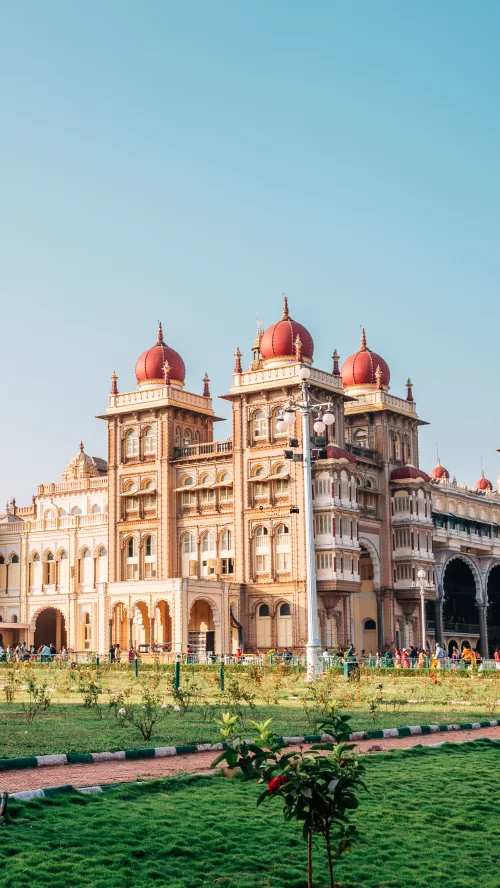
Thirumalai Nayakkar Mahal is one of Madurai's most significant historical monuments and preserves the architectural legacy of the Nayak rulers who transformed the city into an important political and cultural center during the seventeenth century. Built by King Thirumalai Nayak, the palace originally formed part of a much larger royal complex, although only a portion survives today. Even in its present form, the monument impresses visitors with its immense scale, elegant proportions and unique combination of Dravidian and Indo-Islamic architectural influences.
The palace is characterized by towering arches, massive columns, spacious courtyards and decorative stucco work that reflect the grandeur of the Nayak dynasty. Natural light entering through the open central courtyard highlights the architectural symmetry while creating changing visual effects throughout the day. Visitors can comfortably explore the palace on foot while appreciating the engineering techniques that allowed such monumental structures to be built without modern construction technology.
Visitors should spend time observing the palace from different angles to appreciate its scale and architectural balance. The open courtyard and surrounding halls provide excellent opportunities to understand the royal vision that shaped one of Madurai's most important heritage landmarks.
The interior of Thirumalai Nayakkar Mahal is dominated by enormous pillars that support graceful arches and expansive ceremonial halls. These massive columns are among the tallest found in historic South Indian palaces and immediately convey the royal grandeur intended by the Nayak rulers. Decorative plasterwork, elegant ceilings and carefully planned open spaces contribute to an atmosphere that differs significantly from Tamil Nadu's temple architecture while still reflecting regional artistic traditions.
The central courtyard served as an important gathering space for royal ceremonies, cultural performances and official events. Visitors can imagine the palace during its period of greatest splendor when musicians, dancers, scholars and royal guests assembled within these magnificent halls. Although only part of the original complex survives, the remaining structures provide valuable insight into the architectural sophistication and ceremonial life of the Nayak court.
Exploring the palace slowly allows visitors to appreciate the relationship between its structural engineering and decorative design. Every hall and courtyard demonstrates the ambition of the Nayak rulers to create a royal residence worthy of one of South India's most influential kingdoms.
Thirumalai Nayakkar Mahal represents an important chapter in Madurai's political and cultural history. Under the Nayak rulers, the city experienced significant development in architecture, religion, literature and the arts. The palace served not only as a royal residence but also as an administrative center where important political decisions and cultural activities shaped the future of the region. Its preservation allows modern visitors to better understand the influence of the Nayak dynasty on Tamil Nadu's heritage.
Today the palace continues to attract historians, students and travelers interested in royal architecture. Evening sound and light presentations, when available, provide additional historical context by narrating the story of Madurai and the Nayak rulers through visual effects and recorded commentary. Many visitors combine the palace with Meenakshi Amman Temple and the Gandhi Memorial Museum to create a comprehensive heritage itinerary within the city.
Visiting Thirumalai Nayakkar Mahal provides valuable insight into the royal history that shaped Madurai beyond its temples. Together with the city's religious landmarks, the palace completes the story of Madurai as one of South India's greatest centers of architecture, culture and historical importance.
Srirangam Temple, officially known as Sri Ranganathaswamy Temple, is one of the largest functioning Hindu temple complexes in the world and the foremost shrine dedicated to Lord Ranganatha, a reclining form of Lord Vishnu. Situated on Srirangam Island between the Kaveri and Kollidam rivers near Tiruchirappalli, the temple has remained an important pilgrimage destination for centuries. Its vast complex extends across multiple concentric enclosures, each containing shrines, halls, residential areas and commercial streets that together form a living temple town rather than a single monument.
The temple's scale immediately distinguishes it from most other religious sites in Tamil Nadu. Visitors pass through a succession of towering gateways before reaching the inner sanctum, experiencing the gradual transition from lively outer streets to increasingly sacred spaces. Daily worship, festivals and religious processions continue throughout the year, ensuring that the temple remains a vibrant spiritual center while preserving its remarkable architectural heritage.
Visitors should allow several hours to explore the temple because of its immense size. Moving gradually through its different enclosures provides a better understanding of how architecture, spirituality and community life have developed together over centuries within one of India's greatest temple complexes.
Srirangam Temple showcases the grandeur of Dravidian architecture through its monumental gopurams, extensive corridors, richly decorated mandapams and beautifully planned sacred spaces. The towering Rajagopuram dominates the skyline and serves as one of the tallest temple gateways in Asia. Throughout the complex, carved stone pillars, decorative ceilings and spacious ceremonial halls reflect the contributions of multiple dynasties that expanded the temple over many centuries.
Every enclosure contains important shrines, gathering spaces and architectural features that demonstrate the temple's gradual development into a vast religious center. Sacred tanks, processional pathways and intricately carved structures create an environment where architecture serves both ceremonial and practical purposes. The harmonious arrangement of buildings allows visitors to appreciate the balance between artistic beauty and religious function that characterizes classical South Indian temple planning.
Taking time to observe architectural details throughout the complex allows visitors to appreciate the craftsmanship that transformed Srirangam into one of Tamil Nadu's greatest religious and artistic achievements. Every gateway, hall and shrine contributes to the monument's extraordinary heritage.
Srirangam occupies a central position in the Sri Vaishnava tradition and has long been associated with important saints, philosophers and religious scholars. Pilgrims from across India visit the temple throughout the year, especially during major festivals such as Vaikunta Ekadasi when the complex welcomes exceptionally large gatherings of devotees. Religious ceremonies, devotional music and temple processions maintain traditions that have continued for centuries.
Beyond its spiritual significance, Srirangam has influenced literature, music, education and temple administration throughout South India. The surrounding temple town remains closely connected with the complex, where traditional shops, flower markets, artisans and local communities continue to support religious life. Exploring both the temple and its surrounding streets provides visitors with a broader understanding of how faith shapes the cultural identity of Srirangam today.
Visiting Srirangam offers much more than architectural appreciation. Its living religious traditions, immense cultural influence and centuries of continuous worship combine to create one of Tamil Nadu's most significant heritage experiences for pilgrims and travelers alike.
Kanchipuram is one of India's oldest continuously inhabited cities and has long been celebrated as the City of a Thousand Temples. Once serving as the capital of the Pallava dynasty, the city developed into one of South India's greatest religious and cultural centers. Today, visitors encounter an extraordinary concentration of historic temples representing different architectural styles developed over many centuries. Monuments such as Kailasanathar Temple, Ekambareswarar Temple, Varadharaja Perumal Temple and Kamakshi Amman Temple illustrate the evolution of Dravidian temple architecture through successive dynasties.
Each temple presents its own distinctive architectural features, from intricately carved sandstone walls to towering gopurams and expansive courtyards. The city's compact layout allows visitors to combine several temples within a single itinerary, although spending additional time at fewer monuments provides a richer understanding of their historical significance. Morning exploration is particularly enjoyable because temperatures remain comfortable and temple activities begin early with traditional worship ceremonies.
Visitors should avoid rushing through multiple temples and instead spend time appreciating the unique architectural details of each monument. Every temple reflects a different period of Tamil history while contributing to Kanchipuram's remarkable reputation as one of India's greatest heritage cities.
Kanchipuram's heritage extends beyond its famous temples into traditional streets, religious institutions and long-established neighborhoods where spiritual life continues to shape everyday routines. Temple festivals, devotional processions and daily rituals remain central to community life, while flower markets, traditional shops and religious vendors create an atmosphere closely connected with centuries of pilgrimage. Walking through the city's heritage streets allows visitors to experience living traditions rather than isolated historical monuments.
The city's temples belong to both Shaivite and Vaishnavite traditions, making Kanchipuram an important destination for followers of different branches of Hinduism. Pilgrims often spend several days visiting multiple temples while participating in religious ceremonies and festivals. Even outside festival periods, the sound of temple bells, devotional music and everyday worship contributes to the city's deeply spiritual atmosphere.
Exploring the heritage streets alongside the temples provides a more complete understanding of Kanchipuram's cultural identity. The city's enduring spiritual traditions continue to shape its markets, neighborhoods and community life just as they have for centuries.
In addition to its temples, Kanchipuram is internationally renowned for its silk weaving tradition. The city's handwoven silk sarees are celebrated for their exceptional quality, vibrant colors and intricate zari work, making them among India's most respected textile products. Numerous weaving families continue to practice traditional techniques passed down through generations, preserving an important cultural industry that remains closely connected to the city's heritage.
Visitors can explore weaving workshops where skilled artisans transform fine silk threads into beautifully designed sarees using traditional looms. Observing this detailed process provides insight into the patience, precision and craftsmanship required to produce each finished textile. Local showrooms and cooperative stores offer opportunities to purchase authentic handwoven silk directly from trusted producers while supporting the continuation of this centuries-old tradition.
Kanchipuram offers a rare opportunity to experience both monumental temple architecture and living craft traditions within a single destination. Together, its temples and silk weaving industry illustrate the remarkable cultural richness that continues to define one of Tamil Nadu's oldest and most respected heritage cities.
Gangaikonda Cholapuram and Darasuram are among the finest surviving examples of Chola temple architecture and, together with Brihadeeswarar Temple in Thanjavur, form the UNESCO-recognized Great Living Chola Temples. These monuments represent the remarkable architectural, engineering and artistic achievements of the Chola Empire, which ruled large parts of South India and maintained extensive maritime connections across Asia. Although they are less crowded than some of Tamil Nadu's better-known heritage attractions, both temples provide an equally rewarding experience for travelers interested in history, architecture and archaeology.
Gangaikonda Cholapuram was established by Emperor Rajendra Chola I after his victorious northern campaign and became the capital of the Chola Empire. The Brihadisvara Temple at this site reflects many architectural similarities with the famous temple at Thanjavur while introducing its own graceful proportions and decorative refinements. Darasuram, located near Kumbakonam, is home to the Airavatesvara Temple, celebrated for its smaller scale, extraordinary sculptural detail and beautifully carved mandapams. Visiting both monuments together allows travelers to appreciate how Chola architecture evolved while maintaining its distinctive style.
Travelers should allow enough time at each monument to appreciate their individual character rather than comparing them only with Brihadeeswarar Temple. Their refined architectural details, peaceful surroundings and historical importance make them essential stops for anyone exploring Tamil Nadu's Chola heritage.
The artistic richness of Gangaikonda Cholapuram and Darasuram becomes increasingly apparent through careful observation of their sculptural details. Temple walls, pillars, niches and entrance gateways display beautifully carved deities, celestial figures, mythological scenes and ornamental motifs that reflect the remarkable craftsmanship of Chola artisans. Unlike monuments where decoration dominates every surface, these temples achieve a careful balance between architectural form and sculptural elegance.
Darasuram is especially admired for the intricate carvings found throughout the Airavatesvara Temple. Stone pillars, decorative panels and miniature sculptures reveal extraordinary precision, while the famous stone chariot-shaped mandapam demonstrates both artistic creativity and technical excellence. Gangaikonda Cholapuram, on the other hand, presents larger sculptural compositions that complement the monument's monumental scale. Together, these temples illustrate the artistic refinement that distinguished Chola architecture during its most accomplished period.
Rather than focusing only on the larger architectural structures, visitors should spend time studying the sculptural details that distinguish each temple. These carvings reveal the extraordinary artistic skill that continues to make Chola architecture one of the greatest achievements in Indian heritage.
The temples at Gangaikonda Cholapuram and Darasuram represent far more than religious monuments. They illustrate the administrative strength, engineering capabilities and cultural ambitions of one of India's greatest empires. Chola rulers invested heavily in temple construction because these complexes served as religious centers, educational institutions, artistic workshops and community gathering places. Their influence extended beyond Tamil Nadu through maritime trade and cultural exchange with Southeast Asia, leaving a lasting impact on architecture throughout the region.
Today these temples continue as active places of worship while attracting historians, architects, students and travelers interested in South Indian civilization. Conservation efforts have helped preserve their remarkable structural integrity without diminishing their religious significance. Visitors who include these monuments within a broader Chola heritage circuit gain a comprehensive understanding of the dynasty's enduring contribution to architecture, sculpture, literature and temple culture.
Visiting Gangaikonda Cholapuram and Darasuram provides a deeper appreciation of how the Chola Empire transformed temple architecture into a lasting expression of artistic excellence, engineering innovation and cultural identity. Together, these monuments remain among Tamil Nadu's most valuable heritage treasures.
Tamil Nadu offers one of India's richest collections of heritage destinations, allowing travelers to plan itineraries according to architecture, religion, history or living cultural traditions. Visitors interested in monumental temple architecture should prioritize Brihadeeswarar Temple, Meenakshi Amman Temple, Srirangam, Chidambaram and Kanchipuram, while those fascinated by royal history can include Thirumalai Nayakkar Mahal and Chettinad's magnificent merchant mansions. Mahabalipuram provides UNESCO-recognized coastal monuments, whereas Gangaikonda Cholapuram and Darasuram present exceptional examples of Chola engineering and sculpture.
Rather than attempting to visit every heritage site within a short period, travelers benefit from grouping nearby destinations into regional circuits. The Thanjavur and Kumbakonam region is ideal for Chola monuments, Madurai combines temple and palace heritage, while the Chennai–Mahabalipuram–Kanchipuram route showcases Pallava architecture and historic temple towns. Selecting destinations according to individual interests allows more time to appreciate architectural details, museums, local traditions and cultural experiences.
Planning according to personal interests rather than popularity creates a more rewarding heritage journey. Tamil Nadu's remarkable diversity allows every traveler to experience different periods of history while appreciating the architectural and cultural achievements that define the state's unique identity.
A well-balanced heritage itinerary generally requires seven to twelve days depending on the number of destinations included. First-time visitors often begin with Chennai before exploring Mahabalipuram and Kanchipuram, continuing toward Thanjavur, Darasuram, Gangaikonda Cholapuram and Srirangam before finishing in Madurai and Chettinad. This route combines Pallava, Chola, Nayak and merchant heritage while minimizing unnecessary travel between major historical centers.
Railways and highways connect most heritage destinations efficiently, while airports in Chennai, Tiruchirappalli, Madurai and Coimbatore provide convenient entry points for different regions. Travelers interested in photography should allow additional time during sunrise and late afternoon when softer light enhances temple carvings and architectural details. Festival periods provide exceptional cultural experiences but may also increase visitor numbers at important pilgrimage sites.
Allowing time for museums, heritage streets, local cuisine and cultural interactions creates a more complete understanding of Tamil Nadu's history than simply visiting monuments. A relaxed itinerary helps visitors appreciate both the architectural grandeur and the living traditions that continue to shape these historic destinations.
Preparing appropriately helps visitors enjoy Tamil Nadu's heritage monuments comfortably throughout the year. Lightweight clothing, comfortable walking shoes, reusable water bottles and sun protection are essential because many temple complexes require extended periods of walking in open courtyards. Since numerous heritage attractions continue as active places of worship, modest clothing is recommended, and footwear must be removed before entering temple interiors where required. Carrying a hat and planning sightseeing during cooler parts of the day also improves visitor comfort.
Respect for local customs remains equally important. Photography rules vary between monuments, particularly within temple sanctums, so visitors should always follow instructions provided by temple authorities. Maintaining cleanliness, avoiding damage to historical structures and remaining mindful of ongoing religious ceremonies help preserve these remarkable monuments for future generations. Keeping transport confirmations, identification documents and local maps readily accessible also contributes to a smooth heritage journey.
With thoughtful planning and responsible travel practices, Tamil Nadu offers one of India's most rewarding heritage experiences. From UNESCO monuments and ancient temple cities to royal palaces and historic merchant settlements, every destination contributes to a remarkable journey through the architectural, artistic and cultural legacy of South India.


Get customized Tamil Nadu tour planning designed around temple visit timing, seasonal weather comfort, road travel distances, and realistic pacing across regions. Whether you are visiting for architectural heritage, spiritual journeys, coastal relaxation,
⚡ Quick Response | 💰 Free consultation | 🕒 24×7 expert support

