
What is Meghalaya Famous For?
Meghalaya is famous for its living root bridges, waterfalls, caves, hills, tribal culture, clean villages, crystal clear rivers, and unique natural landscapes that attract travellers throughout the year.
+91 9910402252
admin@chalbanjare.com



Meghalaya’s living root bridges are among the world’s most unique natural engineering wonders, created by the Khasi and Jaintia communities using the aerial roots of rubber fig trees over generations.
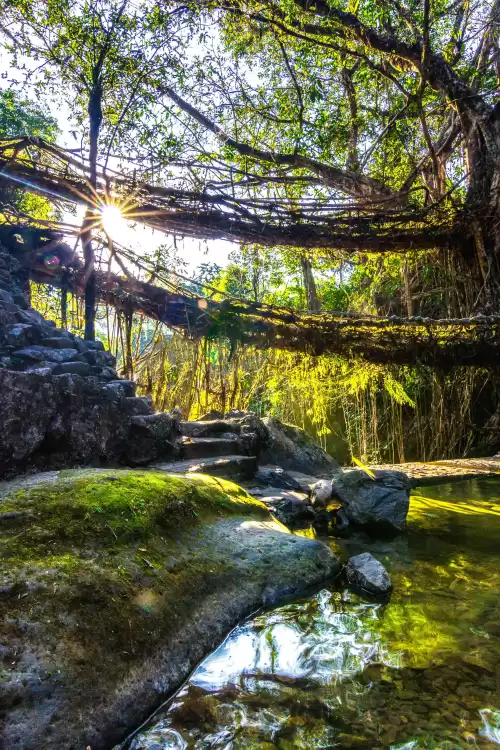
The Double Decker Living Root Bridge in Nongriat is the most iconic example of Khasi bioengineering, formed by guiding the aerial roots of rubber fig trees over generations until they naturally strengthen into a two-tier walking structure. Located deep in the East Khasi Hills, it requires a long descent through stone steps and forest pathways.
The journey is physically demanding but highly rewarding, as travelers pass through dense rainforest, small villages, and natural streams before reaching the bridge. The surrounding environment becomes more humid and lush as you descend deeper into the valley.
It is one of the most famous natural engineering wonders in India.
The experience combines trekking, culture, and raw nature in one route.
Nongriat’s Double Decker Bridge represents centuries of living architecture.
The Riwai Living Root Bridge near Mawlynnong is one of the most accessible root bridges in Meghalaya, making it ideal for travelers who want to experience Khasi bioengineering without a long trek. A short walk through village pathways leads to this beautifully preserved natural structure.
Surrounded by greenery and small forest patches, the bridge is supported by thick living roots that continue to grow and strengthen over time. Its calm environment makes it suitable for families and casual visitors.
It is one of the easiest root bridges to visit in Meghalaya.
The site blends nature with simple village life.
Riwai offers a simple introduction to living root bridge culture.
The Ummunoi Living Root Bridge in East Khasi Hills is a lesser-known example of Khasi traditional engineering, located in a quieter and less-visited part of the region. The bridge blends naturally into the forest environment and is supported by long-established root systems.
The journey to this bridge often passes through rural landscapes and small settlements, offering a more offbeat and peaceful experience compared to mainstream root bridge destinations.
It is one of the most underrated living root bridges in Meghalaya.
The location remains calm and less commercialized.
Ummunoi offers a quiet and authentic root bridge experience.
The trek to the Double Decker Living Root Bridge in Nongriat is one of the most famous trekking experiences in Meghalaya, involving a steep descent of thousands of stone steps through dense rainforest terrain. The route passes through small villages, suspension bridges, and natural streams.
As travelers descend, the environment becomes increasingly humid and green, with constant sounds of flowing water and birds. The return climb is physically demanding, making fitness an important consideration for visitors.
It is one of the most challenging yet rewarding treks in Meghalaya.
The journey itself is as significant as the destination.
The trek defines the full Nongriat experience.
The Single Decker Living Root Bridge near Nongriat is another remarkable example of Khasi bioengineering, often visited as part of the same trekking route. It is structurally simpler than the double-decker bridge but equally important in cultural and ecological significance.
Surrounded by forest streams and shaded paths, the bridge offers a quieter stop along the trekking route. It provides a more relaxed viewing experience before or after reaching the main attraction.
It is one of the key highlights of the Nongriat trail.
The structure reflects early stages of root bridge formation.
The Single Decker Bridge adds depth to the Nongriat journey.
Beyond the main bridges, the Nongriat trails contain several lesser-known root bridges that are still in development or used by local villagers. These hidden structures are often smaller but equally fascinating in their natural formation process.
Walking through these trails reveals how deeply rooted the Khasi connection with nature is, as bridges form part of daily pathways across rivers and streams. The experience feels raw and untouched by tourism.
It is one of the most authentic trekking discoveries in Meghalaya.
These bridges show nature and human effort growing together.
Nongriat trails reveal multiple layers of living root heritage.
The Riwai Living Root Bridge near Mawlynnong is one of the most accessible root bridges in Meghalaya, reached through a short and scenic walk from the village. The trail passes through clean pathways, small greenery patches, and a calm rural setting before reaching the forested area.
Unlike the steep treks of Nongriat, this bridge offers a relaxed experience suitable for all age groups. The structure itself is formed by living roots of rubber fig trees, carefully guided over time to create a natural walking bridge.
It is one of the easiest root bridge visits in Meghalaya.
The experience is simple, peaceful, and highly scenic.
Riwai Bridge offers a gentle introduction to Khasi bioengineering.
The region around Mawlynnong and Riwai is surrounded by small Khasi villages where traditional life continues alongside natural landscapes of hills, farms, and forests. These settlements reflect a strong connection between community living and environmental balance.
Walking through these areas offers a calm rural experience where agriculture, bamboo structures, and greenery define the surroundings. The slow pace of life enhances the sense of peaceful exploration.
It is one of the most authentic rural zones in Meghalaya.
The landscape blends culture and nature seamlessly.
The area reflects the natural rhythm of Khasi rural life.
The living root bridges near Mawlynnong represent a centuries-old bioengineering practice where Khasi communities guide tree roots to form natural, living structures. This technique reflects deep ecological knowledge and long-term interaction with forest ecosystems.
Over time, these root systems grow stronger and become functional bridges that integrate seamlessly into the landscape. The practice is both cultural and environmental, showcasing sustainable living traditions.
It is one of the most unique heritage practices in the world.
The system connects nature and human innovation.
Mawlynnong region preserves a living example of ecological craftsmanship.
The trek from Tyrna village to Nongriat is one of the most famous and physically demanding root bridge journeys in Meghalaya, involving thousands of steep stone steps that descend deep into the East Khasi Hills. The route is entirely on foot and passes through dense forest sections and small settlements.
As the descent continues, the environment becomes increasingly humid and green, with frequent encounters of streams, hanging bridges, and natural viewpoints. The return climb is equally challenging and requires steady stamina and pacing.
It is one of the most intense trekking experiences in Meghalaya.
The journey is a true test of endurance and reward.
Tyrna to Nongriat defines the classic root bridge trekking challenge.
The rainforest trails connecting remote villages in the root bridge regions of Meghalaya form a natural network of pathways used by locals for daily movement. These trails pass through thick vegetation, bamboo sections, and narrow forest corridors.
Travelers experience continuous natural surroundings with changing terrain, where streams and small wooden bridges appear intermittently. The trails are less structured and require careful navigation.
It is one of the most immersive forest trekking environments in India.
The paths reflect deep integration between people and nature.
These trails reveal Meghalaya’s living forest network.
The East Khasi Hills region offers several scenic trekking routes beyond the famous root bridge trails, featuring rolling hills, forest valleys, and panoramic viewpoints. These routes vary in difficulty and often connect multiple villages and natural attractions.
Depending on the route, trekkers can experience changing landscapes from dense forests to open hill views, with frequent encounters of natural streams and traditional settlements along the way.
It is one of the most scenic trekking regions in Meghalaya.
The landscape diversity makes every route unique.
East Khasi Hills offer some of Meghalaya’s most rewarding treks.
The Double Decker Living Root Bridge in Nongriat is one of the most visually complex natural structures in Meghalaya, offering layered compositions from both above and below. Photographers often capture the bridge from surrounding forest steps, streams, and suspension points along the trail.
The interplay of roots, water, and dense greenery creates depth in every frame, especially during monsoon when the surroundings become more vibrant. The shifting light through the canopy adds natural contrast to the structure.
It is one of the most iconic photography subjects in Meghalaya.
Every angle reveals a different layer of the structure.
The bridge offers endless creative photography possibilities.
The Riwai Living Root Bridge provides a calm and accessible photography setting where the structure blends gently into its forest surroundings. The short walk to the site allows photographers to carry equipment easily and focus on composition.
The simplicity of the environment, combined with soft natural lighting and surrounding greenery, makes it ideal for clean and minimal nature shots. It is especially photogenic during early morning and late afternoon hours.
It is one of the easiest root bridges to photograph in Meghalaya.
The setting is naturally balanced and uncluttered.
Riwai offers simple yet elegant root bridge photography.
The areas surrounding Meghalaya’s living root bridges are filled with forest streams, moss-covered rocks, and dense vegetation that enhance the overall photographic experience. These elements create natural frames around the bridges and add depth to landscape shots.
Water movement through the forest adds dynamic elements to compositions, especially during monsoon when streams become more active. The combination of roots, water, and forest layers makes the environment visually rich.
It is one of the most atmospheric nature photography zones in Meghalaya.
The surroundings are as important as the bridges themselves.
The environment enhances every root bridge photograph.
The living root bridges of Meghalaya are deeply rooted in Khasi traditions where communities have, for generations, guided tree roots to form natural pathways across rivers and streams. This practice reflects a unique understanding of ecology, patience, and long-term environmental harmony.
The process is not immediate but evolves over decades, with each generation contributing to the strengthening and maintenance of these living structures. It represents a cultural relationship where nature is shaped gently rather than altered forcefully.
It is one of the most remarkable cultural traditions in India.
The practice reflects coexistence between humans and forest ecosystems.
Root bridges represent living cultural heritage of Meghalaya.
Several villages in the East Khasi Hills continue to preserve the traditional knowledge of living root bridge construction, where elders pass down techniques for guiding and nurturing tree roots across streams. These villages maintain a strong connection with forest ecosystems.
The knowledge is shared orally and through practice, ensuring that younger generations learn directly from observation and participation. This continuity keeps the tradition alive even in changing times.
It is one of the most enduring cultural practices in Meghalaya.
The tradition remains active within rural communities.
These villages keep centuries-old ecological knowledge alive.
Travelers visiting root bridge regions often experience warm Khasi hospitality, where local communities welcome visitors with simplicity and respect. The interaction is natural and uncommercialized, reflecting the rural character of the region.
Indigenous culture is visible in daily life, from traditional homes and farming practices to community gatherings and shared responsibilities. This cultural environment adds depth to the physical trekking experience.
It is one of the most genuine cultural interactions in Meghalaya.
Hospitality here is rooted in simplicity and respect.
Root bridge regions offer authentic cultural immersion.
Rainbow Falls, located deeper beyond Nongriat Village, is one of the most rewarding natural attractions for trekkers exploring the living root bridge region. The journey continues past the Double Decker Bridge through dense rainforest trails, streams, and steep forest pathways.
The waterfall gets its name from the rainbow effect that often appears in its mist during sunny conditions, especially when sunlight filters through the surrounding valley. The combination of remote trekking and untouched scenery makes it a memorable extension of the root bridge experience.
It is one of the most beautiful hidden waterfalls in Meghalaya.
The trek adds adventure to the natural reward.
Rainbow Falls is a true reward after a challenging forest trek.
The living root bridge regions are surrounded by natural pools, forest streams, and dense rainforest landscapes that create a continuous ecosystem of water and greenery. These pools are often formed by flowing streams that collect in rocky basins along the trail.
The rainforest environment remains humid and rich in biodiversity, with moss-covered rocks, hanging roots, and constant water movement shaping the surroundings. These elements enhance the immersive nature experience of the region.
It is one of the most refreshing natural environments in Meghalaya.
The ecosystem remains active throughout the year.
The region feels like a living natural sanctuary.
Around Meghalaya’s living root bridges, multiple smaller waterfalls and forest trails create an interconnected natural network. These trails pass through bamboo sections, wooden steps, and river crossings that link villages and natural landmarks.
The combination of waterfalls and trekking paths offers a continuous exploration experience, where each turn reveals new natural features. The terrain remains raw and closely tied to local village life.
It is one of the most diverse trekking environments in Meghalaya.
The landscape changes constantly along the route.
The trails connect multiple natural wonders seamlessly.
The period just after the monsoon is one of the most visually rewarding times to visit Meghalaya’s living root bridges, as the entire landscape remains fresh, green, and full of flowing streams. Forests are dense, and the environment feels alive after continuous seasonal rainfall.
Trails can still be slightly damp, but the scenery is at its peak, with waterfalls, moss-covered rocks, and clear streams enhancing the trekking experience. The natural saturation of colors makes this period highly preferred by nature lovers.
It is one of the most scenic seasons for root bridge exploration.
The landscape feels vibrant and deeply immersive.
Post-monsoon offers the most visually rich experience of root bridges.
Winter is considered the most comfortable time for trekking to living root bridges, as the weather remains dry, cool, and stable. The reduced humidity makes long walks and steep climbs more manageable, especially in regions like Nongriat.
Although water flow may be lower compared to monsoon months, visibility improves significantly, allowing clearer views of bridges, trails, and surrounding landscapes. It is ideal for visitors prioritizing comfort and ease of movement.
It is one of the best seasons for long trekking routes.
Conditions are suitable for all fitness levels.
Winter provides the most comfortable root bridge trekking experience.
Trail conditions around living root bridges vary significantly with seasons, especially due to rainfall patterns that affect stone steps, forest paths, and river crossings. Monsoon months can make trails slippery and more challenging, while dry seasons offer more stable footing.
Travelers should consider physical fitness, weather forecasts, and trek duration before planning visits. Local guidance is often helpful in understanding real-time trail conditions, especially in remote areas like Nongriat.
It is one of the most important planning factors for Meghalaya trekking.
Seasonal awareness ensures safer travel decisions.
Understanding conditions ensures a safer and smoother journey.
The trekking routes leading to living root bridges, especially in Nongriat and East Khasi Hills, involve long stretches of uneven stone stairways, muddy patches, and forest paths. Proper trekking footwear with strong grip is essential to maintain stability during both descent and ascent.
Slippery conditions are common, particularly after rainfall, so shoes with anti-slip soles significantly improve safety. Lightweight and breathable footwear also helps during long walks in humid forest conditions.
It is one of the most important gear decisions for root bridge trekking.
Proper shoes directly impact trekking safety and comfort.
Good footwear ensures safer movement on steep stone paths.
Root bridge treks often involve long durations without frequent access to shops or facilities, making it important to carry sufficient drinking water and basic supplies. Hydration becomes especially critical during steep climbs and humid conditions.
Light snacks, energy items, and a small first-aid kit are recommended for longer routes like Nongriat. Since infrastructure is limited in remote areas, self-preparation ensures a smoother trekking experience.
It is one of the most practical safety requirements for trekking.
Self-sufficiency improves comfort during long routes.
Proper supplies help maintain energy during long forest treks.
Living root bridge regions are closely tied to Khasi communities who have preserved these natural structures for generations, making respect for local customs and environments essential during visits. Travelers are encouraged to follow local guidelines and behave responsibly in villages.
Maintaining cleanliness, avoiding damage to natural structures, and minimizing noise ensures that these ecosystems remain preserved for future generations. Responsible tourism plays a key role in sustaining these unique landscapes.
It is one of the most important aspects of visiting Meghalaya.
Respect helps preserve both culture and nature.
Responsible travel keeps root bridge heritage alive and protected.
Meghalaya’s living root bridges vary significantly in accessibility and trekking difficulty, making it important to choose the right one based on fitness level and travel experience. The Riwai Living Root Bridge near Mawlynnong is ideal for beginners due to its short and easy walk.
For more adventurous travelers, the Double Decker Living Root Bridge in Nongriat offers a challenging descent and ascent through steep stone steps and dense rainforest terrain. Each bridge provides a different balance between effort and reward.
It is one of the most flexible trekking experiences in Meghalaya.
Difficulty selection ensures a more enjoyable journey.
Choosing the right bridge improves overall trekking experience.
A well-planned Meghalaya root bridge itinerary often combines Mawlynnong, Dawki, and Nongriat to cover both easy-access and high-adventure experiences. This combination allows travelers to experience cultural villages, river landscapes, and deep forest trekking within one journey.
Depending on available time, the itinerary can range from short visits focusing on Riwai Bridge to extended treks reaching Nongriat and nearby waterfalls. Proper pacing is essential due to long travel distances and physical effort required for certain routes.
It is one of the most diverse travel circuits in Meghalaya.
The route blends culture, nature, and adventure.
A balanced itinerary ensures full exposure to root bridge heritage.
Before exploring living root bridges, travelers should prepare for steep terrain, changing weather, and limited facilities in remote regions. Comfortable trekking shoes, lightweight clothing, and rain protection are essential for safety and convenience.
It is also advisable to carry sufficient water, energy snacks, cash, and basic medical supplies due to limited availability along trekking routes. Proper preparation reduces physical strain and improves overall travel experience.
It is one of the most important steps for Meghalaya trekking safety.
Good preparation ensures a smooth and enjoyable journey.
Preparation is key to safely experiencing Meghalaya’s living root bridges.


Get customized Meghalaya tour planning designed around rainfall patterns, road connectivity, seasonal visibility, and realistic hill travel timing. Whether you are visiting for waterfalls, cave exploration, scenic drives, village experiences, or nature-fo
⚡ Quick Response | 💰 Free consultation | 🕒 24×7 expert support