


How to Reach Ladakh in Winter
Learn how to reach Ladakh during winter, including flight options, seasonal road closures, local transport and important travel considerations.
+91 9910402252
admin@chalbanjare.com


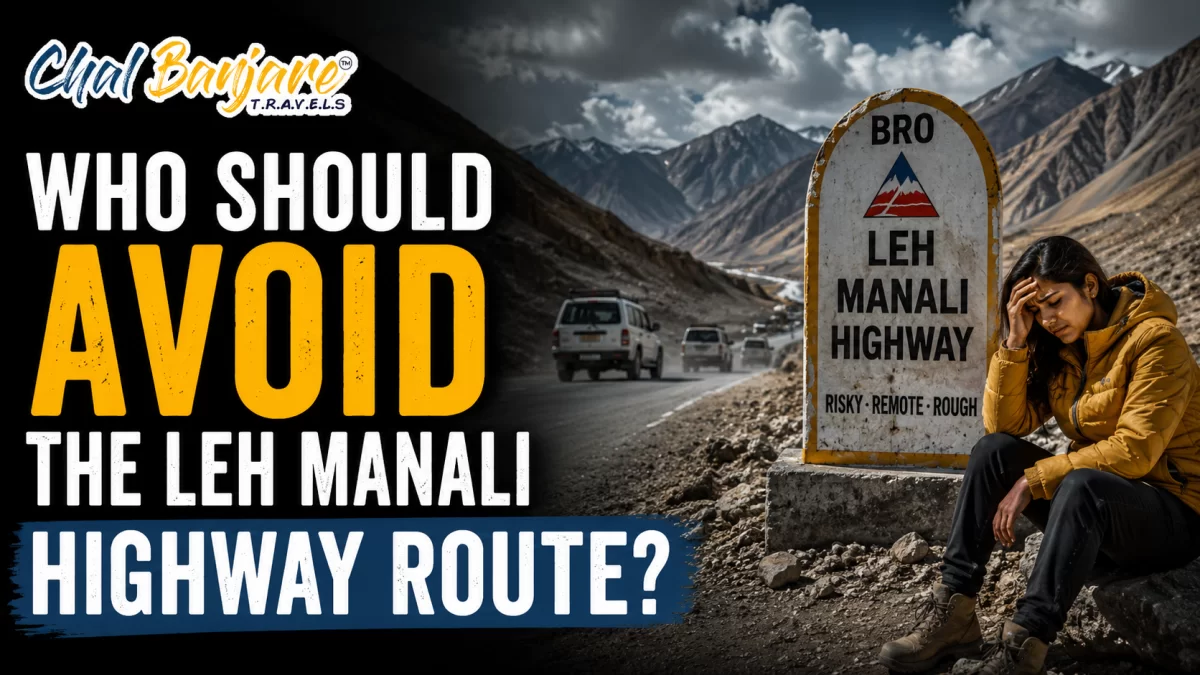
The Leh Manali Highway is one of the world’s most adventurous mountain roads, but its extreme altitude, rough terrain, long travel hours, and remote conditions can make the journey unsafe for certain travelers.
The Leh Manali Highway reaches elevations above 4,000 meters at several mountain passes, exposing travelers to significantly lower oxygen levels than those experienced at lower altitudes. Such conditions place additional demands on the cardiovascular system, making the journey physically challenging for individuals with serious heart conditions.
The route also involves long driving hours, remote landscapes, and limited access to advanced medical facilities. Travelers with existing cardiac concerns should understand these realities before considering the journey.
Recognizing the physical demands of the route helps travelers make informed decisions about whether this Himalayan highway is suitable for their health condition.
Travelers with significant heart conditions should carefully evaluate the route's challenges before planning this high-altitude road journey.
As altitude increases, oxygen availability decreases, requiring the heart to work harder to deliver oxygen throughout the body. This natural physiological response may create additional challenges for travelers who already have serious cardiovascular conditions.
Altitude affects individuals differently, making it difficult to predict how any one traveler may respond. Understanding these changes helps visitors appreciate why medical evaluation is often recommended before high-altitude travel.
Awareness of altitude-related changes allows travelers to make safer and more informed travel decisions.
Understanding how altitude affects the body helps travelers assess whether the Leh Manali Highway aligns with their health situation.
Before planning the Leh Manali Highway, travelers with serious heart conditions should discuss their travel plans with their healthcare provider. A professional assessment can help determine whether the route is appropriate based on individual health status and current medical management.
Travel decisions should always prioritize personal safety rather than itinerary goals. In some situations, alternative travel routes or destinations may provide a more suitable experience.
Careful medical evaluation helps travelers choose journeys that best match their overall health and comfort.
| Travel Consideration | Recommendation |
|---|---|
| Medical Assessment | Essential before planning. |
| High Altitude Awareness | Understand physical demands. |
| Remote Route Planning | Consider limited facilities. |
| Travel Flexibility | Maintain adaptable schedules. |
| Personal Safety | Remain the highest priority. |
Choosing a route that aligns with individual health circumstances helps ensure a safer and more comfortable Himalayan travel experience.
The Leh Manali Highway passes through several high-altitude regions where oxygen levels are considerably lower than at sea level. Travelers with severe respiratory or lung conditions may find these environments more physically demanding than lower-altitude destinations.
Reduced oxygen availability is a normal characteristic of high mountains and should be considered carefully during trip planning. Understanding these conditions allows travelers to evaluate whether the route matches their personal health circumstances.
Recognizing the realities of high-altitude travel supports safer decision-making before beginning the journey.
Travelers with significant respiratory concerns should understand the environmental conditions before planning this Himalayan route.
Long hours of travel combined with changing altitude, rugged mountain roads, and limited opportunities for rest can make the Leh Manali Highway physically demanding. These factors may influence overall travel comfort, particularly for individuals with existing breathing difficulties.
The journey is better suited to travelers who are comfortable with extended travel in remote mountainous environments and who understand the physical nature of the route.
Planning realistic travel expectations helps improve overall safety and comfort during the journey.
Understanding the journey's physical demands allows travelers to determine whether the route matches their capabilities and comfort levels.
Individuals with severe respiratory or lung conditions should seek medical advice before planning travel on the Leh Manali Highway. A healthcare professional can evaluate personal medical circumstances and provide guidance regarding the suitability of high-altitude travel.
Careful preparation, realistic expectations, and health-focused planning help travelers make informed decisions while prioritizing personal well-being above itinerary objectives.
Professional medical guidance remains one of the most important steps when considering challenging high-altitude journeys.
| Travel Consideration | Recommendation |
|---|---|
| Medical Consultation | Essential before travel. |
| Altitude Awareness | Understand reduced oxygen levels. |
| Journey Planning | Maintain flexible schedules. |
| Remote Conditions | Plan carefully. |
| Personal Health | Prioritize safety first. |
Careful medical evaluation and realistic planning help travelers determine whether the Leh Manali Highway is appropriate for their individual health circumstances.
The Leh Manali Highway passes through several high-altitude mountain passes where lower oxygen levels and changing atmospheric conditions can place additional demands on the body. Travelers with uncontrolled blood pressure should understand that high-altitude environments differ significantly from everyday travel conditions.
The combination of altitude, long driving hours, and remote mountain terrain makes this route more physically demanding than many standard road trips. Understanding these factors helps travelers evaluate whether the journey matches their current health condition.
Careful planning and awareness of high-altitude conditions support safer travel decisions before beginning the journey.
Understanding how altitude affects the body helps travelers make more informed decisions about undertaking this Himalayan road journey.
The Leh Manali Highway travels through isolated mountain regions where advanced medical facilities may not always be immediately accessible. Travelers with ongoing health concerns should consider the realities of remote travel before planning the route.
Long distances between settlements, changing weather conditions, and rugged terrain make preparation especially important. Understanding these factors helps travelers evaluate whether the journey is appropriate for their individual circumstances.
Thoughtful planning contributes to a safer and more comfortable travel experience across the Himalayas.
Preparing for the realities of remote mountain travel helps visitors make safer and more comfortable journey decisions.
Travelers with uncontrolled blood pressure should discuss high-altitude travel plans with their healthcare provider before attempting the Leh Manali Highway. Individual medical advice is important because personal health circumstances vary considerably from one traveler to another.
Choosing a route that matches both health status and travel experience helps reduce unnecessary risks while creating a more enjoyable overall journey.
Medical guidance should always take priority over itinerary ambitions when planning challenging mountain routes.
| Planning Consideration | Recommendation |
|---|---|
| Medical Evaluation | Essential before travel. |
| High Altitude Awareness | Understand physical demands. |
| Remote Travel Planning | Prepare carefully. |
| Flexible Schedule | Strongly recommended. |
| Personal Safety | Highest priority. |
Professional medical advice combined with realistic planning helps travelers determine whether the Leh Manali Highway is appropriate for their health condition.
The Leh Manali Highway is one of India's most demanding mountain road journeys, involving long travel days, high-altitude passes, changing weather conditions, and extended periods on rugged roads. These factors can make the route physically tiring, particularly for elderly travelers with limited endurance.
Although many senior travelers successfully complete the journey, comfort levels depend greatly on overall fitness, travel pace, and individual health conditions. Understanding these physical demands helps travelers choose the most suitable itinerary.
Careful planning allows senior travelers to make informed decisions based on their personal comfort and capabilities.
Understanding the journey's physical nature helps elderly travelers decide whether this route matches their travel expectations.
Daily travel on the Leh Manali Highway often involves several hours on winding mountain roads with limited opportunities for extended rest. Combined with high-altitude conditions, these long travel days may become physically demanding for travelers with reduced stamina.
Planning shorter travel segments where possible and allowing adequate time for rest can improve overall comfort during the journey. Flexible itineraries often provide a more enjoyable experience than tightly packed schedules.
Comfort-focused planning supports a safer and less stressful Himalayan road trip.
Planning according to personal endurance helps create a more comfortable and enjoyable mountain travel experience.
Some elderly travelers may prefer alternative ways of experiencing Ladakh that involve fewer long road journeys or less physically demanding routes. Selecting travel options that match individual comfort levels often leads to a more enjoyable vacation.
The best itinerary is not necessarily the most adventurous one but the one that allows travelers to explore comfortably while respecting their physical abilities and health considerations.
Choosing suitable travel routes helps maximize enjoyment while minimizing unnecessary physical strain.
| Travel Consideration | Recommendation |
|---|---|
| Physical Endurance | Evaluate honestly. |
| Daily Travel Hours | Keep manageable. |
| Rest Opportunities | Include regularly. |
| Health Assessment | Complete before travel. |
| Route Selection | Match comfort level. |
Selecting a travel plan that matches personal endurance and comfort helps elderly travelers enjoy the Himalayas more safely and comfortably.
The Leh Manali Highway is a challenging mountain route that combines high-altitude travel, long driving hours, changing weather, and remote landscapes. These conditions can make the journey considerably more demanding for families traveling with infants and very young children.
Young children may find extended road journeys physically tiring, while frequent altitude changes and limited opportunities for comfortable breaks can increase overall travel complexity. Families should carefully evaluate whether the route matches the needs of their youngest travelers.
Understanding these challenges helps parents make informed decisions before planning a Himalayan road trip.
Families who understand the realities of the route are better prepared to determine whether it suits their travel plans.
Large sections of the Leh Manali Highway pass through remote Himalayan regions where accommodation, medical support, restaurants, and convenience facilities are limited compared to urban destinations. Families with very young children should consider these practical realities before beginning the journey.
Long distances between settlements mean travelers should prepare thoroughly for daily travel requirements. Organized planning becomes particularly important when traveling with infants who require regular care and attention.
Understanding the availability of facilities helps families plan more realistic and comfortable itineraries.
Good preparation helps families manage remote travel conditions more effectively while maintaining greater comfort throughout the journey.
Families should choose travel plans that match the age, comfort, and overall needs of their children. While adventurous road trips appeal to many travelers, not every route is equally suitable for very young family members.
Evaluating travel duration, altitude, road conditions, and available facilities before departure helps parents determine whether the Leh Manali Highway is the right choice or whether a less demanding itinerary would provide a more comfortable family vacation.
Choosing routes based on family comfort often results in a more enjoyable and less stressful Himalayan travel experience.
| Family Planning Factor | Recommendation |
|---|---|
| Child Comfort | Highest priority. |
| Travel Duration | Keep manageable. |
| Remote Facilities | Plan carefully. |
| Weather Conditions | Monitor before travel. |
| Flexible Itinerary | Strongly recommended. |
Selecting an itinerary that matches the needs of young children helps create a safer and more enjoyable family travel experience in the Himalayas.
The Leh Manali Highway includes numerous winding mountain roads, steep ascents, descents, and sharp hairpin bends that continue for long stretches. Travelers who are highly sensitive to motion sickness may find these driving conditions more challenging than ordinary highway journeys.
The combination of continuous curves, changing elevations, and long travel hours can increase travel discomfort for individuals who are particularly susceptible to motion sickness. Understanding the road conditions helps travelers prepare more effectively.
Awareness of the route's characteristics allows visitors to plan realistic expectations before beginning the journey.
Understanding the nature of Himalayan roads allows motion-sensitive travelers to evaluate whether the journey suits their comfort level.
Extended travel days can make motion sickness more noticeable, especially when combined with mountain terrain and varying road conditions. Planning regular breaks, staying hydrated, and maintaining a comfortable travel pace may help improve the overall journey experience.
Travelers should avoid unrealistic schedules that require continuous driving without adequate rest. Comfort-focused planning often leads to a more enjoyable Himalayan road trip.
Allowing time for rest and flexibility can significantly improve travel comfort during long mountain journeys.
Comfort-oriented planning helps motion-sensitive travelers better manage the demands of the Leh Manali Highway.
Preparation is one of the most effective ways to improve comfort during long mountain road trips. Travelers should understand the expected driving conditions, organize travel schedules carefully, and ensure they are physically prepared for extended journeys through remote Himalayan landscapes.
Choosing experienced drivers, allowing extra travel time, and avoiding unnecessary pressure to maintain strict schedules all contribute to a more comfortable overall experience.
Well-planned travel helps visitors enjoy the scenery while minimizing avoidable discomfort during the journey.
| Comfort Strategy | Benefit |
|---|---|
| Regular Rest Stops | Improves comfort. |
| Hydration | Supports well-being. |
| Flexible Itinerary | Reduces travel stress. |
| Experienced Driver | Smoother journey. |
| Comfort Focused Planning | Better travel experience. |
Travelers who prepare carefully and prioritize comfort are generally better equipped to enjoy the spectacular scenery of the Leh Manali Highway despite its demanding mountain roads.
The Leh Manali Highway passes through some of the most remote mountain regions in the Indian Himalayas. Large stretches of the route have limited accommodation options, restaurants, fuel stations, medical facilities, and communication networks compared to urban destinations.
Travelers who are accustomed to modern conveniences throughout their journey may find these conditions challenging. Understanding the level of available services helps visitors prepare realistic expectations before starting the trip.
Awareness of the route's remote nature allows travelers to decide whether it matches their preferred style of travel.
Travelers who understand the highway's remote character are generally better prepared for the overall journey experience.
Unlike popular urban destinations, the Leh Manali Highway requires visitors to be more self-reliant during the journey. Travelers should prepare essential supplies, maintain flexible schedules, and understand that convenience may be limited across several sections of the route.
Weather changes, road conditions, and the distance between facilities all contribute to the expedition-like nature of this highway. Practical preparation significantly improves both comfort and confidence throughout the trip.
Careful planning allows travelers to adapt more comfortably to remote Himalayan conditions.
Proper preparation helps travelers adjust more easily to the unique realities of remote Himalayan road travel.
Not every traveler enjoys expedition-style journeys through isolated mountain landscapes. Visitors who prefer regular access to hotels, restaurants, medical services, and urban conveniences may find other destinations or travel routes more suitable for their expectations.
Selecting a route that aligns with individual comfort preferences often results in a more enjoyable and stress-free vacation. The best itinerary is one that matches both travel goals and personal comfort levels.
Choosing suitable routes allows travelers to enjoy the Himalayas in a way that best fits their expectations.
| Comfort Consideration | Recommendation |
|---|---|
| Remote Facilities | Understand limitations. |
| Travel Expectations | Remain realistic. |
| Self Preparation | Highly important. |
| Flexible Planning | Recommended. |
| Route Selection | Match comfort level. |
Matching travel routes with personal comfort expectations helps create a safer and more enjoyable Himalayan journey.
The Leh Manali Highway is an adventure route rather than a luxury highway experience. Travelers should expect changing road surfaces, mountain terrain, long driving hours, high-altitude conditions, and remote landscapes that are very different from conventional road vacations.
The attraction of this route lies in its dramatic scenery and adventurous nature rather than premium travel comfort. Understanding these realities helps visitors prepare appropriate expectations before beginning the journey.
Viewing the highway as a mountain expedition rather than a luxury drive often leads to greater travel satisfaction.
Travelers who understand the adventurous nature of the route are better prepared to appreciate the journey itself.
Luxury vacations typically focus on convenience, premium accommodations, short transfers, and predictable travel conditions. In contrast, the Leh Manali Highway offers rugged mountain landscapes, unpredictable weather, basic facilities in many areas, and physically demanding travel days.
These differences make the route especially appealing to adventure travelers while potentially making it less suitable for visitors seeking maximum comfort throughout the journey.
Understanding these distinctions helps travelers choose experiences that match their personal travel style.
Selecting destinations based on travel preferences helps visitors enjoy a more satisfying overall vacation.
Every traveler has different expectations regarding comfort, adventure, and sightseeing. Those who enjoy challenging mountain journeys often find the Leh Manali Highway extremely rewarding, while travelers seeking effortless road vacations may prefer destinations with more developed tourism infrastructure.
Evaluating travel style honestly before planning helps ensure that the chosen itinerary provides enjoyment rather than unnecessary discomfort. Matching expectations with reality remains one of the keys to a successful Himalayan journey.
Choosing the right destination according to personal preferences creates a more memorable and enjoyable travel experience.
| Travel Preference | Suitability |
|---|---|
| Adventure Travel | Highly suitable. |
| Remote Exploration | Well suited. |
| Luxury Road Vacation | Less suitable. |
| Comfort Focused Travel | Evaluate carefully. |
| Flexible Travelers | Generally suitable. |
Choosing destinations that align with individual travel expectations helps visitors enjoy the Himalayan experience while maintaining comfort and satisfaction throughout the journey.
The Leh Manali Highway is one of India's most iconic mountain road journeys, but it is not suitable for every traveler. High-altitude passes, remote landscapes, unpredictable weather, long driving hours, and limited facilities make it a route that requires careful preparation and realistic expectations.
Adventure enthusiasts often appreciate the dramatic scenery and sense of exploration, while travelers seeking maximum comfort or those with significant medical concerns may find alternative routes more suitable. Understanding your travel style is one of the most important steps before planning this journey.
Choosing a route that aligns with your experience, comfort level, and personal preferences helps create a safer and more enjoyable Himalayan adventure.
Travelers who understand the demands of the Leh Manali Highway are generally better prepared to enjoy the journey while minimizing unnecessary risks.
Successful travel on the Leh Manali Highway depends on balancing personal health, previous mountain travel experience, and overall comfort with challenging road conditions. Travelers should carefully assess whether they are prepared for long travel days, changing weather, and high-altitude environments before finalizing their itinerary.
Building flexibility into the schedule allows time for weather changes, road conditions, and personal comfort needs. A well-planned itinerary is usually safer and more enjoyable than one that attempts to cover the route as quickly as possible.
Careful preparation allows travelers to experience the beauty of the Himalayas while respecting the realities of mountain travel.
| Planning Factor | Recommendation |
|---|---|
| Health Assessment | Complete before travel. |
| Travel Experience | Evaluate honestly. |
| Itinerary Flexibility | Highly recommended. |
| Weather Awareness | Monitor regularly. |
| Mountain Preparation | Essential. |
| Personal Comfort | Prioritize throughout the journey. |
Planning according to individual abilities and comfort levels helps create a safer and more rewarding road trip through the Himalayas.
Before starting the journey, travelers should review weather forecasts, confirm vehicle readiness, organize travel documents, carry appropriate clothing, prepare essential medicines, and ensure that everyone in the group understands the challenges of high-altitude travel. Good preparation significantly improves confidence throughout the route.
Travelers should also maintain realistic expectations regarding road conditions, travel times, and available facilities. Remaining flexible and adapting to changing conditions is often the key to completing the journey comfortably and safely.
The Leh Manali Highway rewards well-prepared travelers with spectacular mountain scenery and unforgettable experiences, making careful planning an essential part of the adventure.
| Final Travel Checklist | Status |
|---|---|
| Medical Readiness | Confirmed |
| Vehicle Inspection | Completed |
| Weather Forecast Reviewed | Checked |
| Warm Clothing Packed | Ready |
| Emergency Supplies Carried | Ready |
| Flexible Itinerary Planned | Completed |
| High Altitude Awareness | Prepared for Travel |
The Leh Manali Highway is an unforgettable Himalayan adventure for travelers who prepare thoroughly and understand its unique challenges. Careful planning, realistic expectations, and a strong focus on safety help ensure that the journey becomes an enjoyable and memorable experience rather than an unnecessarily difficult one.


Get customized Ladakh tour planning designed around altitude comfort, acclimatization time, weather windows, and real Himalayan road conditions. Whether you are visiting for high mountain passes, monasteries, lakes, or remote valley experiences, our exper
⚡ Quick Response | 💰 Free consultation | 🕒 24×7 expert support

