


Mobile Network and Internet in Srinagar During Winter
Understand mobile network and internet access in Srinagar during winter, including connectivity expectations, possible weather-related disruptions and practical preparation for travellers.
+91 9910402252
admin@chalbanjare.com


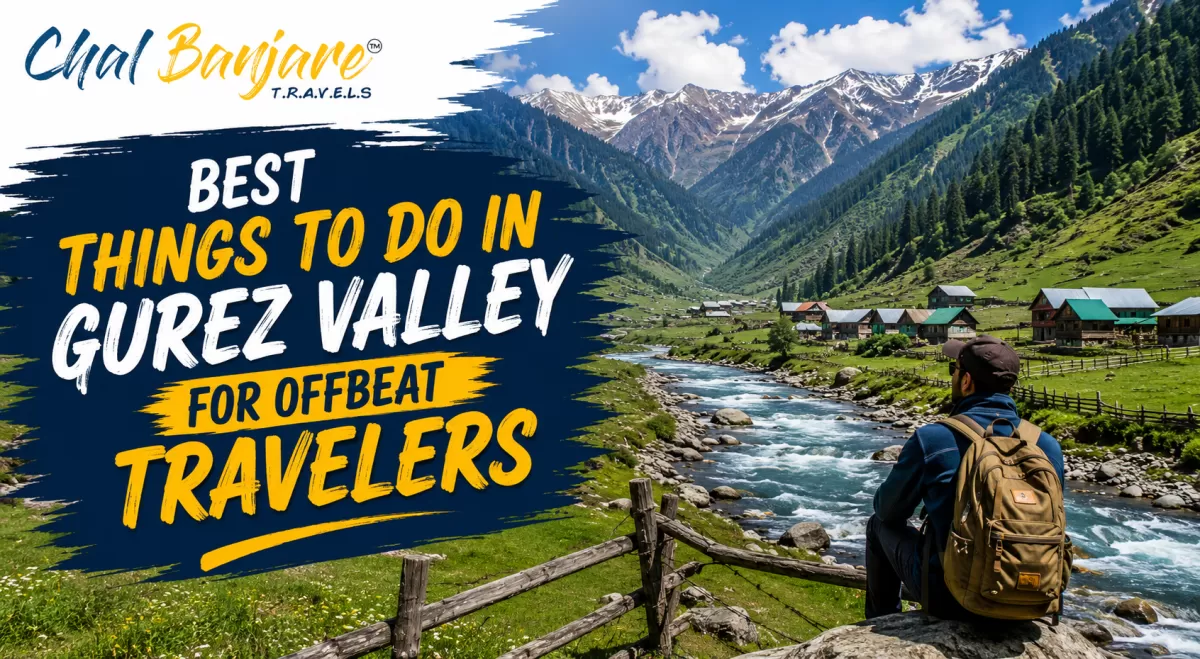
Gurez Valley offers remote villages, Himalayan landscapes, river valleys, cultural experiences, and untouched nature, making it one of Kashmir’s best destinations for offbeat travelers.
The villages of Gurez Valley are among the most scenic and culturally preserved settlements in Jammu and Kashmir. Nestled along the Kishanganga River and surrounded by towering Himalayan peaks, these villages remain largely untouched by large-scale tourism. Wooden homes, cultivated fields, grazing meadows, and snow-covered mountains create an authentic Himalayan landscape that changes beautifully with every season. Unlike the commercial atmosphere found in popular destinations, Gurez villages retain their traditional character and peaceful environment.
Villages such as Dawar, Chorwan, Barnoi, and those scattered across Tulail Valley allow visitors to experience the natural beauty of the region while observing everyday mountain life. Roads pass through green valleys, river crossings, and traditional settlements where agriculture and livestock continue to support local communities. Every village offers a different perspective of the valley's landscapes, making slow exploration far more rewarding than simply driving through the region.
Exploring Gurez Valley's villages allows travellers to appreciate one of Kashmir's most authentic mountain regions. The combination of dramatic landscapes and preserved rural traditions creates an unforgettable experience that differs greatly from the state's more frequently visited destinations.
Life in Gurez Valley follows the rhythm of the mountains. Agriculture, livestock, fishing, and seasonal farming continue to shape the daily routines of local communities. Residents maintain close connections with nature, adapting their activities according to changing weather, snowfall, and the short summer season. Visitors exploring the valley respectfully often observe traditional farming methods, shepherds moving livestock across meadows, and families working together in orchards and cultivated fields.
The peaceful surroundings encourage slow travel rather than hurried sightseeing. Walking through villages allows travellers to notice handcrafted wooden architecture, local schools, small shops, mosques, and community gathering areas where daily life unfolds naturally. Conversations with residents often provide valuable insight into local traditions and the challenges of living in one of Kashmir's most remote mountain valleys.
Experiencing village life in Gurez is about appreciating simplicity, hospitality, and the strong relationship between local communities and the surrounding mountains. Visitors who spend time exploring patiently gain a much deeper understanding of this remarkable Himalayan region.
Unlike Gulmarg, Pahalgam, or Sonamarg, Gurez Valley remains one of Kashmir's least crowded destinations. Its remote location beyond Razdan Pass naturally limits visitor numbers, allowing travellers to experience peaceful landscapes without heavy tourist activity. Roads pass through quiet villages, alpine meadows, river valleys, and forested slopes where nature remains largely undisturbed. This makes Gurez especially appealing for travellers seeking solitude and authentic Himalayan scenery.
Because tourism infrastructure is still developing, visitors should approach Gurez with realistic expectations. Accommodation options are simpler than those in major hill stations, mobile connectivity may be limited in some areas, and services are fewer. These limitations are balanced by exceptional natural beauty, genuine local hospitality, and the opportunity to experience a side of Kashmir that remains largely untouched by commercial tourism.
Travellers looking for peaceful Himalayan landscapes and authentic cultural experiences will find Gurez Valley's rural areas exceptionally rewarding. Its quiet villages and untouched scenery offer a refreshing alternative to Kashmir's more frequently visited destinations while preserving the region's natural and cultural heritage.
The Kishanganga River is the defining natural feature of Gurez Valley, flowing gracefully through its broad meadows, traditional villages, and dramatic mountain landscapes. Originating in the high Himalayas, the river creates fertile valleys that support agriculture and provide fresh water for local communities. Throughout the journey across Gurez, the river remains a constant companion, with roads frequently following its course and offering uninterrupted views of crystal-clear water flowing beneath snow-capped peaks.
The river changes character throughout the valley, appearing calm and reflective in wider sections while becoming fast-flowing as it passes through narrower mountain corridors. Every bend reveals a different perspective, making the Kishanganga one of the valley's most photogenic natural attractions. Visitors travelling through Dawar, Tulail, and nearby villages encounter numerous viewpoints where the river beautifully complements the surrounding Himalayan scenery.
The Kishanganga River is much more than a scenic attraction. It shapes the landscapes, livelihoods, and identity of Gurez Valley while providing travellers with some of the most spectacular riverside scenery in the Kashmir Himalayas.
Several sections of the Kishanganga River provide quiet riverside locations where visitors can pause and appreciate the peaceful atmosphere of Gurez Valley. Open meadows, grazing fields, wildflowers during summer, and forested slopes create ideal surroundings for relaxation, nature observation, and photography. The sound of flowing water combined with fresh mountain air makes these riverside areas among the valley's most tranquil locations.
Unlike crowded riverfront destinations, the banks of the Kishanganga remain largely undisturbed, allowing visitors to experience nature without heavy tourist activity. Spending time beside the river also offers opportunities to observe local life, including shepherds moving livestock, farmers working nearby fields, and residents crossing traditional bridges connecting villages on opposite banks.
The river's quiet surroundings perfectly represent the relaxed pace of travel in Gurez Valley. Visitors who take time to stop beside the Kishanganga experience one of the valley's most calming and memorable natural settings.
The Kishanganga River offers outstanding photography opportunities throughout the day. During calm mornings the clear water often reflects surrounding mountains, forests, and traditional villages, creating striking landscape compositions. Summer greenery, autumn colours, and snow-covered winter scenery each provide distinctive photographic conditions, making the river attractive across different seasons.
Photographers exploring the valley should allow time to stop at multiple viewpoints rather than relying on a single location. Bridges, riverside roads, elevated mountain bends, and village edges all provide unique perspectives of the river flowing through the valley. The changing light during sunrise and sunset further enhances the scenery, producing dramatic contrasts between illuminated mountain peaks and the calm river below.
The Kishanganga River is one of Gurez Valley's most photogenic natural features. Whether viewed from roadside viewpoints, bridges, or village surroundings, it creates spectacular compositions that highlight the untouched beauty of this remote Himalayan destination.
Razdan Pass serves as the primary gateway connecting Gurez Valley with the Kashmir Valley and is one of the most scenic mountain drives in the region. Situated at an altitude of over 3,300 metres, the pass offers spectacular views of dense forests, alpine meadows, distant mountain ranges, and deep valleys throughout the journey. Travelling through Razdan Pass is not simply a means of reaching Gurez but an experience in itself, with every section of the road revealing dramatic changes in landscape and elevation.
The drive begins with forested mountain roads before gradually climbing towards open alpine terrain where panoramic Himalayan views become increasingly impressive. During the summer season, lush green slopes dominate the scenery, while lingering patches of snow may still be visible near the summit. Every bend presents opportunities to admire the changing landscapes that make this route one of the most memorable road journeys in northern Kashmir.
The journey through Razdan Pass is an essential part of visiting Gurez Valley. Rather than rushing to the destination, travellers should allow time to appreciate the remarkable landscapes that unfold throughout this unforgettable Himalayan drive.
One of the most fascinating aspects of travelling through Razdan Pass is the continuous transformation of landscapes as altitude increases. Lower sections feature forests of pine and fir, gradually giving way to open mountain slopes, alpine grasslands, rocky ridges, and expansive viewpoints. During spring and early summer, melting snow feeds countless streams flowing across the mountainsides, while wildflowers begin covering many of the surrounding meadows.
Higher elevations often experience cooler temperatures even during summer, making layered clothing advisable throughout the journey. Visitors frequently stop at designated viewpoints to admire the surrounding peaks and valleys before continuing towards Gurez. Wildlife enthusiasts may occasionally observe Himalayan bird species and grazing livestock across the alpine pastures, adding further interest to the drive. Every season offers distinct scenery, making repeated visits equally rewarding.
The changing terrain across Razdan Pass demonstrates the remarkable ecological diversity of Kashmir's mountains. Every stage of the drive introduces new landscapes, making the journey as rewarding as the destination itself.
Because Razdan Pass experiences heavy snowfall during winter, seasonal accessibility is one of the most important considerations when planning a visit to Gurez Valley. The road generally remains open only during the warmer months after snow clearance has been completed, while winter snowfall often results in temporary closure. Travellers should always confirm current road conditions before departure because weather changes can occasionally affect travel plans even during the operating season.
Vehicles should be in good mechanical condition due to the mountain terrain, and drivers should be experienced in navigating winding Himalayan roads. Carrying drinking water, snacks, warm clothing, and sufficient fuel before leaving major towns is advisable because services become limited along certain sections of the route. Beginning the journey early in the morning provides more comfortable driving conditions and allows additional time for sightseeing stops before reaching Gurez Valley.
Proper planning ensures that the journey through Razdan Pass remains safe, comfortable, and enjoyable. Travellers who prepare according to seasonal conditions are rewarded with one of Kashmir's finest mountain road experiences and an unforgettable introduction to the remote beauty of Gurez Valley.
Tulail Valley lies beyond Dawar and forms the upper section of the greater Gurez region. Compared with the already peaceful Gurez Valley, Tulail receives even fewer visitors, making it one of the most remote and least explored travel destinations in Kashmir. The valley stretches through a series of traditional mountain villages, open meadows, alpine streams, and rugged Himalayan landscapes where modern development remains limited. The road follows the Kishanganga River deeper into the mountains, offering continuous views of untouched scenery rarely found elsewhere in the region.
Villages such as Sheikhpora, Chakwali, and Badugam preserve traditional lifestyles that have changed little over generations. Wooden homes, cultivated terraces, grazing livestock, and mountain agriculture continue to define everyday life. Travellers who venture into Tulail quickly notice the absence of commercial tourism, large hotels, or crowded sightseeing points. Instead, the attraction lies in experiencing authentic mountain communities surrounded by pristine natural landscapes.
Tulail Valley rewards visitors looking for authentic Himalayan landscapes untouched by mass tourism. Its remote villages and spectacular mountain scenery provide a deeper understanding of the greater Gurez region while offering one of Kashmir's most peaceful travel experiences.
The greatest attraction of Tulail Valley is its remarkable sense of peace. Wide green meadows, crystal-clear rivers, snow-fed streams, dense mountain forests, and towering Himalayan peaks surround visitors in every direction. The absence of heavy tourist traffic allows nature to dominate the experience, creating ideal conditions for slow travel, photography, birdwatching, and simply enjoying the silence of the mountains. Seasonal wildflowers during summer further enhance the valley's already impressive scenery.
Unlike destinations built around organised attractions, Tulail encourages visitors to appreciate its landscapes naturally. Small riverside stops, village roads, grazing pastures, and elevated viewpoints provide numerous opportunities to enjoy uninterrupted mountain views. The changing weather frequently creates dramatic cloud formations, shifting light, and colourful sunsets that continually transform the appearance of the valley throughout the day.
Tulail Valley offers a slower and more peaceful travel experience than almost any other destination in Kashmir. Visitors who appreciate untouched landscapes and quiet surroundings will find the valley especially rewarding throughout the summer travel season.
Travelling beyond the main settlements of Gurez into Tulail allows visitors to appreciate the remarkable geographical diversity of the region. Roads continue alongside the Kishanganga River while gradually revealing increasingly remote valleys, mountain slopes, alpine forests, and isolated villages. Every section of the journey introduces fresh perspectives of the Himalayas, making the extended Gurez region particularly attractive for travellers who enjoy road trips, nature exploration, and offbeat destinations.
Because facilities become more limited farther into Tulail Valley, visitors should travel with adequate supplies and plan their itinerary carefully. Accommodation options are basic, fuel stations are unavailable within the valley, and mobile connectivity may be inconsistent in several areas. Travelling during daylight hours, carrying essential provisions, and allowing extra time for sightseeing ensures a comfortable and enjoyable exploration of one of Kashmir's most spectacular remote landscapes.
Exploring Tulail Valley completes the Gurez experience by revealing one of the Himalayas' most remote and naturally beautiful regions. Careful planning and a relaxed pace allow travellers to fully appreciate its extraordinary scenery, peaceful villages, and authentic mountain culture.
Gurez Valley offers exceptional opportunities for nature walks through alpine meadows, mountain forests, riverside paths, and traditional village trails. Unlike destinations dominated by commercial trekking infrastructure, most walking routes here follow natural landscapes and local pathways used by residents, shepherds, and farmers. These walks allow visitors to experience the valley's remarkable biodiversity while enjoying uninterrupted views of snow-covered peaks, flowing streams, and expansive grasslands.
Short walks around Dawar, Habba Khatoon Peak, and riverside meadows are suitable for most visitors, while longer explorations into surrounding villages and forested areas provide greater opportunities to discover the region's untouched beauty. Summer is the ideal season for walking, with pleasant temperatures, blooming wildflowers, and clear mountain views creating ideal outdoor conditions.
Walking remains one of the best ways to appreciate Gurez Valley because it allows visitors to slow down and observe details often missed during road travel. The combination of fresh mountain air, peaceful landscapes, and traditional village surroundings creates an unforgettable outdoor experience.
Nature walks in Gurez are less about reaching specific destinations and more about enjoying the valley's peaceful atmosphere. Gentle riverside paths, open grasslands, and village surroundings encourage relaxed exploration where visitors can pause frequently to admire changing landscapes, observe birds, or simply listen to the sounds of flowing water and mountain winds. The absence of large tourist crowds creates an environment that is particularly attractive for travellers seeking quiet outdoor experiences.
Many walking routes pass agricultural fields, grazing livestock, traditional wooden homes, and small bridges crossing mountain streams. Every season offers a different visual experience, with lush greenery during summer, colourful vegetation in early autumn, and snow-covered scenery before winter road closures. Carrying water, comfortable footwear, and weather-appropriate clothing ensures a safe and enjoyable walking experience throughout the valley.
Peaceful walks through Gurez Valley provide an opportunity to disconnect from busy routines while experiencing the region's remarkable natural beauty at a comfortable pace. Every route offers unique views that reward patient exploration.
One of the greatest advantages of outdoor exploration in Gurez Valley is the opportunity to enjoy nature without heavy tourist activity. Visitors can spend hours exploring meadows, forests, riversides, and village surroundings while encountering very few other travellers. This peaceful environment allows photographers, birdwatchers, and nature enthusiasts to fully appreciate the valley's landscapes without interruption.
Responsible outdoor travel is essential to preserving Gurez's natural environment. Visitors should remain on existing paths where possible, avoid disturbing wildlife, carry back all waste, and respect agricultural land and village property. Hiring local guides for longer explorations into unfamiliar areas also supports local communities while improving safety. Travelling thoughtfully helps ensure that Gurez Valley continues to remain one of Kashmir's most pristine mountain destinations.
Nature walks in Gurez Valley are among the most rewarding experiences for travellers seeking peace, scenery, and authentic Himalayan landscapes. Exploring slowly and responsibly allows visitors to connect deeply with one of Kashmir's most beautiful and least disturbed natural regions.
Camping in Gurez Valley offers travellers the opportunity to stay close to nature while enjoying uninterrupted views of snow-covered mountains, alpine meadows, rivers, and traditional villages. Unlike heavily commercialised camping destinations, Gurez remains peaceful, allowing visitors to experience quiet evenings, fresh mountain air, and star-filled skies away from city lights. Designated camping areas near villages and riversides provide scenic surroundings while remaining accessible from the valley's main road.
Many travellers also combine camping with stays in guesthouses or homestays to experience both outdoor landscapes and local hospitality. Waking up to the sound of the Kishanganga River, watching morning sunlight illuminate surrounding peaks, and enjoying evenings beside open meadows create memorable experiences that reflect the valley's relaxed pace of travel. Camping is particularly rewarding during the summer season when weather conditions remain favourable.
Camping allows travellers to experience Gurez Valley beyond ordinary sightseeing. Spending nights surrounded by mountains creates a stronger connection with the landscape while offering peaceful moments rarely found in more developed tourist destinations.
Gurez Valley is ideally suited to slow travel because its greatest attractions are found through relaxed exploration rather than rushing between sightseeing points. Visitors are encouraged to spend extra time walking through villages, enjoying riverside landscapes, interacting with local communities, and appreciating the changing mountain scenery throughout the day. Without large crowds or busy commercial areas, travellers naturally adopt a slower pace that allows deeper engagement with both nature and local culture.
Rather than focusing on covering long distances, slow travel in Gurez emphasises meaningful experiences such as watching sunrise over Habba Khatoon Peak, enjoying tea with local families, photographing changing landscapes, and taking leisurely nature walks. This approach creates a more rewarding journey while reducing environmental impact and supporting responsible tourism within the valley.
Slow travel allows visitors to fully appreciate Gurez Valley's natural beauty and cultural richness. The peaceful environment encourages travellers to enjoy simple experiences that often become the most memorable parts of the journey.
Successful camping and outdoor travel in Gurez Valley depend on careful planning according to seasonal weather conditions. The valley generally remains accessible during the warmer months after Razdan Pass opens, while winter snowfall makes outdoor stays impractical and often inaccessible. Even during summer, temperatures can fall significantly after sunset due to the valley's high altitude, making warm clothing and suitable camping equipment essential.
Visitors should choose camping locations only where permitted and avoid environmentally sensitive areas or agricultural land. Carrying sufficient drinking water, food supplies, weather protection, and basic first-aid equipment improves safety during outdoor activities. Travelling with experienced local guides or arranging camping through local operators is recommended for visitors unfamiliar with the region. Responsible camping practices help preserve Gurez Valley's pristine natural environment for future travellers.
Careful planning allows visitors to enjoy camping and outdoor exploration safely while respecting the fragile mountain environment. When approached responsibly, slow travel and camping become some of the most rewarding ways to experience the untouched beauty of Gurez Valley.
One of the greatest advantages of travelling through Gurez Valley is the abundance of quiet viewpoints that remain largely unknown outside the region. Unlike popular destinations where designated viewing platforms attract large crowds, many of Gurez's finest panoramic locations are found naturally along mountain roads, village edges, riverside bends, and elevated meadows. These peaceful viewpoints overlook the Kishanganga River, Habba Khatoon Peak, traditional villages, alpine grasslands, and distant Himalayan ranges, allowing visitors to enjoy uninterrupted scenery in complete tranquillity.
Travelling slowly through the valley often reveals numerous opportunities to stop safely and admire the landscape. The road between Razdan Pass, Dawar, and Tulail Valley contains several elevated sections where expansive mountain views appear around every bend. Because visitor numbers remain low throughout most of the season, these viewpoints rarely feel crowded, making them ideal for quiet sightseeing and landscape appreciation.
These lesser-known viewpoints allow travellers to experience the true scale and beauty of Gurez Valley without the distractions of commercial tourism. Spending time at several locations rather than visiting only one provides a richer appreciation of the valley's remarkable Himalayan landscapes.
Gurez Valley is a paradise for landscape photographers because its remote location has preserved vast stretches of untouched mountain scenery. Wide alpine meadows, snow-covered peaks, winding rivers, traditional wooden villages, forests, and changing cloud formations combine to create dramatic compositions throughout the day. Early morning provides soft light and calm conditions, while late afternoon produces warm colours that beautifully illuminate the surrounding mountains and valleys.
Photographers should allow flexibility in their itinerary because weather conditions frequently change in the Himalayas. Moving clouds, brief rain showers, and shifting sunlight often transform familiar viewpoints into completely different scenes within minutes. Carrying a tripod, weather protection for camera equipment, and extra batteries is recommended due to the remote nature of the valley and the limited availability of photography supplies.
The untouched scenery of Gurez Valley rewards photographers who travel patiently and remain flexible with changing weather. Every viewpoint offers a unique perspective, making the valley one of Kashmir's finest destinations for nature and landscape photography.
Beyond the main road, Gurez Valley contains numerous lesser-known locations that remain unfamiliar to most visitors. Small alpine meadows, hidden river bends, remote village viewpoints, and seasonal grazing areas provide opportunities to experience landscapes rarely seen in standard travel itineraries. Because many of these places are reached by local tracks or village paths, travellers benefit greatly from the knowledge of local residents or experienced guides who understand the terrain and seasonal conditions.
Exploring responsibly is especially important in remote mountain environments. Visitors should remain on recognised paths where possible, avoid entering agricultural land without permission, and respect local customs while visiting villages. Weather conditions can change rapidly in high-altitude areas, making early departures and daylight travel advisable. With proper planning and local guidance, these offbeat locations reveal some of the most spectacular and peaceful scenery anywhere in the Kashmir Himalayas.
Exploring Gurez's lesser-known viewpoints with local guidance provides some of the most memorable experiences in the valley. These hidden locations combine outstanding scenery, complete tranquillity, and authentic mountain landscapes that remain largely untouched by mainstream tourism.
Gurez Valley is best suited for travellers who value untouched natural landscapes, authentic village life, and peaceful mountain journeys rather than busy tourist attractions. Unlike Kashmir's more developed destinations, Gurez focuses on slow travel, scenic drives, village exploration, nature walks, and cultural experiences. The valley rewards visitors who enjoy spending time beside rivers, photographing mountain scenery, interacting respectfully with local communities, and appreciating the quiet rhythm of Himalayan life.
Travellers interested in photography, offbeat road trips, camping, birdwatching, and rural culture will find Gurez especially rewarding. Families seeking peaceful holidays, couples looking for secluded landscapes, and experienced road travellers also appreciate the valley's relaxed atmosphere. Visitors expecting luxury resorts, nightlife, or extensive commercial tourism should instead approach Gurez as a destination centred on nature, simplicity, and authentic mountain experiences.
Choosing Gurez Valley means embracing a slower and more meaningful style of travel. Visitors who appreciate untouched landscapes and genuine cultural experiences often consider it one of the most memorable destinations in the Kashmir Himalayas.
Seasonal planning is essential when organising a trip to Gurez Valley because access depends on the opening of Razdan Pass. The valley is generally visited during the warmer months when roads remain operational and outdoor activities such as nature walks, camping, village exploration, photography, and sightseeing are most enjoyable. Travellers should always verify road conditions before departure, especially during the beginning and end of the travel season when weather conditions may change quickly.
Accommodation mainly consists of guesthouses, homestays, government tourist facilities, and a limited number of small hotels, particularly around Dawar. Travellers planning to continue towards Tulail Valley should arrange accommodation in advance during the peak summer season because options remain limited. A minimum of two to three nights allows enough time to explore Habba Khatoon Peak, the Kishanganga River, Tulail Valley, nearby villages, and scenic viewpoints without rushing.
Careful seasonal planning allows visitors to experience Gurez Valley comfortably while making the most of its limited travel window. A flexible itinerary ensures enough time to enjoy both the famous attractions and the valley's lesser-known natural and cultural highlights.
Travelling to Gurez Valley requires more preparation than visiting mainstream destinations because of its remote location. Visitors should carry warm layered clothing, comfortable walking shoes, personal medicines, power banks, cash, reusable water bottles, and basic travel essentials. Mobile connectivity may be limited in certain areas, while ATMs and fuel stations are not widely available after leaving larger towns. Preparing in advance helps ensure a smooth and comfortable journey.
Responsible tourism plays an important role in preserving Gurez Valley's natural and cultural heritage. Travellers should avoid littering, respect village customs, request permission before photographing local residents, and support locally owned accommodations and businesses whenever possible. Remaining flexible with travel plans, monitoring weather conditions, and travelling during daylight hours contribute to a safer experience while allowing visitors to fully appreciate one of Kashmir's most beautiful and least explored Himalayan regions.
With thoughtful planning and a respectful approach, Gurez Valley offers one of the most authentic Himalayan travel experiences in India. Its untouched landscapes, welcoming communities, and peaceful atmosphere reward travellers who are prepared to explore beyond Kashmir's traditional tourist circuit.


Get customized Jammu and Kashmir tour planning designed around seasonal weather patterns, valley travel routes, snow conditions, and realistic hill road timing. Whether you are visiting for scenic landscapes, serene lakes, spiritual journeys, meadow stays
⚡ Quick Response | 💰 Free consultation | 🕒 24×7 expert support

